
ZTE(000063)

Search documents
春节流量大战,AI 与机器人的交卷时刻
晚点LatePost· 2026-02-10 14:00
Core Viewpoint - The article emphasizes that the key to AI applications is their low entry barrier, which is crucial for reaching the mass market, especially highlighted during the 2026 Spring Festival marketing competition [2][6]. Group 1: Spring Festival Marketing Landscape - The 2026 Spring Festival marketing landscape is more competitive than in previous years, with major tech companies leveraging the event as a platform for AI public awareness [3]. - Companies like Volcano Engine and Tencent are using the Spring Festival to showcase AI capabilities, similar to how mobile payment companies did a decade ago [3][5]. - The evolution of Spring Festival sponsorship reflects China's economic development, transitioning from physical goods to digital efficiency [5]. Group 2: AI Application Development - AI applications have evolved from merely conversational tools to actionable solutions that can perform tasks for users, marking a significant shift in their functionality [4][7]. - The emergence of applications like DeepSeek has leveled the playing field between large corporations and independent developers, indicating a shift towards AI as a productivity base [7]. - The introduction of the Nubia M153 smartphone represents a significant advancement in AI capabilities, allowing for cross-application automation and reducing user interaction complexity [6][8]. Group 3: User Accessibility and Market Penetration - The low barrier to entry for AI applications, exemplified by the Nubia M153, is essential for widespread adoption, allowing users to interact with technology through simple voice commands [6][10]. - The article suggests that the Spring Festival could serve as a pivotal moment for AI to transition from early adopters to mainstream users, similar to past technological shifts [10]. - As AI becomes more accessible, it is expected that the number of users who claim they cannot use AI will diminish significantly [11].


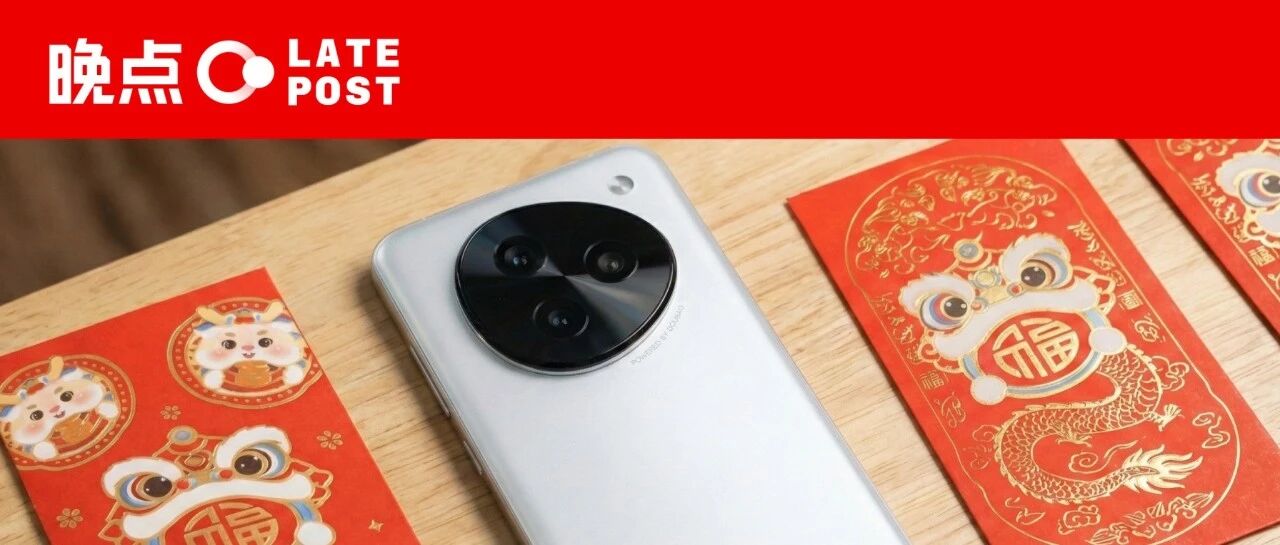
突发!刘强东拿下中兴
商业洞察· 2026-02-10 08:48
Core Viewpoint - JD.com is aggressively expanding its partnerships with smartphone manufacturers, indicating both ambition and anxiety in a competitive market [2][12]. Group 1: Strategic Partnerships - JD.com has formed a strategic partnership with Vivo, aiming for a sales target of 100 billion yuan over the next three years, focusing on user engagement, product co-development, and full-channel integration [4][7]. - The collaboration with Vivo will leverage JD's 700 million active users to target high-potential demographics such as Gen Z through joint marketing and member integration [7]. - JD.com has also secured the national agency rights for ZTE, Nubia, and Red Magic, setting a sales goal of 10 billion yuan, aiming to enhance ZTE's market presence through integrated resources [8][9]. Group 2: Business Expansion and Supply Chain Focus - JD.com is diversifying its business into food delivery, dining, and travel, all centered around its core supply chain capabilities [14][16]. - The company has quickly captured a significant market share in the food delivery sector, achieving 25 million daily orders within three months [16]. - JD's approach in the food industry includes using technology to ensure food safety and streamline supply chain processes, reflecting its long-standing operational efficiencies [17]. Group 3: Financial Performance and Challenges - JD.com's Q3 2025 financial report shows a revenue increase of 14.9% to 299.1 billion yuan, but net profit plummeted by 54.7% to 5.3 billion yuan, indicating financial strain from new business ventures [23]. - The company faces challenges in maintaining market share in food delivery, with a drop in user retention once subsidies are reduced, highlighting the volatility of its new business models [24]. - JD's core supply chain efficiency has declined, with inventory turnover days increasing from 30.4 to 35.8 days, and accounts receivable turnover days rising from 5.8 to 8.3 days, signaling operational difficulties [24][25].


沪深北交易所同日“亮剑”:再融资新政对A股影响(附精选股票)
Sou Hu Cai Jing· 2026-02-10 06:14
Core Viewpoint - The simultaneous release of refinancing optimization measures by Shanghai, Shenzhen, and Beijing stock exchanges marks a significant transformation in China's capital market, aimed at enhancing capital allocation efficiency and reshaping the A-share market landscape [1]. Group 1: Policy Framework and Differences - The policy frameworks of the three exchanges are highly similar, focusing on "supporting the strong, limiting the weak, promoting innovation, and enhancing convenience and regulation" [2]. - Shanghai Stock Exchange emphasizes "main board" characteristics, tailoring financing rules for large, mature technology companies [2]. - Shenzhen Stock Exchange adopts a bolder stance on supporting technology innovation, easing fundraising restrictions for growth-oriented enterprises [2]. - Beijing Stock Exchange focuses on "innovative small and medium-sized enterprises," addressing their financing challenges with flexible policies [2]. Group 2: Strategic Insights on Separate Announcements - The decision to release policies on the same day rather than a joint announcement reflects the nuanced wisdom of tiered regulation in China's capital market [3]. - Different market positioning allows each exchange to cater to the unique characteristics and needs of the enterprises they serve, avoiding a one-size-fits-all approach [3]. - The simultaneous release creates a strong policy resonance, reinforcing market perception of deepening capital market reforms while maintaining the distinct identities of each exchange [3]. Group 3: Deep Impacts on Market Perception - The new measures aim to shift the long-standing fear of "blood-sucking" effects of refinancing, which was believed to drain market funds and destabilize the market [4]. - The principle of "supporting the strong, limiting the weak" will act as a catalyst for market differentiation, favoring quality companies, especially in hard technology, while raising barriers for poorly performing firms [4]. - The policy directs resources towards "new productive forces," providing strong support for leading companies in sectors like semiconductors, AI, biomedicine, and high-end manufacturing [5]. - Allowing companies that have experienced stock price declines to raise funds through methods like private placements and convertible bonds offers a lifeline to solid businesses facing temporary challenges [6]. - A complete regulatory loop is established, tightening post-fundraising supervision while relaxing initial approvals, transforming refinancing from a mere "money-raising tool" to an "engine" for corporate development [7]. Group 4: Implications for Investors - The coordinated actions of the three exchanges signify the entry of China's refinancing mechanism into a "precise drip irrigation" era, providing tailored financing support for different types of enterprises [8]. - Investors are advised to focus on genuinely innovative and well-governed companies while avoiding those that merely chase trends without substance [8]. - The transformation of refinancing from a "blood-sucking machine" to a "blood-producing pump" is expected to enhance the value discovery function of the A-share market, leading to a healthier and more vibrant capital market [8].






中证粤港澳大湾区发展主题指数上涨0.02%,大湾区ETF(512970)成立以来超越基准年化收益达3.32%
Sou Hu Cai Jing· 2026-02-10 01:43
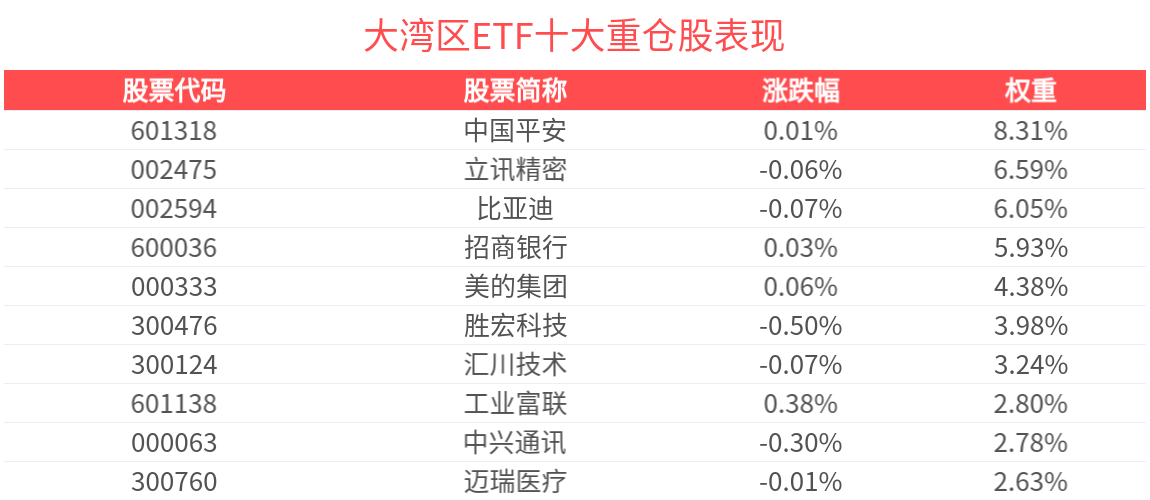
Core Viewpoint - The performance of the Zhuhai-Hong Kong-Macao Greater Bay Area Development Theme Index and its related ETF reflects the overall performance of companies benefiting from the development of the Greater Bay Area, with notable movements in specific constituent stocks [1][2]. Group 1: Index Performance - As of February 10, 2026, the Zhuhai-Hong Kong-Macao Greater Bay Area Development Theme Index (931000) increased by 0.02%, with notable gains from stocks such as Zhaochi Co. (+9.96%) and Mingyang Smart Energy (+1.56%) [1]. - The Greater Bay Area ETF (512970) showed a mixed performance, with a recent price of 1.52 yuan and a cumulative increase of 2.91% over the past week as of February 9, 2026 [1]. Group 2: Liquidity and Trading Data - The trading volume for the Greater Bay Area ETF was reported at 0.00 yuan, with an average daily trading volume of 711,700 yuan over the past month [1]. - The Sharpe ratio for the Greater Bay Area ETF over the past year was 1.41, indicating a favorable risk-adjusted return [1]. Group 3: Drawdown and Fees - The maximum drawdown for the Greater Bay Area ETF year-to-date was 5.52%, with a relative benchmark drawdown of 0.02% [1]. - The management fee for the Greater Bay Area ETF is set at 0.15%, while the custody fee is 0.05% [1]. Group 4: Index Composition - As of January 30, 2026, the top ten weighted stocks in the Zhuhai-Hong Kong-Macao Greater Bay Area Development Theme Index accounted for 44.55% of the index, with China Ping An, Luxshare Precision, and BYD among the leading constituents [2][3]. - The index includes a maximum of 50 Hong Kong market securities, 300 companies from the Shanghai-Hong Kong-Shenzhen market, and 100 mainland market securities, all selected based on their alignment with the Greater Bay Area development theme [2].



研判2026!中国宽带网络行业发展历程、产业链、固定宽带接入端口数、重点企业及未来前景:宽带网络建设持续推进,光纤接入(FTTH/O)端口占比达96.8%[图]
Chan Ye Xin Xi Wang· 2026-02-10 01:10
Core Viewpoint - The article highlights the significant growth and transformation of China's broadband network, emphasizing the shift from copper cable to fiber optic connections, and the increasing number of broadband access ports and users, reflecting a trend towards higher speed and full fiber networks [1][9]. Broadband Industry Overview - Broadband networks are defined as communication networks with bandwidth exceeding 155kbps, consisting of backbone and access networks that support various multimedia services [3]. - The industry has evolved from narrowband and dial-up internet to support high-definition video and immersive applications, with typical bandwidth increasing from 64Kbps to current levels of 1Gbps and beyond [3]. Broadband Industry Development History - The transition to fiber-to-the-home (FTTH) has been a key development, with significant upgrades in network infrastructure to meet growing user demands for high-quality digital services [3]. Current State of the Broadband Industry - The broadband network infrastructure in China is rapidly advancing, with a focus on broadband, intelligence, and integration to support diverse new business applications [5]. - As of the end of 2024, the number of fixed internet broadband access ports reached 1.202 billion, with a net increase of 66.12 million from the end of 2023 [1][9]. Key Companies in the Broadband Industry - Major players include China Telecom, China Unicom, and China Mobile, which dominate the market due to their extensive user bases and network coverage [2][10]. - Emerging companies like ZTE, FiberHome, and others are gaining traction in broadband network equipment manufacturing and services [10]. Industry Challenges - The broadband industry faces challenges such as unclear public infrastructure positioning, regional and urban-rural development imbalances, and insufficient service application diversity [12][13]. Future Trends in the Broadband Industry - The industry is expected to evolve towards "full-fiber" access and "cloud-network integration," enhancing speed and network architecture [14]. - The focus will shift from merely providing connectivity to offering comprehensive, intelligent digital service platforms, integrating various applications for enhanced user experience [15]. - There will be an emphasis on ensuring "deterministic experience" and "green low-carbon" development in network planning and operations [16].





电信ETF汇添富(560300)开盘涨1.29%,重仓股中国移动涨0.06%,中国联通涨0.41%
Xin Lang Cai Jing· 2026-02-09 13:06
Group 1 - The core viewpoint of the article highlights the performance of the Telecom ETF Huatai (560300), which opened with a gain of 1.29% at 2.040 yuan [1] - Major holdings in the ETF showed varied performance, with China Mobile up 0.06%, China Unicom up 0.41%, China Telecom up 0.35%, and China Satcom up 2.09% [1] - Notable gainers included Zhongji Xuchuang up 3.89%, Yinzhijie up 0.59%, Xinyi Sheng up 4.37%, ZTE up 1.35%, Tianfu Communication up 9.50%, and Zhongtian Technology up 4.75% [1] Group 2 - The performance benchmark for the Telecom ETF Huatai is the CSI Telecom Theme Index return [1] - The fund is managed by Huatai Fund Management Co., Ltd., with manager Wei Lizhu [1] - Since its establishment on December 5, 2023, the fund has achieved a return of 101.53%, while the return over the past month has been -5.46% [1]


A股1.88万亿研发投入开启AI元年 340万技术人才锻造新质生产力
Chang Jiang Shang Bao· 2026-02-09 06:54
Core Insights - The article highlights the significant breakthroughs in general artificial intelligence (AGI) technology and its integration across various industries, marking a transformative shift in productivity globally [1] - A-share listed companies in China are prioritizing technological innovation, particularly in AI, as a central aspect of their development strategy [1] Group 1: R&D Investment Overview - In 2024, the total R&D investment by A-share listed companies reached 1.88 trillion yuan, accounting for 51.96% of the national R&D expenditure [1] - The number of R&D personnel in these companies totaled 3.42 million, representing 11.08% of the total workforce [1] - The Shanghai Stock Exchange companies' R&D investment exceeded 1 trillion yuan, making up nearly 40% of the national corporate R&D spending [2] Group 2: Sector-Specific R&D Insights - The computer, machinery, defense, automotive, pharmaceutical, and communication sectors showed high R&D intensity, with respective contributions of 14%, 6%, 5%, 5%, 4%, and 4% [2] - The Science and Technology Innovation Board (STAR Market) saw its R&D investment reach 168.08 billion yuan in 2025, which is 2.5 times its net profit, reflecting a 6.4% year-on-year growth [2] - The Shenzhen Stock Exchange companies' total R&D investment surpassed 760 billion yuan, with 410 companies having an R&D intensity exceeding 10% [3] Group 3: Leading Companies in R&D - BYD led the A-share market with R&D expenses of 53.195 billion yuan, focusing on advancements in blade battery technology and smart driving algorithms [3] - China State Construction maintained a strong position with R&D investment of 45.459 billion yuan, focusing on smart construction and low-carbon materials [4] - Companies like ZTE, iFlytek, and Hikvision are increasingly investing in AI infrastructure and applications, with a significant portion of their R&D resources directed towards AI-related fields [4]



股市必读:中兴通讯(000063)2月6日主力资金净流出2.39亿元
Sou Hu Cai Jing· 2026-02-08 16:16
Group 1 - ZTE Corporation (000063) closed at 36.31 yuan on February 6, 2026, down 0.71%, with a turnover rate of 1.48%, trading volume of 595,300 shares, and a transaction amount of 2.168 billion yuan [1] - On February 6, 2026, the main funds had a net outflow of 239 million yuan, while retail investors had a net inflow of 203 million yuan [2][3] - ZTE Corporation's board of directors approved a resolution to invest 200 million yuan in the Guangdong-Hong Kong-Macao Greater Bay Area Venture Capital Guidance Fund as a limited partner [2][3]
通信行业25Q4前瞻:AI主线持续,国产网络提速
Shenwan Hongyuan Securities· 2026-02-08 15:11
Core Insights - The report emphasizes the dual focus on AI advancements and the deepening of domestic network capabilities in the communication industry, predicting significant growth in AI-related investments and domestic production across various segments [4][5][6] - The anticipated performance for Q4 2025 shows a robust increase in net profits for key companies, with some expected to see over 50% year-on-year growth [4][15] Group 1: AI and Network Development - The AI focus is expected to evolve around overseas mapping, optical communication trends, and changes in optoelectronic technology, with a shift from Scale out to Scale up in ecosystem development [4][5] - Domestic production trends are accelerating across four key areas: chips, cloud, network, and end devices, with significant growth potential in the chip sector due to global supply chain dynamics [4][5] - The report highlights the expected explosion in demand for optical devices and chips, driven by AI needs and the introduction of new technologies like silicon photonics [5][6] Group 2: Company Performance Predictions - Key companies are projected to experience substantial profit growth, with notable increases such as Heertai (+798%), Guangku Technology (+439%), and 5.5G Canqin Technology (+290%) [4][15] - The report outlines specific performance forecasts for major players, indicating a strong recovery in demand across various sectors, including optical communication and satellite internet [4][15] - Companies like China Mobile and ZTE are expected to benefit from increased capital expenditures directed towards AI and network investments, enhancing their revenue and profitability [6][15] Group 3: Investment Opportunities - The report identifies several investment opportunities in the AI computing network, including companies like Zhongji Xuchuang and Xinyi Technology, which are positioned to benefit from the growing demand for AI capabilities [4][6] - The satellite internet sector is highlighted as having high barriers to entry and significant long-term investment potential, with companies like Zhenyou Technology and Xinke Mobile being key players [4][6] - The IoT sector is expected to see a surge in demand driven by AI and robotics, with companies like Lexin Technology and Guanghe Technology poised for growth [10][11]




中兴通讯公布国际专利申请:“日志处理的方法、电子设备、存储介质及计算机程序产品”
Sou Hu Cai Jing· 2026-02-07 22:52
Core Viewpoint - ZTE Corporation has filed an international patent application for a method of log processing, indicating ongoing innovation efforts despite a decrease in patent filings this year [1] Group 1: Patent Application - The patent application is titled "Method for Log Processing, Electronic Device, Storage Medium, and Computer Program Product" with application number PCT/CN2025/085297, published internationally on February 5, 2026 [1] - ZTE has announced a total of 159 international patent applications this year, which represents a 27.4% decrease compared to the same period last year [1] Group 2: R&D Investment - In the first half of 2025, ZTE invested 12.665 billion yuan in research and development, showing a slight decrease of 0.48% year-on-year [1]
