Workflow
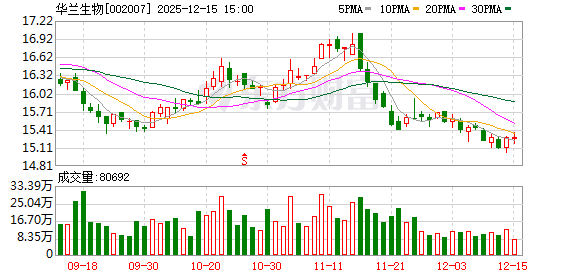
HUALAN BIOLOGICAL(002007)
icon
Search documents
中西药上市公司联合抗流感销售备货忙
Zheng Quan Ri Bao Wang· 2025-12-06 02:53
Group 1: Flu Season Overview - The flu season in China has entered a high incidence period, with flu-like cases in southern and northern provinces reaching 10.3% and 9.1% of total emergency visits, respectively, both higher than the previous week [1] - The demand for flu prevention and control has surged, prompting pharmaceutical companies to increase inventory and supply across all segments, including vaccines, diagnostics, treatments, and drug distribution [1] Group 2: Prevention Efforts - Hualan Biological Engineering Co., Ltd. has reported a significant increase in public awareness regarding flu vaccination, leading to a rise in demand orders from disease control centers compared to the same period last year [1] - The company has efficiently utilized its cold chain logistics to meet the vaccination needs across the country [1] Group 3: Diagnostic Solutions - Shengxiang Biotechnology Co., Ltd. has developed a rapid nucleic acid testing solution for respiratory infections, covering various pathogens and is suitable for outpatient, emergency, and inpatient settings [1] - The company has seen an increase in shipments of respiratory products since October and is well-prepared to meet the testing demand during the flu season [1] Group 4: Treatment Options - The industry is witnessing a collaborative approach in flu treatment, combining Western and traditional Chinese medicine [2] - Beijing Shuanglu Pharmaceutical Co., Ltd. has reported an increase in orders for its flu medications, including Oseltamivir and immune enhancers [2] - Hunan Fangsheng Pharmaceutical Co., Ltd. has noted a significant improvement in sales of respiratory products in the fourth quarter, although overall sales for the year still require monitoring [2] Group 5: Drug Distribution - From November, the sales of flu medications, particularly Oseltamivir and Mabalaoshuai (Sufuda), have seen significant growth at the pharmacy chain, Lao Bai Xing [3] - The company has initiated supply assurance plans ahead of the respiratory disease peak season, ensuring stable market supply through predictive measures and increased inventory [3] - The overall pharmaceutical industry is responding to the flu season by ramping up production and inventory, which not only meets public medication needs but also drives company performance [3]
12月3日医疗健康R(480016)指数跌0.42%,成份股人福医药(600079)领跌
Sou Hu Cai Jing· 2025-12-03 10:05
Core Points - The Medical Health R Index (480016) closed at 7284.72 points, down 0.42%, with a trading volume of 17.046 billion yuan and a turnover rate of 0.61% [1] - Among the index constituents, 23 stocks rose while 26 fell, with TeBao Bio leading the gainers at 2.85% and Renfu Pharmaceutical leading the decliners at 3.33% [1] Index Constituents Summary - The top ten constituents of the Medical Health R Index include: - WuXi AppTec (sh603259) with a weight of 13.66%, latest price at 87.62, down 2.01%, and a market cap of 261.437 billion yuan [1] - Hengrui Medicine (sh600276) with a weight of 11.00%, latest price at 60.97, down 0.25%, and a market cap of 404.670 billion yuan [1] - Mindray Medical (sz300760) with a weight of 7.57%, latest price at 199.50, down 0.56%, and a market cap of 241.882 billion yuan [1] - United Imaging Healthcare (sh688271) with a weight of 4.27%, latest price at 128.88, up 0.13%, and a market cap of 106.217 billion yuan [1] - Pianzai Shou (sh600436) with a weight of 3.48%, latest price at 171.48, up 1.33%, and a market cap of 103.457 billion yuan [1] - Aier Eye Hospital (sz300015) with a weight of 3.42%, latest price at 11.35, down 1.30%, and a market cap of 105.843 billion yuan [1] - Kelun Pharmaceutical (sz002422) with a weight of 2.59%, latest price at 34.00, down 0.03%, and a market cap of 54.334 billion yuan [1] - Xinhecheng (sz002001) with a weight of 2.42%, latest price at 24.44, up 0.20%, and a market cap of 75.114 billion yuan [1] - Fosun Pharma (sh600196) with a weight of 2.39%, latest price at 27.05, down 0.15%, and a market cap of 72.235 billion yuan [1] - Ziji Shenzhou (sh688235) with a weight of 2.27%, latest price at 275.20, down 1.59%, and a market cap of 423.995 billion yuan [1] Capital Flow Analysis - The Medical Health R Index constituents experienced a net outflow of 1.159 billion yuan from institutional investors, while retail investors saw a net inflow of 999 million yuan [1] - Detailed capital flow for specific stocks shows: - Health元 (600380) had a net inflow of 34.2431 million yuan from institutional investors [2] - Hengrui Medicine (600276) had a net inflow of 29.9909 million yuan from institutional investors [2] - Long Spring High-tech (000661) had a net inflow of 19.8154 million yuan from institutional investors [2] - The index constituents underwent adjustments, adding four new stocks and removing one [2]
2025年中国生物制剂行业政策、产业链、市场规模、研发支出、竞争格局及未来发展趋势研判:已成为医药行业增长最快的领域之一,市场规模将达到6752亿元[图]
Chan Ye Xin Xi Wang· 2025-12-03 01:24
Core Insights - The biopharmaceutical sector is one of the fastest-growing areas in the pharmaceutical industry, driven by an aging population and increased public health awareness [1][5] - China's biopharmaceutical market is projected to grow from CNY 312 billion in 2019 to CNY 587.1 billion in 2024, and is expected to reach CNY 675.2 billion by 2025, with a potential to hit CNY 1.149 trillion in the next five years [1][5][6] - Innovation remains the core driver of growth in the biopharmaceutical industry, which is capital-intensive and requires significant R&D investment [1][6] Industry Definition and Classification - Biopharmaceuticals are medical products manufactured using biological methods, aimed at replicating the activity of natural substances [2][4] - They can be categorized into vaccines, blood products, biopharmaceutical drugs, diagnostic reagents, and others, with further subdivisions based on source or mechanism of action [2] Current Industry Status - The global biopharmaceutical market is expected to grow from USD 286.4 billion in 2019 to USD 461.6 billion in 2024, with the original biopharmaceutical market projected to increase from USD 268.9 billion to USD 427.9 billion in the same period [5] - China plays a significant role in the global biopharmaceutical market, with rapid growth driven by favorable policies, increased R&D investment, and advancements in biotechnology [5][6] Industry Development Environment - Policies - The Chinese government has implemented various laws and policies to encourage biopharmaceutical R&D, including the Drug Registration Management Measures and regulations for clinical research and application of biomedical technologies [7] Competitive Landscape - The biopharmaceutical sector is recognized as a "new frontier" in the pharmaceutical industry, with major global players actively entering the market [9] - Key companies in China's biopharmaceutical industry include WuXi AppTec, Hengrui Medicine, ZhiFei Biological, BeiGene, and others, with a competitive landscape characterized by differentiated strategies [9] Future Development Trends - Market demand for biopharmaceuticals is expected to continue growing, supported by policy backing, technological advancements, and increased health awareness [10] - Domestic companies are transitioning from biosimilars to First-in-Class drugs, with examples like Hengrui Medicine's ADC drug showing superior efficacy [10][11] - Personalized medicine based on genetic testing is anticipated to become a trend, with increasing international recognition of Chinese innovative drugs [11]
防治流感,上市药企有什么“手段”?
Core Insights - The flu positive rate in China has reached nearly 45%, indicating a significant rise in flu cases, with some provinces experiencing high epidemic levels [1] - Investors are closely monitoring the supply and sales of flu medications and vaccines from listed pharmaceutical companies, which are actively preparing to meet public health needs [1] Group 1: Drug and Vaccine Supply - Multiple listed companies have reported sufficient reserves of flu medications and vaccines, ensuring stable supply capabilities [2] - Renhe Pharmaceutical has initiated a priority supply mechanism for Oseltamivir, while Dajia Weikang has adjusted production capacity based on market demand [2] - The entire supply chain, including raw material suppliers like Rhine Bio, is collaborating to ensure a robust response to market needs [2] Group 2: Vaccine Development - Companies are focusing on flu vaccines as a key area for development, with several achieving significant progress by 2025 [3] - Zhejiang Tianyuan Biopharmaceutical's quadrivalent flu vaccine "Yufening" has been approved for sale, alongside its trivalent vaccine "Yuganning" [3] - Baike Bio has innovated with a freeze-dried nasal spray flu vaccine, which has been upgraded to a liquid form for easier administration [3] Group 3: Treatment Options - Companies are building a diverse matrix of flu medications to address various symptoms and treatment needs [5] - Zhongsheng Pharmaceutical is advancing the commercialization of Anladiwei tablets for treating uncomplicated influenza, while Jichuan Pharmaceutical is developing a novel flu treatment [5] - Oseltamivir remains a commonly used antiviral, with multiple companies like Renfu Pharmaceutical and Dajia Weikang actively involved in its production [5][6] Group 4: Symptomatic Relief - Several companies are providing symptomatic treatments for flu, including Lisheng Pharmaceutical's Acetaminophen and various products from Zhenbaodao for symptom relief [6] - Companies like Foci Pharmaceutical produce a range of cold and flu medications, ensuring comprehensive treatment options for patients [6]
生物制品板块12月1日涨0.23%,禾元生物领涨,主力资金净流出2.73亿元
Core Viewpoint - The biopharmaceutical sector experienced a slight increase of 0.23% on December 1, with He Yuan Bio leading the gains. The Shanghai Composite Index rose by 0.65%, while the Shenzhen Component Index increased by 1.25% [1]. Group 1: Market Performance - The biopharmaceutical sector's performance on December 1 showed a mixed trend, with notable gainers including He Yuan Bio, which closed at 81.60 with a rise of 3.29%, and Kanghua Bio, which closed at 84.21 with a rise of 2.93% [1]. - The overall trading volume in the biopharmaceutical sector was significant, with He Yuan Bio achieving a transaction amount of 336 million yuan and Kanghua Bio reaching 351 million yuan [1]. Group 2: Individual Stock Performance - The table of individual stock performance indicates that several companies in the biopharmaceutical sector saw positive price movements, with Te Bao Bio and Wu Xi Jing Hai also recording increases of 2.81% and 2.51%, respectively [1]. - Conversely, some companies faced declines, such as Rong Chang Bio, which fell by 4.47%, and Bai Pu Sai Si, which decreased by 3.65% [2]. Group 3: Capital Flow - The biopharmaceutical sector experienced a net outflow of 273 million yuan from institutional investors, while retail investors contributed a net inflow of 178 million yuan [2]. - The capital flow data highlights that He Yuan Bio attracted a net inflow of 51.47 million yuan from institutional investors, despite a net outflow from retail investors [3].
禽流感概念下跌0.76%,主力资金净流出18股
Core Insights - The avian influenza concept sector experienced a decline of 0.76%, ranking among the top losers in the market, with major stocks like Zhongsheng Pharmaceutical hitting the limit down, while a few stocks like Wens Foodstuff and Weilan Biology saw gains of 1.80% each [1][2] Market Performance - The top-performing concept sectors included Titanium Dioxide with a gain of 4.31%, and Hainan Free Trade Zone with a gain of 3.54%, while the avian influenza sector was among the worst performers [1] - The avian influenza sector saw a net outflow of 784 million yuan, with 18 stocks experiencing net outflows, led by Zhongsheng Pharmaceutical with a net outflow of 684 million yuan [1] Stock Performance - Stocks with significant net outflows included: - Zhongsheng Pharmaceutical: -10.00% with a turnover rate of 18.78% and a net outflow of 683.65 million yuan - Yiling Pharmaceutical: -2.40% with a net outflow of 35.71 million yuan - Lianhuan Pharmaceutical: -1.79% with a net outflow of 25.69 million yuan - Hualan Biological: -6.60% with a net outflow of 18.13 million yuan [1] - Conversely, stocks with net inflows included: - Tiankang Biological: +1.26% with a net inflow of 16.52 million yuan - Shanghai Kaibao: -1.70% with a net inflow of 5.06 million yuan - Jinhai Biological: +0.16% with a net inflow of 3.82 million yuan [2]
流感「抬头」,疫苗价「雪崩」,行业协会坐不住了
3 6 Ke· 2025-11-26 13:48
Core Insights - The price war in the vaccine industry is driven by changes in supply and demand dynamics, leading to significant price reductions and financial losses for companies [2][10][15] Group 1: Price Trends - The price of a three-valent flu vaccine has dropped to 5.5 yuan, lower than the price of a cup of milk tea, indicating a drastic reduction in vaccine prices [3][7] - The price of the four-valent flu vaccine has decreased from 128 yuan to 88 yuan, with further reductions expected as competition intensifies [7][8] - HPV vaccines have also seen significant price drops, with the two-valent HPV vaccine priced at 27.5 yuan, down over 90% from previous prices [8] Group 2: Industry Response - The China Vaccine Industry Association issued an initiative to combat "involutionary" competition, urging members to avoid bidding below cost and maintain price stability [4][5] - The association's initiative aims to stabilize price expectations but may not address the underlying issue of overcapacity in the industry [3][10] Group 3: Market Dynamics - The vaccine market is experiencing overcapacity due to an influx of companies entering the sector, leading to intense competition and price wars [10][11] - Demand for vaccines is under pressure, with declining public trust in vaccines and a decrease in birth rates affecting the market for childhood vaccines [11][12] Group 4: Financial Impact - Vaccine companies have reported significant financial losses, with overall revenue for listed vaccine companies dropping by 60% and net profits declining by 113% in the first half of 2025 [12][14] - Major companies like Zhifei Biological and Wantai Biological have reported substantial revenue declines and net losses, reflecting the severe impact of the price war [12][14] Group 5: Future Outlook - Experts suggest that the industry may need to undergo a period of consolidation and restructuring, which could last five to ten years, to address the current challenges [15] - Companies are exploring international markets and differentiation strategies to navigate the competitive landscape, with some reporting significant increases in exports [15]
流感「抬头」,疫苗价「雪崩」,行业协会坐不住了
36氪· 2025-11-26 13:39
Core Viewpoint - The article discusses the ongoing price war in China's vaccine industry, driven by changes in supply and demand dynamics, leading to significant price reductions and financial losses for companies [4][15][22]. Group 1: Price War Dynamics - The price of a three-valent flu vaccine has dropped to 5.5 yuan, cheaper than a cup of milk tea, indicating a severe price competition in the vaccine market [5][11]. - The China Vaccine Industry Association has issued an initiative to combat "involution-style" competition, urging members to avoid bidding below cost and threatening penalties for violations [6][8][10]. - The price war has persisted for two years, with the association's initiative being the first formal stance against low-price competition, although it may not resolve the underlying issue of overcapacity [6][10][22]. Group 2: Supply and Demand Changes - The supply side is characterized by homogenization and overcapacity, with many companies entering the vaccine market, leading to intense competition and price wars [16][17]. - Demand is also under pressure, with declining public trust in vaccines and a decrease in vaccination rates, particularly for flu vaccines, which averaged below 4% in China from 2020 to 2023 [17][19]. - The shift in focus from childhood vaccines to adult vaccines due to declining birth rates has intensified competition in the adult vaccine market [17][19]. Group 3: Financial Impact on Companies - The financial repercussions of the price war are evident, with vaccine companies experiencing a 60% drop in revenue and a 113% decline in net profit in the first half of 2025 [19][20]. - Major companies like Zhifei Biological and Wantai Biological have reported significant losses, with Zhifei's revenue down 66.53% and net profit loss of 12.06 billion yuan [20][21]. - Despite some companies showing growth in sales, the overall trend indicates that increased revenue does not equate to increased profit due to drastic price reductions [21][22]. Group 4: Future Outlook and Strategies - Experts suggest that the industry is in a "deep cold moment," requiring a period of consolidation and restructuring that could last five to ten years [23]. - Companies are exploring two main strategies to navigate the competitive landscape: expanding into emerging markets and focusing on differentiated products to meet unmet clinical needs [24].
流感板块持续活跃,多只概念股涨停,康缘药业、新华制药等公司回应
Xin Hua Cai Jing· 2025-11-26 07:50
Group 1 - The flu season has led to a significant increase in demand for antiviral medications, with stocks related to flu treatment becoming active in the A-share market [1] - The National Disease Control Bureau reported a notable rise in flu activity, with the H3N2 subtype accounting for over 95% of cases, and an expectation for continued increases in flu cases [1] - Sales of antiviral drugs have surged, with oseltamivir sales increasing by 237% and baloxavir marboxil by 180% in Beijing over the past week [1] Group 2 - Kangyuan Pharmaceutical has established a diverse product portfolio in respiratory and infectious diseases, including products like Heat Toxicity Ning Injection, which is effective for viral infections [2] - Jichuan Pharmaceutical announced that its innovative drug, Jike Shou, has been approved for the treatment of influenza in healthy adults and is expected to be launched by July 2025 [2] - Hualan Biological has a production capacity of 100 million flu vaccine doses annually and has seen a significant increase in demand for flu vaccines, with 54 batches approved for release in 2025 [2] Group 3 - Everbright Securities noted the rising flu trend may increase public and market attention, leading to growth in demand for flu prevention and detection products [3] - Investment opportunities are suggested in flu vaccines, virus testing, cold medications, and specific antiviral drugs, as well as blood products for complex epidemic responses [3]
生物制品板块11月25日涨0.83%,金迪克领涨,主力资金净流入4087.68万元
Market Overview - The biopharmaceutical sector increased by 0.83% on November 25, with Jindike leading the gains [1] - The Shanghai Composite Index closed at 3870.02, up 0.87%, while the Shenzhen Component Index closed at 12777.31, up 1.53% [1] Top Gainers in Biopharmaceutical Sector - Jinke (688670) closed at 25.75, up 19.99% with a trading volume of 92,200 shares [1] - Hualan Biological (301207) closed at 23.33, up 11.25% with a trading volume of 250,500 shares [1] - Saiseng Pharmaceutical (300485) closed at 11.95, up 5.19% with a trading volume of 168,000 shares [1] - Other notable gainers include Bohui Innovation (300318) at 6.84 (+3.32%) and Dongbao Biological (300239) at 5.72 (+3.25%) [1] Market Capital Flow - The biopharmaceutical sector saw a net inflow of 40.88 million yuan from institutional investors, while retail investors experienced a net outflow of 147 million yuan [2] - The sector's overall capital flow indicates a strong interest from institutional investors despite retail selling pressure [2] Individual Stock Capital Flow - Jinke (688670) had a net inflow of 39.66 million yuan from institutional investors, while retail investors showed a net outflow of 13.72 million yuan [3] - Other stocks like Watson Bio (300142) and Hualan Bio (002007) also experienced significant net inflows from institutional investors, indicating positive sentiment [3] - Conversely, stocks like Dongbao Biological (300239) and Bohui Innovation (300318) faced net outflows from retail investors, suggesting mixed investor sentiment [3]