NavInfo(002405)

Search documents
四维图新:公司和北汽蓝谷在智能座舱、智能驾驶方面有合作,且均斩获订单
Mei Ri Jing Ji Xin Wen· 2025-12-17 04:07
每经AI快讯,有投资者在投资者互动平台提问:请问贵公司和北汽蓝谷有哪些合作? 四维图新(002405.SZ)12月17日在投资者互动平台表示,公司和北汽蓝谷在智能座舱、智能驾驶方面 有合作,且均斩获订单。 (文章来源:每日经济新闻) ...


四维图新:和九识智能、新石器等无人物流车公司在数据合规、车路云方面均有合作
Mei Ri Jing Ji Xin Wen· 2025-12-17 03:45
Group 1 - The company has confirmed its collaboration with autonomous logistics vehicle companies, including Jiushi Intelligent and New Stone Technology, in areas such as data compliance and vehicle-road cloud integration [1]
四维图新:投资鉴智机器人成为其第一大股东 重组后的“新鉴智”将成为旗下智驾业务平台
Mei Ri Jing Ji Xin Wen· 2025-12-16 10:25
Core Viewpoint - The company Siwei Tuxin has invested 250 million yuan to acquire a 39.14% stake in Jianzhih Robot, becoming its largest shareholder, which will enhance its autonomous driving business platform [1] Group 1: Investment Details - Siwei Tuxin invested 250 million yuan and its 100% stake in Tuxin Intelligent Driving to subscribe for shares issued by Jianzhih Robot [1] - After the investment, Siwei Tuxin holds a total of 39.14% of Jianzhih Robot's shares [1] - The investment was successfully completed on December 10 [1] Group 2: Strategic Implications - The restructured "New Jianzhih" will serve as a platform for Siwei Tuxin's intelligent driving business [1] - The company will provide Tier 2 support based on dual-platform R&D and production capabilities from Horizon and Qualcomm [1] - This transaction is expected to increase Siwei Tuxin's consolidated investment income by approximately 1.5 billion yuan [1]
四维图新:已中标北京高级别自动驾驶示范区项目,持续推进深圳等城市的车路云项目
2 1 Shi Ji Jing Ji Bao Dao· 2025-12-16 10:22
Core Viewpoint - The company, Siwei Tuxin, is one of the earliest players in the domestic vehicle-road-cloud industry and has secured a significant project in Beijing for the construction of intelligent perception equipment in high-level autonomous driving demonstration zones [1] Group 1: Company Developments - Siwei Tuxin has won the bid for the intelligent perception equipment project in the expansion of the high-level autonomous driving demonstration zone in Beijing [1] - The company is responsible for providing related equipment and services for this project [1] Group 2: Industry Progress - In addition to Beijing, vehicle-road-cloud projects are being advanced in several other cities, including Changchun, Jinan, Qingdao, Xi'an, Ordos, Baoding, Wuhan, and Shenzhen [1] - Multiple cities are currently in the stages of funding procurement and preliminary planning for similar projects [1]
四维图新(002405) - 002405四维图新投资者关系管理信息20251216
2025-12-16 10:06
Group 1: Investment Overview - Four-dimensional Map Technology Co., Ltd. invested 250 million RMB to acquire 39.14% of Intelligent Robot, becoming its largest shareholder [1] - The investment is expected to increase the consolidated investment income by approximately 1.5 billion RMB [1] - The investment was successfully completed on December 10, 2025 [1] Group 2: Product Offerings - Intelligent Robot offers a differentiated product matrix ranging from low to high-level autonomous driving solutions [2] - Key products include PhiGo Pro, PhiGo Pro+, and PhiGo Max, with capabilities such as full coverage in urban and highway scenarios and support for city NOA functions [1][2] - PhiGo Max features over 1000 Tops of computing power and is designed for future upgrades to Level 3 autonomy [1] Group 3: Technical Capabilities - The company has original capabilities in mass production-level BEV and OCC perception paradigms, ranking first in the nuScenes evaluation [2] - The OmniNWM technology significantly enhances video generation quality, control precision, and long-term stability, improving robustness in complex driving scenarios [2] - The company has shipped over 1.3 million units, showcasing its leading algorithm engineering capabilities [2] Group 4: Business Strategy and Orders - The company aims to focus on automotive intelligence, striving to become an industry leader with a dual-platform development and production capability [2] - Current orders span low, medium, and high-level products, with clients including top international car manufacturers and luxury brands [2] - Revenue from these orders is expected to improve as production progresses [2] Group 5: Vehicle-to-Everything (V2X) Developments - The company is one of the earliest players in the V2X industry in China, with significant technical reserves and experience [2] - It has won bids for projects in high-level autonomous driving demonstration zones, including the provision of intelligent perception equipment [2] - Ongoing projects are advancing in multiple cities, including Beijing, Changchun, and Jinan [2]
920576,7日大涨超200%!商业航天概念再度拉升
Di Yi Cai Jing Zi Xun· 2025-12-16 05:33
Group 1 - The commercial aerospace sector has seen a significant surge, with Tianli Composite rising nearly 26% and accumulating over 200% increase in the past seven trading days [1] - Other companies such as Hualing Cable, Tongyu Communication, and Datang Telecom have also reached their daily limit up, while Jiuzhiyang, Ruihuatai, Xincheng Technology, and Tianyin Electromechanical have all increased by over 10% [3] Group 2 - The following companies have shown notable price increases: - Tianli Composite (+25.90%, current price 87.00, net inflow 0.07 million) - Jiuzhiyang (+18.41%, current price 66.32, net inflow 0.29 million) - Ruihuatai (+14.48%, current price 23.01, net inflow 0.97 million) - Xincheng Technology (+12.37%, current price 20.89, net inflow 0.75 million) - Tianyin Electromechanical (+10.27%, current price 26.96, net inflow 0.68 million) - Hualing Cable (+10.02%, current price 19.77, net outflow -1.53 million) - Datang Telecom (+10.00%, current price 9.46, net inflow 1.88 million) - Tongyu Communication (+10.00%, current price 35.21, net inflow 2.19 million) [4]


920576,7日大涨超200%!商业航天概念再度拉升
第一财经· 2025-12-16 05:27
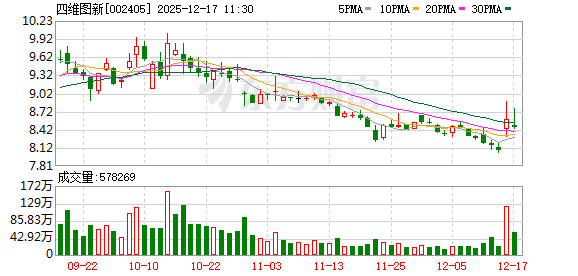
Core Viewpoint - The commercial aerospace sector has seen a significant surge, with Tianli Composite rising nearly 26% in a single day and over 200% in the past seven trading days [1][3]. Group 1: Stock Performance - Tianli Composite (code: 920576) increased by 25.90%, reaching a price of 87.00, with a net buying volume of 0.07 million [4]. - Jiuzhiyang (code: 300516) rose by 18.41%, with a current price of 66.32 and a net buying volume of 0.29 million [4]. - Ruihuatai (code: 688323) saw a gain of 14.48%, priced at 23.01, with a net buying volume of 0.97 million [4]. - Xincheng Technology (code: 300542) increased by 12.37%, with a price of 20.89 and a net buying volume of 0.75 million [4]. - Tianyin Electromechanical (code: 300342) rose by 10.27%, priced at 26.96, with a net buying volume of 0.68 million [4]. - Hualing Cable (code: 001208) increased by 10.02%, with a current price of 19.77 and a net selling volume of -1.53 million [4]. - Datang Telecom (code: 600198) rose by 10.00%, priced at 9.46, with a net buying volume of 1.88 million [4]. - Tongyu Communication (code: 002792) also increased by 10.00%, with a price of 35.21 and a net buying volume of 2.19 million [4]. - Aerospace Electronics (code: 600879) saw a rise of 7.90%, priced at 17.07, with a net selling volume of -0.53 million [4]. - Hezhong Shizhuang (code: 002383) increased by 7.57%, with a price of 10.66 and a net buying volume of 3.08 million [4]. - Siwei Tuxin (code: 002405) rose by 7.31%, priced at 8.66, with a net buying volume of 0.44 million [4]. - Fuguang Co. (code: 688010) increased by 7.28%, with a price of 31.54 and a net buying volume of 0.49 million [4]. - Laisai Laser (code: 920363) saw a rise of 6.82%, priced at 21.47, with a net selling volume of -0.96 million [4]. - Qifan Cable (code: 605222) increased by 5.86%, with a price of 18.42 and a net buying volume of 0.23 million [4].


A股商业航天股反弹
Ge Long Hui· 2025-12-16 05:25
Group 1 - The A-share market saw a rebound in commercial aerospace stocks, with companies such as Jiuzhiyang and Ruihuatai rising over 15% [1] - Other companies including Tianyin Electromechanical and Xinchen Technology increased by more than 10% [1] - Additional stocks that experienced gains include Laisai Laser, Fuguang Co., Siwei Tuxin, Qifan Cable, and China Satellite Communications [1]

这一概念再度拉升,600733回封涨停
第一财经· 2025-12-16 03:08
Core Viewpoint - The smart driving sector has seen a significant surge, with multiple companies experiencing substantial stock price increases following the announcement of L3-level conditional autonomous driving vehicle approvals in China [1][3]. Group 1: Market Performance - On December 16, smart driving concept stocks rose sharply, with companies like Beiqi Blue Valley hitting the daily limit, Wanji Technology up by 20%, and Luchang Technology also reaching the daily limit [1]. - The smart driving index (884162) recorded a value of 4928.32, reflecting a 1.37% increase, with a trading volume of 2.131 billion [2]. Group 2: Company Highlights - Wanji Technology's stock price reached 28.06, marking a 20.02% increase [2]. - Luchang Technology and Beiqi Blue Valley both saw their stock prices increase by 10.01%, reaching 28.46 and 8.24 respectively [2]. - Other notable performers included Zhejiang Shibao with a 10.04% increase, and Yunyi Electric with a 6.51% increase [2]. Group 3: Regulatory Developments - On December 15, the Ministry of Industry and Information Technology announced the first batch of L3-level conditional autonomous driving vehicle approvals, including models from Chongqing Changan Automobile and Beiqi Blue Valley Magna [3]. - Additionally, Hongmeng Zhixing has initiated L3-level conditional autonomous driving testing in Shenzhen in collaboration with local transportation authorities [3].



智能驾驶迎重磅利好,智能车ETF(159888)逆市领涨,万集科技涨停
Mei Ri Jing Ji Xin Wen· 2025-12-16 01:54
Group 1 - The core viewpoint of the news is the significant rise in the smart driving sector, driven by the recent approval of L3-level conditional autonomous driving vehicles in China, marking a transition from testing to commercial application [1] - The smart car ETF (159888) has shown a leading increase of 1% in the market, with key holdings such as Wanjie Technology, Zhejiang Sebao, and Suoling Co., Ltd. reaching their daily limit [1] - The Ministry of Industry and Information Technology announced the first batch of L3-level autonomous driving vehicle licenses, allowing two models to conduct road trials in designated areas of Beijing and Chongqing [1] Group 2 - According to China International Capital Corporation (CICC), the penetration rate of advanced autonomous driving is expected to gradually increase, with urban NOA penetration surpassing 15% and highway NOA exceeding 30% by September 2025 [1] - The smart car ETF closely tracks the CS Smart Car Index, with its constituent stocks primarily distributed across high-quality sectors such as electronics, computers, automobiles, and communications, showcasing a strong technological attribute [1] - The automotive parts ETF (562700) tracks the CSI Automotive Parts Theme Index, focusing on high-quality parts companies, with significant weight in automotive parts, automation equipment, and consumer electronics sectors [2]