
ESTUN AUTOMATION(002747)

Search documents
八个关键词,解码江苏未来产业
Xin Hua Ri Bao· 2025-09-01 06:36
Core Insights - The future industry represents a new wave of technological revolution and industrial transformation, playing a vital role in global innovation and economic landscape changes [1] - Jiangsu province is accelerating the development of future industries, showcasing significant achievements at the 2025 Jiangsu Future Industry Innovation Development Exchange Conference [1] Comprehensive Strength - Jiangsu's future industry is experiencing rapid growth, with the province's core enterprises totaling 3,112 and revenue reaching 757.8 billion yuan in 2024 [3] - Jiangsu ranks among the top in the nation for innovation capabilities, with 315,000 invention patent applications and 114,000 granted patents in the future industry sector as of June 2025 [3] Innovation Capability - Jiangsu has made breakthroughs in cutting-edge technologies, exemplified by the successful CAR-T cell therapy for multiple myeloma patients, marking a significant advancement in cell and gene technology [4] - The province is enhancing the transformation of scientific achievements into practical applications, fostering a robust innovation ecosystem [4] Patient Capital - The Jiangsu provincial strategic emerging industry mother fund has established 41 specialized funds, with a total scale of 106.9 billion yuan, providing substantial financial support to future industry enterprises [6] - Jiangsu Rural Commercial Bank has committed to providing at least 10 billion yuan in loans for future industries within a year, with an annual growth rate of no less than 20% over the next three years [6] Talent System - Jiangsu has established 38 future industry-related disciplines and 23 provincial-level key industry colleges, strengthening the talent foundation for future industry development [7] Development Trends - The "Future Industry Pilot Cluster Development" initiative has led to significant advancements, with 21 pilot areas generating substantial innovation and economic activity [8] - In Changzhou, the hydrogen energy industry has seen rapid growth, with companies achieving significant sales and developing core intellectual property [8] Application Scenarios - Jiangsu has introduced 56 landmark products in future industries, showcasing advancements in wearable technology and robotics [9][10] Regional Cooperation - The Yangtze River Delta region is enhancing collaborative innovation networks, with joint efforts in low-altitude economy development and the establishment of cross-regional industry alliances [11] Development Entities - Jiangsu has seen a surge in future-oriented enterprises, with 30 new unicorns and 119 potential unicorns, leading the nation in these categories [12] - The province has 180 high-growth enterprises with annual revenues exceeding 5 million yuan and an average growth rate of over 50% in the past two years [12]

埃斯顿2025年中报简析:营收净利润同比双双增长,公司应收账款体量较大
Zheng Quan Zhi Xing· 2025-08-29 22:41
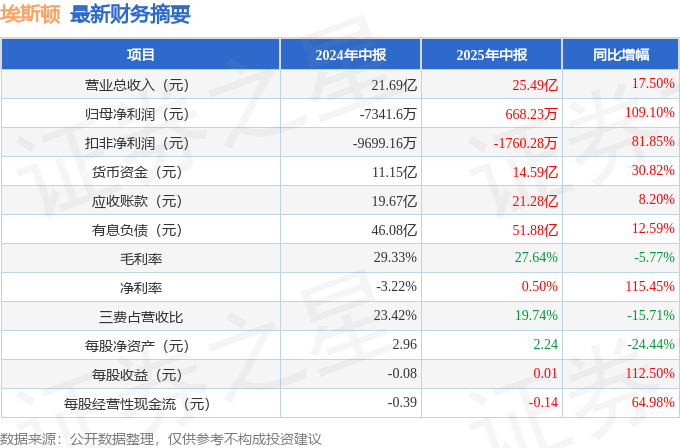
Core Viewpoint - The recent financial report of Estun (002747) shows a significant increase in revenue and net profit, indicating a positive trend in the company's performance despite challenges in cash flow and debt management [1][2][3]. Financial Performance - For the first half of 2025, Estun reported total revenue of 2.549 billion yuan, a year-on-year increase of 17.5%, and a net profit attributable to shareholders of 6.6823 million yuan, up 109.1% year-on-year [1]. - In Q2 2025, the company achieved revenue of 1.304 billion yuan, reflecting an 11.87% increase year-on-year, while the net profit attributable to shareholders was -5.9477 million yuan, showing a 92.56% improvement year-on-year [1]. - The gross margin was 27.64%, down 5.77% year-on-year, while the net profit margin was 0.5%, up 115.45% year-on-year [1]. - Total sales, management, and financial expenses amounted to 503 million yuan, accounting for 19.74% of revenue, a decrease of 15.71% year-on-year [1]. - Earnings per share were 0.01 yuan, an increase of 112.5% year-on-year, while the net asset per share was 2.24 yuan, down 24.44% year-on-year [1]. Cash Flow and Debt Management - The company has a significant amount of accounts receivable, with accounts receivable accounting for 53.08% of the latest annual revenue [1]. - The cash flow situation is concerning, with cash and cash equivalents to current liabilities at only 37.16%, and the average operating cash flow over the past three years being -0.12% of current liabilities [3]. - The interest-bearing debt ratio has reached 43.34%, indicating a high level of debt relative to assets [3]. Strategic Initiatives - Estun is pursuing a Hong Kong listing to enhance its global strategy, improve core competitiveness, and attract overseas partnerships [4]. - The funds raised from the H-share issuance will be used for expanding global production capacity, seeking strategic alliances, advancing next-generation industrial robotics technology, and improving global service capabilities [4]. - The company submitted its application for H-share listing on June 27, 2025, and is awaiting approval from relevant regulatory bodies [4].

埃斯顿(002747.SZ):2025年中报净利润为668.23万元
Xin Lang Cai Jing· 2025-08-29 01:29
Core Viewpoint - The company reported a total operating revenue of 2.549 billion yuan and a net profit attributable to shareholders of 6.6823 million yuan, ranking 53rd among disclosed peers [1] Financial Performance - Total operating revenue is 2.549 billion yuan [1] - Net profit attributable to shareholders is 6.6823 million yuan, ranking 53rd among peers [1] - Cash flow from operating activities is -119 million yuan, ranking 73rd among peers [1] Financial Ratios - The latest debt-to-asset ratio is 81.84%, ranking 79th among peers, an increase of 7.84 percentage points compared to the same period last year [1] - The latest gross profit margin is 27.64%, ranking 50th among peers, a decrease of 0.63 percentage points from the previous quarter and a decrease of 1.69 percentage points from the same period last year [1] - The latest return on equity (ROE) is 0.34%, ranking 59th among peers [1] Earnings and Efficiency - The diluted earnings per share is 0.01 yuan, ranking 59th among peers [1] - The latest total asset turnover ratio is 0.24 times [1] - The latest inventory turnover ratio is 1.12 times, a decrease of 0.02 times compared to the same period last year, representing a year-on-year decline of 1.64% [1]
埃斯顿(002747.SZ):上半年净利润668.23万元
Ge Long Hui A P P· 2025-08-28 14:56
Group 1 - The company, Estun (002747.SZ), reported a revenue of 2.549 billion yuan for the first half of 2025, representing a year-on-year growth of 17.50% [1] - The net profit attributable to shareholders of the listed company was 6.6823 million yuan [1] - The net profit attributable to shareholders after deducting non-recurring gains and losses was -17.6028 million yuan [1] - The basic earnings per share were 0.01 yuan [1]
埃斯顿:关于续聘会计师事务所的公告
Zheng Quan Ri Bao· 2025-08-28 13:35
Group 1 - The company, Estun, announced on August 28 that it plans to reappoint Zhonghui Certified Public Accountants (Special General Partnership) as its auditing firm for the fiscal year 2025, with a tenure of one year [2]
港股成新热土?卧龙电驱、埃斯顿、兆威机电纷纷冲击港股IPO
Sou Hu Cai Jing· 2025-08-28 12:04
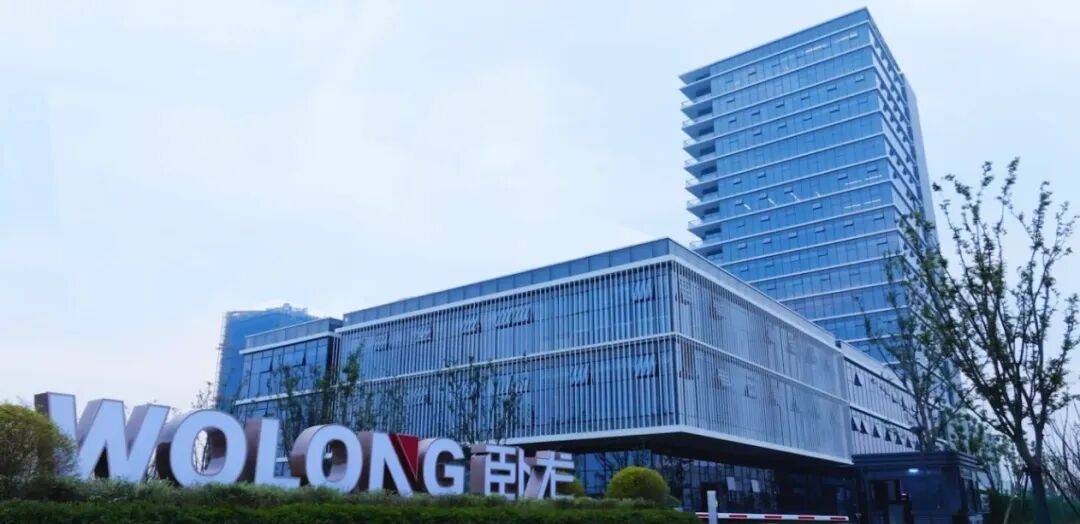
Group 1: Company Overview - Wolong Electric Drive Group Co., Ltd. has submitted an application to list on the Hong Kong Stock Exchange, with CICC, Huatai International, and GF Securities (Hong Kong) as joint sponsors [1] - As of June 30, 2023, Wolong Electric Drive reported revenue exceeding 8 billion yuan for the first half of the year [1] - According to Frost & Sullivan, Wolong Electric Drive ranks first in the global explosion-proof electric drive system solutions market with a market share of approximately 4.5% [1] Group 2: Market Trends - The Hong Kong stock market has seen a significant increase in equity financing, reaching approximately 287.98 billion HKD in 2023, a year-on-year increase of 350.56% [3] - The surge in capital has led to a focus on technology sectors such as artificial intelligence, robotics, new energy, and advanced manufacturing, with many core enterprises in these industries filing for IPOs [3][8] - Over 40 companies have successfully completed IPOs on the Hong Kong main board in the first half of 2023, with total IPO proceeds exceeding 106.7 billion HKD, a substantial increase of 688.56% compared to the same period last year [16] Group 3: Industry Dynamics - The Hong Kong Stock Exchange has optimized its rules to lower the listing threshold for technology companies, allowing unprofitable tech firms to be valued based on their technological potential [17] - The trend of "liquidity migration" is observed as companies move from the A-share market to Hong Kong due to tighter IPO regulations in China and more favorable conditions in Hong Kong [18] - Hong Kong serves as a global financial hub, providing companies with funding and brand endorsement for cross-border expansion, aligning with the trend of globalization in the industry [19]



埃斯顿(002747) - 公司章程(2025年8月)
2025-08-28 11:58
南京埃斯顿自动化股份有限公司 章 程 二〇二五年八月 | . | | --- | | ৰ্ম | | 第一章 | 总则 | 2 | | --- | --- | --- | | 第二章 | 经营宗旨和范围 | 3 | | 第三章 | 股 份 | 3 | | 第一节 | 股份发行 | 3 | | 第二节 | 股份增减和回购 | 4 | | 第三节 | 股份转让 | 6 | | 第四章 | 股东和股东会 | 6 | | 第一节 | 股东 | 6 | | 第二节 | 控股股东和实际控制人 9 | | | 第三节 | 股东会的一般规定 10 | | | 第四节 | 股东会的召集 | 14 | | 第五节 | 股东会的提案与通知 15 | | | 第六节 | 股东会的召开 | 17 | | 第七节 | 股东会的表决和决议 19 | | | 第五章 | 董事和董事会 | 23 | | 第一节 | 董事的一般规定 23 | | | 第二节 | 董事会 | 26 | | 第三节 | 独立董事 | 30 | | 第四节 | 董事会专门委员会 33 | | | 第六章 | 高级管理人员 | 35 | | 第七章 | 财务会计制度、 ...
埃斯顿(002747) - 2025 Q2 - 季度财报
2025-08-28 11:30
Financial Performance - The company reported a revenue of 500 million yuan for the first half of 2025, representing a year-on-year increase of 15%[15]. - The net profit attributable to shareholders reached 80 million yuan, up 20% compared to the same period last year[15]. - The company's revenue for the reporting period was ¥2,548,576,557.91, representing a 17.50% increase compared to ¥2,169,074,626.04 in the same period last year[21]. - Net profit attributable to shareholders was ¥6,682,264.59, a significant turnaround from a loss of ¥73,415,999.71, marking a 109.10% improvement[21]. - The company achieved a sales revenue of CNY 2.55 billion, a year-on-year increase of 17.50%, with industrial robots and intelligent manufacturing systems revenue at CNY 2.09 billion, up 26.54%[51]. - The company’s net profit attributable to the parent company was CNY 6.68 million, a year-on-year increase of 109.10%, while the net profit after deducting non-recurring gains and losses was CNY -17.60 million, an increase of 81.85%[53]. - The company reported a total comprehensive income of approximately -¥24.73 million for the first half of 2025, compared to ¥60.49 million in the same period of 2024[163]. - The company reported a net loss of CNY 131,765,752.95 for the period, compared to a loss of CNY 138,448,017.54 in the previous period[151]. Research and Development - The company plans to invest 100 million yuan in R&D for new automation technologies in the upcoming year[15]. - The company has invested approximately 10% of its sales revenue in R&D annually, with a reported R&D expenditure of 235 million yuan, representing 9.21% of total revenue[46]. - The company has filed for 156 patents that are pending approval, with a total of 597 authorized patents, including 250 invention patents as of June 30, 2025[46]. - The company has developed an AI digital platform, E-Care, for remote maintenance and intelligent management, enhancing service efficiency through IoT and cloud technology[33]. - The company emphasizes the transformation of R&D results into practical applications, adhering to a customer demand-oriented approach in product development[47]. - The company has established a unified platform for R&D, integrating resources from Germany, the UK, and the US, and has a high-level R&D team comprising international experts and top talents[46]. Market Expansion and Strategy - The company is expanding its market presence in Southeast Asia, targeting a 30% increase in sales in that region[15]. - The company is exploring potential acquisitions to enhance its product offerings and market reach[15]. - The company plans to enhance its global capacity layout and supply chain efficiency through a "Local for Global" strategy, focusing on high-value products and markets[53]. - The company has made significant strides in the industrial robot market, becoming the leading domestic brand in China, surpassing foreign brands in shipment volume for the first time in the first half of 2025[52]. Financial Management - No cash dividends or stock bonuses will be distributed for this fiscal year[5]. - The company’s cash and cash equivalents increased by 205.88% to CNY 176,628,345.88, due to improved collection of accounts receivable and a decrease in inventory[57]. - The company’s operating cash flow was CNY -119.48 million, an improvement of 65.08% year-on-year, indicating better cash management practices[54]. - The company’s total liabilities increased from CNY 8,248,197,120.32 to CNY 8,942,947,143.31, which is an increase of about 8.4%[151]. - The company’s total equity attributable to shareholders was reported at $1,892,702,145.00, showing stability in shareholder equity[169]. Risk Management - The management has identified risks related to supply chain disruptions and is implementing strategies to mitigate these risks[15]. - The company faces risks related to macroeconomic conditions and industry development, which could impact demand for automation products[79]. - Geopolitical risks may affect the company's international strategy, particularly due to trade tensions and changing market access conditions[81]. - The company acknowledges intensified market competition, particularly from international firms establishing local operations in China[82]. - The company is focused on enhancing its internal control systems and governance structures to manage risks associated with its expanding scale[83]. Governance and Compliance - The governance structure includes a board of directors with specialized committees, ensuring effective oversight and strategic direction[192]. - The company has established a multi-layer governance structure, including a strategic committee and an ESG committee, to address various operational aspects[192]. - The financial statements were approved for release on August 27, 2025, reflecting the company's adherence to regulatory requirements[193]. - The company prepares financial statements based on the going concern assumption and adheres to the relevant accounting standards issued by the Ministry of Finance[194]. - There are no significant doubts regarding the company's ability to continue as a going concern for the next 12 months[195]. Shareholder Information - The total number of common shareholders at the end of the reporting period was 124,097[139]. - Nanjing Paili Technology Co., Ltd. holds 29.40% of shares, totaling 254,894,742 shares, with 11,000,000 shares pledged[139]. - The total shares held by Wu Bo and his concerted actions with Nanjing Paili and Wu Kan amount to 367,154,475 shares, representing 42.35% of the total share capital[141]. - The company’s shareholding structure includes 84,613,300 restricted shares and 782,405,153 unrestricted shares at the end of the reporting period[132]. - The total approved external guarantee limit for the reporting period was RMB 89 million, with no actual guarantees issued[119].
埃斯顿(002747) - 半年度非经营性资金占用及其他关联资金往来情况汇总表
2025-08-28 11:28
编制单位:南京埃斯顿自动化股份有限公司 单位:万元 非经营性资金占 用 资金占用方名称 占用方与上市 公司的关联关 系 上市公司核算 的会计科目 2025 年期初占 用资金余额 2025 年半年度 占用累计发生金 额(不含利息) 2025 年半年度 占用资金的利息 (如有) 2025 年半年度 偿还累计发生 金额 2025 年半年度 期末占用资金 余额 占用形成原 因 占用性质 控股股东、实际控 制人及其附属企 业 - - - - - - - - - 非经营性占用 小计 - - - - - - - - - - 前控股股东、实际 控制人及其附属 企业 - - - - - - - - - 非经营性占用 小计 - - - - - - - - - - 其他关联方及其 附属企业 - - - - - - - - - 非经营性占用 小计 - - - - - - - - - - 总计 - - - - - - - - - - | | 南京航鼎股权投资合伙 企业(有限合伙) | 子公司 | | | | | | | 暂借款 | 非经营性往来 | | --- | --- | --- | --- | --- | --- | --- | ...
埃斯顿(002747) - 关于变更公司注册资本并修订《公司章程》的公告
2025-08-28 11:28
股票代码:002747 股票简称:埃斯顿 公告编号:2025-057 号 南京埃斯顿自动化股份有限公司 关于变更公司注册资本并修订《公司章程》的公告 本公司及董事会全体成员保证信息披露内容的真实、准确和完整,没有虚假记 载、误导性陈述或重大遗漏。 南京埃斯顿自动化股份有限公司(以下简称"公司")于 2025 年 8 月 27 日 日召开第五届董事会第十七次会议,审议并通过《关于变更公司注册资本并修订 <公司章程>的议案》,具体情况公告如下: 一、公司注册资本变更情况 本次限制性股票授予登记完成后,公司注册资本由 86,701.8453 万元增至 87,101.8453 万元;公司股本总数由 86,701.8453 万股增至 87,101.8453 万股, 由此引起的注册资本变化需要办理《公司章程》修订及工商登记变更相关手续。 二、《公司章程》修订对照表 公司于 2025 年 6 月 3 日、2025 年 6 月 20 日分别召开第五届董事会第十四 次会议、2025 年第二次临时股东大会审议通过了《关于<公司 2025 年股票期权 与限制性股票激励计划(草案)>及其摘要的议案》等相关议案。根据中国证券 监督管理 ...