Apple(AAPL)

Search documents
美股“七巨头”,本周市值蒸发超6万亿元
财联社· 2026-03-28 04:29
Group 1 - The core viewpoint of the article highlights the significant decline in the U.S. stock market, particularly among major technology companies, due to ongoing geopolitical tensions in the Middle East [3][4]. - The Nasdaq index experienced a weekly drop of 3.23%, marking the largest single-week decline since April of the previous year [4]. - The combined market value of the "Seven Giants" in the tech sector decreased by over $880 billion (approximately 61 trillion RMB) during the week [6]. Group 2 - Among the "Seven Giants," Meta had the worst performance, with a weekly decline exceeding 11%, the largest drop since October 2025, influenced by a significant court ruling regarding social media addiction [6][7]. - Google/Alphabet also faced a nearly 9% drop, following the same court ruling as Meta [7]. - Microsoft saw a decline of 6.57%, with its stock down nearly 34% from historical highs [8]. - Apple was the only tech giant to maintain an upward trend, with plans to allow more AI companies to integrate with its Siri voice assistant, to be detailed at the upcoming WWDC conference [8]. - Micron Technology recorded an overall drop of 15.53% for the week, following a strong earnings report and intensified competition from Google's new compression algorithm [8]. Group 3 - The focus of the market is shifting towards Elon Musk's next moves, with SpaceX expected to file for an IPO soon, potentially setting a new record for global IPO fundraising [10]. - Tesla is also set to announce its quarterly delivery data next week, which will be closely monitored by investors [10].






苹果悄悄上线新服务:不仅免费,还更好用!
猿大侠· 2026-03-28 04:13
Core Viewpoint - Apple has launched a new platform called "Apple Business," which integrates its previously separate enterprise services into a single solution aimed at small and medium-sized enterprises using Apple devices [1][3]. Group 1: Overview of Apple Business - Apple Business combines three existing services: Apple Business Essentials, Apple Business Manager, and Apple Business Connect into one platform, set to launch on April 14, covering over 200 countries and regions [3]. - The platform serves as a comprehensive "enterprise IT infrastructure," offering device management, corporate email, internal directories, and app distribution, all integrated into the system [4]. Group 2: Key Features of Apple Business - **Zero-Touch Deployment**: This feature allows administrators to create preset configurations for different groups, enabling automatic setup of devices without IT personnel involvement. Employees simply log in with their company account, and all configurations are downloaded automatically [6]. - **App and Permission Management**: Apple Business supports group-based app distribution, allowing administrators to bulk purchase apps and control which groups can install them. Employees only see company-approved apps in their enterprise app store [7]. - **Integrated Email, Calendar, and Directory**: Apple Business includes built-in enterprise-level email, calendar, and directory services, eliminating the need for third-party solutions like Google Workspace or Microsoft 365 [10]. - **API and Large-Scale Deployment**: For larger companies with IT teams, Apple Business offers management APIs for bulk user creation, device configuration, and audit log retrieval, streamlining the management process [11]. Group 3: Data Security and Cost Implications - Apple Business ensures data security and privacy by storing all work-related data in an encrypted area of the managed Apple account, allowing companies to remotely wipe data without affecting personal information when an employee leaves [13]. - The most surprising aspect is that Apple Business is free, significantly reducing IT management costs for small companies to zero. This marks a strategic shift for Apple from being merely a hardware supplier to becoming a foundational service provider for enterprise IT [14]. Group 4: Conclusion - Apple Business represents a free, built-in enterprise IT infrastructure that allows small companies to adopt Apple devices without incurring additional costs, while larger companies can manage thousands of devices uniformly [15]. - Simplifying tools enables companies to focus on core activities such as customer service, product development, and value creation [16].


iPhone上最好的相机App,是怎么和苹果决裂的?
创业邦· 2026-03-28 01:10
Core Viewpoint - Apple has significantly invested in iPhone imaging over the past decade, emphasizing that for most users, the iPhone serves as their primary camera. However, the default iOS camera app lacks advanced features needed by professional users, creating a gap that third-party apps like Halide aim to fill [4][6][8]. Group 1: Investment in Imaging Technology - Apple has consistently communicated that the iPhone is sufficient for most users' photography needs, but the default camera app is limited to a "point-and-shoot" mode, which may not satisfy advanced users [6][8]. - The iPhone Pro series has seen continuous upgrades in imaging specifications, making the limitations of the default camera app more apparent for users seeking manual controls [8][9]. Group 2: Halide's Role and Market Position - Halide, developed by Lux Optics, addresses the gap left by the default camera app by offering professional features such as RAW shooting, manual focus, and histograms, while maintaining an intuitive design [9][10]. - Halide Mark II is currently the most popular paid camera app on the App Store, priced at $59.99 for a one-time purchase or $19.99 per year for a subscription, indicating its quality in a market dominated by free apps [10]. Group 3: Lux Optics and Acquisition Talks - Lux Optics was founded in 2016 by Ben Sandofsky and Sebastiaan de With, who aimed to create a camera app that replicates the tactile experience of traditional cameras on the iPhone [12][14]. - Apple has shown strong support for Lux, with Halide receiving multiple awards and recognition as a model developer in the App Store ecosystem [18][21]. - Discussions about acquiring Lux Optics by Apple were reported, with the expectation that integrating Halide into the native camera app would enhance iPhone's capabilities [21][24]. Group 4: Legal Disputes and Internal Conflicts - Following the failed acquisition talks, a lawsuit was filed by Sandofsky against de With, alleging financial misconduct and breach of trust, including unauthorized personal expenses charged to the company [26][30][31]. - De With's subsequent hiring by Apple raised concerns about potential intellectual property theft and the implications of direct competition between Lux and Apple [34][40]. Group 5: Developer Community Reactions - The developer community has expressed mixed feelings regarding de With's transition to Apple, with some viewing it as a loss for Lux and others as an opportunity for Apple to innovate [42][46]. - The ongoing situation highlights a broader concern among developers about Apple's tendency to absorb third-party functionalities into its ecosystem, raising questions about the future of independent developers [47][50][57]. Group 6: Future Directions - Despite the internal conflicts, Lux continues to develop Halide, with plans to introduce features that challenge Apple's camera algorithms, aiming to provide users with a more personalized photography experience [59][60]. - The impact of de With's design philosophy on Apple's ongoing UI redesign remains uncertain, as the company navigates its internal changes [64].
娃哈哈停产了?知情人士回应;九号公司与泡泡玛特达成合作,联名电动车将于4月推出;雷军介绍小米机器人团队在灵巧手领域新进展丨邦早报
创业邦· 2026-03-28 01:10
Group 1 - Apple is offering stock incentives worth $200,000 to $400,000 to iPhone hardware designers to prevent them from leaving for AI startups like OpenAI, with the bonuses vesting over four years [3] - OpenAI has successfully recruited dozens of engineers from Apple in 2023 and plans to expand its workforce from 4,500 to 8,000 by the end of 2026 [3] - The bonuses offered by Apple are significantly lower than those provided by AI companies, which reportedly offer around $1 million annually in stock incentives [3] Group 2 - Wahaha has temporarily halted 70% of its production lines, including those for its popular bottled water, with a planned resumption of operations around April 2 [4] - A source close to Wahaha indicated that the production stoppage is due to scheduling and inventory issues rather than a sign of instability [4] Group 3 - Ninebot announced a collaboration with Pop Mart to create a co-branded electric vehicle aimed at young consumers, set to launch in April [4] Group 4 - Xiaomi's robotics team has made advancements in dexterous hands, completing 150,000 grip cycle reliability tests, and aims for near 100% operational success in long-term deployments [6][7] Group 5 - BYD reported a revenue of 803.96 billion yuan for 2025, a year-on-year increase of 3.46%, with net profit expected to decline by 19% to 32.62 billion yuan [10] - The revenue from automotive and related products was approximately 648.65 billion yuan, up 5.06%, while revenue from mobile components and assembly decreased by 2.74% to about 155.24 billion yuan [10] Group 6 - Li Auto has initiated a stock repurchase plan, allowing up to $1 billion in buybacks by March 31, 2027, with the execution of the plan to be based on market conditions [10] Group 7 - Cha Bai Dao reported a total revenue of 5.395 billion yuan for 2025, a 10% increase, with net profit rising 71% to 820 million yuan [18] - The company expanded its store count to 8,621, with a significant portion in lower-tier cities, and launched 117 new products during the year [18] Group 8 - OpenAI's ChatGPT advertising business achieved an annualized revenue of over $100 million within six weeks of its pilot launch in the U.S., with plans to expand to more countries [19] Group 9 - Zero Run Auto launched its A10 model globally, priced from 65,800 to 86,800 yuan, featuring advanced driving assistance and targeting nearly 40 countries [23][24] - IM Motors has opened pre-sales for its LS8 SUV, with prices ranging from 259,800 to 309,800 yuan, featuring advanced technology and AI capabilities [26]



手机全面涨价,这回有得等了
芯世相· 2026-03-28 01:07
Core Viewpoint - The recent price increases in smartphones are primarily driven by the soaring costs of storage chips, which have seen significant price hikes due to increased demand from AI infrastructure and supply constraints from major manufacturers like Samsung, SK Hynix, and Micron [5][6][7]. Group 1: Price Increases in Smartphones - OPPO initiated the first wave of price adjustments for several models, followed by vivo and other brands, indicating a collective trend of price hikes across the smartphone industry [5][6]. - The price adjustments are particularly pronounced in mid-range and low-end models, with many devices seeing increases of 100 to 1000 yuan [9][17][18]. - The cost structure of smartphones reveals that storage chips represent a significant portion of the overall bill of materials (BOM) cost, especially in lower-end devices, making them more vulnerable to price fluctuations [10][14]. Group 2: Impact of Storage Chip Prices - The recent surge in storage chip prices has exposed the weaknesses in the business model of mid-range smartphones, where cost elasticity is low [10][14]. - For example, the storage cost for an iPhone 17 Pro Max is approximately 300 yuan, which is negligible compared to its overall price, while for a mid-range device priced around 2000 yuan, the storage cost can account for as much as 43% of the BOM [14][15]. - The current market dynamics suggest that brands with a higher proportion of low-end models will face greater pressure due to rising costs [15][16]. Group 3: Historical Context and Market Dynamics - The last major storage cycle from 2016 to 2018 saw similar conditions, leading to significant market consolidation and the exit of many second-tier brands [21][27]. - The absence of a buffer layer provided by these second-tier brands means that current price increases are more likely to be passed on to consumers, as leading brands have less room to maneuver [28][29]. - The concentration of power among storage chip manufacturers has increased, with the top three companies controlling 99% of the market, reducing the bargaining power of smartphone manufacturers [29][32].



昨夜,全线大跌!科技巨头,突遭猛烈抛售!
证券时报· 2026-03-28 00:28
Market Overview - Major U.S. stock indices experienced significant declines, with the Dow Jones down 1.73% to 45166.64 points, the S&P 500 down 1.67% to 6368.85 points, and the Nasdaq down 2.15% to 20948.36 points [2] - This week, the Dow Jones fell 0.9%, the S&P 500 dropped 2.12%, and the Nasdaq decreased by 3.23% [2] Technology Sector Performance - Large tech stocks faced a severe sell-off, with Meta and Amazon dropping nearly 4%, Nvidia, Alphabet A, Microsoft, and Tesla falling over 2%, and Apple declining over 1% [3] - The cumulative market value of the "Big Seven" tech stocks decreased by over $800 billion this week, with Meta down over 11%, Alphabet A down nearly 9%, and Microsoft down over 6% [3] Consumer Confidence - The U.S. consumer confidence index fell sharply by 6% in March, reaching its lowest level since December 2025, influenced by rising fuel prices and financial market volatility [5][6] - The final consumer confidence index for March was 53.3, down from 56.6 in February and 57.0 in March of the previous year [6] - Expectations for fuel prices surged fivefold compared to February, while personal financial outlooks dropped by 10% [6] Economic Outlook - Approximately 61% of consumers expect unemployment to rise in the next year, an increase from 58% in February, reflecting a 14% drop in short-term economic outlook [7] - Inflation expectations rose from 3.4% in February to 3.8% in March, marking the largest monthly increase since April 2025 [8] Oil Market Dynamics - Crude oil prices surged, with U.S. oil rising 7.09% to $101.18 per barrel and Brent oil increasing by 4.32% to $106.29 per barrel [10] - The geopolitical tensions in the Middle East, particularly the closure of the Strait of Hormuz by Iran, pose significant threats to oil supply, leading to concerns about a potential repeat of the 1970s stagflation [12]




'Magnificent 7' stocks wipe more than $850 billion in value as stock market sell-off hits AI winners hard
Yahoo Finance· 2026-03-27 21:39
Market Overview - Big Tech stocks experienced significant declines, with the "Magnificent Seven" losing over $850 billion in market value in the past week due to rising inflation fears and company-specific challenges [1] - Meta (META) had its worst week since October 2025, dropping more than 11% following a major social media lawsuit loss [1] Company-Specific Developments - A jury found Meta and Google (GOOG, GOOGL) negligent for not protecting young users, contributing to Alphabet's nearly 9% decline for the week [2] - Microsoft (MSFT) fell 6.5%, on track for its worst quarter since 2008, as software stocks faced significant pressure [2] - Nvidia (NVDA) and Amazon (AMZN) both saw declines of approximately 3%, while Tesla (TSLA) dropped nearly 2% over the week [2] Semiconductor Sector - Semiconductor stocks saw a rebound on Friday, but Sandisk (SNDK) and Micron Technology (MU) ended the week lower after substantial losses on Thursday [3] - The sell-off in semiconductor stocks was triggered by Alphabet's new research on an algorithm aimed at reducing AI memory usage, which unsettled the sector [3] Stock Performance Summary - The only stock among the Magnificent Seven to end the week slightly higher was Apple (AAPL), following news of plans to expand Siri's capabilities to compete with other AI services [5] - Growth stocks were negatively impacted by rising bond yields and expectations of persistent inflation, leading investors to anticipate that the Federal Reserve may not cut rates this year as previously expected [4]
Is Fidelity's FTEC a Better Tech ETF Than State Street's XLK?
The Motley Fool· 2026-03-27 20:32
Core Viewpoint - The State Street Technology Select Sector SPDR ETF (XLK) and Fidelity MSCI Information Technology Index ETF (FTEC) provide low-cost access to U.S. technology stocks, with XLK being larger and more concentrated while FTEC offers broader exposure to more companies [1][2]. Cost & Size - Both XLK and FTEC have an expense ratio of 0.08% [3][4]. - As of March 24, 2026, XLK has a 1-year return of 25.1% and a dividend yield of 0.6%, while FTEC has a 1-year return of 24.1% and a dividend yield of 0.4% [3][4]. - XLK has assets under management (AUM) of $87.7 billion compared to FTEC's $16.0 billion [3]. Performance & Risk Comparison - Over the past five years, XLK has a max drawdown of -33.56% and has grown $1,000 to $2,105, while FTEC has a max drawdown of -34.95% and has grown $1,000 to $2,057 [5]. - Both funds exhibit significant volatility typical of the technology sector [5]. Portfolio Composition - FTEC tracks the MSCI USA IMI Information Technology 25/50 Index and holds 294 stocks, with top positions in Nvidia (18.25%), Apple (15.41%), and Microsoft (10.07%) [6]. - XLK targets the S&P 500's technology sector with 73 stocks, where its top three holdings (Nvidia, Apple, Microsoft) comprise 38.27% of assets [7]. Investor Implications - XLK's larger AUM provides greater liquidity for active traders, while FTEC's 294 holdings offer more diversification and exposure to smaller companies with high growth potential [10][11]. - XLK is more suitable for income-focused investors due to its higher dividend yield, while FTEC appeals to those seeking broader tech exposure [11].

Meta Funds Gas Plants to Power Mega Louisiana Data Center | Bloomberg Tech 3/27/2026
Youtube· 2026-03-27 19:58
Group 1: Market Overview - The NASDAQ 100 has fallen into correction territory, indicating a decline of 10% from recent highs, driven by geopolitical tensions and economic volatility [2][8][49] - Technology stocks are under pressure due to rising oil prices and inflation concerns, particularly related to the ongoing war in Iran [8][10][12] Group 2: Meta's Energy Initiatives - Meta is constructing seven new natural gas energy pumps to power its data center in Louisiana, expected to deliver 5.2 gigawatts of electricity [4][5] - This project represents a significant increase in energy capacity, with a 33-fold increase from previous levels, and aims to support the growing demands of AI infrastructure [6][11] - Meta is committed to covering electricity costs to avoid passing them onto local residents, amidst scrutiny of data center operations [7][32] Group 3: Anthropics IPO Plans - Anthropic, an AI company, is reportedly looking to go public as soon as October, with potential to raise around $60 billion [22][24] - The competitive landscape includes other major players like SpaceX, with expectations that multiple companies may pursue IPOs later this year [23][26] - Investors are particularly interested in how these companies will manage their substantial capital expenditures in the AI sector [25][68] Group 4: Regulatory Environment - President Trump has established a new council focused on AI policy, aiming for a unified regulatory framework across states to facilitate innovation [30][31] - The council's framework includes principles for child safety and cost protections for electricity related to data centers, reflecting a bipartisan approach to AI legislation [33][35] - The ongoing discussions highlight the need for a cohesive strategy to address the rapid pace of technological advancements and regulatory challenges [41][42]

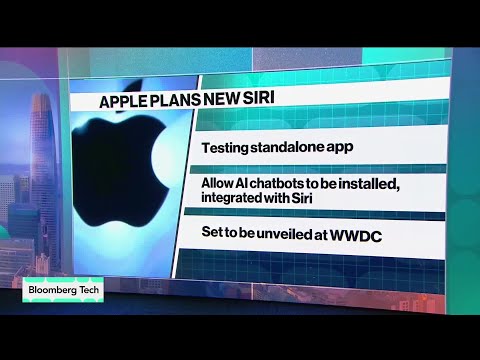
Apple Goes Chatbot Agnostic in New AI Strategy
Bloomberg Technology· 2026-03-27 18:57
Apple plans to open Siri to outside artificial intelligence assistants, a major move aimed at bolstering the iPhone as an AI platform. Bloomberg’s Mark Gurman discusses what’s driving the move with Ed Ludlow on “Bloomberg Tech.” -------- Like this video? Subscribe to Bloomberg Technology on YouTube: https://www.youtube.com/channel/UCrM7B7SL_g1edFOnmj-SDKg Watch the latest full episodes of "Bloomberg Technology" with Caroline Hyde and Ed Ludlow here: https://www.youtube.com/playlist?list=PLfAX25ZLrPGTygCwn55 ...