Apple(AAPL)

Search documents
小红书正研发视频剪辑类AI产品OpenStoryline;库克称AI将是苹果未来主要支柱丨AIGC日报
创业邦· 2026-02-10 00:09
Group 1 - Apple CEO Tim Cook stated that artificial intelligence (AI) will become a core pillar for the company's future, emphasizing the need for meaningful user experiences rather than just adding AI as a feature [2] - Apple plans to launch entirely AI-driven new products and services, addressing criticisms regarding its current AI capabilities and competition [2] - The user feedback for Apple Intelligence has been less than ideal, with basic functionalities not meeting expectations, leading to reliance on OpenAI's ChatGPT for more complex tasks [2] Group 2 - Alibaba's new model Qwen3.5 is expected to be released soon, featuring a new mixed attention mechanism and potential visual understanding capabilities [2] - Qwen3.5 may include at least 2 billion dense models and 35 billion-A3B MoE models, with indications that it will be open-sourced around the Spring Festival [2] - Xiaohongshu is developing an AI video editing product called OpenStoryline, which is currently in testing and may be open-sourced in the future [2] Group 3 - Game Science CEO Feng Ji praised the capabilities of ByteDance's Seedance 2.0, highlighting a significant leap in AI's ability to understand and integrate multimodal information [2] - He noted that the production costs for general videos will no longer follow traditional film industry logic, leading to unprecedented inflation in the content sector [2] - Feng Ji expressed concerns about the proliferation of fake videos and trust issues, while also expressing pride that Seedance 2.0 originates from China [2] Group 4 - New York State is set to discuss two significant AI-related bills, one focusing on the use of AI in news content and the other proposing a pause on new data center construction due to energy pressures [3] - The proposed "New York News Basic AI Requirements Bill" mandates that news content primarily created by AI must be clearly labeled and undergo human editorial review before publication [3] - The second bill, S9144, aims to implement a three-year pause on new data center approvals, citing a tripling of large electricity access requests and an expected increase of at least 10GW in electricity demand over the next five years [3]



马斯克,宣布大消息!科技股大涨!白宫:正下调对这国“对等关税”
Xin Lang Cai Jing· 2026-02-10 00:08
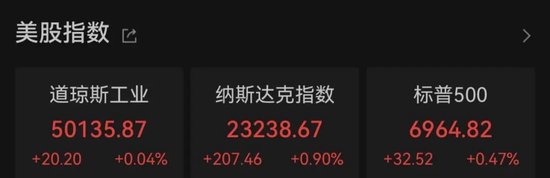
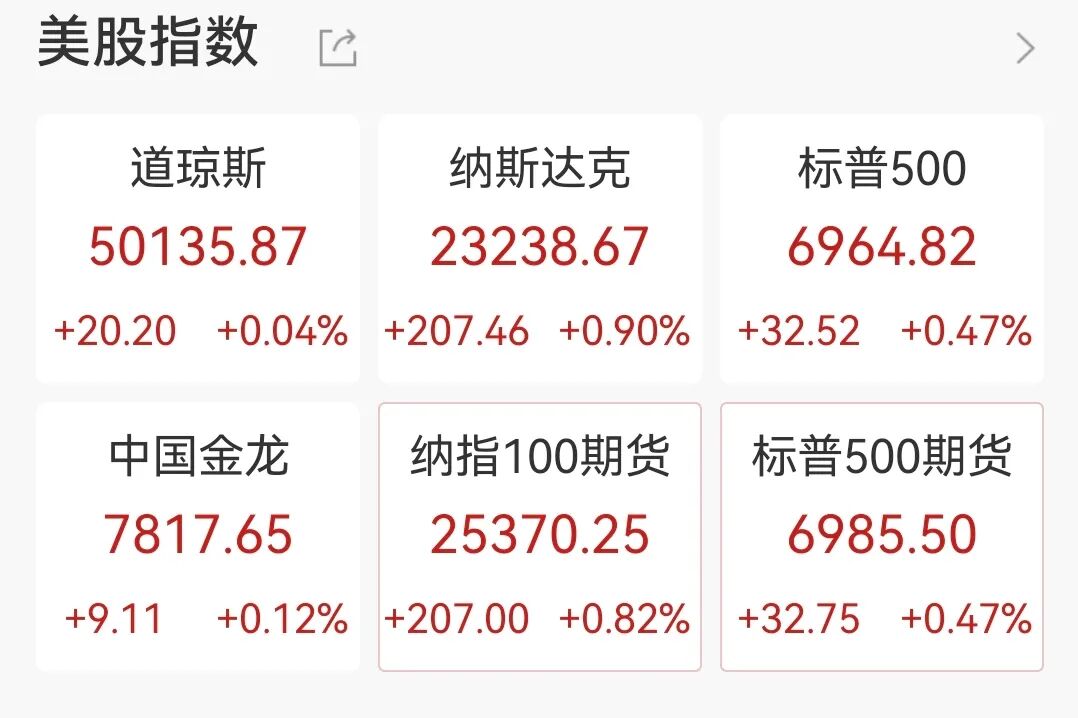
Market Performance - US stock market closed higher with technology stocks leading the gains, as the Dow Jones Industrial Average reached a new all-time high [1][16] - The Dow Jones increased by 20.20 points, or 0.04%, closing at 50,135.87 points; the Nasdaq rose by 207.46 points, or 0.90%, to 23,238.67 points; and the S&P 500 gained 32.51 points, or 0.47%, ending at 6,964.82 points [3][18] Technology Sector - Major technology stocks saw significant increases, with Microsoft rising over 3%, Nvidia and Facebook up more than 2%, and Tesla increasing by over 1% [7][22] - Alphabet Inc. plans to issue $20 billion in bonds, exceeding previous expectations of $15 billion, and will also issue bonds in Switzerland and the UK for the first time [9][23] - The bond issuance attracted over $100 billion in subscriptions, marking one of the strongest demand cases in corporate bond issuance history [9][24] - Microsoft, Amazon, Meta, Oracle, and Alphabet are planning to invest over $600 billion in capital expenditures by 2026 [9][24] Commodities - Oil prices increased, with Brent crude oil futures rising by $0.99, or 1.45%, to $69.04 per barrel, and West Texas Intermediate (WTI) crude oil futures up by $0.81, or 1.27%, to $64.36 per barrel [11][26] - Gold prices rebounded above $5,000, with spot gold rising by 2.01% to $5,064.10 per ounce, and COMEX gold futures increasing by 2.04% to $5,081.50 per ounce [11][26] - Gold mining stocks performed strongly, with significant gains for companies such as Coeur Mining, Pan American Silver, and Kinross Gold [11][27] Space Industry - SpaceX, led by Elon Musk, is shifting its focus to building a "self-sustaining city" on the Moon, aiming for completion within a decade, while still planning to establish a city on Mars in the future [29][30] - SpaceX's acquisition of AI company xAI is expected to support its plans for establishing data centers in space, with a potential IPO in June 2024 aiming to raise up to $50 billion [30]






甲骨文涨9.6%,AMD涨3.6%,博通涨3.3%,微软涨3.1%,英伟达涨2.5%
财联社· 2026-02-09 23:35
Core Viewpoint - The U.S. stock market experienced a collective rise, led by technology stocks, with the Nasdaq increasing nearly 1%, the Dow Jones slightly rising to a historic high, and the S&P 500 up by 0.5%, nearing its all-time high [1][3]. Group 1: Market Performance - The Dow Jones index closed up 0.04% at 50,135.87 points, the S&P 500 rose 0.47% to 6,964.82 points, and the Nasdaq increased by 0.90% to 23,238.67 points [3]. - Major technology stocks showed strong performance, with Nvidia rising by 2.5%, Broadcom by 3.3%, and Oracle's stock surging by 9.6% [3][5]. - The market had previously faced a significant sell-off, primarily driven by declines in technology stocks, particularly software stocks, and Bitcoin experienced a sharp drop before slightly recovering [3][4]. Group 2: Investor Sentiment - Following a strong rebound on the previous Friday, the Dow Jones index made history by surpassing 50,000 points for the first time [4]. - CFRA Research's Chief Investment Strategist, Sam Stovall, highlighted investor uncertainty regarding whether the recent momentum would continue or if it was merely a temporary rebound [4]. - Stovall noted that the forward price-to-earnings ratio for technology stocks has shifted from a 17% premium to an 8% discount compared to the average over the past five years, suggesting it may not be time to exit technology stocks completely [5]. Group 3: Individual Stock Movements - Among large-cap technology stocks, Nvidia rose by 2.50%, Microsoft by 3.11%, and Meta by 2.38%, while Apple fell by 1.17% and Amazon by 0.76% [5]. - Chinese concept stocks showed mixed results, with the Nasdaq Golden Dragon China Index up 0.12%, Alibaba up 0.30%, and NIO down 2.98% [5].



凌晨,全线大涨!美联储,重磅发声!
券商中国· 2026-02-09 23:29
科技股全线反攻。 隔夜美股市场,科技股反弹提振市场情绪,纳指大涨近1%,道指再创历史新高。以黄金、白银为首的贵金属 全线大涨,COMEX黄金期货涨超2%,COMEX白银期货大涨8%。 有分析指出,美元持续走弱为风险资产和黄金、白银提供了额外支撑。美东时间2月9日,美元大幅走弱,衡量 美元对六种主要货币的美元指数大跌0.84%,跌破97关口。 对此,美国亚特兰大联储主席博斯蒂克表示,他开 始看到人们对美元信心产生质疑。美联储理事米兰则表示,美元目前的这种程度的下跌,还没有对货币政策产 生实质性的影响。 全线大涨 美东时间2月9日,美股三大指数低开高走,道指再创历史新高,标普500指数逼近历史高点。截至收盘,道指 涨0.04%,标普500指数涨0.47%,纳指涨0.90%。 美股大型科技股多数走强,甲骨文大涨超9%,微软、博通、AMD大涨超3%,英伟达、Meta涨超2%,特斯拉 涨超1%,谷歌小幅收涨;苹果跌超1%,亚马逊小幅收跌。 消息面上,甲骨文大幅飙涨主要受到D.A. Davidson上调评级的提振。D.A.Davidson分析师吉尔·卢里亚认为, 市场对甲骨文的抛售可能已过度。 谷歌母公司Alphabet ...


凌晨,全线大涨!美联储,重磅发声!
Xin Lang Cai Jing· 2026-02-09 23:28
Market Overview - The technology sector rebounded significantly, with the Nasdaq rising nearly 1% and the Dow Jones reaching a new historical high [1][8] - Precious metals, including gold and silver, saw substantial gains, with COMEX gold futures up over 2% and silver futures up 8% [1][3] - The weakening of the US dollar provided additional support for risk assets and precious metals, with the dollar index dropping 0.84% to below 97 [1][7] Technology Sector Performance - Major US stock indices opened lower but closed higher, with the Dow Jones up 0.04%, S&P 500 up 0.47%, and Nasdaq up 0.90% [2][9] - Notable gains in large tech stocks included Oracle rising over 9%, Microsoft, Broadcom, and AMD rising over 3%, while Nvidia and Meta rose over 2% [2][9] - Oracle's surge was attributed to an upgrade from D.A. Davidson, which suggested that the market's sell-off may have been excessive [2][9] Cloud Computing and Capital Expenditure - Analysts believe that capital expenditures for large-scale cloud providers still have upward potential, with Morgan Stanley noting accelerated revenue growth for GCP, AWS, and Azure [2][10] - The expected earnings growth for the technology sector is projected at 32% for 2026 and 20% for 2027, compared to 13% and 16% for the S&P 500 [3][10] Precious Metals and Oil Prices - The precious metals market experienced a full rebound, with COMEX gold futures at $5084.2 per ounce and silver futures at $83.05 per ounce [3][10] - Oil prices also strengthened, with WTI crude futures up 1.27% to $64.36 per barrel and Brent crude up 1.45% to $69.04 per barrel [3][10] Geopolitical Context - The US issued guidelines for ships passing through the Strait of Hormuz, advising US-flagged vessels to avoid Iranian waters amid rising tensions [3][11]
道指再创新高,美股科技股反弹,甲骨文飙涨9%,金银、原油大涨
2 1 Shi Ji Jing Ji Bao Dao· 2026-02-09 23:15
Market Performance - The US stock indices all closed higher, with the Nasdaq rising nearly 1%, the Dow Jones slightly up, and the S&P 500 increasing by 0.5%, nearing its historical high [1] - The Dow Jones closed at 50,135.87, up by 20.20 points (0.04%), the Nasdaq at 23,238.67, up by 207.46 points (0.90%), and the S&P 500 at 6,964.82, up by 32.52 points (0.47%) [2] Technology Sector - Major US tech stocks rebounded after a recent sell-off triggered by AI concerns, with the tech giants index rising by 1.02% [2] - Microsoft saw an increase of over 3%, while Nvidia and Facebook rose by over 2%. However, Apple and Amazon experienced declines of over 1% and 0.76%, respectively, marking Amazon's fifth consecutive day of decline [2] Chip Sector - The chip stock index increased by 1.9%, with Oracle rising over 9%, and Microsoft and Broadcom up by over 3%. In contrast, Micron Technology and SanDisk fell by nearly 3% [3] Commodity Market - Gold prices continued their upward trend, with spot gold rising nearly 2% to surpass $5,050. COMEX gold increased by over 2%, while spot silver rose by over 7% and COMEX silver by 8% [6][7] - Crude oil prices rose by over 1%, influenced by new US guidelines for ships passing through the Strait of Hormuz [6] Employment and Inflation Data - Upcoming US non-farm payroll and CPI reports are expected to provide important insights into the Federal Reserve's monetary policy direction, with potential for significant market volatility if the data indicates "weak employment + stubborn inflation" [8] - Current probabilities for Federal Reserve interest rate changes indicate a 17.7% chance of a 25 basis point cut by March and a 50.4% chance of a 25 basis point cut by June [8]



Market Open: Not quite yesterday’s +2% rocket, but Oz in for another advance | Feb 10
The Market Online· 2026-02-09 21:34
Market Overview - Australian shares continue to rise, with a +0.4% advance in futures following a +1.9% increase the previous day, supported by a rebound in Wall Street technology stocks [1][3] - The Nasdaq index is up +0.9%, while the S&P 500 and Dow Jones both increased by +0.5%, indicating a recovery in market sentiment after a previous decline [3] Company News - Electro Optic Systems (ASX:EOS) is under scrutiny as it prepares to respond to a short sell report from Grizzly Research, with the market expecting the release before market open [4] - Elevra Lithium (ASX:ELV) has signed a Memorandum of Understanding (MOU) to supply Mangrove Lithium with spodumene concentrate, with expectations to supply up to 144,000 tonnes per year [4] - PLS Group (ASX:PLS) has secured a multi-year offtake agreement with Canmax for 150,000 tonnes of spodumene at a price of US$1,000 per tonne [5] - Eastern Gas Corp (ASX:EGA) is set to debut on the ASX, focusing on oil and gas exploration in the Cooper and Surat Basin, with an initial market capitalization of $5.5 million [5] - Compushare (ASX:CPU) and Amotiv (ASX:AOV) are also expected to report earnings, with CSL (ASX:CSL) leading a series of quarterly reports [5][6] Commodity Prices - The Australian dollar is trading at US 70.9 cents [7] - Iron ore prices have increased by nearly +1%, currently at $99.80 per tonne [7] - Brent crude oil has risen by +1.5%, now priced at $69.06 per barrel [7] - Gold is trading at $5,095 per ounce, while US natural gas futures have decreased by -8% to $3.14 per gigajoule [7]
Coons: Volatility Going Nowhere, GOOGL, AAPL & CRWD Next AI Winners
Youtube· 2026-02-09 20:00
Market Outlook - The market is expected to experience volatility for the next several months due to ongoing policy changes and uncertainty surrounding the Federal Reserve's actions [2][3][4] - Despite the volatility, the consumer remains resilient, and the labor market shows strength, indicating that a recession may not be imminent [6][7] - Earnings for the S&P 500 are projected to remain strong, suggesting a stock pickers market where individual company performance will be crucial [7][8] Consumer Behavior - The high-end consumer market, particularly brands like LVMH, continues to thrive, driven by international buyers and sustained spending [10][11][13] - The middle segment of the economy has been negatively impacted, but high-end goods are still in demand, indicating a K-shaped economic recovery [10][11] - Interest rates may influence consumer spending patterns, with potential for increased buying activity if rates decrease [12] Company Insights - Alphabet is viewed as a strong investment opportunity, particularly due to its vertical integration in AI, which sets it apart from competitors [15][16] - Cybersecurity companies like CrowdStrike and Fortinet are expected to benefit from the growing need for advanced security solutions as AI technology expands [17][18] - The overall market for cybersecurity is anticipated to grow, driven by the necessity for enhanced security measures [18][19]


Sterling Capital's SCEP Blends AI With Human Stock Picking
Etftrends· 2026-02-09 19:58
Core Insights - Sterling Capital Management launched the Sterling Capital Hedged Equity Premium Income ETF (SCEP) to combine AI-driven stock selection with human portfolio construction, aiming for tax-efficient income and reduced downside risk [1] Fund Overview - SCEP began trading on December 12 and currently manages $214.1 million in assets with a management fee of 0.65% [1] - The ETF structure was chosen for its tax efficiency, intraday trading capability, and lower costs compared to traditional mutual funds [1] Investment Strategy - The fund aims to deliver tax-efficient monthly income, better risk-adjusted returns through AI-driven stock selection, and reduced downside risk via protective options trading [1] - Guardian Capital, the fund's sub-adviser, has utilized AI in equity strategies since 2018 and manages over $4 billion in assets [1] AI Stock Selection - AI models forecast key investment variables such as earnings growth and dividend growth, creating a shortlist of companies with durable earnings potential [1] - The fund focuses on quality (sustainability of cash flow) and growth (consistent high-quality earnings and revenue growth) [1] - Current top holdings include Alphabet Inc. (6.37%), Apple Inc. (6.09%), NVIDIA Corp. (5.77%), Microsoft Corp. (5.07%), and Amazon.com, Inc. (4.58%) [1] Options Strategy - SCEP employs a dynamic options overlay strategy, writing covered call options on up to 100% of its portfolio and buying protective put options to cushion against market declines [1] - Protective puts are structured to guard against a 10% to 30% market decline, aiming to protect income-focused investors from large drawdowns [1] - The fund maintains around 21% exposure to midcap stocks, which may provide better valuations compared to large-cap alternatives [1] Tax Efficiency - The fund's structure aims to deliver more tax-efficient income by offsetting gains with losses on individual securities and options [1] - Return of capital distributions may allow investors to defer taxes until they sell their position, potentially years into the future [1]


Sterling Capital’s SCEP Blends AI With Human Stock Picking
Etftrends· 2026-02-09 19:39
Core Viewpoint - Sterling Capital Management launched the Sterling Capital Hedged Equity Premium Income ETF (SCEP), which combines artificial intelligence for idea generation and human intelligence for portfolio construction to provide a U.S. equity allocation while employing options strategies for income generation and market protection [1][3]. Fund Overview - The fund began trading on December 12 and currently manages $214.1 million in assets with a management fee of 0.65% [2]. - The ETF structure was chosen for its tax efficiency, intraday trading capability, and lower costs compared to traditional mutual funds [2]. Investment Strategy - SCEP aims to deliver tax-efficient monthly income, better risk-adjusted returns through AI-driven stock selection, and reduced downside risk via protective options trading [3]. - The fund's sub-adviser, Guardian Capital, has utilized AI in equity strategies since 2018 and manages over $4 billion in assets using similar investment processes [3]. AI Utilization - Guardian's AI models forecast key investment variables, including earnings growth and dividend growth, using machine learning and deep learning techniques [4]. - The AI narrows the investment universe to a shortlist of companies with a higher probability of durable earnings and dividend growth [5][6]. Portfolio Composition - The fund's top holdings include Alphabet Inc. (6.37%), Apple Inc. (6.09%), NVIDIA Corp. (5.77%), Microsoft Corp. (5.07%), and Amazon.com, Inc. (4.58%), identified for their strong balance sheets and growth potential [7]. - The fund maintains around 21% exposure to midcap stocks, which may provide better valuations compared to large-cap alternatives [11]. Options Strategy - SCEP employs a dynamic options overlay strategy, writing covered call options on up to 100% of its portfolio to boost income while buying protective put options to cushion against market declines [8][9]. - Protective puts are structured to guard against a 10% to 30% market decline, aiming to protect income-focused investors from large drawdowns [9][10]. Tax Efficiency - The fund's structure seeks to deliver more tax-efficient income by finding losses on individual securities and options to offset gains, potentially allowing for return of capital distributions [13]. - Return of capital distributions are generally not taxable in the year received, deferring taxes until the shares are sold, which may result in a higher capital gain [14][15].