
特朗普政府关税政策

Search documents
凌晨,全线大涨!美联储,重磅发声!
券商中国· 2026-02-09 23:29
Core Viewpoint - The article highlights a significant rebound in technology stocks, which has positively influenced market sentiment, with the Nasdaq rising nearly 1% and the Dow reaching a new historical high [2][4]. Group 1: Market Performance - On February 9, U.S. stock indices opened lower but closed higher, with the Dow up 0.04%, the S&P 500 up 0.47%, and the Nasdaq up 0.90% [4]. - Major tech stocks saw substantial gains, with Oracle rising over 9%, Microsoft, Broadcom, and AMD up over 3%, while Nvidia and Meta increased by over 2% [4]. - Oracle's surge was primarily driven by an upgrade from D.A. Davidson, which suggested that the market's sell-off of Oracle may have been excessive [4]. Group 2: Economic Indicators - The U.S. dollar index fell significantly, down 0.84% to close at 96.814, indicating a weakening dollar that supports risk assets and precious metals [2][9]. - Analysts from Morgan Stanley noted that capital expenditures for large cloud providers are expected to continue rising due to increasing demand for data center components and services [4]. Group 3: Precious Metals and Commodities - Precious metals experienced a strong rally, with COMEX gold futures rising over 2% to $5084.2 per ounce and COMEX silver futures surging 8% to $83.05 per ounce [5]. - Oil prices also strengthened, with WTI crude futures up 1.27% to $64.36 per barrel and Brent crude futures up 1.45% to $69.04 per barrel [5]. Group 4: Federal Reserve Insights - Federal Reserve Governor Stephen Milan stated that the impact of tariffs on the economy is "quite limited" and emphasized that the current level of dollar depreciation has not significantly affected monetary policy [8][9]. - The probability of a 25 basis point rate cut by the Federal Reserve by March is estimated at 17.7%, with a 82.3% chance of maintaining current rates [9].





美国最高法院再度爽约!特朗普关税案判决缘何“难产”?|全球洞见
Di Yi Cai Jing· 2026-01-15 11:15
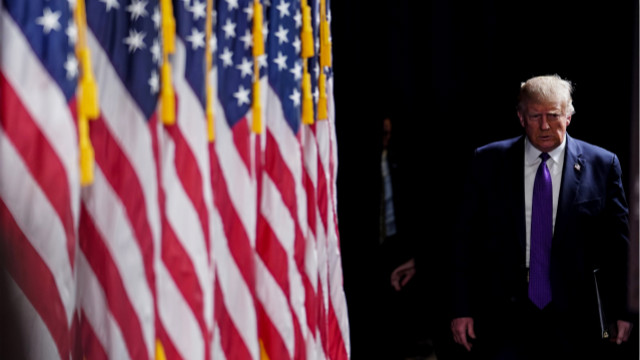
Core Viewpoint - The delay in the U.S. Supreme Court's ruling on the Trump administration's tariff case reflects significant internal divisions, but it is expected that a decision will not be postponed for long [1] Group 1: Supreme Court Proceedings - The U.S. Supreme Court has not yet ruled on the tariff case, with potential announcements expected on January 21 or 22 [1] - Analysts suggest that the longer the ruling is delayed, the more favorable it may become for the Trump administration [1][4] - The case has been expedited, with expectations for a ruling in January, although delays have occurred [3] Group 2: Market Reactions - Consumer stocks in the U.S. have seen declines due to market concerns over policy uncertainty stemming from the delayed ruling [1] - Wall Street analysts are becoming increasingly optimistic about the ruling, suggesting that the impact of the tariff issue may diminish over time [4] Group 3: Financial Implications - The potential refund amount related to tariffs is estimated at $135 billion [5] - Trump's administration has indicated that a ruling against the tariffs could lead to significant financial repercussions, potentially involving "hundreds of billions" in refunds [6] - Current tariff revenues have increased by $206 billion over the past eight months, but the actual impact on the economy may be limited due to the scale of the U.S. economy [7]
事关特朗普政府关税案!美最高法院:暂缓裁决
Zheng Quan Shi Bao· 2026-01-09 23:12
Core Viewpoint - The U.S. Supreme Court will not make a ruling on the Trump administration's tariff case on January 9, focusing on the legality of tariffs imposed under the International Emergency Economic Powers Act (IEEPA) and potential refunds to importers if deemed illegal [1] Group 1: Legal and Policy Implications - The Supreme Court's review centers on whether the Trump administration had the authority to impose tariffs under IEEPA and if the government must refund tariffs paid by importers if the tariffs are found illegal [1] - U.S. Treasury Secretary Scott Bansen emphasized the importance of maintaining tariff revenue levels, noting that an unfavorable ruling would limit the President's flexibility in using tariffs as negotiation tools, which could be detrimental to the American public [1] Group 2: Economic Impact - The actual effects of the tariff policy have diverged from initial analyst predictions, with limited impact on U.S. inflation but a significant reduction in trade deficits, which fell to the lowest level since the 2009 financial crisis by October 2025 [2] - The upcoming tariff ruling is expected to gradually reveal its effects on U.S. trade dynamics, fiscal health, and global economic interactions, warranting ongoing monitoring of policy adjustments and market responses [2]
美国高院的关税裁决将至,特朗普频繁发声警告,他预感要输?
Hua Er Jie Jian Wen· 2025-12-17 02:29
Core Viewpoint - The fate of the Trump administration's signature tariff policy hinges on a critical ruling from the U.S. Supreme Court, with increasing indications that the government may lose the case, complicating potential remedial measures [1][2] Group 1: Legal Proceedings and Predictions - The Supreme Court is expected to rule in early January on whether the government has the authority to impose broad "reciprocal tariffs" under the International Emergency Economic Powers Act (IEEPA) [1][2] - Goldman Sachs reports that based on the questioning during oral arguments, the Court is "likely" to rule much of the tariffs imposed this year as illegal [2] - The two core cases under review challenge whether the President overstepped constitutional boundaries by using IEEPA to exercise Congress's exclusive taxing power [2] Group 2: Government Response and Internal Dynamics - There is a stark contrast in public statements within the White House, with President Trump expressing urgency and concern, while Treasury Secretary Mnuchin attempts to project confidence, suggesting backup plans exist [2] - Mnuchin acknowledges that overturning the tariffs could lead to a "fiscal disaster," yet he also claims the government has alternative revenue-raising options [2] Group 3: Alternative Legal Frameworks - Legal experts indicate that any alternative trade regulations to rebuild the tariff system would face significant legal and political hurdles [3] - The Trade Act of 1974 allows the President to impose tariffs for severe international balance of payments deficits, but it has limitations such as being non-discriminatory and having a short effective period [4] - The Tariff Act of 1930 permits tariffs against countries that discriminate against U.S. trade, but its legal application has never been tested in court, raising questions about necessary investigations [4] Group 4: Economic Implications - Goldman Sachs predicts that if the IEEPA tariffs are overturned, the risk leans towards lower tariff rates, with an expected decline of about 2 percentage points in effective tariff rates by the end of 2026 [5] - The government has collected approximately $130 billion in tariffs through IEEPA, with ongoing monthly increases of about $20 billion, leading to potential refund issues for companies [5] Group 5: Political and Diplomatic Consequences - A legal defeat could have severe political and diplomatic repercussions for the Trump administration, including challenges to the credibility of trade agreements made under the threat of IEEPA tariffs [6] - The credibility of government officials may be undermined if the predicted turmoil does not materialize following a ruling against the tariffs, complicating the political landscape ahead of the 2026 midterm elections [6]
特朗普在本周可能打破两项美国历史记录,美财长加入催降息阵容
Sou Hu Cai Jing· 2025-11-04 18:18
Group 1 - The U.S. government shutdown has reached its 34th day, nearing the record of 35 days, impacting over 42 million low-income individuals reliant on food assistance and affecting 2 million federal employees who are furloughed or unpaid [1][3] - The shutdown has caused significant disruptions in various sectors, including air travel, with nearly 8,000 flight delays and over 270 cancellations due to a shortage of air traffic controllers [3] - Federal employees, approximately 1.3 million, are facing financial hardships, with 750,000 on unpaid leave, and over 4,000 employees from seven federal agencies have received layoff notices [3][5] Group 2 - The Smithsonian Institution has closed several museums and the National Zoo, leading to disappointment among visitors and a shortage of resources for food banks that rely on federal funding [5][6] - The political deadlock is primarily due to disagreements between Democrats and Republicans over the Affordable Care Act, with Democrats insisting on extending tax credits as a condition for reopening the government [6][8] - The Congressional Budget Office reported that the previous 35-day shutdown in 2018-2019 resulted in a $11 billion reduction in economic output, and the current shutdown could lower annual GDP growth by approximately 0.1% per week [8] Group 3 - The upcoming Supreme Court hearing on November 5 regarding the legality of tariffs imposed by the Trump administration is a significant event, with Trump planning to attend, which is unprecedented in the court's 235-year history [8][10] - The legal case involves substantial economic interests, with U.S. companies having paid nearly $90 billion in tariffs, and businesses reporting significant financial losses due to the tariff policies [10] - The ongoing government shutdown, tariff disputes, and calls for interest rate cuts from the Treasury Secretary are interlinked issues that reflect the complexities of the U.S. political economy [15][16]
金都财神:8.6黄金行情走势分析及操作建议
Sou Hu Cai Jing· 2025-08-06 03:53
Group 1 - The core viewpoint of the news is that gold prices are experiencing a strong upward momentum, driven by rising expectations of US interest rate cuts, trade policy impacts, and uncertainties surrounding Federal Reserve appointments [1][3]. - Gold prices reached a near two-week high of $3390.32, closing at $3380.65, marking four consecutive days of gains [1]. - The appeal of gold as a safe-haven asset is significantly increasing due to a substantial narrowing of the trade deficit and stagnation in service sector activities [1]. Group 2 - The analysis indicates that gold showed a significant rise to $3390.4 after a recommendation to buy around $3355-$3358, resulting in profitable trades [3]. - The daily chart shows a bullish trend with four consecutive positive daily closes and a rising 5-day moving average, while the MACD indicator shows a bullish crossover [3]. - Short-term analysis suggests a slight bearish trend with potential support levels at $3350 and $3360, while the focus remains on the breakout of the previous high at $3390 [3]. Group 3 - Trading recommendations include buying gold around $3354-$3357 with a stop loss at $3349 and a target of $3375-$3380 [5]. - Another recommendation suggests selling gold around $3389-$3392 with a stop loss at $3397 and a target of $3370 [5].

2025年第二季度,全球PC出货量同比增长7%,联想稳居榜首,苹果华硕表现亮眼!
Canalys· 2025-07-10 06:27
Core Insights - The global PC market is experiencing a 7.4% year-on-year growth in Q2 2025, with total shipments reaching 67.6 million units, driven primarily by commercial PC deployments ahead of the Windows 10 service termination [1][4] - Consumer demand remains weak due to macroeconomic uncertainties, influenced by the evolving tariff policies of the Trump administration, which have created significant uncertainty in the market [1][2] Market Performance - In Q2 2025, notebook shipments (including mobile workstations) reached 53.9 million units, growing by 7%, while desktop shipments increased by 9% to 13.7 million units [1] - Lenovo maintained its leadership in the global PC market with shipments of 17 million units, a year-on-year increase of 15.2% [4][5] - HP followed with 14.1 million units shipped, reflecting a growth rate of 3.2%, while Dell's shipments decreased by 3% to 9.8 million units [4][5] - Apple saw a significant growth of 21.3%, with shipments reaching 6.4 million units, capturing a market share of 9.4% [4][5] - ASUS ranked fifth with shipments of 5 million units, marking an 18.4% increase [4][5] Supply Chain Dynamics - The evolving tariff policies are reshaping the global PC supply chain, with a notable shift in US PC imports from China to Vietnam to avoid potential tariffs [2] - Recent trade agreements between the US and Vietnam impose a 20% tariff on Vietnamese goods and up to 40% on "transshipped" products, complicating the supply chain further [2] - The ambiguity surrounding the enforcement standards raises concerns about cost stability for market participants, as products made in Vietnam using Chinese components may be subject to higher tariffs [2] Consumer Behavior - The impending termination of Windows 10 services is expected to stabilize the market, particularly benefiting commercial device upgrades, while consumer purchasing decisions are likely to be delayed due to economic uncertainties [4] - A survey indicated that over half of channel partners expect their PC business to grow year-on-year in the second half of 2025, with 29% anticipating growth exceeding 10% [4]




日本经济拉响警报!政府评估5年来首次转为“恶化”,后续走势如何
Di Yi Cai Jing· 2025-07-09 08:03
Group 1 - Japan's household consumption showed the fastest growth in nearly three years in May, indicating a potential recovery in consumer confidence [5] - The Cabinet Office's May economic index assessment turned negative for the first time since July 2020, suggesting a high likelihood of recession [1] - Japan's real GDP decreased by 0.2% quarter-on-quarter in Q1 2025, marking the first negative growth in four quarters [1] Group 2 - The current economic index stands at 115.9, reflecting a 0.1 percentage point decline, with five out of ten components showing negative factors [3] - Japan's exports fell to 8.135 trillion yen in May, a 1.7% year-on-year decrease, marking the first decline in eight months [3] - The decline in exports was primarily driven by significant drops in automotive exports (down 6.9%), steel exports (down 20.6%), and mineral fuel exports (down 50.7%) [3] Group 3 - Japan's real wages adjusted for inflation fell by 2.9% year-on-year in May, the largest decline in 20 months, despite a nominal wage increase of 1.0% [4] - The consumer price index in Japan rose by 4.0% in May, remaining above 4% for six consecutive months [4] - The yield on Japan's 30-year government bonds rose by 12.5 basis points to 3.09%, indicating a potential return of market volatility [4] Group 4 - The increase in household spending in May was driven by higher expenditures on automobiles and travel, surpassing economists' expectations [5] - Consumer spending accounts for over half of Japan's economic output, making it a crucial indicator of economic vitality [5] - The sustainability of this consumption growth is contingent on real wage increases, as ongoing inflation could erode household purchasing power [5]
美银全球研究:是时候逢低买入中期日本国债了
news flash· 2025-06-18 08:00
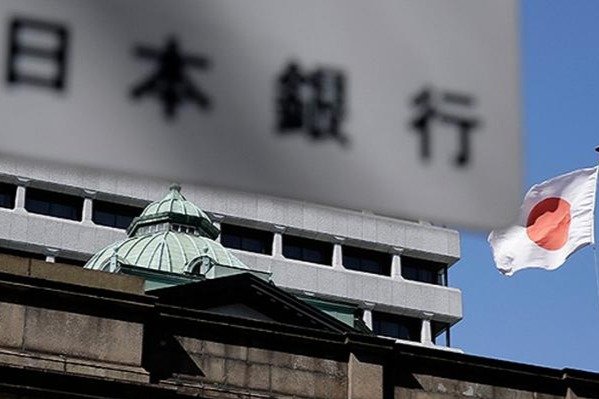
Core Viewpoint - Bank of America Global Research suggests that it is time to buy medium-term Japanese government bonds due to recent price declines [1] Group 1: Market Sentiment - Bond market participants believe that the Bank of Japan may not raise interest rates until as early as October 2025 [1] - The uncertainty surrounding the Trump administration's tariff policies continues to be emphasized by Bank of Japan Governor Kazuo Ueda [1] Group 2: Diplomatic Context - The recent Japan-U.S. summit did not result in any agreements, indicating that the market may require more time to digest the potential for the Bank of Japan's next interest rate hike [1]
美联储博斯蒂克:现在调整政策并不明智
news flash· 2025-05-09 18:33
Core Viewpoint - The Atlanta Fed President Bostic suggests that it is unwise to adjust monetary policy at this time due to uncertainties surrounding the Trump administration's tariffs and other policies, which have led to an economic "stall" [1] Economic Impact - Bostic indicates that the uncertainties have resulted in households and businesses refraining from making significant investments [1] - He emphasizes that the specific economic outcome largely depends on the details of policy implementation, highlighting the current lack of clarity [1] Policy Recommendations - Bostic advises the Federal Reserve to remain cautious and refrain from making bold policy moves until the situation becomes clearer [1]