
Applied Materials(AMAT)

Search documents
屹唐股份起诉美半导体巨头 索赔9999万元
Xi Niu Cai Jing· 2025-08-19 06:30
Core Viewpoint - The domestic semiconductor equipment leader, Yitang Co., announced it will sue Applied Materials, Inc. for stealing company secrets related to plasma sources and wafer surface treatment technology [2] Group 1: Legal Action - Yitang Co. claims that Applied Materials illegally obtained and used its core technology secrets and disclosed them in China through patent applications, violating the Anti-Unfair Competition Law of the People's Republic of China [2] - The lawsuit requests the court to order the defendant to cease the infringing activities, confirm the ownership of the disputed patent application rights, and compensate for economic losses and reasonable expenses totaling 99.99 million yuan [6] Group 2: Company Background - Yitang Co. focuses on the research, development, production, and sales of semiconductor manufacturing equipment, with a notable technology accumulation in high-concentration, stable, and uniform plasma wafer surface treatment technology [6] - Applied Materials, Inc. is a globally recognized semiconductor equipment supplier, covering various equipment and related services required for semiconductor manufacturing, holding a significant position in the global semiconductor equipment market [6] Group 3: Employee Involvement - The dispute involves two employees previously employed by Yitang Co.'s wholly-owned subsidiary, MTI, who signed confidentiality agreements, and are named as the main inventors in the patent application submitted by Applied Materials [6]


上市满一个月后,中国芯片公司向美国巨头宣战,索赔9999万元
Sou Hu Cai Jing· 2025-08-19 04:05
Core Viewpoint - The lawsuit initiated by Yitang Co., a leading domestic semiconductor equipment manufacturer, against American giant Applied Materials (AMAT) for 99.99 million yuan is seen as a significant event reflecting the awakening of technological sovereignty awareness among Chinese chip companies [2][8]. Group 1: Lawsuit Details - The lawsuit focuses on allegations that Applied Materials illegally obtained Yitang's plasma wafer surface treatment technology secrets by hiring former employees of its subsidiary, Mattson, who had signed confidentiality agreements [2]. - The compensation amount of 99.99 million yuan, just one yuan short of one hundred million, has sparked widespread discussion and adds a dramatic element to the case [2][7]. - The core accusation involves a critical process in wafer processing that generates high-concentration and stable plasma, which is essential for chip yield and production consistency, particularly for 12-inch wafers [2]. Group 2: Industry Context - This lawsuit is not an isolated incident; Applied Materials previously sued Mattson for allegedly poaching 17 senior engineers and attempting to steal confidential information [3]. - The semiconductor industry has a history of intellectual property disputes, with notable cases including TSMC's accusations against SMIC in 2009, which resulted in significant financial penalties [5]. Group 3: Company Performance - Despite being established only nine years ago, Yitang Co. has achieved a global market share of 34.6% in dry stripping equipment and 13.05% in rapid thermal processing equipment, ranking second worldwide [5]. - In the first three quarters of 2024, Yitang reported a net profit of 420 million yuan, a year-on-year increase of 102.29%, with domestic customer revenue share rising from 38.6% in 2021 to 68.1% in the first half of 2024 [5]. Group 4: Strategic Implications - The lawsuit is interpreted by some industry experts as a strategic move to demonstrate that Chinese companies are ready to challenge American giants, signaling a shift towards a more localized market focus [5][8]. - Legal experts suggest that while employee mobility is common, taking confidential documents could constitute a violation, which may strengthen Yitang's case if evidence is presented [5][7].
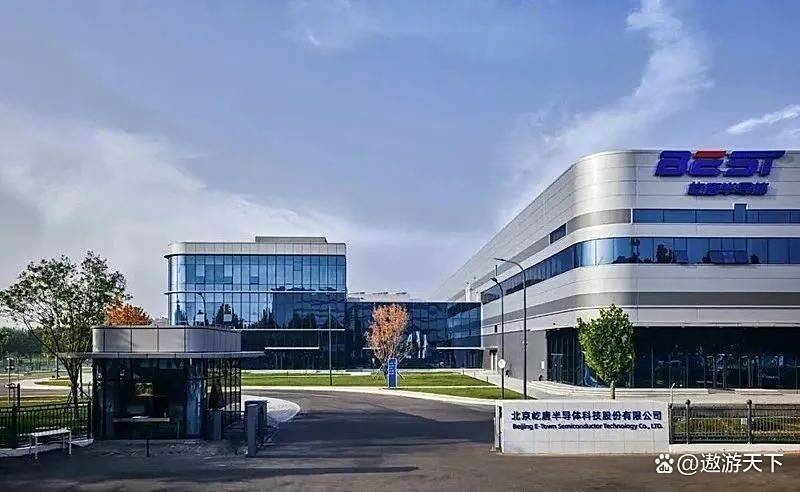
芯片设备公司,冰火两重天
半导体行业观察· 2025-08-19 01:24
Core Insights - The profitability of top chip equipment manufacturers is diverging, with some losing momentum due to declining sales in China, while others are capitalizing on the demand for AI chips [2][5] - Among ten manufacturers from Japan, the US, and Europe, five reported a year-on-year decline in net profit or lower growth compared to the previous year [2] - The combined net profit of these manufacturers has remained robust, growing approximately 40% for the fifth consecutive quarter, reaching $9.4 billion [2] Group 1: Company Performance - Lam Research's net profit surged by 69%, driven by strong sales of deposition and etching equipment for high-bandwidth memory and advanced logic chips [2] - KLA's net profit increased by 44%, benefiting from growth in inspection and measurement equipment for advanced packaging [2] - ASML Holding, ASM International, and Advantest also reported higher profit growth compared to the same period in 2024 [2] Group 2: Challenges Faced - Tokyo Electron, Screen Holdings, and Teradyne experienced declines in net profit after significant growth of over 50% to 90% in the previous year [5] - A major factor for the decline is the slowdown in sales to China, with nine companies reporting a combined sales drop of 5% to $9.3 billion, accounting for 30% of total sales, down from approximately 40% at the end of 2023 [5] - Tokyo Electron's sales from China accounted for 39%, a decrease of 11 percentage points from the previous year, and growth in its Taiwan business could not compensate for this loss [5] Group 3: Market Outlook - Despite the challenges, five US and European companies expect sales growth in the upcoming quarter, with four Japanese companies also projected to achieve revenue growth [6] - The industry faces uncertainty as Washington considers imposing new semiconductor tariffs and restricting AI semiconductor exports [6] - The total market capitalization of the top ten semiconductor equipment manufacturers is approximately $910 billion, down about 20% from the latest peak in July 2024 [7]


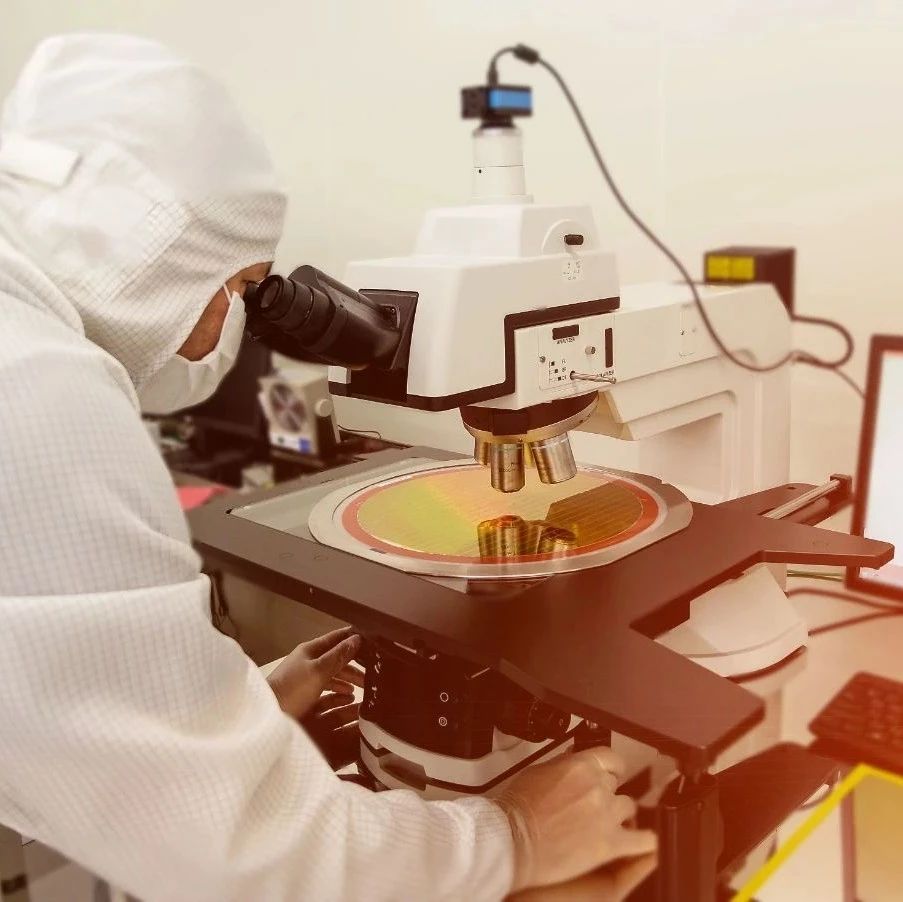
湾芯展2025再升级:展区扩容50%,百亿级产业机遇蓄势爆发
半导体行业观察· 2025-08-19 01:24
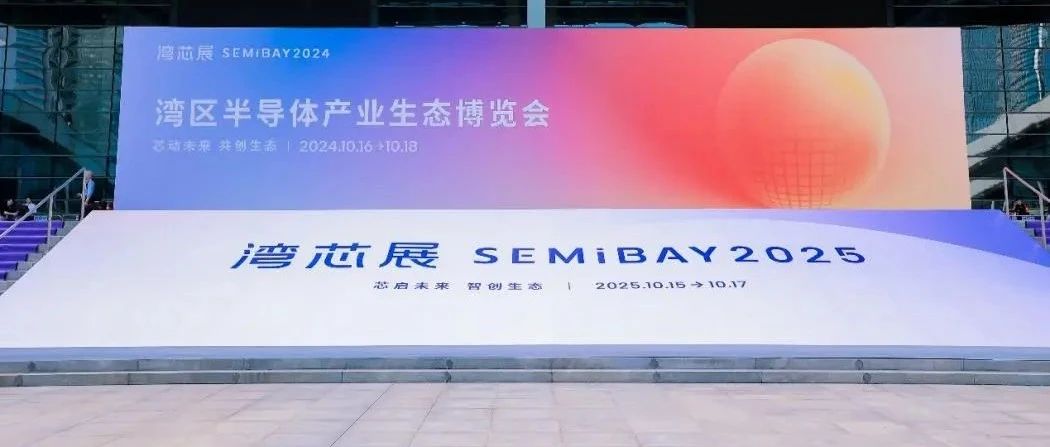
Core Viewpoint - The 2025 Bay Area Semiconductor Industry Eco-Expo aims to showcase the innovation and business opportunities within the global semiconductor industry, featuring a significant scale upgrade and a comprehensive industry ecosystem [1][17]. Group 1: Event Overview - The expo will take place from October 15 to 17, 2025, at the Shenzhen Convention Center, with a total exhibition area exceeding 60,000 square meters, which is equivalent to eight standard football fields [1]. - The event will gather over 600 leading industry companies and is expected to attract 60,000 professional visitors, along with hosting more than 20 cutting-edge technology summits and industry forums [1][9]. Group 2: Industry Coverage - The expo will feature four core exhibition areas: wafer manufacturing, compound semiconductors, IC design, and advanced packaging, covering the entire industry chain from upstream materials and equipment to downstream applications [4][7]. - Each exhibition area is meticulously planned to not only showcase the latest technological achievements but also to focus on practical application scenarios, providing an immersive industry experience for exhibitors and visitors [4]. Group 3: Innovative Display Modes - The expo introduces an innovative "technology + application ecosystem" display mode, with three ecological zones dedicated to AI chip ecosystems, RISC-V ecosystems, and Chiplet and advanced packaging ecosystems [6]. - This approach allows visitors to deeply experience semiconductor technology in various application scenarios, including AI computing centers, robotics, smart vehicles, smart cities, Industry 4.0, and consumer electronics [6]. Group 4: Business Opportunities - The wafer manufacturing exhibition area will showcase top global wafer manufacturing equipment and materials suppliers, presenting comprehensive solutions for the entire wafer manufacturing process, including key technological breakthroughs [7]. - The expo is expected to unlock over 10 billion yuan in industrial cooperation opportunities across various fields, including equipment procurement, technology licensing, production line construction, and material supply [9]. Group 5: Year-Round Service Ecosystem - The expo will establish a year-round service ecosystem, breaking the traditional three-day exhibition time limitation, and will include a demand database and supplier resource library for precise matching before, during, and after the event [10][19]. - An innovative "project procurement exhibition" model will be introduced, focusing on project demand to facilitate efficient matching between suppliers and buyers [11]. Group 6: Collaborative Development - The expo will connect six major semiconductor industry cities in China, leveraging local industrial characteristics and resource advantages to form a collaborative development pattern [12]. - It will provide a platform for global product launches, technical exchanges, and precise procurement matching, inviting key downstream purchasers from the industry [12][14]. Group 7: Comprehensive Professional Services - The organizers will offer a full range of professional services throughout the exhibition process, including pre-exhibition demand research, on-site business coordination, and post-exhibition project tracking [19]. - The expo aims to promote the deep integration of the global semiconductor industry ecosystem, contributing to the transition of China's semiconductor industry from "technology following" to "innovation leading" [17].


Trade Tracker: Jim Lebenthal sells Applied Materials
CNBC Television· 2025-08-18 17:42
Market Trends & Investment Strategies - BCA today suggests broadening investment beyond the "Mag 7" to the "pedestrian 493," favoring disruptors over the disrupted [1] - The market is in a "wait and see" mode regarding incumbent seat-based software providers and their ability to generate more revenue through AI [8] - Goldman agrees with the view that the software bear case is not a certainty [7] - A modest correction is occurring in the cybersecurity sector due to concerns about potential pullback in spending [9] Company Performance & Outlook - Applied Materials (AAT) experienced its worst week since July 2024 due to terrible guidance, coming in 10% below street expectations [4][5] - Applied Materials has responded negatively for the last six quarters, leading to a decision to exit the position [6] - Lamb Research and KLA Corp are executing well, contrasting with Applied Materials' underperformance [7] - Viva Systems, a cloud-based software company in the healthcare sector, is performing remarkably well, up 44% over the last year with double-digit earnings growth [11] - Oracle is performing phenomenally, driven by the AI trade and excellent results, with HSBC raising its price target to $287 and reiterating a buy rating [12] Specific Company Analysis - Adobe is considered disrupted, with final judgment reserved until the next earnings call in about 3 weeks [2][3] - Palo Alto Networks needs to provide very strong guidance to restore positive momentum in the cybersecurity sector [10] - CrowdStrike's target price was reduced to $425 from $450 by Evercore ISI, adding it to the tactical underperform list [10]


应用材料Q3营收73亿美元,中国区占比35%
Sou Hu Cai Jing· 2025-08-18 10:22
Core Viewpoint - Application Materials reported record quarterly revenue of $7.3 billion for Q2 of FY2025, marking an 8% year-over-year increase, with strong profitability metrics [2] Financial Performance - Q2 revenue reached $7.3 billion, up 8% year-over-year [2] - GAAP gross margin was 48.8%, while Non-GAAP gross margin was 48.9% [2] - GAAP operating margin stood at 30.6%, with Non-GAAP operating margin at 30.7% [2] - GAAP earnings per share (EPS) increased by 8% to $2.22, and Non-GAAP EPS rose by 17% to $2.48, both reaching historical highs [2] Market Outlook - CEO Gary Dickson expressed confidence in long-term growth opportunities despite increased business uncertainty, particularly in the Chinese market [2] - Revenue from China accounted for 35% of total revenue in Q2 [2] - CFO Blase Hill indicated that revenue is expected to decline in Q4 due to capacity digestion by Chinese customers and fluctuations in demand from advanced process clients [3] Strategic Initiatives - Application Materials is investing over $200 million in Arizona to establish a state-of-the-art manufacturing facility for specialized components [3] - The company aims to double its business in the advanced packaging market to over $3 billion in the coming years [3] Future Guidance - For Q4 of FY2025, the company expects net income of $6.7 billion ± $500 million, with a Non-GAAP gross margin of 48.1% and diluted Non-GAAP EPS of $2.11 ± $0.20 [3] - The company anticipates mid-single-digit revenue growth for the entire FY2025 [3]
美国应用材料8~10月营收预减5%,中国业务低迷
日经中文网· 2025-08-18 08:00
Core Viewpoint - Applied Materials, the largest semiconductor manufacturing equipment company in the U.S., is experiencing a sales decline for the first time in seven quarters, primarily due to stagnation in its largest market, China, and the impact of U.S. government restrictions on exports [1][3]. Group 1: Sales Performance - Applied Materials expects sales for the period of August to October 2025 to be $6.7 billion, a 5% decrease year-over-year, which is below market expectations [3]. - The company's sales to China accounted for 30% of total sales from November 2024 to July 2025, down significantly from 40% in the same period last year [3]. Group 2: Market Dynamics - The semiconductor manufacturing equipment market is projected to reach $117.1 billion in 2024, with China accounting for $49.5 billion, representing 42% of the market [6]. - The decline in sales in China is attributed to U.S. government export controls aimed at curbing China's advanced semiconductor development [6]. Group 3: Competitive Landscape - Other U.S. competitors, such as Lam Research and KLA, are also facing declining sales in China, with Lam Research's sales proportion to China dropping by 8 percentage points to 34% and KLA's by 10 percentage points [7]. - Chinese local competitors, such as NAURA and AMEC, are expanding their market share in less technologically challenging semiconductor equipment, supported by government subsidies to reduce reliance on U.S. technology [7]. Group 4: Regulatory Environment - The backlog of export license applications is acknowledged by the CEO of Applied Materials, who expressed pessimism about the likelihood of any licenses being issued for the upcoming period [6]. - The U.S. Congress has proposed further tightening of export controls to prevent China from developing advanced AI technologies, which could inadvertently accelerate the technological accumulation of Chinese companies [7].
异动盘点0818|声通科技早盘涨近30%,机器人概念股涨幅居前;迅雷美股涨超26%,应用材料跌超14%
贝塔投资智库· 2025-08-18 04:16
Group 1: Hong Kong Stocks - Ascentage Pharma-B (06855) opened over 5% higher after receiving FDA and EMA approval for its drug, Lisenglitazone, for high-risk MDS in Phase III clinical trials [1] - Haijia Medical (06078) fell over 5% following a profit warning, expecting a mid-term net profit decline of approximately 34% to 39% due to factors like centralized procurement and increased depreciation from new hospitals [1] - Hua Hong Semiconductor (01347) dropped over 6% as it announced plans to acquire a controlling stake in Shanghai Huali Microelectronics to address industry competition [1] - Zhonghui Biotech-B (02627) rose over 8% after receiving IND approval for its recombinant respiratory syncytial virus vaccine in both the US and China [1] - NetDragon (00777) surged over 10% after forming a strategic alliance with Zhongke Wenge to promote AI technologies abroad [1] - Great Wall Motors (02333) increased over 12% following the completion of its factory in Brazil, with an initial production capacity of 30,000 vehicles per year [1] - Yuewen Group (00772) rose over 20% as its first-half performance exceeded expectations, benefiting from growth in licensing business and steady performance of short dramas [1] Group 2: Other Notable Stocks - Huirui Group (00806) increased over 8% after reporting first-half results that met market expectations and is applying for MRF mutual recognition for other products [2] - Soundon Technology (02495) surged nearly 30% after announcing a projected net profit exceeding 50 million yuan for the first half, marking a turnaround from losses [2] - Robotics concept stocks saw significant gains, with Jinshang Machine Tool (01651) up over 11% and Lijin Technology (00558) up over 3% [2] Group 3: US Stocks - Intel (INTC.US) rose 2.93% amid reports of negotiations with the Trump administration for government investment to support domestic manufacturing [3] - Hesai Technology (HSAI.US) increased 9.73% after reporting over 50% year-on-year revenue growth for Q2 2025 [3] - UnitedHealth (UNH.US) surged 11.98% following Berkshire Hathaway's new investments in the company [3] - NIO (NIO.N) rose 8.09% as it announced the upcoming launch of its new ES8 model [4] - Xunlei (XNET.US) continued to rise by 26.53% after reporting a 30.6% year-on-year revenue increase for Q2 2025 [5]


一周概念股:多家上市公司并购切入半导体,屹唐股份亮剑起诉应用材料
Ju Chao Zi Xun· 2025-08-17 13:19
Group 1: Mergers and Acquisitions in Semiconductor Sector - Multiple A-share listed companies are engaging in cross-industry mergers and acquisitions, particularly in the semiconductor sector, including companies like Wantong Development, Quzhou Development, Kaipu Cloud, Yongji Co., and Kanda New Materials [2][3] - Wantong Development plans to invest approximately 854.45 million yuan to acquire a 62.98% stake in Beijing Shudu Information Technology Co., which specializes in high-speed interconnect chip design and development [3] - Quzhou Development intends to purchase 95.46% of the shares of Guangdong Xiandao Rare Materials Co. and raise up to 3 billion yuan in supporting funds, with the estimated valuation of the target company not exceeding 12 billion yuan [4] - Yongji Co. is planning to acquire control of Nanjing Tena Fei Electronic Technology Co. through a combination of share issuance and cash payment [4] - Kanda New Materials aims to acquire 51% of Chengdu Zhongke Huamei Electronics Co. for 275 million yuan, making it a subsidiary [5] Group 2: Legal Disputes in Semiconductor Industry - Yitang Co., a leading domestic equipment manufacturer with a market value of 60 billion yuan, has filed a lawsuit against global semiconductor equipment leader Applied Materials for "illegally obtaining and using its core technical secrets," seeking 99.99 million yuan in damages [6][7] - The lawsuit highlights the competitive landscape between Chinese and American semiconductor equipment giants and reflects the determination of Chinese semiconductor companies to protect their innovations through legal means [6][7] Group 3: Lithium Mining and Market Reactions - Ningde Times' subsidiary, Yichun Times New Energy Mining Co., has temporarily halted operations at its lithium mine following the expiration of its mining rights, with plans to apply for an extension [8][9] - The suspension has led to a significant rise in lithium stocks, with companies like Tianqi Lithium and Jiangte Electric experiencing substantial gains, indicating a positive market reaction to the supply disruption [9]

应用材料市值蒸发212亿美元,营收预期低于6亿缺口,半导体巨头集体承压
Jin Rong Jie· 2025-08-16 11:24
Group 1 - The core viewpoint of the articles highlights a significant decline in the stock price of Applied Materials, which fell over 14% in a single day, marking the largest drop since March 2020, resulting in a market value loss of over $21.2 billion [1] - The company's market capitalization decreased sharply to $125.94 billion after the stock price drop, impacting the entire semiconductor equipment industry, with peers KLA Corp and Lam Research also experiencing declines of 8.4% and 7.3% respectively [1] Group 2 - The immediate trigger for the stock price plunge was the company's financial forecast, which projected Q4 FY2025 revenue at approximately $6.7 billion, significantly below Wall Street analysts' average expectation of $7.32 billion, creating a gap of over $600 million [2] - Adjusted earnings per share expectations were also disappointing, with the company forecasting around $2.11, notably lower than the analysts' average estimate of $2.38, raising investor concerns about future growth prospects [2] Group 3 - Multiple factors affecting the company's business outlook include a significant reduction in demand from key customers, which has directly impacted order acquisition capabilities [3] - Changes in the Chinese market have become a crucial factor influencing the company's performance, as Chinese customers, after increasing purchases in recent years, are currently in a phase of inventory digestion, leading to a temporary slowdown in new order demand [3] - The uncertainty surrounding tariff negotiations and other macroeconomic factors has prompted major customers to delay some equipment procurement plans, contributing to the revenue forecast decline [3] - Despite facing short-term challenges, the management remains optimistic about long-term demand for computing capabilities [3]