半导体产业生态

Search documents
台积电已经无法向美国交代了!张忠谋没有说谎:美国要掏空台湾半导体
Sou Hu Cai Jing· 2026-02-17 00:21
Core Viewpoint - The recent "US-Taiwan Trade Agreement" announced by US Commerce Secretary Howard Lutnick involves a significant reduction in tariffs on Taiwanese goods, but it comes with stringent conditions that require Taiwan to relocate a substantial portion of its semiconductor supply chain to the US, along with a hefty financial commitment of $500 billion [1][3]. Group 1: Financial Implications - Taiwan is required to invest $500 billion, which represents 56.8% of its GDP, significantly higher than the investment ratios of Japan (12.8%) and South Korea (18.8%) in similar agreements with the US [3][4]. - The $500 billion is divided into $250 billion for direct investments by Taiwanese semiconductor companies like TSMC to build factories in the US, and another $250 billion in credit guarantees from the Taiwanese government to support smaller semiconductor firms [3][4]. Group 2: Operational Challenges - TSMC faces operational difficulties in the US, including high construction costs and regulatory hurdles, which have led to a significant drop in profit margins from 62% in Taiwan to only 8% in Arizona [6][10]. - The construction of TSMC's Arizona factory has been delayed, with the facility not expected to be operational until late 2024, and the company has incurred substantial compliance costs due to stringent US regulations [6][10]. Group 3: Market Dependencies - TSMC's reliance on the US market is critical, with 38% of its exports directed to the US, making it vulnerable to potential punitive tariffs if it does not comply with US demands [4][5]. - The company’s core production technologies and equipment are largely controlled by US firms, creating a dependency that limits TSMC's ability to resist US pressures [5][11]. Group 4: Industry Ecosystem - The semiconductor industry requires a comprehensive ecosystem, including thousands of specialized suppliers, which are predominantly located in Taiwan. The relocation of this ecosystem to the US is deemed nearly impossible [10][11]. - TSMC's founder has previously warned that building factories in the US is significantly more expensive and inefficient compared to Taiwan, highlighting the challenges of replicating Taiwan's established semiconductor ecosystem in the US [11][12].


心智观察所:真相比情绪重要,误读中国光刻机正在伤害真正的进步
Xin Lang Cai Jing· 2025-11-20 06:17
Core Viewpoint - The article emphasizes the significant technological gap between ASML's advanced lithography machines and domestic Chinese alternatives, highlighting the complexities involved in semiconductor manufacturing and the need for realistic assessments of China's capabilities in this field [3][4][10]. Summary by Sections ASML's Technology Showcase - ASML showcased its advanced DUV lithography machines, TWINSCAN XT:260 and TWINSCAN NXT:870B, at the China International Import Expo, with the XT:260 being particularly noted for its dual exposure capabilities aimed at advanced packaging [1][3]. Technical Complexity of Lithography Machines - The complexity of lithography machines extends beyond resolution metrics, involving a sophisticated integration of optics, mechanics, electronics, software, and materials, with ASML's EUV machines containing over 100,000 components from more than 5,000 suppliers [4][5]. Challenges in Domestic Development - Domestic lithography machines face significant challenges, including the need for extensive debugging and optimization, which typically requires 6-12 months post-assembly to achieve stable production [6][7]. Importance of Local Collaboration - For domestic lithography machines to achieve sustainable industrial capabilities, collaboration with local customers is essential, as real-world operational data is crucial for performance optimization and stability [6][7]. Market Dynamics and ASML's Position - ASML's market share in China is expected to decrease from a peak of 46% to around 20% by 2025, not due to domestic alternatives but rather a normalization of demand as existing orders are fulfilled [8][10]. Misinterpretation of Industry Signals - Claims of a strong domestic semiconductor industry based on increased chip exports are misleading, as these exports primarily consist of mature process chips that do not require advanced lithography technology [9][10]. Realistic Assessment of Progress - The article argues for a realistic acknowledgment of the technological gap in the semiconductor industry, stressing that genuine progress requires a grounded understanding of current capabilities rather than optimistic narratives [10][14]. Future Outlook - The future of the semiconductor industry will belong to those who face reality, invest continuously, and accumulate knowledge, with a call for a pragmatic approach to technological development in China [14][15].


中建八局承建的上海临港拓荆科技项目正式竣工投产
Cai Jing Wang· 2025-11-11 02:53
Core Insights - The Shanghai Lin-gang Tuo-jing Technology Project, constructed by China State Construction Engineering Corporation (CSCEC) No.8 Bureau, has officially completed and commenced operations [1] Group 1: Project Overview - The project is located in the Lin-gang New Area of Shanghai, covering a total construction area of 90,700 square meters [1] - It includes production workshops, a cafeteria dormitory building, a research and development building, and related auxiliary facilities [1] Group 2: Industry Impact - The project will serve as a critical component of the semiconductor industry chain in the Lin-gang New Area, providing robust hardware support for the regional semiconductor industry's clustered development [1] - It aims to assist in creating a complete and efficient semiconductor industry ecosystem [1]


杭州培育出AI“六小龙”,深圳能否捧出半导体“天团”?
Mei Ri Jing Ji Xin Wen· 2025-10-21 12:59
Core Insights - Shenzhen's semiconductor industry is experiencing a significant transformation, marked by a strong presence at the Bay Area Semiconductor Industry Ecological Expo, showcasing local innovations and technologies [1][2] - The industry is supported by a robust capital ecosystem, characterized by a collaboration between state-owned and market-oriented investment institutions, emphasizing the importance of "patient capital" [1][5][7] Industry Growth - The scale of Shenzhen's semiconductor and integrated circuit industry reached 256.4 billion yuan in 2024, reflecting a year-on-year growth of 26.8%, with the first half of 2025 showing a continued growth trend of 16.9% [3] - The industry structure has become more balanced, with significant growth across manufacturing, packaging, testing, and equipment sectors, all doubling in size since 2020 [3] Investment Ecosystem - The establishment of the Shenzhen Semiconductor and Integrated Circuit Fund, with a total scale of 5 billion yuan, highlights the role of state-owned capital in driving the semiconductor industry [4] - Shenzhen's investment landscape includes a variety of national and local guiding funds, with numerous state-owned platforms actively participating in the establishment of funds targeting the semiconductor sector [6][8] Strategic Collaboration - The investment strategy in Shenzhen focuses on long-term, strategic capital that aligns with the industry's needs, contrasting with the short-term capital approach seen in other regions [5][7] - The Bay Area Expo serves as a platform for connecting supply and demand, facilitating direct interactions between core procurement parties and exhibitors, enhancing the industry's collaborative ecosystem [10][11] Ecosystem Development - Shenzhen's semiconductor industry benefits from a dense network of high-tech enterprises, providing a complete supply chain and rich application scenarios, which fosters rapid innovation and iteration [11][12] - The region is evolving into a critical player in the global semiconductor landscape, with a focus on nurturing core enterprises that can drive the entire industry forward [13][14] Future Outlook - The ongoing development of the semiconductor sector in Shenzhen is expected to solidify its position as a global innovation hub, leveraging its technological and financial resources [12][15] - The region aims to cultivate a "semiconductor dream team," supported by a strong foundation of capital, talent, and technology [15]
2025湾芯展收官,粤港澳大湾区半导体产业注入新动能
Zhong Guo Jing Ying Bao· 2025-10-20 07:33
Core Insights - The 2025 Bay Area Semiconductor Industry Ecological Expo concluded in Shenzhen, showcasing over 2,500 new products from various global companies, emphasizing the theme "Chip Enables Future Intelligent Creation" [1][2] - The event attracted participation from more than 20 countries and regions, featuring top semiconductor firms such as Applied Materials, KLA, and domestic leaders like SMIC and BYD, highlighting a comprehensive industry chain [1][2] Group 1 - The expo served as a platform for "technological breakthroughs," allowing domestic companies to present key achievements that challenge foreign monopolies [1] - Approximately 5,000 professional buyers from leading companies attended, including major players like Samsung and Foxconn, facilitating effective connections between domestic and international industry resources [2] - The event fostered a "dual approach" of innovation and market engagement, with many enterprises seeking solutions for technical challenges and new market demands [2] Group 2 - The participation of renowned companies from 27 countries and regions expanded the "friend circle" of the semiconductor industry in the Guangdong-Hong Kong-Macao Greater Bay Area [2] - The expo included targeted matchmaking services, enhancing collaboration on policy consultation, resource sharing, and capital investment among semiconductor hubs like Shanghai and Wuxi [2]




稀土掣肘!中国一纸批文,ASML光刻机50公斤重稀土供给悬了?
Sou Hu Cai Jing· 2025-10-19 14:34
Core Viewpoint - The recent announcement by China's Ministry of Commerce on October 9, which requires export approval for products containing 0.1% or more of Chinese heavy rare earth elements, has raised concerns in the semiconductor industry, particularly among companies reliant on these materials, such as ASML and Applied Materials [1][3]. Group 1: Impact on Semiconductor Equipment Manufacturers - The EUV lithography machines, which are critical for semiconductor manufacturing, contain over 50 kilograms of rare earth materials, with 90% of high-purity production capacity concentrated in China [3]. - The new policy highlights the importance of resource control, as companies realize the implications of restricted access to essential materials [3]. Group 2: Domestic Innovations and Developments - Domestic players are innovating to reduce reliance on foreign technology, with companies like New Kylin developing alternative methods to enhance precision in semiconductor manufacturing despite not having access to top-tier machines [6][10]. - New Kylin's standardized processes and equipment, such as "Wuyishan" for precise pattern transfer and "Alishan" for uniform film deposition, have shown promising results, achieving an 85% yield in 5nm logic chip trials with SMIC [8][10]. Group 3: Advancements in Design Tools - The introduction of domestic EDA software by New Kylin has been recognized as a significant advancement, reportedly outperforming international counterparts by 30% and reducing hardware development cycles by 40% [12]. - The new tools have improved success rates for complex circuit designs, demonstrating the growing self-sufficiency and capability of the domestic semiconductor industry [12]. Group 4: Industry Resilience and Future Outlook - The overall trend in the semiconductor industry indicates a gradual completion of the supply chain, enhancing resilience against external pressures and ensuring that disruptions in one area do not cripple the entire operation [10][12]. - The focus on building a robust domestic ecosystem suggests that the industry is moving towards greater independence and stability, reducing vulnerability to international restrictions [10].

21特写|一场中国半导体产业的“生态突围”
2 1 Shi Ji Jing Ji Bao Dao· 2025-10-18 10:49
Core Insights - The Chinese semiconductor industry is experiencing a significant transformation, moving from reliance on foreign technology to developing a robust domestic ecosystem that includes breakthroughs in materials, hardware, and software [2][3][10]. Industry Developments - The recent "Bay Chip Exhibition" showcased the advancements in China's semiconductor ecosystem, highlighting the collaborative efforts of companies like Fangzheng Microelectronics, Runpeng Semiconductor, and Jiangfeng Electronics, along with research institutions [2][3]. - The introduction of the new ultra-high-speed real-time oscilloscope by Wanlian Eye, which breaks the foreign monopoly on oscilloscopes with bandwidths over 60GHz, marks a significant milestone for domestic technology [2][5]. - Jiangfeng Electronics has successfully produced high-purity tantalum sputtering targets, achieving the highest global shipment volume and breaking the long-standing foreign monopoly in this critical material [4][10]. Technological Innovations - The new 90GHz oscilloscope from Wanlian Eye represents a 500% performance improvement over previous domestic models, positioning it as the second-best globally [5]. - The development of domestic EDA software by Qiyunfang has improved product performance by 30% and reduced hardware development cycles by 40%, effectively replacing foreign products [6][10]. - The shift towards chiplet technology and 2.5D/3D stacking is seen as a new pathway for enhancing chip performance while reducing costs, allowing Chinese manufacturers to compete with advanced processes [7][10]. Manufacturing Advancements - Fangzheng Microelectronics has achieved the highest actual production capacity for SiC automotive chips in China, indicating significant progress in the manufacturing segment of the semiconductor industry [8][9]. - The collaboration between domestic manufacturers and research institutions is crucial for overcoming challenges in the semiconductor supply chain, particularly in the context of global competition [10][11]. Ecosystem Collaboration - The establishment of platforms like the Shenzhen Pinghu Laboratory is facilitating the validation and introduction of domestic semiconductor equipment, helping to break the foreign monopoly in this area [10][11]. - Research institutions are playing a vital role in developing advanced packaging materials and technologies, which are essential for the growth of the semiconductor industry in China [11][12]. Global Engagement - Foreign semiconductor giants are increasingly investing in China's local supply chain, with companies like NXP and GlobalFoundries planning to enhance their operations in the region [14][15]. - The influx of foreign capital into the Chinese semiconductor sector reflects growing confidence in the market, with significant investments aimed at fostering local collaboration and innovation [14][16].
从新凯来看“中国芯”突围,深圳做对了什么?
Nan Fang Du Shi Bao· 2025-10-16 23:16
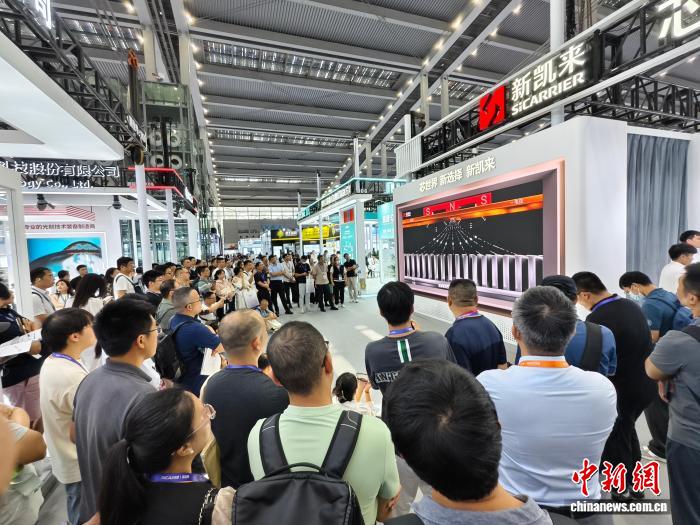
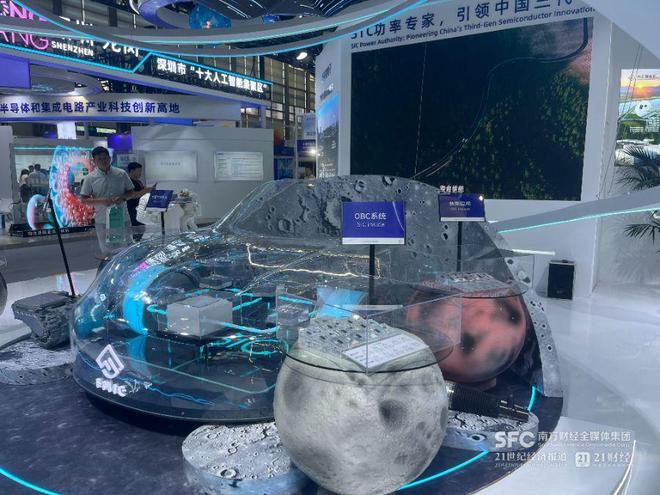
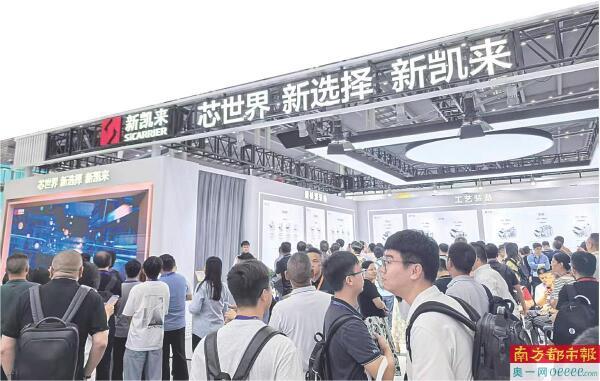
Core Insights - The 2025 Bay Area Semiconductor Industry Ecological Expo showcased significant advancements in China's semiconductor industry, particularly through the company Xinkailai, which unveiled groundbreaking products that fill critical gaps in domestic technology [2][3][6]. Group 1: Product Innovations - Xinkailai's subsidiary Qiyunfang launched a domestic EDA (Electronic Design Automation) software, enhancing design capabilities by approximately 30% compared to industry benchmarks, and reducing hardware development cycles by 40% [3][6]. - Another subsidiary, Wanlianyan, introduced a 90GHz ultra-high-speed real-time oscilloscope, achieving the highest bandwidth in China and the second globally, breaking through Western technology restrictions [3][5][6]. Group 2: Market Context - The semiconductor industry in Shenzhen is experiencing a shift from reliance on foreign technology to a focus on domestic innovation, with a current domestic product replacement rate of 70% to 80% [6][7]. - The Shenzhen government is actively supporting the semiconductor sector through substantial funding and policy measures, aiming for a projected industry scale of 2,564 billion yuan by 2024, reflecting a year-on-year growth of 26.8% [10][11]. Group 3: Industry Collaboration - The expo highlighted a growing consensus on the importance of ecosystem collaboration among semiconductor companies, emphasizing the need for integrated efforts across the supply chain to enhance competitiveness [9][10]. - Investment trends are shifting towards foundational elements of the semiconductor industry, such as equipment and materials, indicating a maturation of the market [7][10]. Group 4: Future Outlook - Experts suggest that the rapid development of companies like Xinkailai is indicative of a broader trend towards self-sufficiency in critical technology areas, driven by government support, capital investment, and talent aggregation [7][11]. - The establishment of collaborative platforms for research and validation is seen as essential for advancing the domestic semiconductor ecosystem and reducing dependency on foreign technology [11][14].
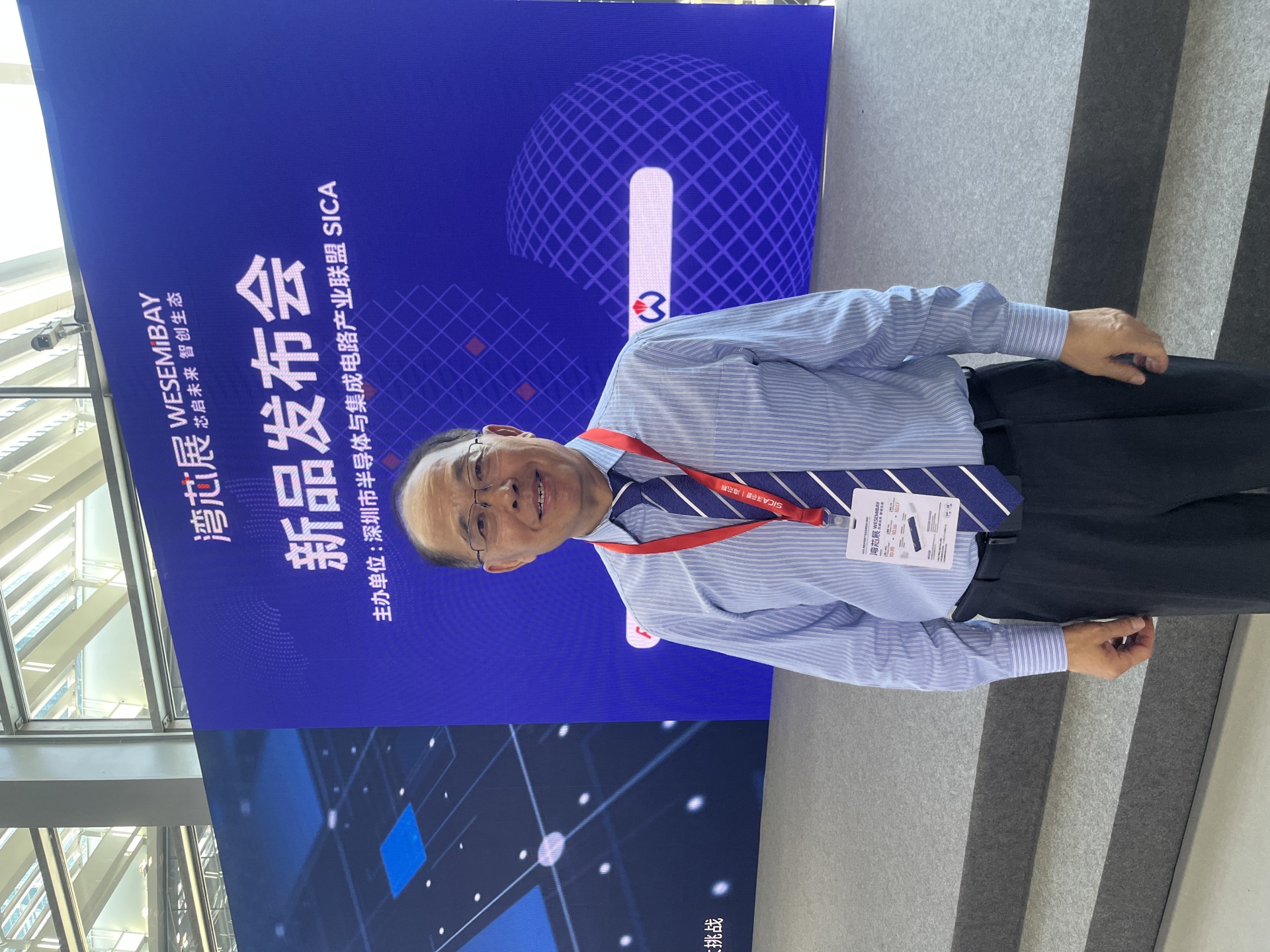
专访深圳技术大学集成电路与光电芯片学院院长宁存政:国内半导体优势在“量”,短板在“精”
Mei Ri Jing Ji Xin Wen· 2025-10-16 09:30
Core Insights - The current state of China's semiconductor industry shows significant advantages in labor costs, market scale, and mid-to-low-end equipment manufacturing, but there are notable shortcomings in high-end technology areas, particularly in lithography machines and other advanced equipment [1][7][9] Industry Overview - The semiconductor sector is the core of the information technology industry, essential for modern technological development and closely related to daily life and research [2][6] - Establishing a complete domestic industrial ecosystem, research ecosystem, and supply chain is crucial for long-term healthy development [2][6] Domestic Advantages - China's semiconductor industry benefits from labor, scale production, cost control, and market size, with significant capabilities in low-tech equipment manufacturing [7] - The industry chain's downstream has reached a high level of maturity, especially in Shenzhen and surrounding areas, leveraging a complete industrial ecosystem and diverse application scenarios [7] Challenges and Shortcomings - There are significant gaps in high-end technology products, particularly in critical manufacturing equipment like lithography machines, which require high reliability and consistency [8][9] - The industry faces challenges in upgrading and breaking through in high-precision technology areas, which are key to future development [8] Recent Innovations - Recent innovations in the semiconductor field include the launch of the new Kai Lai 90GHz oscilloscope, showcasing ongoing advancements across various segments [10] - The establishment of a semiconductor micro-nano processing center at Shenzhen Technology University aims to support small and medium enterprises in high-end chip research and development, reducing barriers and costs [10]
“湾芯展”2025启幕 云集超600家半导体优质企业
Zhong Guo Xin Wen Wang· 2025-10-15 14:15
Core Viewpoint - The second Bay Area Semiconductor Industry Ecosystem Expo (Bay Chip Expo 2025) is being held in Shenzhen, showcasing over 600 semiconductor companies and emphasizing Shenzhen's role in becoming a global semiconductor innovation hub [1][3]. Industry Overview - The expo covers an exhibition area of over 60,000 square meters and features more than 30 concurrent events, attracting hundreds of industry experts and scholars [1]. - The Guangdong-Hong Kong-Macao Greater Bay Area has emerged as a core growth area for China's semiconductor and integrated circuit industry, with a significant clustering effect and a collaborative development model among major cities like Guangzhou, Shenzhen, and Zhuhai [3]. Market Trends - In 2024, the semiconductor and integrated circuit industry in Shenzhen is projected to reach a scale of 256.4 billion yuan, reflecting a year-on-year growth of 26.8%. In the first half of 2025, the industry is expected to maintain rapid growth, reaching 142.4 billion yuan, with a year-on-year increase of 16.9% [5]. Event Highlights - The expo features four core exhibition areas, including wafer manufacturing and advanced packaging, as well as three special exhibition areas focused on AI chips, RISC-V ecosystem, and Chiplet technology [3]. - High-end forums such as the International Lithography Conference and Chip Academic Conference are being held during the expo, providing tailored one-on-one matchmaking services to enhance engagement between exhibitors and attendees [3][5]. Ecosystem Development - At least 115 semiconductor companies from Shenzhen are participating in the expo, alongside research institutions, universities, regional governments, and financial institutions, showcasing the strength of Shenzhen as a "hardware first city" [5].