
BANK OF CHINA(BACHY)

Search documents
大摩:升中国银行目标价至6.3港元 评级“增持”
Zhi Tong Cai Jing· 2025-12-19 07:20
摩根士丹利发布研报称,根据中国银行(601988)(03988)2025年第三季度业绩,修订对该行的盈利预 测。将2025至2027年度净息差预测下调,而手续费收入预测则上调,因2025年第三季手续费收入增长超 出预期。因此,该行将中国银行2025年、2026年及2027年度净利润预测分别上调0.9%、1.4%及1.1%, 将中行目标价由5.9港元升至6.3港元,评级增持。 ...

大摩:升中国银行(03988)目标价至6.3港元 评级“增持”
智通财经网· 2025-12-19 07:19
Group 1 - Morgan Stanley revised its profit forecast for Bank of China (03988) based on the bank's Q3 2025 performance [1] - The net interest margin forecast for 2025 to 2027 was lowered, while the fee income forecast was raised due to Q3 2025 fee income growth exceeding expectations [1] - The net profit forecasts for Bank of China for 2025, 2026, and 2027 were increased by 0.9%, 1.4%, and 1.1% respectively [1] Group 2 - The target price for Bank of China was raised from HKD 5.9 to HKD 6.3 [1] - The rating for Bank of China was upgraded to "Overweight" [1]
大行评级丨大摩:上调中国银行H股目标价至6.3港元 评级“增持”
Ge Long Hui A P P· 2025-12-19 03:25
摩根士丹利发表报告指,根据中国银行2025年第三季业绩,修订对该行的盈利预测,将2025至2027年度 净息差预测下调,以反映净息差复苏步伐放缓;而手续费收入预测则上调,因2025年第三季手续费收入 增长超出预期。因此,该行将中国银行2025年、2026年及2027年度净利润预测分别上调0.9%、1.4%及 1.1%,将H股目标价由5.9港元上调至6.3港元,评级"增持"。 ...
中国银行 2026 展望:重新评估房地产对银行的影响-China Banks_ 2026 Outlook_ Re-evaluating property impact on banks
2025-12-19 03:13
Summary of Key Points from the Conference Call on China Banks Industry Overview - The focus is on the **Chinese banking sector**, particularly its exposure to the **property market** and the implications of projected property price declines on bank earnings and capital adequacy [1][2][3]. Core Insights and Arguments 1. **Property Price Forecast**: - The **GS China Property team** has revised its property price forecast, predicting a **15% decline** over the next two years, with a stress scenario of a **30% drop** [1][7][16]. - This decline is expected to impact mortgage and property non-performing loans (NPLs), with total mortgage and property NPLs estimated at **Rmb 2.3 trillion** under the base case and **Rmb 4.0 trillion** under the stress test [7][12]. 2. **Mortgage Exposure and Risk Profile**: - The total mortgage exposure in the banking system is **16%** of the loan book, with a healthy risk profile due to well-collateralized loans [1]. - The mortgage NPL ratio is projected to rise to **2.4%** by 2027, with covered banks at **2.1%** and non-covered banks at **3.4%** [8][12]. 3. **Earnings and Capital Risks**: - Earnings risks are anticipated, with a potential **6-22% haircut** on covered bank earnings through 2027, but banks are expected to remain profitable [2]. - In a severe scenario, risks of dividend cuts or capital calls may arise, particularly for smaller banks [2][43]. 4. **Dividend Outlook**: - Dividend yields are projected at **4-5%**, providing valuation support, with payouts expected to remain at **20-35%** for 2026 [3]. - Larger banks like **BOC** and **CCB** are favored for their robust balance sheets and total return potential [3]. 5. **Capital Buffers and Provisions**: - The banking sector has raised **Rmb 880 billion** in capital over the past three years, leading to a comfortable average Texas ratio of **18%** for covered banks [2][43]. - Under the base case, banks can absorb potential losses without creating a capital shortfall, but under the stress test, a cumulative capital shortfall of **Rmb 241 billion** is projected by 2027 [46][66]. 6. **Risk Management Strategies**: - Banks are advised to optimize balance sheets, reduce risk-weighted asset (RWA) density, and seek external capital replenishment to maintain stability [43][72]. - The full recourse nature of mortgages in China is expected to mitigate actual loss rates compared to potential NPL ratios [8][24]. Additional Important Insights - The decline in high-risk property credit exposures, such as property bonds and shadow banking, has improved the overall risk profile of banks [26]. - The number of city and rural banks in China has decreased, indicating a potential reduction in asset quality tail risks for small and medium-sized banks [78]. - The banking system's ability to maintain adequate NPL coverage and CET-1 ratios is crucial for navigating the anticipated property downturn [46][51]. This summary encapsulates the critical aspects of the conference call regarding the Chinese banking sector's outlook amidst property market challenges, highlighting both risks and strategies for resilience.

中国银行原行长李礼辉谈中国AI竞争:中短期内有望接近并超越核心技术
Xin Lang Cai Jing· 2025-12-19 02:12
Group 1: Core Insights - The core theme of the 22nd China International Financial Forum is the construction of an intelligent financial ecosystem in the digital economy era [1][19] - AI is recognized as a core technology that determines future national strength, with competition primarily between China and the US focusing on computing power [1][13] - By the end of 2024, China's computing power is projected to account for approximately 26% of the global total, while the US is expected to hold about 37% [1][14] Group 2: Financial Models - AI technology is evolving from unimodal to multimodal, enabling the generation of new unstructured content and creating direct commercial value in the financial sector [2][20] - The reliability and economic efficiency of financial models are crucial, emphasizing the need for high reliability and interpretability in AI applications within finance [4][22] - The economic aspect involves using vast data to pre-train industry-level financial models, which can lower development costs and expand application ranges [5][23] Group 3: Financial Agents - The evolution of AI from assistants to agents allows for the development of financial agents capable of performing complex tasks, potentially replacing human roles in various financial sectors [6][26] - Financial agents are being deployed in banks and other financial institutions, with the potential to replace over 60% of investment advisor positions [7][26] - The transformation of human resource management in finance is necessary to adapt to the integration of AI, requiring changes in traditional views and educational structures [8][27] Group 4: Data Sharing - Data quality and quantity are critical for the effectiveness of intelligent finance, with current data sharing facing significant challenges [10][28] - The government is working on regulations to improve public data sharing and facilitate the use of non-public data through market mechanisms [11][29] - Establishing a specialized database for financial data is essential to address issues of data dispersion and quality [12][30] Group 5: AI Competition - The competition in AI is characterized by a focus on both hard and soft computing power, with China investing 1 trillion yuan in AI infrastructure [14][31] - The US is prioritizing hard computing power through initiatives like the "Star Gate" plan, which involves a $500 billion investment over four years [14][31] - The political landscape affects technological advancements, with geopolitical tensions impacting the sharing of advanced technologies [15][32] Group 6: Innovation and Intellectual Property - The shift towards open-source models in AI can democratize access to technology and encourage innovation, although risks associated with foreign software must be considered [17][34] - Protecting intellectual property is essential to foster innovation while supporting local core technology development [17][34] - The emergence of advanced open-source models, such as Alibaba's Qwen3-Omni, highlights the potential for domestic AI advancements [17][34]
中国银行原行长李礼辉:智能金融治理应该刚柔并济,洞察、支持、引导创新
Xin Lang Cai Jing· 2025-12-19 02:01
Core Viewpoint - The 22nd China International Financial Forum emphasizes the construction of a secure and efficient intelligent financial ecosystem in the digital economy era, highlighting the need for reliability, interpretability, and economic viability in smart financial innovations [1][18]. Group 1: Financial Models - AI technology is evolving from unimodal to multimodal, enabling the processing of unstructured data and creating direct commercial value in finance [3][21]. - The DeepSeek OCR launched on October 20 can compress text token counts by 90% and accurately identify key information in financial documents, enhancing data processing precision [3][21]. - Financial models must ensure high reliability, interpretability, and economic efficiency, focusing on security against malicious attacks and minimizing errors in financial transactions [5][23]. Group 2: Financial Agents - The evolution of AI from assistants to agents allows for the development of financial agents capable of performing complex tasks in various financial sectors, potentially replacing human roles [7][26]. - AI agents are already being deployed in banks and financial institutions, significantly improving efficiency, such as reducing the time for due diligence report writing from one day to one hour with over 98% accuracy [8][26]. - The shift towards AI in finance necessitates a transformation in human resource management and educational structures to accommodate the new skill requirements [9][27]. Group 3: Data Sharing - The quality and quantity of data are critical for the effectiveness of intelligent finance, with current data sharing facing challenges such as administrative fragmentation and insufficient integration of private data [10][28]. - The "Data 20" initiative aims to establish a framework for data rights, circulation, and governance, promoting both the quantity and quality of data shared [10][28]. - Local regulations and platforms are being developed to facilitate public data sharing and improve the flow of non-public data among financial institutions and tech companies [11][29]. Group 4: AI Competition - AI is recognized as a core technology determining national strength, with competition primarily between the US and China, focusing on computational power [12][31]. - By the end of 2024, China's computing power is projected to account for approximately 26% of the global total, while the US is expected to hold about 37% [13][32]. - The development of AI technologies must navigate geopolitical challenges, with the US imposing restrictions on high-end technology exports to China, impacting the global AI landscape [14][33].
做优进博“金融服务引擎”,中国银行上海市分行护航进博优品交易会
第一财经网· 2025-12-19 01:09
Group 1 - The 2025 Import Expo Quality Products Trade Fair has opened at the National Exhibition and Convention Center (Shanghai), with the Bank of China deeply involved in this event, referred to as "Mini Import Expo," injecting financial momentum to help quality products reach households [1] - The Bank of China has leveraged its eight years of experience in supporting over a hundred overseas exhibition activities, forming two major exhibition groups: the "Bank of China Consumer Goods Exhibition Group" and the "Bank of China Automotive Exhibition Group" [2] - The Bank of China Shanghai Branch has created a 500 square meter quality lifestyle consumer goods exhibition area featuring ten well-known consumer brands, offering a one-stop quality lifestyle experience that includes smart home appliances, trendy clothing, and gourmet food [2] Group 2 - The Import Expo Quality Products Trade Fair showcases global premium goods, new product launches, and intangible cultural heritage brands, with the Bank of China actively connecting with exhibitors as a purchaser, enhancing the concept of bringing "Import Expo quality products into thousands of households" [3] - The Bank of China provides comprehensive financial services for the fair, including a dedicated payment service called "Bank of China Smart Payment," integrating various payment methods and ensuring quick fund turnover for merchants [4] - The Bank of China is committed to enhancing the consumer experience through promotional activities, such as discounts for credit and debit card payments and digital currency consumption red envelopes, aiming to create a vibrant marketplace [4]
中国银行风险总监赵蓉已出任中国信保党委委员
2 1 Shi Ji Jing Ji Bao Dao· 2025-12-18 08:20
(中国信保党委委员赵蓉) 简历显示,赵蓉,女,1971年生,系复旦大学经济学院世界经济系1989级本科生,复旦大学世界经济研 究所金融学1993级硕士研究生,1995年毕业。同年,赵蓉考取中国人民银行研究生部博士研究生,并于 1998年毕业。 南方财经全媒体记者 林汉垚 今日,21世纪经济报道记者注意到,中国出口信用保险公司(以下简称"中国信保")官网更新公司领导 信息,中国银行股份有限公司(以下简称"中国银行")风险总监赵蓉已出任中国信保党委委员。 自2024年10月起,赵蓉出任中国银行风险总监,2024年9月起兼任中国银行风险管理部总经理。 据了解,中国信保成立于2001年12月18日,是由国家出资设立、支持中国对外经济贸易发展与合作的国 有政策性保险公司。 截至2025年6月底,中国信保累计支持的国内外贸易和投资规模超过9.5万亿美元,为38万家企业提供了 信用保险及相关服务,企业获赔受偿累计超250亿美元。 目前,中国信保公司领导包括党委书记、董事长王浩;党委副书记、副董事长、总经理盛和泰;党委副 书记李文森;党委委员、中央纪委国家监委驻公司纪检监察组组长李景龙;党委委员、副总经理徐新 伟;党委委员、 ...


融通自贸港 “活水”润琼崖 海南推进金融高水平开放
Shang Hai Zheng Quan Bao· 2025-12-17 19:19
Core Insights - The establishment of the multi-functional free trade account (EF account) in Hainan has significantly enhanced cross-border capital flow, with over 650 accounts opened and transaction volumes exceeding 250 billion yuan by October 2025 [1][4] - Hainan's cross-border RMB payment volume reached over 420 billion yuan from January to October 2025, marking a 16-fold increase compared to the same period in 2020 [1][6] - The financial sector plays a crucial role in supporting the construction of Hainan Free Trade Port, facilitating trade and investment freedom [2][9] Financial Infrastructure and Policy Development - The "Overall Plan for the Construction of Hainan Free Trade Port" emphasizes the need for a multi-functional free trade account system to facilitate cross-border trade and investment [3][4] - The pilot program for cross-border trade and investment was expanded to the entire province in February 2024, enhancing the convenience of cross-border financing [4] - The establishment of the cross-border capital centralized operation center in Hainan is a key development, providing a comprehensive financial infrastructure for enterprises [5] Cross-Border Investment and Asset Management - The release of the implementation rules for cross-border asset management pilot business in July 2023 aims to support foreign investors in participating in Hainan's financial market [7][8] - The cross-border asset management pilot business is designed to create a dual-directional open comprehensive asset management platform, focusing on domestic investments while attracting qualified foreign institutions and individuals [8] - The innovative financial products developed under this pilot program are expected to attract more domestic and foreign asset management institutions to Hainan [7][8] Enhancing Financial Services for the Real Economy - The "14th Five-Year Plan" for Hainan emphasizes improving the quality and efficiency of financial services for the real economy [9][10] - Hainan Free Trade Port is positioned as a significant platform for promoting financial openness and the internationalization of the RMB [9][10] - Financial institutions are expected to deepen their presence in Hainan, focusing on cross-border trade and investment, and enhancing the convenience of cross-border capital flow [10]

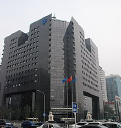
遵义金融监管分局同意中国银行正安支行开业
Jin Tou Wang· 2025-12-17 03:16
二、核准中国银行遵义分行业务范围为:经银行业监督管理机构批准并经上级行授权的业务。 2025年12月11日,遵义金融监管分局发布批复称,《中国银行(601988)遵义分行关于辖属中国银行股 份有限公司正安支行开业的请示》(遵中银报〔2025〕103号)收悉。经审核,现批复如下: 一、同意中国银行股份有限公司正安支行开业,营业场所为正安县凤仪镇文昌社区七鑫·未来世界一组 团A14栋1层1号商业门面。 三、接此批复文件后,中国银行应按照有关规定领取许可证并办理开业前的相关手续。开业后及时向遵 义金融监管分局报告相关情况。 ...