BIDU(BIDU)

Search documents
未知机构:大摩TMT大会第一天要点总结各公司主题一句话要点-20260304
未知机构· 2026-03-04 02:45
Summary of Key Points from Conference Call Records Industry: Internet Company: Baidu - Baidu aims for a valuation of $50-100 billion for Kunlun, with a target to keep its shareholding discount at 20% or lower through buybacks, dividends, and spin-offs to enhance shareholder value, expecting a rebound in search business by 2026 [1][4] - The company plans a $5 billion buyback program and has initiated a dividend policy, with the goal of reducing shareholding discount post Kunlun spin-off [4][6] - AI computing potential is projected to grow sixfold, with inference share increasing from 20% to 80%, expanding the total addressable market (TAM) by 20-24 times due to lightweight models and application-driven growth [4][6] - Baidu's AI-driven business is expected to account for over 50% of total revenue by 2026, including AI cloud, infrastructure, and autonomous driving services [6][10] Company: Grab - Grab is experiencing sustainable growth driven by low user penetration in Southeast Asia (below 10%), new affordable product launches, and cross-selling strategies that are expected to increase delivery EBITDA margins to 4% by 2025 [1][7] - The company has secured $4 billion in credit and projects EBITDA of $440 million, $1.16 billion, and $1.5 billion for 2026-2028 [7] Industry: Semiconductor Company: Applied Materials (AMAT) - Applied Materials has over two years of order visibility, with demand focused on leading-edge logic, DRAM, and advanced packaging, expecting 2026 to be the highest growth year since 2024 [1][8] - Multiple factors will impact gross margins, including product complexity and the speed of new material applications [8] Company: Broadcom - Broadcom's current cycle differs from 2020-2021, driven by a broader range of sectors including AI accelerators and data center architecture upgrades, with longer product lifespans [2][8] - The company anticipates obtaining merchant GPU certification in 1H26 and expects strong demand for HBM and CPO, with ASICs split evenly [2][8] Company: Lumentum - Lumentum faces supply bottlenecks until 2028, with Nvidia's investment aiding capacity expansion; CPO is expected to become the highest revenue business, although traditional optical module business may suffer [2][9] Industry: AI Company: Intuit - Intuit's resilience against AI disruption relies on accuracy, compliance, and relevance, particularly in tax, payroll, and accounting, which large language models cannot fulfill [3][10] - The company anticipates AI-driven business to constitute 40% of total revenue by 2025 and over 50% by 2026 [10] Industry: Autonomous Driving Company: Uber - Autonomous driving is seen as a growth driver for ride-hailing, with leading platforms expected to maintain their edge; however, commercialization will require time due to safety software, OEM scaling, and regulatory challenges [2][10] Additional Insights - SoftBank is narrowing its investment focus to semiconductors and AI, with limited new investments in China but maintaining a positive outlook on ByteDance, recently valued at $550 billion [4][9]




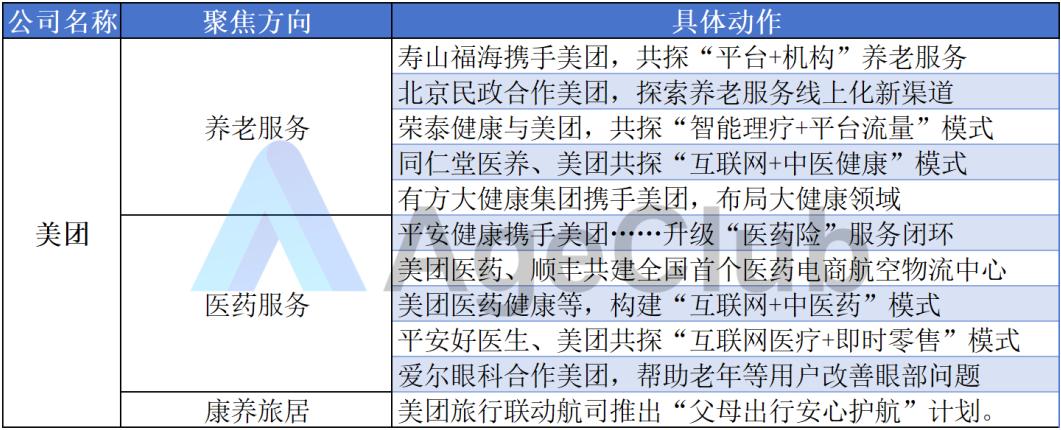
京东10亿押注护理培训、美团上线养老机构,互联网巨头正在改写中国养老服务逻辑
3 6 Ke· 2026-03-04 01:27
Core Insights - Major internet companies are entering the elderly care market, leveraging their resources and technology to reshape the industry dynamics and enhance service efficiency [1][12][23] Group 1: Company Strategies - Meituan has signed strategic cooperation agreements with various elderly care institutions and government departments to explore online elderly care services [3][4] - JD.com focuses on home care and has invested significantly in establishing a supply chain for elderly care services, including a 10 billion yuan investment in training care personnel [5][6][8] - Tencent is developing various applications and services aimed at elderly care, including a mini-program to assist seniors in using smartphones and a health management system [9][12] Group 2: Market Dynamics - The elderly care market is characterized by diverse and fragmented demands across different age groups and regions, creating opportunities for large companies to enter and optimize service delivery [1][12] - The integration of technology and data-driven approaches by major companies is expected to enhance operational efficiency and reduce costs in the elderly care sector [12][22] - The shift towards a "platform + institution" model allows for a more transparent and efficient service delivery, enabling users to easily compare and select services [4][13] Group 3: Future Outlook - The collaboration between internet giants and traditional elderly care institutions is anticipated to create a "win-win" scenario, improving service accessibility and personalization for seniors [23] - The establishment of standardized service protocols and the integration of digital tools are expected to enhance the overall quality and efficiency of elderly care services [12][23] - The ongoing development of AI and data analytics will further personalize health management solutions for the elderly, making services more tailored to individual needs [12][21]



豆包破3亿,千问狂涨552%,ChatGPT慌了丨AI产品榜
36氪· 2026-03-03 14:08
Core Insights - The article discusses the competitive landscape of AI products following the 2026 Spring Festival, highlighting significant user growth and market shifts among leading AI applications [4][20]. Global Rankings - ChatGPT remains the top AI application globally with 955.6 million Monthly Active Users (MAU), showing a growth rate of 2.69% [34]. - Domestic AI application Doubao surged to second place with 315.31 million MAU, experiencing an impressive growth of 87.38% [34]. - Qianwen, another domestic AI product, climbed to third place with 202.69 million MAU, marking a staggering growth of 552.83% [34]. Domestic Rankings - The domestic AI landscape has been reshaped, with Doubao and Qianwen dominating the top two spots, followed by Quark, DeepSeek, and Tencent Yuanbao [12][13]. - Doubao's MAU growth is attributed to its integration into various Spring Festival activities, while Qianwen's growth is linked to substantial subsidies from Alibaba [13][20]. Overseas Rankings - DeepSeek leads the overseas market with 132.57 million MAU, showing stable growth of 2.26% [16]. - Dola, the overseas version of Doubao, ranks second with 59.98 million MAU, growing by 12.61% [17]. - Talkie AI has emerged as the fastest-growing overseas product with a 13.45% increase, reaching 26.27 million MAU [30]. Subscription Revenue Rankings - Gemini leads in subscription revenue with $17.87 million, followed by Claude with $43.41 million [33]. - The subscription revenue growth rates for these products indicate a strong market demand for premium AI services [33]. User Retention Concerns - The article raises questions about whether the user growth observed during the Spring Festival can be sustained in the long term, emphasizing the need for ongoing engagement strategies [20].



首次AI春节大战,谁赢了?
华尔街见闻· 2026-03-03 08:10
Core Insights - The article discusses the intense competition among major Chinese tech companies in the consumer AI sector during the 2026 Spring Festival, driven by substantial subsidies and promotional activities [1][2] - Morgan Stanley estimates that the total promotional spending across platforms could exceed 8 billion RMB, highlighting the scale of the user acquisition battle [1][7] - The analysis reveals that while all platforms experienced a surge in daily active users (DAU), only Doubao and Tongyi Qwen managed to retain users effectively, indicating a disparity in long-term user engagement [1][2] Promotional Spending - Alibaba (Tongyi Qwen) announced a "30 billion RMB Spring Festival invitation plan," with actual spending likely exceeding 5 billion RMB, focusing on various consumer scenarios [3] - ByteDance (Doubao) heavily invested in media exposure through the CCTV Spring Festival Gala and estimated total spending far exceeded 1.5 billion RMB, including high-value prizes [4] - Tencent (Yuanbao) allocated 1 billion RMB for cash red envelopes, with a notable marketing strategy involving task-based rewards [5] - Baidu (Wenxin) spent 500 million RMB on cash red envelopes, positioning itself as a key AI partner for the Beijing Satellite Spring Festival Gala [6] User Engagement and DAU Growth - Doubao achieved a peak DAU of 144.5 million during the Spring Festival, a net increase of approximately 60.5 million from pre-activity levels [6] - Tongyi Qwen's DAU peaked at 73.5 million, with a net increase of about 56.5 million [8] - Yuanbao's DAU reached a peak of 50 million, marking a net increase of around 33.5 million [9] - Wenxin's performance was significantly lower, with a peak DAU of only 826,000 [10] User Participation and Retention - User engagement metrics showed that Doubao had the highest average daily usage time, with a mild decrease of 15% to 8.7 minutes, indicating strong user retention [12][14] - Tongyi Qwen experienced a significant drop in average usage time from 6.3 minutes to between 3 to 5 minutes, reflecting a transactional user behavior [12] - Yuanbao's average usage time decreased by about 32%, suggesting lower engagement from newly acquired users [13] - Post-activity retention rates revealed that Yuanbao's DAU quickly fell back to pre-activity levels, indicating poor user retention [16] Overall Performance Assessment - The competition is characterized as a "super entrance" battle, with the ability to retain users post-subsidy being crucial for future AI commercialization [2][21] - Doubao's comprehensive performance was highlighted as the most outstanding, benefiting from top-tier media exposure and balanced metrics across user engagement and retention [22] - Tongyi Qwen demonstrated impressive order volume through its ecosystem integration, but user engagement quality needs improvement [22] - Yuanbao's retention performance raised concerns, as its promotional efforts seemed to yield only short-term visibility [22] - Baidu's Wenxin was noted to have lagged significantly behind the other three platforms in terms of performance metrics [22]


春节餐饮市场迎“开门红”,关注AI制药、CPO等产业新趋势
Tebon Securities· 2026-03-03 07:46
Consumer Sector - During the Spring Festival of 2026, the average daily revenue from national catering consumption increased by 31.2%, significantly surpassing the overall consumption growth rate of 13.7%[4] - The average daily sales of key retail and catering enterprises monitored by the Ministry of Commerce grew by 5.7%, accelerating by 1.6 percentage points compared to 2025[4] - In terms of consumption types, the growth rate for dining services was 26.5%, while snack services experienced explosive growth of 42.1%[7] Hard Technology - Global capital expenditure by the eight major cloud service providers (CSPs) is expected to exceed $710 billion in 2026, representing a year-on-year growth of approximately 61%[13] - Google's self-developed TPU chips are projected to account for nearly 78% of its AI server shipments in 2026, widening the gap with GPUs[14] - The global Datacom CPO market is expected to grow from less than $70 million in 2024 to $8 billion by 2030, with a compound annual growth rate exceeding 120%[18] Health Sector - AI drug discovery can reduce the time and cost of drug development by up to 50% during preclinical and clinical stages[23] - The global AI pharmaceutical market is projected to reach $15.6 billion by 2025, with a compound annual growth rate of 25.7% from 2025 to 2030[24] - Companies with AI model development capabilities, such as InSilico Medicine and CrystalGenomics, are recommended for investment[26]




百度(BIDU.US/9888.HK):AI业务成为重要支柱,昆仑芯上市进展顺利
SPDB International· 2026-03-03 07:25
Investment Rating - The report maintains a "Buy" rating for the company with a target price of $195 for BIDU.US and HK$190 for 9888.HK, indicating a potential upside of 57% and 54% respectively from current prices [3][5]. Core Insights - The company's AI business has become a significant revenue pillar, with core AI new business revenue reaching RMB 113 billion in Q4 2025, accounting for 43% of total revenue [2]. - Despite a decline in traditional search advertising revenue, the company has shown improved profitability with an adjusted net profit of RMB 39 billion in Q4 2025, exceeding market expectations by 15% [1][3]. - The company is advancing its global expansion in autonomous driving, providing over 3.4 million fully autonomous driving services in Q4 2025, marking a year-on-year growth of over 200% [3]. Financial Performance Summary - In Q4 2025, total revenue was RMB 327 billion, a year-on-year decrease of 4% but a quarter-on-quarter increase of 5%. Core revenue was RMB 261 billion, down 6% year-on-year [1]. - The adjusted net profit for 2025 is projected at RMB 18.9 billion, with a net profit margin of 11.9% [1][4]. - The company has announced a share repurchase plan of $5 billion and established a dividend policy, expected to commence by the end of 2026 [1][3]. Revenue Breakdown - The AI cloud infrastructure segment reported revenue of RMB 58 billion in Q4 2025, with a quarter-on-quarter growth of 38% and a year-on-year increase in AI subscription revenue of 143% [2]. - AI applications generated RMB 27 billion in revenue for Q4 2025, with total annual revenue surpassing RMB 100 billion [2]. - AI-native marketing services achieved a revenue of RMB 27 billion, reflecting a year-on-year growth rate of 110% [2]. Market Position and Future Outlook - The company is expanding its autonomous driving operations globally, currently covering 26 cities and collaborating with Uber and Lyft to enhance its asset-light model [3]. - The planned independent listing of Kunlun Chip is progressing well, which is expected to unlock asset value through market pricing [3]. - Overall, while traditional business faces challenges, the growth of AI new business is anticipated to offset declines in traditional advertising revenue [3].
QuestMobile 2025年AI应用层发展核心报告:原生App巨头筑墙,新锐破局,AI核心入口雏形初现,入口争夺战持续
QuestMobile· 2026-03-03 02:09
Core Insights - The article emphasizes that 2025 will be a pivotal year for AI applications, marking a significant transition from quantity to quality in the domestic AI application market, with mobile AI applications, smartphone manufacturers' AI assistants, and PC AI applications reaching monthly active user counts of 722 million, 559 million, and 205 million respectively, indicating a rapid adoption rate [4][35]. Group 1: AI Application Market Overview - The domestic AI application market is projected to achieve a qualitative leap by the end of 2025, with mobile AI applications and smartphone manufacturers' AI assistants capturing 56.6% and 57.7% of the overall user base respectively [4][35]. - The growth of AI applications is characterized by significant quarterly milestones, including open-source initiatives, performance comparisons, and the establishment of commercial value [4][19]. - The distribution of AI applications across various sectors shows that creative design, comprehensive assistants, efficiency office tools, and copywriting applications account for 11.7%, 10.7%, 9.2%, 8.7%, and 8.1% respectively, reflecting clear market demand and monetization pathways [4][25]. Group 2: Competitive Landscape - Major internet companies like Alibaba, Tencent, ByteDance, and Baidu are engaged in fierce competition across various platforms, with a notable "red envelope battle" during the Spring Festival highlighting the intense rivalry [5][54]. - The average monthly usage of native apps has reached 69.2 times per user, surpassing application plugins, indicating a shift in user habits towards native applications [5][35]. - The top five applications in December 2025, including Doubao and DeepSeek, have seen significant user growth, with Doubao achieving a compound growth rate of 9.7% [5][53]. Group 3: User Engagement and Experience - The article notes that the average monthly usage time for native apps has increased to 143.2 minutes, significantly higher than that of tool and photo editing apps [5][44]. - The user engagement metrics indicate a growing trend towards native applications, with the number of users engaging with two or more apps increasing by 27.5% compared to January 2024 [5][46]. - The rise of native apps is reshaping user digital experiences, suggesting a transition into a "reconstruction period" where users are actively seeking more efficient solutions [5][48]. Group 4: Future Trends and Opportunities - The article predicts that the competition for AI application entry points will intensify, with mobile scenarios becoming the core entry for AI experiences [5][35]. - The collaboration between smartphone manufacturers and internet companies is expected to deepen, driven by AI as a new connective tissue for ecosystem building [5][82]. - The potential emergence of three types of AI super entry points is anticipated, which will reshape the internet value chain as the flow of traffic evolves [5][89].

Macquarie Lowers Price Target on Baidu (BIDU) Citing Sluggish Ad Business
Yahoo Finance· 2026-03-02 20:16
Group 1 - Baidu Inc. is considered one of the 12 best stocks to buy and hold for the next 2 years despite a price target reduction from $205 to $177 by Macquarie, which reflects sluggish performance in its core advertising business [1][4] - The company has strategically rebranded its revenue reporting to emphasize AI monetization, which now constitutes 43% of total revenue, indicating solid growth momentum in AI cloud infrastructure [2] - Baidu announced a new $5 billion share repurchase program and plans to implement its first-ever dividend policy, signaling confidence in its financial health [2] Group 2 - The recent earnings call for Baidu provides insights into its performance and strategic direction, particularly in the context of its advertising and AI initiatives [4]
百度,从入口失效到技术自救
财富FORTUNE· 2026-03-02 13:05
Core Viewpoint - Baidu is transitioning from being an "entry-level company" in the internet space to focusing on AI and computational power, indicating a significant shift in its business model and revenue structure [1][6][28]. Group 1: Business Transition - Baidu's revenue for 2025 reached 129.1 billion yuan, with AI business revenue accounting for 40 billion yuan, representing 43% of its general business revenue in Q4 2025 [5][15]. - The company is moving from a "traffic tax" model, where it charged for user access, to a "computational tax" model, selling productivity instead [6][28]. - The shift in advertising dynamics shows that small and medium-sized businesses prefer platforms like Douyin and Xiaohongshu for their higher conversion rates, indicating a decline in Baidu's advertising dominance [12][13]. Group 2: Market Position and Competition - Baidu's search advertising is becoming a supplementary role, lacking the depth of context and social engagement that competitors like Tencent and ByteDance offer [13][19]. - The company faces challenges in maintaining its competitive edge in AI applications, as it lacks the distribution channels that other companies like ByteDance and Alibaba possess [20][21]. - Baidu's historical role as a traffic gatekeeper is diminishing, as social media and content platforms have redefined user engagement and entry points into the internet [24][26]. Group 3: Future Outlook - The capital market is providing Baidu with a chance for revaluation, contingent on its ability to stabilize its profit structure, sustain technological advantages, and recover capital investments [28][29]. - The transition from collecting traffic fees to computational fees represents a profound restructuring of Baidu's business model, with the potential to redefine its role in the AI era [28].

Global Markets Shaken as US-Israeli Strikes on Iran Intensify; Oil Surges and Tech Stocks Plunge
Stock Market News· 2026-03-02 02:38
Military Operations - The United States and Israel have launched a significant military offensive against Iranian targets, with explosions reported in Tehran and Karaj [2] - U.S. Defense Secretary is scheduled to provide further details on the operations, which were delayed from an original target date of February 21 [3] - The military campaign will continue until the U.S. avenges the deaths of three American soldiers [3] Market Reactions - Asian financial markets are experiencing high volatility due to the escalating conflict, with major tech stocks in Hong Kong suffering significant losses [4] - SenseTime dropped by 8%, while Alibaba, Baidu, and Kuaishou all fell by over 4% [4] - Philippine shares slid 2.8% to their lowest levels since mid-February, driven by fears of a prolonged regional war affecting global trade and energy flows [5] Energy and Commodity Impact - Oil prices have surged in response to the military strikes, complicating cost-of-living management in Japan [6] - Japan has no immediate plans to release its oil stockpiles despite the price spike [6] - The jewelry industry in India is preparing for potential shortages of gold and diamonds due to disrupted trade routes from the Middle East [7] - South Korea has released 150,000 tons of rice from state reserves to stabilize domestic food prices amid global uncertainty [7] Humanitarian and Diplomatic Developments - The military escalation has led to a humanitarian crisis in the Levant, with evacuations ordered in Lebanon [8] - Thousands have rallied in Yemen in support of Iran, indicating a potential widening of regional unrest [8] - Despite the violence, Iran is reportedly making efforts to restart talks with the U.S., although military operations will continue until objectives are met [9] Digital Asset Market - Bitcoin is trading at $66,199.39 as investors assess the impact of the conflict on digital assets and overall market sentiment [10]