BIDU(BIDU)

Search documents
百度:In progress to provide greater visibility on AI-powered business growth and enhance shareholder return-20260302
Zhao Yin Guo Ji· 2026-03-02 01:24
Investment Rating - The report maintains a "BUY" rating for Baidu, with a target price adjusted to US$161.7 from the previous US$150.7, indicating a potential upside of 29.9% from the current price of US$124.44 [2][14]. Core Insights - Baidu's General Business revenue for 4Q25 was RMB26.1 billion, down 5.7% year-over-year, aligning with Bloomberg consensus, while non-GAAP operating profit reached RMB2.8 billion, down 39% year-over-year but 12% above consensus [1]. - AI-powered business segments showed significant growth, with AI-native marketing services revenue increasing by 110% year-over-year to RMB2.7 billion, and AI-cloud infrastructure revenue reaching RMB5.8 billion, with subscription-based revenue growing 143% year-over-year [1][8]. - The report highlights key stock price drivers, including the reacceleration of overall advertising revenue growth, robust cloud revenue growth, and enhancements in shareholder returns, particularly through a new share repurchase program and the introduction of a dividend policy [1][15]. Financial Performance - For FY25, Baidu's revenue is projected at RMB129.1 billion, reflecting a 3.0% decline year-over-year, with adjusted net profit expected to be RMB18.9 billion, down 29.9% year-over-year [9]. - The non-GAAP operating profit margin for Baidu Core was 10.9% in 4Q25, showing a recovery from 9.0% in 3Q25, indicating improvements in operational efficiency [8]. - The revenue from AI Cloud Infrastructure for 2025 is expected to reach RMB19.8 billion, up 34% year-over-year, showcasing strong growth in this segment [8]. Valuation and Forecast - The report rolls over the valuation window to 2026E, with a target price based on a sum-of-the-parts (SOTP) valuation method, which includes various business segments and net cash [14]. - The adjusted target price reflects a valuation of US$35.7 for Baidu General Business, US$62.9 for Baidu Cloud, and US$62.8 for net cash and investments [14]. - The forecast for 2026E revenue is RMB135.0 billion, with a gross profit margin of 43.7% and a non-GAAP net profit margin of 12.9% [12][19].

百度2.0:一场由AI驱动的核心价值重构
阿尔法工场研究院· 2026-03-01 23:12
Core Viewpoint - Baidu has transformed its AI business from a cost center into a profit engine, signaling a significant shift in its market strategy and financial performance [1][4]. Financial Performance - In Q4 2025, Baidu's total revenue reached RMB 32.7 billion, a 5% quarter-on-quarter increase, with core AI new business revenue at RMB 11.3 billion, accounting for 43% of general business revenue, up 17.7% from Q3 [2][3]. - For the entire year of 2025, the core AI new business revenue totaled RMB 40 billion, representing a substantial 48% year-on-year growth [2][3]. Revenue Composition - The core AI new business consists of three main components: AI Cloud (largest share), AI applications, and AI native marketing services. The AI native marketing services experienced an annual growth rate of 301%, making it the fastest-growing segment [2][3]. Market Strategy - Baidu's management has adjusted its disclosure policy to highlight AI business revenue, indicating confidence in its AI capabilities and a commitment to transparency in the capital market [4]. - The company is undergoing a comprehensive restructuring of its core business value through new technologies, supported by a full-stack AI and self-developed chip strategy [4]. Business Segments - In the B-end market, Baidu's AI Cloud infrastructure revenue reached RMB 5.8 billion in Q4, with AI high-performance computing subscription revenue surging 143% year-on-year [7]. - Baidu's AI native marketing services generated nearly RMB 10 billion in revenue for the year, with a remarkable annual growth rate of 300% [8]. User Engagement - As of December 2025, Baidu's app had 679 million monthly active users, while the Wenxin Assistant surpassed 200 million MAU, showing a significant increase in user engagement and willingness to pay for productivity enhancements [9][10]. New Growth Areas - Baidu's Robotaxi service, "LuoBo Kuaipao," achieved 3.4 million orders in Q4, a 200% year-on-year increase, and expanded its global presence to 26 cities [11][13]. Valuation Perspective - The market is shifting from traditional PE valuation to SOTP (Sum of the Parts) valuation, recognizing the potential of Baidu's AI business segments [15]. - Baidu plans to spin off its Kunlun chip division, with estimated valuations ranging from $13.3 billion to $50 billion, which could significantly boost Baidu's stock price [15]. Capital Return Strategy - Baidu's board authorized a $5 billion share buyback plan and approved its first-ever dividend policy, indicating strong confidence in future cash flows from its AI business [16].


百度:2025 年第四季度初步解读- 业绩基本符合预期,AI 驱动业务环比增长稳健;暂未评级
2026-03-01 17:23
Summary of Baidu.com Inc. (BIDU) 4Q25 Earnings Call Company Overview - **Company**: Baidu.com Inc. (BIDU) - **Quarter**: 4Q25 - **Revenue**: RMB 32.74 billion, down 4% year-over-year (yoy) but in line with expectations [9] - **Non-GAAP EPADS**: RMB 10.62, down 45% yoy but up 12% compared to Goldman Sachs estimates [9] Key Financial Highlights - **Gross Margin**: 44.4%, an increase of 3.5 percentage points compared to Goldman Sachs estimates [9] - **Baidu General Business Revenue**: RMB 26.1 billion, down 6% yoy, consistent with expectations [9] - **Operating Cash Flow**: Positive in 2H25, generating RMB 3.9 billion combined, with RMB 2.6 billion in 4Q25 [6] Business Segment Reclassification - Baidu redefined its business segments starting from 4Q25: - **AI-powered Business**: RMB 11.3 billion - **Legacy Business**: RMB 12.3 billion - **Others**: RMB 2.5 billion [2] AI-Powered Business Growth - **AI-powered Business Revenue**: Grew 17% quarter-over-quarter (qoq) to approximately RMB 11 billion, now accounting for 43% of Baidu General Business [6] - **AI Cloud Infrastructure Revenue**: RMB 5.8 billion, with a 39% qoq growth; subscription-based revenue surged 143% yoy [6] - **AI Applications Revenue**: RMB 2.7 billion, with a 5% qoq growth [6] - **AI-native Marketing Services Revenue**: RMB 2.7 billion, down 4% qoq but up 110% yoy [6] Apollo Go Developments - **Operational Rides**: Apollo Go provided 3.4 million fully driverless operational rides in 4Q25, a growth of over 200% yoy [6] - **Global Footprint**: Expanded to 26 cities as of February 2026 [6] Shareholder Returns - **Share Repurchase Program**: Announced a new program with up to US$5 billion authorization effective through December 31, 2028 [7] - **Dividend Policy**: Introduced its first-ever dividend policy, with the first payment potentially by year-end 2026 [7] Risks and Methodology - Goldman Sachs has not rated BIDU and highlights potential conflicts of interest due to business relationships with the company [4][11] Additional Financial Metrics - **Total Revenue for FY25**: RMB 102.5 billion, down from RMB 104.7 billion in FY24 [8] - **Operating Profit (GAAP)**: RMB 1.483 billion in 4Q25, down 62% yoy [10] - **Net Profit (GAAP)**: RMB 1.697 billion in 4Q25, down 66% yoy [10] Conclusion Baidu's 4Q25 results reflect a mixed performance with solid growth in AI-powered segments, particularly in AI Cloud Infrastructure, while facing challenges in overall revenue and net profit. The company is taking steps to enhance shareholder value through share repurchase and dividend policies, indicating a focus on returning capital to investors.
百度20260226
2026-03-01 17:23
Summary of Baidu's Earnings Call Company Overview - **Company**: Baidu - **Date**: February 26, 2026 Key Points Industry and Business Performance - Baidu's AI cloud business revenue is projected to reach **30 billion RMB** in 2025, representing a **34% year-over-year growth**, outperforming the market [2][6] - AI accelerator infrastructure subscription revenue grew by **143% year-over-year** in Q4, becoming a major growth driver [2][6] - AI-driven business revenue accounted for **43%** of total revenue in Q4, marking a significant increase and becoming the core growth engine [2][7] Product and Technology Developments - The latest version of the ERNIE model, **ERNIE 5.0**, was released alongside organizational restructuring to enhance agility in R&D and deployment [2][4] - The model team was reorganized into two focused teams: one for foundational models and another for business applications, aiming to optimize efficiency and cost [5][4] - Baidu has invested over **100 billion RMB** in AI, with plans to maintain this investment density [4][11] Strategic Initiatives - Baidu announced a **$5 billion stock buyback plan** and its first dividend policy to enhance shareholder value [2][8] - The proposed spin-off and independent listing of Quanching is underway, expected to unlock significant value for Baidu [2][8] Apollo Go Developments - Apollo Go has completed over **20 million rides**, with a total mileage exceeding **300 million kilometers**, including **190 million kilometers** of fully autonomous driving [2][9] - The goal is to achieve unit economic breakeven in more cities by **2026**, with a focus on international expansion [3][9] Competitive Landscape - The AI product market is highly competitive, with Baidu focusing on practical applications and enhancing existing products [10][4] - The flagship consumer app has built an intelligent assistant, expected to surpass **200 million monthly active users** [10][4] Financial Outlook - Q4 profits saw a **double-digit quarter-over-quarter growth**, with non-GAAP operating profit increasing by approximately **35%** [4][11] - Operating cash flow turned positive, nearing **4 billion RMB** in the second half of the year [11][11] Future Growth Drivers - The growth of AI-driven business is supported by multiple factors, including enterprise AI scaling, comprehensive AI capabilities, and the expansion of Apollo Go [7][8] - The company aims to leverage its AI capabilities to enhance user interaction and conversion rates in marketing services [8][7] Investment and Financial Strategy - Baidu is exploring alternative ways to support financial needs while maintaining a healthy long-term financial structure [11][11] - The company is committed to balancing profitability with ongoing AI investments, ensuring operational capital remains positive [11][11]
百度集团-SW(09888):AI新业务增速强劲,新增50亿回购、将加大资本开支
Guoxin Securities· 2026-03-01 13:21
Investment Rating - The investment rating for Baidu Group is "Outperform the Market" [5][27]. Core Insights - Baidu Group's total revenue for Q4 2025 was 32.7 billion yuan, a year-on-year decrease of 4%. The core revenue was 26.1 billion yuan, down 6% year-on-year, while iQIYI's revenue increased by 3% to 6.8 billion yuan [1][9]. - The adjusted net profit attributable to shareholders for Q4 2025 was 3.9 billion yuan, a decline of 42% year-on-year, with an adjusted net profit margin of 12% [1][9]. - AI new business revenue reached 11.3 billion yuan, with AI high-performance computing facility subscription revenue growing by 143% year-on-year [2][21]. - The company plans to increase capital expenditure significantly, maintaining a scale of 10 billion yuan over the next 12-24 months, while also initiating a stock repurchase plan of 5 billion dollars [3][27]. Financial Performance Summary - For Q4 2025, Baidu's core revenue decreased by 6%, while iQIYI's revenue increased by 3%. Online marketing revenue fell by 16%, while non-online marketing revenue rose by 13% [11][14]. - The operating expenses for Q4 2025 were 13 billion yuan, up 6% year-on-year, primarily due to increased expected credit losses and one-time employee severance costs [9]. - The forecast for adjusted net profit for 2026-2027 is 22.1 billion yuan and 22.8 billion yuan, respectively, with an additional forecast for 2028 of 27.3 billion yuan [27][29]. Business Segment Analysis - The AI business is divided into three segments: 1. Intelligent Cloud Infrastructure, which generated 5.8 billion yuan in revenue, up 34% year-on-year. 2. AI Applications, with revenue of 2.7 billion yuan, a 5% increase year-on-year. 3. AI Native Marketing Services, which saw revenue of 2.7 billion yuan, growing by 110% year-on-year, accounting for 18% of Baidu's core online marketing revenue [2][21]. Market Outlook - The report expresses optimism about the potential impact of AI technology on marketing and intelligent cloud business, despite challenges in advertising revenue due to macroeconomic conditions [3][27].
Baidu, Inc. (BIDU) Releases Q4 2025 and FY 2025 Results
Insider Monkey· 2026-03-01 06:33
Core Insights - Generative AI is viewed as a transformative technology by Amazon's CEO Andy Jassy, indicating its potential to significantly enhance customer experiences across the company [1] - Elon Musk predicts that by 2040, humanoid robots could create a market worth $250 trillion, representing a major shift in the global economy driven by AI innovation [2][3] - Major firms like PwC and McKinsey acknowledge the multi-trillion-dollar potential of AI, suggesting a broad consensus on its economic impact [3] Company and Industry Analysis - A breakthrough in AI technology is redefining work, learning, and creativity, leading to increased interest from hedge funds and top investors [4] - There is speculation about an under-owned company that may play a crucial role in the AI revolution, with its technology posing a threat to competitors [4][6] - Prominent figures in technology and investment, including Bill Gates and Warren Buffett, recognize AI as a significant advancement with the potential for substantial social benefits [8]

百度集团-SW(09888):25Q4:利润超预期,AI相关收入增势强劲
GF SECURITIES· 2026-03-01 04:06
Investment Rating - The report assigns a "Buy" rating for Baidu (BIDU) with a target price of $177 per ADS (equivalent to HKD 173 per share) [3]. Core Insights - Baidu's Q4 2025 earnings exceeded expectations, with AI-related revenue showing strong growth. The company's total revenue for Q4 2025 was CNY 32.7 billion, a year-over-year decline of 4% but a quarter-over-quarter increase of 5% [6]. - AI-related revenue accounted for 43% of total revenue, indicating a successful transition from traditional advertising to AI-driven services. The AI Cloud Infrastructure revenue reached CNY 5.8 billion, growing 143% year-over-year [6]. - The report forecasts Baidu's revenue to reach CNY 131.5 billion and CNY 136.5 billion in 2026 and 2027, respectively, with expected growth rates of 2% and 4% [6]. Financial Projections - Revenue projections for Baidu are as follows: - 2024: CNY 133.125 billion - 2025: CNY 129.079 billion - 2026: CNY 131.536 billion - 2027: CNY 136.528 billion - 2028: CNY 143.284 billion - Non-GAAP net profit is projected to be CNY 27.002 billion in 2024, declining to CNY 18.114 billion in 2026, before recovering to CNY 20.302 billion in 2028 [2][6]. - The report anticipates a gradual recovery in profitability, with EBITDA expected to be CNY 64.218 billion in 2024 and reaching CNY 55.276 billion by 2028 [2][6]. Revenue Breakdown - The revenue breakdown for Q4 2025 includes: - AI-powered Business: CNY 11.3 billion - Traditional Advertising: CNY 12.3 billion - Other Revenue: CNY 2.5 billion [6]. - The report highlights that the decline in traditional advertising revenue is expected to have a diminishing marginal impact on overall revenue and profit [6].
百度集团-SW:看好AI业务保持强劲增长,维持“买入”评级-20260228
Ubs Securities· 2026-02-28 09:40
Investment Rating - The report maintains a "Buy" rating for Baidu (BIDU.US) with a target price of $180 for US shares and HKD 175 for H-shares [1] Core Insights - Baidu's fourth-quarter performance exceeded expectations, with AI-driven revenue reaching RMB 11.3 billion, a year-on-year increase of 48%, accounting for 43% of the total revenue from Baidu's core business [1] - The report anticipates strong growth in Baidu's AI business through fiscal year 2026, driven by increased adoption of AI applications, continuous product innovation, and expanded use cases [1] - Despite recent stock price volatility, the report asserts that the valuation framework remains solid, with several positive factors such as the upcoming IPO of Kunlun Chip and dividend announcements making the current stock price attractive in terms of risk-reward [1] - The report slightly raises the core non-GAAP operating profit margin due to ongoing focus on operational efficiency [1]
百度集团-SW(09888):——百度集团-SW(9888.HK)2025Q4财报点评:AI业务快速增长,已成为公司业绩新驱动力
Guohai Securities· 2026-02-28 09:03
Investment Rating - The investment rating for Baidu Group-SW (9888.HK) is "Buy" (maintained) [1] Core Insights - Baidu's general business revenue showed a quarter-on-quarter increase in Q4 2025, primarily driven by growth in Baidu's core AI new business. The general business revenue for 2025 was approximately CNY 102.5 billion, a year-on-year decline of 2% [5] - The core AI new business of Baidu has become a new core driver of the company's performance, achieving revenue of approximately CNY 40 billion in 2025, a year-on-year growth of 48%. This segment includes intelligent cloud infrastructure, AI applications, and AI-native marketing services [6] - The Robotaxi service, "Luo Bo Kuaipao," has accelerated its global expansion, with operational orders reaching 3.4 million in Q4 2025, representing a year-on-year growth of over 200% [7] Financial Performance Summary - In 2025, Baidu achieved total revenue of approximately CNY 129.1 billion, a year-on-year decline of 3%. The non-GAAP operating profit was approximately CNY 15 billion, down 43% year-on-year, and the non-GAAP net profit was approximately CNY 18.9 billion, down 30% year-on-year [4] - For Q4 2025, Baidu's revenue was approximately CNY 32.7 billion, a year-on-year decline of 4% but a quarter-on-quarter increase of 5%. The non-GAAP operating profit was approximately CNY 3 billion, down 41% year-on-year but up 35% quarter-on-quarter [4] - The company has authorized a new share repurchase plan of up to USD 5 billion, effective until December 31, 2028, and has approved a dividend policy to enhance shareholder returns [10] Earnings Forecast - The revenue forecast for Baidu is projected to be CNY 134.6 billion, CNY 147.1 billion, and CNY 154.9 billion for 2026, 2027, and 2028, respectively. The non-GAAP net profit is expected to be CNY 19.5 billion, CNY 23.9 billion, and CNY 27.3 billion for the same years [11][12]
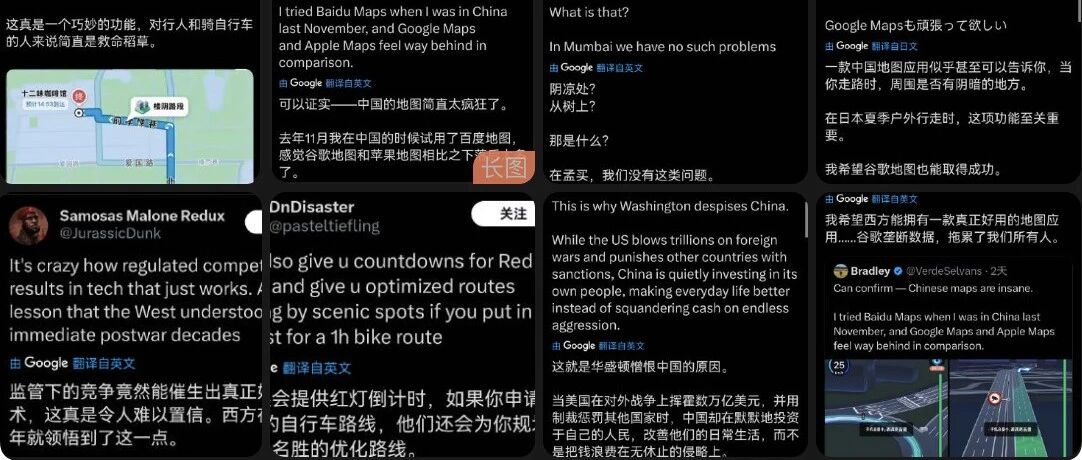
中国地图软件在外网火了!老外直呼太好用
程序员的那些事· 2026-02-28 03:37
Core Viewpoint - The rise of Chinese map software among foreign tourists highlights the effectiveness of China's digital services and the impact of visa-free policies on inbound tourism [2][3]. Group 1: Inbound Tourism - During the recent Spring Festival holiday, China welcomed 4.281 million inbound tourists, including 898,000 foreign visitors, driven by visa-free policies [2]. - The popularity of Chinese map applications among foreign tourists has become a significant topic on social media platforms [2]. Group 2: Features of Chinese Map Software - Domestic map applications like Amap and Baidu have launched fully English interfaces and support multiple languages, including Japanese, Korean, French, German, and Spanish, catering to overseas users [3]. - Features such as lane-level navigation, traffic light countdowns, and real-time congestion predictions have exceeded foreign tourists' expectations [3]. - The integration of the BeiDou system enhances positioning accuracy and stability, allowing users to find precise locations in alleys, scenic spots, and commercial areas [3]. Group 3: User Experience - Foreign users have reported that using Chinese map applications for navigation in China is more aligned with local conditions compared to Google Maps, providing comprehensive solutions for transportation needs [3]. - Many foreign tourists express that their perception of China has shifted from merely sightseeing to being impressed by Chinese technological advancements [3].