Citi(C)

Search documents
The White House Is Threatening Card Issuers Again. Time to Buy Bank Stocks?
Yahoo Finance· 2026-02-17 10:35
Core Viewpoint - The Trump Administration is pressuring credit card issuers to lower high-interest rates, with a proposed cap of 10% on credit card interest rates, which would require Congressional action to implement [1][4]. Group 1: Government Pressure and Legislative Context - White House trade advisor Peter Navarro publicly criticized credit card companies for charging interest rates as high as 30%, echoing President Trump's earlier call for a 10% cap on rates [1][2]. - The proposal to cap credit card interest rates faces significant opposition from the financial industry, which has historically resisted similar legislative efforts [4]. Group 2: Market Reaction - Following Navarro's statements, share prices of major credit card issuers declined significantly, with Bank of America down 8%, JPMorgan Chase down 6.9%, and Citigroup down 9.9% over the week [5]. - The performance of major card payment networks also suffered, with Visa falling 3.6% and Mastercard down 4.7% during the same period [6]. Group 3: Interest Rate Outlook - Despite the pressure on credit card issuers, the outlook for bank and financial industry stocks remains positive due to anticipated interest rate cuts by the Federal Reserve, which could benefit these stocks in the long term [7].





JP Morgan Raises Target Price on Citi (C), Keeps Overweight Call
Yahoo Finance· 2026-02-16 16:35
Core Viewpoint - Citigroup Inc. is recognized as one of the 10 Best Bank Stocks to Buy in 2026, with JPMorgan raising its target price on Citi by 3.1% to $134, maintaining an Overweight rating on the stock [1][4]. Financial Performance - Citigroup reported a 13.5% year-over-year decline in attributable net income to $2.5 billion, down from $2.9 billion. However, after excluding a $1.1 billion net income hit from the sale of its Russia unit, adjusted attributable net income grew 25.8% year-over-year to $3.6 billion [3]. - Earnings per diluted share increased by 29.1% year-over-year to $1.73, up from $1.34, contributing to a 6-basis-point improvement in adjusted return on average assets to 0.52% and a 125-basis-point improvement in adjusted return on average common equity to 6.55% [3]. Revenue Drivers - The earnings growth was primarily driven by a 14.1% year-over-year increase in net interest income (NII) to $15.7 billion, reflecting growth in the bank's loan book and a modest improvement in net interest margin (NIM) [5]. - Gross loans grew 8.3% year-over-year to $733.0 billion, with approximately 73% of this growth attributed to the commercial loan segment, which increased by $42.3 billion year-over-year to $343.7 billion [5]. Interest Margin Analysis - NIM expanded modestly by 7 basis points to 2.49%, as the decline in loan yields was offset by higher deposit costs. The average cost of interest-bearing deposits improved by 51 basis points year-over-year to 2.83%, while the average gross loan yield declined by 54 basis points year-over-year to 8.30% [6]. Market Outlook - JPMorgan expressed a favorable outlook on bank stocks for the current market cycle, citing good economic trends, steady fundamentals, sticky inflation, a favorable regulatory environment, and an uptick in bank consolidations as key factors [2].
Dividend Harvesting Portfolio Week 259: $25,900 Allocated, $2,793.02 In Projected Dividends
Seeking Alpha· 2026-02-16 13:30
Group 1 - The focus is on growth and dividend income as a strategy for retirement planning [1] - The portfolio is structured to generate monthly dividend income that grows through reinvestment and annual increases [1] Group 2 - The article expresses personal opinions and is not intended as investment advice [2] - It emphasizes the importance of conducting individual research before making investment decisions [2]
百年老街,资本暗战|故乡里的中国
Jing Ji Guan Cha Wang· 2026-02-16 10:10
Core Insights - The article highlights the historical significance of Harbin's Central Street as a financial hub in Northeast Asia, showcasing its evolution from a bustling center of trade and banking in the early 20th century to its current status as a cultural and historical landmark [2][3]. Historical Context - Central Street was established around 1900, becoming home to over twenty banks and financial institutions, including Citibank and HSBC, which played a crucial role in capital flow in Northeast Asia [3]. - The street's architecture and remnants of old banks serve as a testament to its role in modern Chinese financial history and the memory of a nation’s currency evolution [3][9]. Currency Evolution - In the early 20th century, transactions on Central Street were primarily conducted in rubles, with the circulation reaching over 100 million rubles by 1914, surpassing that of some major Russian cities [8]. - The October Revolution in 1917 led to the devaluation of the old ruble, causing significant financial losses for many local merchants, illustrating the volatility of currency during that period [8][14]. - By 1924, the Soviet government abolished all Tsarist currency, marking the end of the ruble era in Harbin [8]. The Role of Autumn Trading Company - The Autumn Trading Company, established in 1900, became a significant player in the local economy by issuing its own vouchers during a time of currency chaos, which were widely accepted as a form of currency [13][15]. - The company adapted to changing political climates, transitioning from a retail business to a comprehensive commercial empire, with its vouchers maintaining purchasing power better than official currencies [15][24]. Modern Financial Landscape - The establishment of Harbin Bank in 1997 marked a new era, introducing advanced trading systems and becoming a partner to previously competing foreign banks [24]. - The evolution from gold standard to digital currency reflects a long financial transformation witnessed by Central Street, which continues to serve as a cultural and historical site [24]. Cultural Significance - Central Street remains a vibrant area where locals and tourists gather, maintaining traditions such as enjoying local delicacies, while the historical buildings silently narrate the financial history of the region [27][28].



花旗集团将美卓目标股价从13.4欧元上调至17.5欧元。
Xin Lang Cai Jing· 2026-02-16 06:20
Group 1 - Citigroup raised the target price for Metso from €13.4 to €17.5 [1]
华尔街重回“镀金时代”:六大行掌门人年薪均超4000万
Hua Er Jie Jian Wen· 2026-02-15 23:16
Core Viewpoint - The compensation for CEOs of major U.S. banks has returned to pre-financial crisis levels, with annual total pay exceeding $40 million, surpassing records set in 2006 and 2021 [1][2]. Group 1: CEO Compensation Trends - The annual total compensation for CEOs of the six largest U.S. banks has reached or exceeded $40 million, marking a significant increase compared to previous years [1][2]. - Bank of America CEO Brian Moynihan's compensation rose by 17% year-over-year to $41 million, while Citigroup CEO Jane Fraser's pay increased by 22% to $42 million [1][2]. - Goldman Sachs CEO David Solomon's 2025 compensation is set at $47 million, the highest among peers, reflecting a 21% increase [2]. Group 2: Profitability and Performance - The rise in CEO compensation is directly linked to improved industry profitability, with top U.S. financial institutions reporting their largest annual profits since 2021 [3]. - Increased activity in trading, lending, and mergers and acquisitions has contributed to enhanced performance and bonus pools [3]. Group 3: Governance and Retention Strategies - Some pay increases signal governance confidence, such as Citigroup's raise for Jane Fraser, viewed as a vote of trust from the board after years of underperformance [4]. - Goldman Sachs' compensation discussions focus on retention, with significant bonuses aimed at keeping key executives amid competition from private equity investors [4]. - Compensation structures often include stock-based payments, aligning executive interests with those of shareholders [4]. Group 4: Shareholder Sentiment and Cost Concerns - Despite some opposition, CEO compensation plans generally pass shareholder votes without major obstacles [5]. - There is growing scrutiny on costs and compensation, particularly with the rise of artificial intelligence, leading to increased questioning of how banks will manage expenses while pursuing revenue growth [5]. - Investors are likely to monitor both the return of high salaries and the emphasis on cost control in upcoming earnings seasons and compensation votes [5].

华尔街重回“镀金时代”:六大行掌门人年薪均超4000万,刷新08年危机后上限
Hua Er Jie Jian Wen· 2026-02-15 12:18
Core Viewpoint - The compensation for CEOs of major U.S. banks has returned to pre-financial crisis levels, with annual total pay exceeding $40 million, surpassing records set in 2006 and 2021 [1][2]. Group 1: CEO Compensation Trends - The annual total compensation for CEOs of the six largest U.S. banks has reached or exceeded $40 million, marking a significant increase compared to previous years [1][2]. - Bank of America CEO Brian Moynihan's compensation rose by 17% year-over-year to $41 million, while Citigroup CEO Jane Fraser's pay increased by 22% to $42 million [1][2]. - Goldman Sachs CEO David Solomon's 2025 compensation is set at $47 million, the highest among peers, reflecting a 21% increase [2]. Group 2: Industry Profitability and Performance - The rise in CEO compensation is directly linked to improved industry profitability, with top U.S. financial institutions reporting their largest annual profits since 2021 [3]. - Increased activity in trading, lending, and mergers and acquisitions has contributed to the enhanced performance and bonus pools for banks [3]. Group 3: Governance and Retention Strategies - Some compensation increases signal governance intentions, such as Citigroup's raise for Jane Fraser, viewed as a vote of confidence from the board after years of underperformance [4]. - Goldman Sachs' compensation discussions focus on retention, with significant bonuses aimed at keeping key executives amid competition from well-funded private equity investors [4]. Group 4: Shareholder Sentiment and Cost Concerns - Although there has been some opposition to executive compensation plans among shareholders, these plans typically pass without major obstacles during voting [5]. - There is a growing focus on costs and compensation within the industry, particularly as concerns rise over employee and technology investments driven by artificial intelligence [6]. - Investors are likely to monitor the dual aspects of "high salary returns" and "cost control" in upcoming earnings seasons and compensation votes [6].
花旗集团四季度持仓曝光:英伟达为第一大重仓股 大幅减持美国银行
美股IPO· 2026-02-15 00:08
Core Insights - Citigroup's investment portfolio remains primarily focused on U.S. stocks and ETFs, with significant positions in NVIDIA, SPDR S&P 500 ETF, and Microsoft [3][4]. Holdings Summary - The top five holdings in Citigroup's portfolio as of Q4 2025 are: - NVIDIA (NVDA): 3.04% - SPDR S&P 500 ETF (SPY): 2.56% - Microsoft (MSFT): 2.53% - iShares Russell 2000 Put Options (IWM): 2.05% - Tesla Put Options (TSLA): 2.02% [3][4]. New Positions - Citigroup established new positions in several debt and convertible securities, including Evercore (EVRG), Snowflake (SNOW), Nutanix (NTNX), Align Technology (ALGN), Mara Holdings (MARA), and IonQ (IONQ), with individual positions generally ranging from 5 million to 13 million shares [5]. - Notably, Citigroup also initiated a position in TotalEnergies (TTE) with approximately 6.86 million shares valued at about $448 million, representing 0.20% of the portfolio [5]. Liquidations - Citigroup completely liquidated positions in several small-cap and illiquid stocks, primarily in healthcare, consumer discretionary, finance, and industrial sectors, including MHUAF, REVB, KEQU, BYFC, CSWC, RDI, and RAIN, reducing these holdings to zero [6][7]. Increased Holdings - Citigroup significantly increased its holdings in certain ETFs and debt instruments, with the Consumer Staples ETF (XLP) seeing the largest increase, growing from 0.18% to 0.78% of the portfolio [8]. - Additional notable increases were observed in debt securities related to Akamai (AKAM), JD.com (JD), CMS Energy (CMS), JetBlue Airways (JBLU), Global Payments (GPN), Southwest Airlines (LUV), and Lantheus (LNTH), with increases generally between 7 million and 12 million shares [8][9]. Decreased Holdings - Citigroup made substantial reductions in several financial stocks, including a 54.86% decrease in Bank of America (BAC), reducing its holdings from 1.23% to 0.59% of the portfolio [10][11]. - The firm also reduced positions in various options, including a 42.31% decrease in iShares iBoxx High Yield Bond ETF Put Options (HYG) and a significant reduction in industrial sector ETF Put Options (XLI) by over 90% [10][11].




Wall Street CEO Pay Hits Post-Crisis Highs as JPMorgan Forecasts Bullish Weak-Dollar Regime
Stock Market News· 2026-02-14 14:08
Executive Compensation - Top U.S. bank executives are receiving their highest payouts since before the 2008 financial crisis, with several leaders joining the "40 million club" [2][9] - Goldman Sachs Group Inc. (GS) CEO David Solomon leads with a $47 million compensation package for 2025, a 20.5% increase from the previous year [2] - Other major institutions have also increased CEO pay, with Citigroup Inc. (C) raising Jane Fraser's pay by 22% to $42 million, Morgan Stanley (MS) CEO Ted Pick's compensation jumping 31% to $45 million, JPMorgan Chase (JPM) leader Jamie Dimon receiving $43 million, and Wells Fargo (WFC) CEO Charlie Scharf reaching $40 million [3][9] Market Outlook - Analysts at JPMorgan Chase (JPM) believe a weaker U.S. dollar will act as a catalyst for stocks, projecting a decline of approximately 3% through mid-2026 [4] - The broader market remains resilient, with the S&P 500 surpassing the 7,000 level, supported by underlying economic growth momentum and expected Federal Reserve easing [5][9] U.S. Government Actions - U.S. agencies are shifting tactics to assist Iranian civilians in evading government censorship, purchasing nearly 7,000 Starlink terminals and covertly transferring about 6,000 units into Iran [6][7][9] - This hardware-focused approach comes amid challenges in funding VPN software for millions of users, with concerns that inconsistent federal funding could lead to critical VPN services going offline [7]


中概股全线走低、美股全线大跌,有色金属、半导体芯片、苹果重挫
Sou Hu Cai Jing· 2026-02-14 04:30
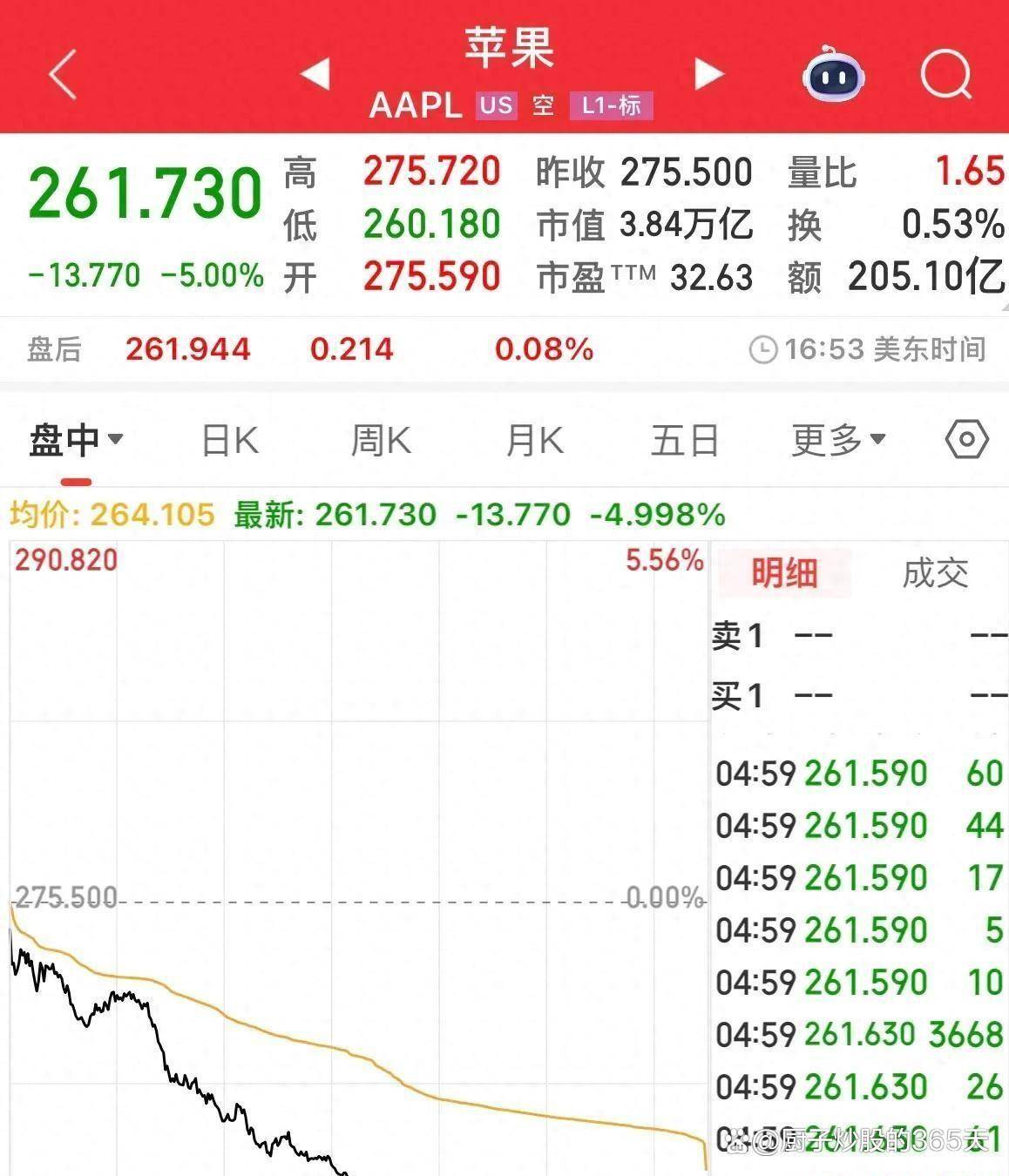
Market Overview - The US stock market experienced a significant decline, with the Dow Jones Industrial Average dropping 669.42 points (1.34%) to close at 49,451.98 points, the Nasdaq Composite falling 469.32 points (2.03%) to 22,597.15 points, and the S&P 500 decreasing by 108.71 points (1.57%) to 6,832.76 points [1][2][3] Market Sentiment - Over 4,100 stocks declined, indicating widespread market panic as investors rushed to sell assets, particularly in the tech and growth sectors. The VIX index surged, reflecting heightened risk aversion [2][3] Sector Performance - The sell-off affected nearly all sectors, with notable declines in precious metals and semiconductor stocks. The precious metals sector saw significant drops, with gold futures down 3.08% and silver futures plummeting 10.62% [4][5][6][8] - The Philadelphia Semiconductor Index fell by 2.5%, with individual stocks like AEHR Test Systems down 17.58% and Intel down over 3% [8][10] Major Companies - Apple Inc. experienced a substantial drop of 5.00%, resulting in a market cap loss of over $120 billion, attributed partly to regulatory concerns [12] - Other major tech companies also faced declines, with Tesla down 1.62%, Amazon down 2.20%, and Meta Platforms down nearly 3% [12] Financial Sector - Bank stocks fell across the board, with JPMorgan Chase down over 2%, Goldman Sachs down over 4%, and Citigroup down over 5%, driven by concerns over AI disrupting traditional wealth management [13][14] Economic Indicators - Recent economic data, including a drop in initial jobless claims and lower-than-expected existing home sales, contributed to market anxiety about potential economic overheating and prolonged high interest rates [24][25][26] Global Market Impact - The sell-off in the US markets had a ripple effect on global markets, with European indices also closing lower after initially opening higher, indicating a widespread sentiment of fear [18][19][20] AI Concerns - The market's decline was exacerbated by fears regarding the disruptive impact of AI technologies on various industries, leading to significant stock price drops in sectors perceived to be at risk [21][22][30] Storage Chip Sector - In contrast to the overall market trend, storage chip stocks saw gains, with companies like SanDisk and Seagate Technology rising significantly, reflecting a belief that AI's growth will increase demand for data storage [29]