Citi(C)

Search documents
花旗集团(C.US)四季度13F曝光:英伟达(NVDA.US)为第一大重仓股 大幅减持美国银行(BAC.US)
智通财经网· 2026-02-13 23:21
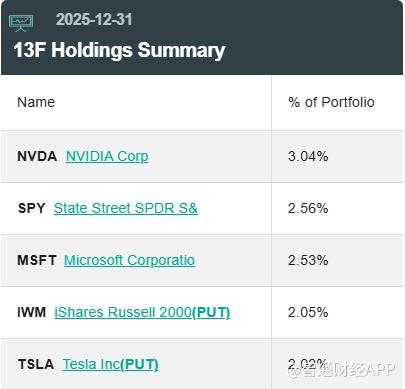
Core Insights - Citigroup has submitted its 13F holdings report to the SEC for the fourth quarter ending December 31, 2025, indicating a portfolio primarily focused on U.S. stocks and ETFs, with some allocation to options and debt instruments [1][2]. Holdings Summary - The largest holding in Citigroup's portfolio is NVIDIA (NVDA), accounting for 3.04% of the total [1][2]. - The second-largest holding is the SPDR S&P 500 ETF (SPY), representing 2.56% of the portfolio [1][2]. - Microsoft (MSFT) ranks third with a 2.53% allocation [1][2]. - Other significant positions include iShares Russell 2000 Index ETF put options (IWM) at 2.05% and Tesla (TSLA) put options at 2.02% [1][2]. New Positions - Citigroup has added several debt and convertible securities in Q4, including positions in Evercore Energy (EVRG), Snowflake (SNOW), Nutanix (NTNX), Align Technology (ALGN), Mara Holdings (MARA), and IonQ Inc (IONQ), with individual additions generally ranging from 5 million to 13 million shares [3]. - A notable new position is in the energy company Total (TTE), with approximately 6.86 million shares valued at about $448 million, representing 0.20% of the portfolio [3]. Exits and Reductions - Citigroup has completely exited several small-cap and illiquid stocks, primarily in healthcare, consumer discretionary, finance, and industrial sectors, including MHUAF, REVB, KEQU, BYFC, CSWC, RDI, and RAIN, reducing these holdings to zero [4][5]. - The firm has significantly reduced its positions in financial stocks, notably decreasing its stake in Bank of America (BAC) by approximately 29.29 million shares, a reduction of 54.86%, lowering its portfolio share from 1.23% to 0.59% [8][9]. Increases in Holdings - Citigroup has notably increased its holdings in the Consumer Staples ETF (XLP), raising its position by approximately 17.63 million shares, increasing its portfolio share from 0.18% to 0.78% [6][7]. - The firm has also significantly increased its positions in various debt and preferred securities, including Akamai (AKAM), JD.com (JD), CMS Energy (CMS), JetBlue Airways (JBLU), and others, with increases generally in the range of 7 million to 12 million shares [6][7]. Summary of Changes - Citigroup has made substantial reductions in options positions, including a 42.31% decrease in iShares iBoxx High Yield Bond ETF put options (HYG) and a reduction of over 90% in the industrial sector ETF put options (XLI) [8][9].





Bank of America lifts Moynihan’s pay 17% to $41 million for 2025
Fortune· 2026-02-13 22:48
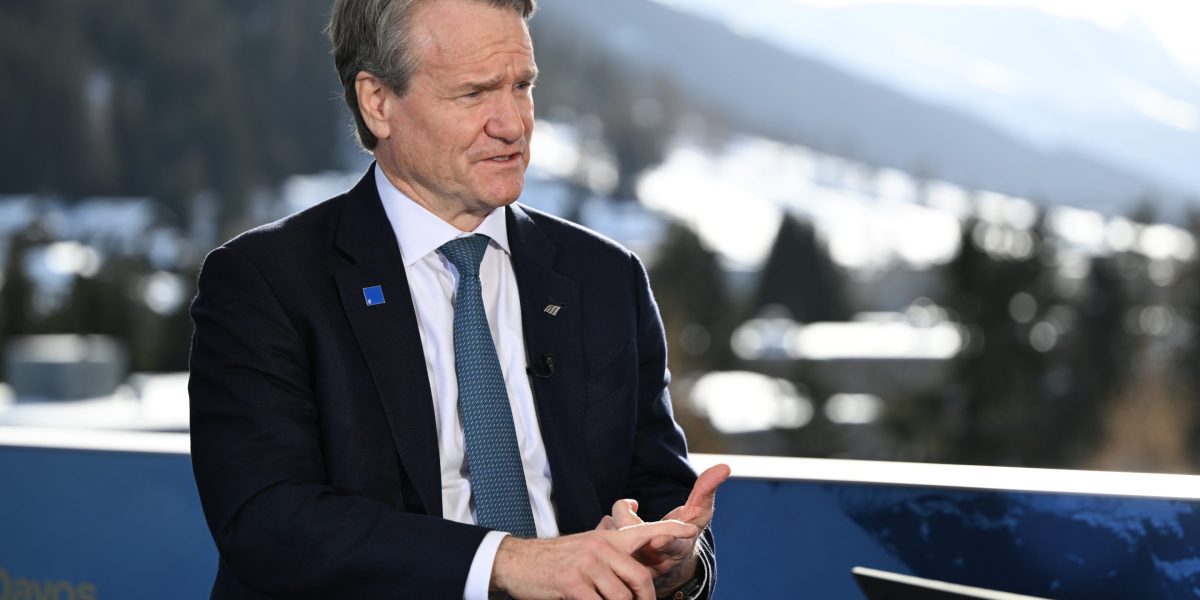
Core Viewpoint - Bank of America Corp. has raised CEO Brian Moynihan's total compensation to $41 million for 2025, despite the bank's stock performance lagging behind its peers, even as profits improved [1]. Compensation Details - Moynihan's compensation package includes a base salary of $1.5 million and equity incentive awards totaling $39.5 million, with no cash bonus, consistent with previous years [2]. - Last year, Moynihan's pay was increased by 21% to $35 million following a boost in the bank's earnings [2]. Financial Performance - In 2024, Bank of America reported a net income of $30.5 billion, reflecting a 13.1% increase from the previous year [3]. - The bank is focused on revenue growth while managing expenses, utilizing technology and artificial intelligence to control costs [3]. Leadership and Future Plans - Moynihan, who has been CEO for 16 years, has expressed interest in continuing his role for the foreseeable future [4]. - Under his leadership, the bank has set new financial targets aimed at improving shareholder value and managing spending effectively [5]. Industry Comparison - In comparison, other major banks have also increased their CEOs' compensations, with JPMorgan Chase's Jamie Dimon receiving $43 million (up 10.3%), Goldman Sachs' David Solomon at $47 million (up 21%), and Morgan Stanley's Ted Pick at $45 million (up 32%) [6].
Citigroup Trades at a Discount to Industry: How to Play the Stock?
ZACKS· 2026-02-13 17:26
Core Insights - Citigroup, Inc. (C) stock is trading at a trailing P/E of 10.67X, below the industry average of 14.42X, indicating a discount [1][4] - The stock has appreciated 31.5% over the past year, outperforming the industry growth of 19.1% and key peers like Bank of America and Wells Fargo [4][6] Valuation and Performance - Citigroup's stock is attractively priced compared to peers, with Bank of America at 12X and Wells Fargo at 12.33X [4] - The company is targeting a revenue CAGR of 4-5% through 2026 and expects net interest income (NII) growth of 5-6% in 2026 [6][21] Strategic Initiatives - CEO Jane Fraser is advancing a multi-year strategy to streamline operations and focus on core businesses, including exiting consumer banking in 14 markets [8] - Citigroup has completed exits in nine countries and plans to divest its Russia-based banking unit, which will improve its capital position [9][10] - The company is increasing its investment banking headcount in Japan by 30% by the first half of 2026 to capitalize on M&A opportunities [11] Efficiency and Cost Management - Citigroup is focusing on streamlining processes and driving automation, including deploying AI tools to enhance operational efficiency [14] - The company plans to cut 20,000 jobs, approximately 8% of its global staff, by 2026, aiming for annualized savings of $2-2.5 billion [16] Macro and Regulatory Environment - The macroeconomic environment is becoming favorable, with interest rates currently at 3.50-3.75%, which is expected to support increased borrowing and loan volumes [20] - Regulatory pressures are easing, allowing Citigroup to modernize its technology and improve governance [25][26] Financial Strength and Capital Distribution - As of December 31, 2025, Citigroup's cash and investments totaled $476.7 billion, with total debt at $335.8 billion [27] - The company has increased its dividend by 7.1% to 60 cents per share and has a $20 billion stock repurchase program with $6.8 billion remaining [28][29] Asset Quality and Growth Outlook - Citigroup's asset quality has been deteriorating, with provisions increasing at a CAGR of 24.5% from 2022 to 2025 [30] - The Zacks Consensus Estimate for Citigroup's earnings implies year-over-year growth of 28.2% in 2026 and 17.8% in 2027, with upward revisions in estimates [31]

Goldman Sachs, JPMorgan, and Citigroup All Plunge Over 5% on Thursday
247Wallst· 2026-02-13 12:54
Core Insights - Major banks including Goldman Sachs, JPMorgan, and Citigroup experienced significant declines, with Goldman Sachs dropping 5.1%, JPMorgan falling 3.2%, and Citigroup decreasing 5% on a day when the S&P 500 declined only 1.8% [1] Company Performance - **Goldman Sachs**: The stock fell from an opening price of $956.17 to close at $907.99, with a notable spike in trading volume indicating institutional selling during the last hour of trading [1] - **JPMorgan Chase**: The stock decreased from $312.88 to $302.79, with 5.57 million shares traded at the close, reflecting a similar pattern of institutional selling [1] - **Citigroup**: The stock fell from a session high of $119.18 to close at $111.47, indicating ongoing weakness in the stock [1] Market Context - The broader market saw a decline, with the S&P 500 down 1.8%, but the banks underperformed significantly, suggesting sector-specific issues rather than just general market weakness [1] - The regional banking sector also faced declines, with the SPDR S&P Regional Banking ETF dropping 3.8%, marking the third consecutive day of losses [1] Analyst Sentiment - The selloff was triggered by a series of analyst downgrades in the asset management sector, with BMO Capital Markets lowering its price target on T. Rowe Price Group from $110 to $104, alongside downgrades from other major banks [1] - Concerns about fee-based revenue streams and market activity levels were highlighted as key issues affecting investor sentiment towards financial stocks [1]



Former Citigroup unit in Russia says it is changing its name to RenCap Bank
Reuters· 2026-02-13 12:47
Group 1 - Citigroup's former Russian unit, AO Citibank, is rebranding to RenCap Bank following its sale to Renaissance Capital [1] - The sale was approved by Citigroup's board in December 2022 and is expected to result in a pre-tax loss of approximately $1.2 billion [1]
花旗:发行趋势被视为欧元区债券久期和曲线的关键驱动因素
Sou Hu Cai Jing· 2026-02-13 06:47
Group 1 - The core viewpoint of the article is that German government bonds are more influenced by U.S. Treasury yields than by domestic data, with the issuance trends in the Eurozone potentially affecting duration and curve [1] - According to Citigroup, Eurozone sovereign nations have completed 17% of their annual government bond issuance, indicating ongoing demand and supply progress that supports short-term gains [1] - The reduction in the issuance of 30-year bonds may lead to a flattening of the yield curve for 10 to 30-year Eurozone government bonds starting from March [1] Group 2 - The long-term concerns are more about the fiscal impact on the economy rather than the issuance itself, which limits the potential for upward movement in yields [1]
警惕大反转!花旗警告:通胀风险被严重低估
Jin Shi Shu Ju· 2026-02-13 03:10
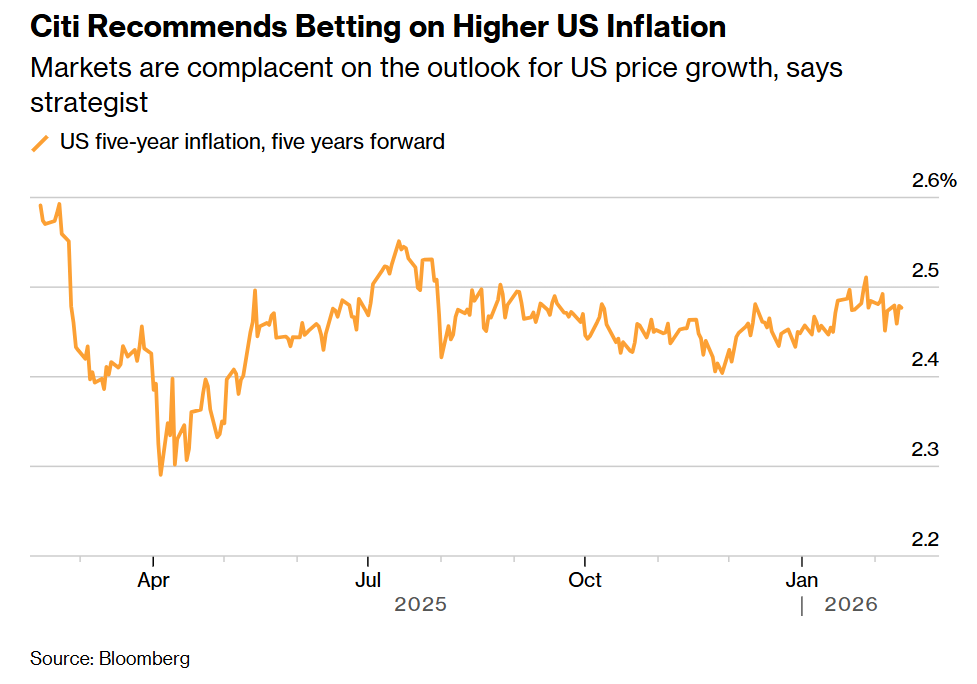
Group 1 - The core viewpoint of the article is that the market is overly complacent about the U.S. inflation outlook, making bets on rising inflation pressures significantly attractive [1] - Citigroup's rate trading strategist Benjamin Wiltshire suggests that investors may be underestimating the resilience of U.S. consumption, leading to a likely slight upward revision of market inflation expectations [1] - Wiltshire recommends buying five-year/five-year forward inflation derivatives, arguing that the current pricing level of about 2.5% is too low compared to the persistent core inflation indicator, which remains just below 3% [1] Group 2 - Recent strong U.S. employment data has exceeded market expectations, causing a surge in U.S. Treasury yields and prompting traders to lower their expectations for Federal Reserve rate cuts this year [4] - The market's reluctance to price in inflation risks is attributed to disappointment over last year's U.S. tariff policies not quickly translating into inflation [4] - Wall Street remains vigilant about inflationary risks, anticipating that a strong economic recovery in the U.S. could reignite price increases, especially if the next Federal Reserve chair, likely to be Waller, guides policymakers to lower rates more aggressively [4] Group 3 - UBS Group AG's senior trader Ben Pearson indicates that the "inflationary boom" led by the U.S. is one of the most underestimated risks by investors this year [4] - If inflationary pressures materialize, the Federal Reserve may remain inactive in the first half of the year, forcing the market to price in rate hikes for the second half [5] - Lazard's CEO argues that it is reasonable and likely for U.S. inflation to return above 4% by the end of the year [5] Group 4 - The complexity of predicting inflation has increased due to tariff tensions and rapid advancements in emerging technologies [5] - Investors must also contend with geopolitical risks affecting oil prices, particularly from intermittent threats related to Iran [5] - BlackRock's Tom Becker has been increasing short positions in long-term U.S. and U.K. government bonds, expecting strong economic growth and rising commodity prices to exert upward pressure on consumer prices [5] Group 5 - In this uncertain environment, TIPS (Treasury Inflation-Protected Securities) offer a potential hedging mechanism against inflation [6] - Vanguard's senior portfolio manager Brian Quigley notes that TIPS are not without risks, particularly if oil prices fall sharply, which could quickly lower the breakeven point for these securities [7] - Pimco views TIPS as inexpensive insurance against inflation, believing they provide good protection if inflation exceeds the Federal Reserve's target, similar to the past four to five years [7]

金属观察:中国铝需求具备韧性,短期前景喜忧参半,储能系统(BESS)增长为行业提供结构性支撑-Metal Matters China aluminium demand resilient near-term outlook mixed BESS gains add to structural support
2026-02-13 02:18
Summary of Key Points from the Conference Call on China's Aluminium Demand Industry Overview - The report focuses on the **aluminium industry in China**, specifically the demand dynamics and trends for 2025 and beyond, as tracked by the **China Aluminium End-Use Tracker (CAET)** [1][2][8]. Core Insights and Arguments - **Aluminium Demand Growth**: Implied aluminium demand in China grew approximately **4% year-over-year (y/y)** in 2025, reaching an annualized estimate of **~51 million tonnes (Mt)**. This growth was primarily driven by decarbonisation-related end-use markets [2][8][19]. - **Decarbonisation Impact**: Demand linked to decarbonisation surged by **~18% y/y** in 2025, supported by strong renewable energy installations, particularly in solar and wind sectors [8][10]. - **Cyclical Demand Weakness**: Traditional cyclical demand for aluminium has softened, particularly in late 2025, due to a decline in manufacturing and infrastructure fixed-asset investment (FAI) [3][9][10]. - **K-Shaped Economic Recovery**: China's economy is exhibiting a **K-shaped recovery**, where structurally strong sectors (renewables, EVs, energy storage) diverge from weaker traditional sectors (construction, manufacturing) [10][3]. - **Future Outlook**: Economists project a rebound in infrastructure and manufacturing FAI to approximately **6% and 5% y/y** respectively in 2026, which could positively influence cyclical aluminium demand [3][10]. Additional Important Insights - **Battery Energy Storage Systems (BESS)**: The BESS sector is becoming a significant contributor to aluminium demand, with output rising **~73% y/y** in December 2025. Policy reforms are expected to accelerate project commissioning in 2026 [4][43]. - **Transportation Sector**: Transportation-related aluminium demand fell **~3% y/y** in December 2025, but for the full year, it rose **~14% y/y**, driven by a **~25% y/y** increase in electric vehicle (EV) sales [22][23]. - **Solar Installations Decline**: Solar installations saw a **~40% y/y** decline in December 2025, following a strong front-loading in the first half of the year. This was a significant factor in the overall softness in electrical-related aluminium demand [27][28]. - **Consumer Durables**: Demand for aluminium in consumer durables declined by **~2% y/y** in December 2025, primarily due to weaker air conditioner output. However, medium-term prospects remain positive due to potential material substitution from copper to aluminium [42]. Conclusion - The aluminium industry in China is navigating a complex landscape characterized by strong decarbonisation-driven demand and weakening traditional cyclical demand. The outlook for 2026 appears cautiously optimistic, contingent on policy support and economic recovery in key sectors. The BESS sector is poised to play an increasingly important role in shaping future aluminium demand dynamics.
Citigroup CEO Jane Fraser's pay jumps 22% to $42M following years of job cuts
New York Post· 2026-02-13 00:16
Core Viewpoint - Citigroup has approved a total compensation of $42 million for CEO Jane Fraser for 2025, marking a nearly 22% increase from the previous year, reflecting positive investor sentiment towards her management strategies [1][3]. Group 1: Compensation Details - The compensation package for CEO Jane Fraser includes a base salary of $1.5 million, cash incentives of $6.075 million, and the remainder in deferred incentives [3]. - In 2024, Fraser's total compensation was $34.5 million, indicating a significant increase in her earnings for 2025 [3]. Group 2: Market Performance - Citigroup's stock surged by 65.8% last year, outperforming peers and a bank stock index, largely due to Fraser's initiatives to streamline management, cut jobs, and divest businesses [1][5]. - The increase in Fraser's compensation aligns with similar raises for top executives at rival firms like Goldman Sachs and Morgan Stanley, as the industry anticipates a strong year for dealmaking [2]. Group 3: Regulatory Progress - Citigroup executives are optimistic about completing compliance work related to major regulatory penalties, which could allow the bank to focus more on profit growth after years of intensive compliance efforts [4].
Wall Street Wrap-Up: AI Disrupts Markets, Rivian Surges, and a Potential Government Shutdown Looms
Stock Market News· 2026-02-13 00:08
Market-Moving Headlines - AlgoRhythm Holdings Inc. announced that its AI platform could significantly increase freight volume without additional headcount, leading to a sell-off in the logistics sector, with the Russell 3000 Trucking Index dropping by 6.6% [2][9] - Concerns about AI's disruptive potential have been heightened, with UBS warning that credit markets are underpricing the risks associated with AI-driven disruption, particularly affecting leveraged loans [3] Rivian's Positive Outlook - Rivian Automotive Inc. reported a fourth-quarter adjusted loss of 54 cents per share, which was better than analyst expectations, and surpassed revenue forecasts [4] - The company provided a strong delivery guidance for 2026, estimating 62,000 to 67,000 vehicles, and confirmed that its R2 SUV is on track for a second-quarter launch [4] Tech and Finance Giants Make Moves - NVIDIA Corp. plans to lease a new 200-megawatt data center in Nevada, partially financed by a $3.8 billion junk-bond sale led by Tract Capital, with JPMorgan Chase & Co. and Morgan Stanley managing the transaction [5] - Citigroup Inc. announced a 22% pay increase for CEO Jane Fraser, raising her 2025 compensation to $42 million, following a 66% surge in the bank's stock price [6][9] Political and Economic Headwinds - A partial shutdown of the Department of Homeland Security is looming as Senate Democrats blocked a funding bill over immigration agent restrictions, with a deadline approaching [10] Financial Troubles in Retail - Saks Fifth Avenue is negotiating with lenders and suppliers to address financial concerns related to inventory on consignment and to prevent objections to its bankruptcy loan [11]