GM(GM)

Search documents
Volatus Aerospace Appoints Lieutenant-General (Ret'd) Christopher J. Coates to Board of Advisors
Globenewswire· 2025-12-04 12:52
Core Insights - Volatus Aerospace Inc. has appointed Lieutenant-General (Ret'd) Christopher J. Coates to its Board of Advisors, enhancing the company's defense expertise and supporting its vision for Canadian Armed Forces and allied defense partners [1][5][6] Company Overview - Volatus Aerospace is a leader in aerial and defense solutions, focusing on Canadian-made uncrewed aerial systems (UAS), training, and operational capabilities [1][4] - The company provides integrated aerial solutions for commercial and defense applications, serving industries such as oil and gas, utilities, healthcare, and public safety [8][9] Appointment of Lieutenant-General Coates - Lieutenant-General Coates has extensive experience in defense and security, having served in senior roles within the Canadian Joint Operations Command and NORAD, overseeing both domestic and global military operations [2][7] - His background includes leadership in advanced training and defense transformation, contributing to defense modernization efforts in various regions [3][7] Strategic Direction - The Volatus Advisory Board aims to provide strategic guidance on defense procurement, government policy, and emerging capability requirements, enhancing the company's long-term strategic direction [4] - The appointment of Coates is expected to strengthen Volatus' domestic manufacturing programs and training capabilities, aligning with the needs of the Canadian Armed Forces and allied partners [5][6]



GM's new ‘Silicon Valley cowboy' eyes technology renaissance for automaker
CNBC· 2025-12-04 12:00
Core Insights - General Motors (GM) is undergoing a significant transformation under the leadership of Sterling Anderson, who views the company as a canvas for innovation and integration of technology [2][25] - Anderson's strategy focuses on merging software and hardware development to accelerate innovation and streamline product management [4][6] Leadership Changes - Sterling Anderson has consolidated power to oversee the entire product lifecycle, including manufacturing, engineering, and software management [3] - The recent departures of key executives in software and AI, including Dave Richardson and Barak Turovsky, are attributed to restructuring efforts aimed at integrating AI capabilities into GM's core operations [5][20] Strategic Focus - GM aims to develop autonomous vehicles, with a target for autonomous highway driving by 2028, following the disbandment of its Cruise AV business [12][13] - Anderson emphasizes the importance of treating software and product development as interconnected, a shift from previous operational silos [6][20] Executive Background - Anderson, with a strong background in robotics and experience at Tesla and Aurora, is seen as a pivotal figure in GM's push towards software-defined vehicles [15][25] - His appointment reflects a broader trend of hiring tech executives to enhance GM's technological capabilities, although many have faced challenges leading to short tenures [20][23] Cultural Shift - The automotive industry, particularly traditional U.S. automakers, has struggled with integrating technology, leading to high turnover among tech executives [21][23] - Anderson's approach involves leveraging GM's resources while fostering a culture of innovation, aiming to reshape perceptions of the company from a traditional automaker to a modern tech-driven entity [10][25]

Aztec Expands Drilling Program at the Tombstone Project, Arizona
Thenewswire· 2025-12-04 12:00
Core Insights - Aztec Minerals Corp. has provided an update on its ongoing drilling program at the Tombstone Property in Southeastern Arizona, having completed 34 reverse circulation (RC) drill holes and 13 reported drill holes, totaling 5,960 meters of RC drilling and 495 meters of core drilling to date [1][2][5] - The drilling program has been expanded from 7,500 meters to at least 8,500 meters, with plans for 7,000 meters of RC drilling and a minimum of 1,500 meters of core drilling, expected to extend into Q1 2026 [2][5] - The company anticipates improved turnaround times for geochemical analysis due to recent staffing additions and equipment repairs at the Bureau Veritas laboratory, with additional results expected within 30 days [3] Drilling Program Details - The core drilling portion has resumed, currently advancing to a total depth of 465 meters in drillhole TC25-03, with plans to further test previously identified targets beneath the Bisbee formation [4] - The main target of the drilling is to assess shallow, bulk tonnage, potentially heap leachable, mesothermal gold-silver oxide mineralization adjacent to the previously mined Contention pit [9] - The Tombstone project is located 100 kilometers southeast of Tucson, Arizona, covering much of the historic Tombstone silver district, known for its high-grade oxidized silver-gold deposits [10][14] Geological Context - The district's geology includes a mix of shallow-level oxidized Au-Ag and base metal deposits, with underexplored sulfide versions located below the water table [11] - The mineralization host rocks are primarily clastic sediments of the Cretaceous Bisbee Formation, underlain by Paleozoic carbonate formations [12] - Aztec believes the historic silver mines at Tombstone could be related to a larger mesothermal system with CRD mineralization below the old mines, indicating high prospectivity for further discoveries [13]

特朗普宣布:将降低汽车燃油经济性标准
Zheng Quan Shi Bao· 2025-12-04 10:41
Core Viewpoint - The Trump administration announced a reduction in fuel economy standards for vehicles produced in the U.S., aiming to lower costs for consumers and protect jobs in the automotive industry [2]. Group 1: Fuel Economy Standards - The new average fuel economy standard for light vehicles is set to reach approximately 34.5 miles per gallon (about 6.9 liters per 100 kilometers) by the 2031 model year, significantly lower than the current requirement of 50.4 miles per gallon (about 4.7 liters per 100 kilometers) [2]. - The U.S. Department of Transportation estimates that the new standards will save car buyers $109 billion over the next five years, with an average reduction of $1,000 in the purchase cost of each new vehicle [2]. Group 2: Industry Reaction - Executives from major automakers, including Ford, General Motors, and Stellantis, attended the announcement ceremony, with Stellantis shares rising over 3% and Toyota shares increasing nearly 2% in pre-market trading [3]. - Ford and General Motors also experienced slight increases in their stock prices during the same period [3].


Joe Biden Credited GM CEO Mary Barra For EVs, But She Said Credit Should Go To Elon Musk - Tesla (NASDAQ:TSLA)
Benzinga· 2025-12-04 10:19
Core Insights - General Motors CEO Mary Barra attributes the growth of the U.S. electric vehicle (EV) market primarily to Elon Musk and Tesla, rather than herself [1][3] - During a past meeting with President Joe Biden, Barra corrected him on the credit for the EV sector's surge, emphasizing Musk's contributions [2][3] - The Biden administration previously excluded Musk from an EV event, a decision that was later criticized by former Vice President Kamala Harris [4] Company Developments - GM announced layoffs of 3,400 workers, including 1,200 at the Detroit EV plant and over 550 at the Ohio Ultium Cell plant [4] - The layoffs coincide with a $1.6 billion charge related to EVs, with $1.2 billion attributed to changes in EV capacity and $400 million due to contract cancellations [5] Market Performance - GM's stock increased by 1.40% to $74.69 at market close and further rose by 0.28% to $74.90 in pre-market trading [8]


特朗普给油车送大礼!
第一财经· 2025-12-04 08:09
Core Viewpoint - The article discusses President Trump's announcement to revoke the fuel efficiency standards set by the Biden administration, claiming it artificially raised new car costs and would allow consumers to save at least $1,000 on new vehicles [3]. Group 1: Trump's New Regulations - The fuel economy standards, established by the U.S. Department of Transportation, set minimum miles per gallon for passenger cars and light trucks [5]. - The Biden administration's 2022 standards aimed for an average fuel economy of approximately 49 miles per gallon for 2026 models, with annual efficiency improvements of 8% for 2024-2025 models and 10% for 2026 models [6]. - Trump's proposal suggests restoring average fuel economy to the 2022 model standards, requiring manufacturers to increase efficiency by only 0.5% annually until 2026, and then by 0.25% annually, leading to an expected average of 34.5 miles per gallon by 2031 [7]. Group 2: Reactions from the Automotive Industry - Ford's CEO praised the new regulations as aligning fuel economy standards with market realities, emphasizing progress in carbon emissions and energy efficiency while maintaining consumer choice and affordability [9]. - General Motors' CEO highlighted the challenges faced before the revocation of California's zero-emission vehicle regulations, indicating potential factory closures due to production limitations [9]. Group 3: Opposition to the New Standards - Critics argue that the previous fuel economy standards could have saved Americans $23 billion in fuel costs and reduced national fuel consumption by 70 billion gallons [10]. - Environmental advocates express concern that weakening clean car standards will allow manufacturers to produce less fuel-efficient and more polluting vehicles, potentially costing consumers an additional $35 billion at the gas station [10].
Trump’s Market Mayhem: A Rollercoaster Ride for the Ages
Stock Market News· 2025-12-04 06:00
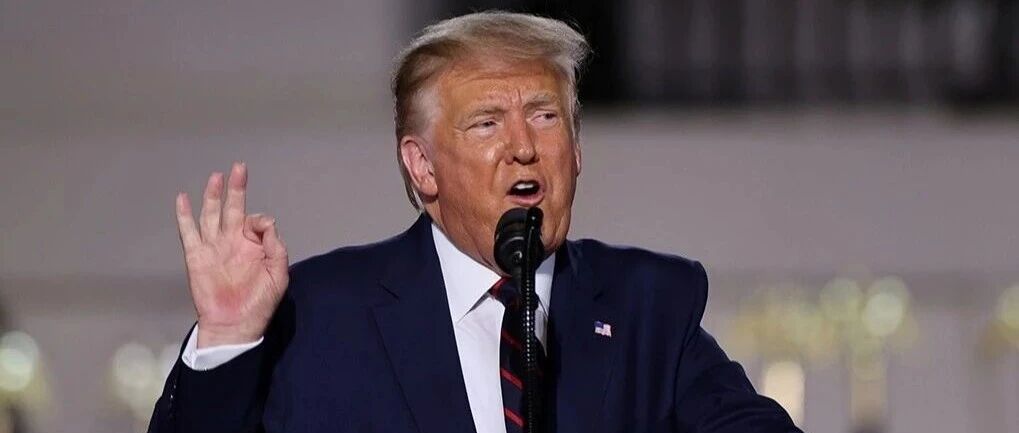
Fuel Economy Regulations - Former President Trump announced plans to roll back Biden-era fuel efficiency standards from approximately 50 miles per gallon (mpg) to 34.5 mpg by 2031, along with the elimination of the Corporate Average Fuel Economy (CAFE) credit trading program by 2028 [2][3] - The rationale for this rollback is centered around "affordability" and "consumer choice," with claims that it will save American families an average of $1,000 on car prices and a total of $109 billion over the next five years [3] Automotive Industry Reaction - The automotive industry, particularly the Detroit Three (Ford, General Motors, and Stellantis), expressed strong support for the rollback, viewing it as a victory for common sense and market alignment [4] - Following the announcement, traditional automakers saw stock price increases, with Stellantis surging 7.64%, Ford and General Motors both gaining less than 2% [5] Impact on Electric Vehicle Manufacturers - The elimination of the CAFE credit trading program is expected to create a regulatory advantage for traditional automakers while potentially harming electric vehicle manufacturers like Tesla and Rivian [6] - Despite this, Tesla's stock rose by 4.08% following the announcement, indicating that market reactions can be unpredictable [6] Trade and Tariff Developments - President Trump has renewed threats of tariffs on China, which has historically affected the soybean market, with soybean futures showing slight increases amid ongoing trade tensions [8] - Costco is suing the U.S. government for refunds on tariffs, with $90 billion in tariffs collected, reflecting broader concerns about tariff legality and market implications [9] Market Volatility and Reactions - The market has shown predictable volatility in response to Trump's tariff announcements, with significant drops in major indices following threats of increased tariffs [10] - The "Trump effect" on stock markets illustrates a cycle of immediate reactions to policy changes and trade rhetoric, with markets adapting to this volatility [14]



凯迪拉克销量下滑 二线豪华品牌“突围战”何时休?
Xi Niu Cai Jing· 2025-12-04 02:37
Core Viewpoint - Cadillac is facing significant sales decline, with 2024 sales dropping to 113,800 units, nearly halving from the peak of 233,000 units in 2021, and the trend continues into 2025 with a year-to-date sales of 82,853 units, down from 90,101 units in the same period last year [2] Group 1: Sales Performance - Cadillac's main models, CT5 and XT5, experienced over 20% sales decline, while niche models struggle to sell more than 1,000 units monthly [2] - In the electric vehicle sector, Cadillac's performance is disappointing, with total sales of the IQ models reaching only 3,483 units, significantly lagging behind competitors [2] Group 2: Market Challenges - The brand faces intense competition from traditional luxury brands like BBA, which dominate the luxury car market and have historically squeezed Cadillac's market share [2] - Cadillac's slow product updates and high pricing diminish its competitiveness, failing to meet consumer demands for diverse and personalized electric vehicles [2] - The increasing consumer demand for smart features in vehicles has not been adequately addressed by Cadillac, leading to reduced product appeal [2] Group 3: Pricing Strategy - In response to sales challenges, Cadillac adopted a "price for volume" strategy, significantly reducing prices on models like CT5 and XT5, with discounts exceeding 80,000 yuan and 130,000 yuan respectively [3] - This pricing strategy risks eroding brand equity and consumer perception of luxury, as frequent price cuts can lead to concerns about resale value, with Cadillac's resale rate reported at 45.4%, lower than some domestic brands [3] Group 4: Marketing and Management Issues - Cadillac's marketing strategies have faced criticism, such as the controversial "Coconut Tree Wind" campaign that backfired due to its negative portrayal of competitors and unappealing style [3] - Internal management issues are evident, with three changes in the China region president over three years, indicating instability and inconsistent strategic direction [3] Group 5: Future Recommendations - To overcome current challenges, Cadillac needs to increase investment in electric vehicle transformation, enhance smart technology, and launch products that align with market demands [4] - Optimizing marketing strategies and improving internal management are crucial for Cadillac to avoid further marginalization in the automotive market [4]

Trump says he will roll back fuel efficiency standards for vehicles
NBC News· 2025-12-03 21:42
Core Viewpoint - The Trump administration plans to "reset" fuel efficiency standards for passenger cars to address rising auto prices and inflation concerns, which have been exacerbated by previous regulations aimed at reducing carbon emissions [1][5]. Group 1: Economic Context - The average price of a new vehicle reached an all-time high of over $50,000 in October, indicating a significant increase in auto prices [4]. - Overall inflation, as measured by the consumer price index, has been rising monthly since the announcement of tariffs on imported goods, including automobiles [3]. Group 2: Policy Changes - The proposed changes to fuel efficiency standards are expected to save consumers approximately $109 billion, equating to about $1,000 off the average cost of a new vehicle, although the timeline for price reductions remains uncertain [5]. - The new standards will roll back efficiency mandates established by the Biden administration, potentially altering automakers' long-term strategies and product development plans [6]. Group 3: Industry Response - Executives from major automotive companies, including Stellantis, Ford, and General Motors, expressed support for the new standards, emphasizing the need for alignment with market conditions and customer affordability [10]. - Following the announcement, shares of Ford and GM increased by about 1%, while Stellantis' stock rose by 4.7%, reflecting positive market sentiment towards the policy shift [10].

Trump's South Korea tariff cuts are major boost for Hyundai and GM
CNBC· 2025-12-03 21:23
Core Insights - Hyundai Motor and General Motors are poised to benefit significantly from the reduction of U.S. tariffs on vehicle imports from South Korea, decreasing from 25% to 15% [3][4]. Group 1: Tariff Impact - Hyundai is the largest U.S. importer of vehicles from South Korea, followed by GM, both of which have incurred substantial tariff costs this year, with Hyundai reporting 1.8 trillion won ($1.2 billion) in Q3, up from 828 billion won ($565 million) in Q2 [2][4]. - GM's tariff costs from South Korea and Mexico are projected to be between $3.5 billion and $4.5 billion in 2025, with expectations of reducing these costs to around $1 billion or less by 2026 [4][5]. Group 2: Sales and Production - Hyundai aims to increase local production in the U.S. to over 80% of its vehicle sales by 2030, up from approximately 40% currently, while still importing nearly 1 million vehicles from South Korea this year [8][10]. - GM is expected to import about 422,000 vehicles from South Korea in 2025, marking a 3.6% increase from over 407,000 units last year, with a focus on entry-level crossovers produced in South Korean plants [10][11]. Group 3: Economic Partnership - The U.S. and South Korea have strengthened their economic partnership, with South Korea committing to invest $350 billion in the U.S. over several years, which is seen as beneficial for domestic jobs and industry [6][7]. - The recent trade agreement follows a period of tension due to an immigration raid at a battery plant in Georgia, jointly owned by Hyundai and LG Energy Solution, where about 475 workers were arrested [13][14].