
GM(GM)

Search documents
General Motors Awards $1.25 Million Grant to Fuel STEM Education and Transportation Safety for America's Club Kids
Globenewswire· 2025-10-13 14:00
Core Points - General Motors has awarded a $1.25 million grant to Boys & Girls Clubs of America to enhance STEM education and transportation safety initiatives nationwide [2][3] - The funding will support training for nearly 500 staff, provide STEM kits, and maintain safe vehicles for Clubs, while also expanding road safety education for teens [7] Group 1: Grant Details - The grant includes $500,000 for staff training and STEM kits, and $750,000 for vehicle maintenance and road safety education [7] - This collaboration aims to inspire young people to pursue careers in STEM and ensure safe access to Clubs [2][3] Group 2: Organizational Impact - Boys & Girls Clubs of America has been providing safe spaces for youth for over 160 years, serving more than 4 million young people through various programs [4] - General Motors is committed to creating opportunities in STEM learning and enhancing access to resources for youth [3][5]



前瞻布局应对稀土依赖,通用汽车(GM.US)将成美国唯一拥有多重本土磁体供应车企
智通财经网· 2025-10-13 12:42
Core Viewpoint - The article highlights the proactive measures taken by the U.S. government and companies, particularly General Motors (GM), to secure rare earth supply chains amid China's tightening export controls on rare earth materials [1][2]. Group 1: General Motors' Initiatives - General Motors has been working since 2021 to secure domestic rare earth magnet supply, positioning itself to become the only U.S. automaker with multiple large-scale direct supply sources in the coming months [1]. - In late 2021, GM announced plans to build a rare earth magnet manufacturing plant in the U.S. in collaboration with German company VAC, which is expected to start production this fall and reach full capacity by early 2026, with 90% of its output dedicated to GM and the remainder to the U.S. Department of Defense [1]. - GM also signed a long-term supply agreement with MP Materials in 2021, agreeing to invest in a new plant in Texas, with the U.S. Department of Defense subsequently providing funding for both VAC and MP's new facilities [1]. Group 2: Department of Defense Involvement - A senior official from the Department of Defense indicated that if the new facilities only supplied the Department, their viability might be limited to 5 to 10 years, but supplying both the Department and GM would provide a more stable outlook [1]. - In July of this year, the Department of Defense agreed to invest $400 million in MP Materials in exchange for equity to help increase its production capacity [1]. Group 3: Additional Supply Agreements - GM has also reached a multi-year supply agreement with Noveon Magnetics, with rare earth magnets beginning delivery in July [2]. - The exact proportion of GM's rare earth magnet demand that can be met by domestic production has not been disclosed by the company's procurement and supply chain head [2].

Brace For Supply Chain Disruptions
Seeking Alpha· 2025-10-13 11:30
Group 1: U.S.-China Trade Relations - President Trump is attempting to reduce tensions with China after Beijing's firm response to his 100% tariff threat, indicating that China "will not back down" [4] - Economists show slight optimism regarding the U.S. economy, but job growth expectations have declined according to an NABE survey [5] Group 2: Rare Earths and Critical Minerals - China has tightened its export controls on rare earths, prompting the U.S. government to intensify efforts to secure supplies and reduce dependence on Chinese supply chains [5] - The Pentagon plans to acquire up to $1 billion worth of critical minerals essential for defense systems and advanced technologies, with recent solicitations including $500 million for cobalt and $245 million for antimony [6] - Australia is considering mandated floor prices for critical minerals and investing in new rare earth projects as part of a trade deal with the U.S., discussing a $777 million strategic reserve for critical minerals [8] Group 3: Automotive Industry Developments - General Motors (GM) is set to benefit from its efforts since 2021 to secure domestic rare earth magnet supply, potentially becoming the only U.S. automaker with significant direct supply from multiple factories [7] - GM has established multi-year supply agreements with MP Materials and Noveon Magnetics, although the extent of U.S. production meeting GM's rare earth magnet demand remains unclear [7]


EV makers fill tax-credit void with costly discounts
Yahoo Finance· 2025-10-13 11:00
Core Insights - The expiration of the federal government's $7,500 tax credit for electric vehicle (EV) buyers has led automakers to implement significant discounts to maintain EV sales momentum [1][2] - Automakers are adopting varied strategies in response to the loss of federal subsidies, with some offering cash incentives while others are adjusting lease deals [2][3] - The market is seeing a shift towards lower-priced EVs as brands aim to attract cost-conscious consumers [3][4] Group 1 - Hyundai Motor Co. has introduced a $7,500 cash incentive for the 2025 Ioniq 5 and reduced the price of the 2026 model by up to $9,800 [1] - General Motors and Ford Motor Co. initially sought to extend the benefits of the tax credit through alternative lease deals but retracted their plans due to political pressure [2] - Stellantis has begun offering incentives that mimic the value of the expired tax credit, reflecting a competitive response in the market [2] Group 2 - Analysts predict that automakers' pricing and marketing strategies for EVs will differ based on their market share and perspectives on the EV segment [3][5] - The second-generation Chevy Bolt will start at under $30,000, while Tesla's new Model Y and Model 3 are priced around $40,000, indicating a trend towards more affordable options [4] - The fourth quarter is expected to be a transitional period for the EV market, with varying responses from brands regarding production and pricing strategies [5][6] Group 3 - Hyundai's commitment to competitiveness and value delivery was emphasized by its North America CEO, indicating a focus on customer affordability [6] - Analysts suggest that EV leasing rates may decline as automakers adjust their incentive strategies, potentially leading to higher transaction prices [6] - The loosening of federal emissions regulations under the Trump administration has reduced pressure on automakers to increase EV sales [7]


通用汽车取消下一代氢燃料电池研发项目,究竟出于怎样的考量?
Zhong Guo Qi Che Bao Wang· 2025-10-13 08:49
Core Viewpoint - General Motors has decided to cancel its next-generation hydrogen fuel cell development project and shelve plans for a $55 million factory in Detroit, citing a lack of viable development pathways for this emerging power technology [2][3] Group 1: Strategic Shift - The decision to halt hydrogen fuel cell research is driven by high hydrogen energy costs in the U.S. and limited infrastructure, which restricts consumer acceptance of fuel cell vehicles [3][5] - General Motors will continue its joint venture with Honda in Brownstown Township, focusing on providing power support for data centers, while shifting resources towards electric vehicle development [3][4] - The company aims to prioritize engineering talent and resources to advance electric vehicle initiatives, reflecting a broader trend of resource reallocation in the automotive industry [8] Group 2: Historical Context - General Motors has a long history in hydrogen energy, having introduced its first hydrogen fuel cell test vehicle, the Electrovan, in 1966, showcasing its early vision for hydrogen applications in the automotive sector [6] - The company formed a joint venture with Honda in 2013 to collaborate on hydrogen fuel cell technology, initially expressing optimism about the market potential [6] Group 3: Market Challenges - Despite previous investments, the hydrogen fuel cell technology faces significant market promotion challenges and extended investment return timelines, leading to a reevaluation of its viability [6][9] - The high terminal price of hydrogen for vehicles in the U.S. remains a barrier, with diesel costs for commercial vehicles being significantly lower, making it difficult for hydrogen fuel cell vehicles to compete on a lifecycle cost basis [7] Group 4: Future Outlook - Industry experts suggest that a "hydrogen-electric hybrid" model could be a viable path forward, particularly in commercial vehicles, where hydrogen fuel cells can be utilized for long-distance transport while electric power can be used for short-range deliveries [9] - The strategic shift by General Motors may weaken the position of North American automakers in the hydrogen vehicle sector, potentially impacting the EU's hydrogen strategy and delaying the commercialization timeline for hydrogen vehicles [8][9]

General Motors’ Q3 2025 Earnings: What to Expect
Yahoo Finance· 2025-10-13 04:30
Core Insights - General Motors Company (GM) is preparing to release its Q3 results on October 21, with analysts expecting an adjusted profit of $2.26 per share, a decrease of 23.7% from the previous year's $2.96 per share [2] - GM has a strong earnings surprise history, having exceeded analysts' bottom-line estimates in the last four quarters [2] - The company's stock has increased by 16.1% over the past 52 weeks, outperforming the Consumer Discretionary Select Sector SPDR Fund's 15.9% and the S&P 500 Index's 13.4% [4] Financial Performance - In fiscal 2025, GM's adjusted EPS is projected to be $9.43, down 11% from $10.60 in 2024, with a slight growth of 4.7% expected in fiscal 2026 to $9.87 per share [3] - Following the release of Q2 results, GM's stock fell by 8.1%, despite better-than-expected topline and earnings, with automotive sales declining by 2.7% year-over-year to $42.9 billion [5] - GM's net revenues for Q2 were $47.1 billion, a decrease of 1.8% year-over-year, but 1.9% above analysts' expectations [5] Market Sentiment - Analysts maintain a "Moderate Buy" consensus rating for GM, with 13 "Strong Buys," 2 "Moderate Buys," 11 "Holds," and 3 "Strong Sells" among 29 analysts [7] - The mean price target for GM is $60.69, indicating a potential upside of 9.6% from current price levels [7] Challenges - GM's net income on a GAAP basis fell by 35.4% year-over-year to $1.9 billion, raising concerns among investors due to high tariffs imposed by the current Federal administration [6]
韩美最大车企“联姻”会结出什么果?
Zhong Guo Qi Che Bao Wang· 2025-10-13 01:38
Core Insights - The global automotive industry is undergoing significant transformation driven by electrification and smart technology, leading multinational automakers to invest heavily in R&D and supply chain restructuring while facing challenges from slowing economic growth and increased competition in the electric vehicle (EV) market [2][7] Group 1: Collaboration and Development - Hyundai and General Motors (GM) plan to jointly develop five vehicle models, with the first expected to launch in 2028, covering compact cars, compact SUVs, and commercial trucks [3][5] - The collaboration will involve shared development processes from concept design to mass production, while maintaining brand identity for each model [3][4] - The partnership will extend beyond vehicle platforms to include powertrains and procurement strategies, aiming to reduce costs through joint purchasing [4][6] Group 2: Market Focus and Sales Goals - The collaboration primarily targets the Americas, especially Latin America, with a projected annual sales target of 800,000 units once fully operational, starting with an initial estimate of 100,000 units [5][6] - The focus on the Americas is influenced by high tariffs and the potential for local production to lower costs, as well as the growing market opportunities in Latin America [5][6] Group 3: Competitive Landscape - The partnership is partly a response to increasing competition from Chinese automakers, which have been gaining market share in key regions like Latin America [7][10] - Both companies aim to leverage their strengths to develop more cost-competitive products and enhance their market positions against emerging competitors [7][10] Group 4: Strategic Implications - This collaboration marks Hyundai's first significant partnership with a foreign automaker in vehicle development, while GM has shifted its focus from previous partnerships to align with Hyundai [8][9] - The potential for synergies through joint procurement and technology sharing could enhance competitiveness in emerging markets and the North American electric commercial vehicle sector [10]

GM's Rare-Earth Gamble Pays Off as China Tightens Magnet Exports
WSJ· 2025-10-13 00:30
Core Viewpoint - The automaker is playing a significant role in revitalizing the domestic magnet industry by securing supply chains amidst ongoing trade tensions [1] Group 1 - The company has strategically invested in the domestic magnet industry to ensure a stable supply of critical materials [1] - This initiative is part of a broader effort to mitigate risks associated with international trade disputes [1] - The revival of the domestic magnet industry is expected to enhance the company's competitive position in the market [1]
汽车供应商集体拒绝“无限期合同”
汽车商业评论· 2025-10-11 23:07
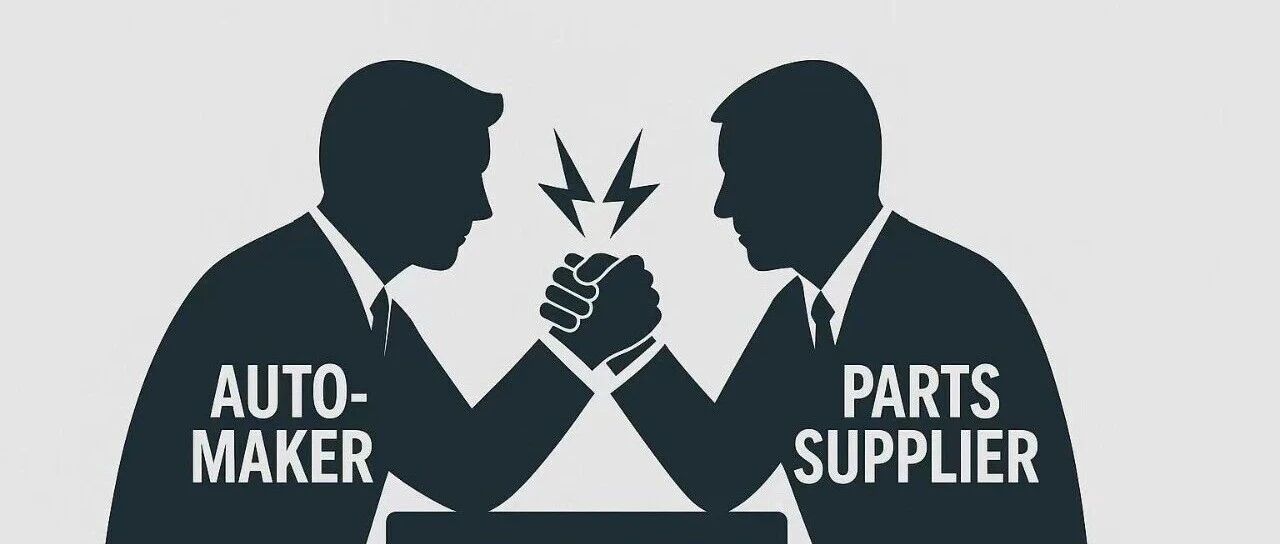
Core Viewpoint - General Motors is making significant adjustments to its procurement agreements, aiming to gain greater operational flexibility by tightening supply contracts with other major automakers in Detroit [3][4]. Group 1: New Contract Terms - The new "project extension clause" allows General Motors to extend contracts indefinitely with a six-month notice to suppliers, breaking the traditional fixed-term contract model [4]. - Suppliers are concerned about the implications of this clause, particularly regarding price adjustments, as it grants General Motors unilateral power to determine price changes based on a fair cost assessment if an agreement cannot be reached [4][8]. - This change has surprised many suppliers, as General Motors has previously been seen as the most cooperative among the Detroit automakers [8]. Group 2: Industry Context and Challenges - General Motors is facing significant cost pressures, with expected tariff costs ranging from $4 billion to $5 billion, the highest among the Detroit automakers [10]. - The automotive industry is experiencing uncertainty due to canceled electric vehicle orders and project delays, prompting manufacturers to seek more flexible procurement contracts to mitigate risks [10]. - The trend indicates a shift in power dynamics within the industry, with automakers increasingly transferring risks to suppliers amid global uncertainties [10]. Group 3: Long-term Implications - While the new contract terms may help automakers control costs in the short term, they could lead to dissatisfaction among suppliers, potentially affecting product quality and delivery timelines [12]. - The introduction of such clauses without supplier consent may damage the reputation of automakers and erode trust within the supply chain, which is crucial for long-term collaboration and innovation [14]. - Historical precedents show that General Motors has previously modified contentious contract terms in response to supplier and industry pushback, indicating a potential for future adjustments [14].
通用汽车取消电车税收抵免过渡计划
Shang Wu Bu Wang Zhan· 2025-10-11 16:29
Core Points - General Motors has canceled an emergency plan aimed at extending electric vehicle leasing tax credits, which was intended to alleviate sales pressure on dealers after the tax credit policy expired on September 30 [1] - The plan involved acquiring dealer inventory electric vehicles through its financial division to claim a $7,500 tax credit per vehicle and convert the benefit into leasing subsidies by the end of the year, affecting approximately 20,000 electric vehicles [1] - Following concerns raised by a Republican senator from Ohio, General Motors has committed to self-fund leasing incentives by the end of October [1] - Ford has not clarified its stance on a similar plan launched concurrently, and the industry anticipates that the termination of tax incentives will lead to a significant decline in electric vehicle sales [1]