
INNOVENT BIO(IVBIY)

Search documents
国产首个!信达生物CTLA-4单抗获批上市
Xin Lang Cai Jing· 2025-12-25 12:40
Core Viewpoint - The National Medical Products Administration (NMPA) has approved the launch of the anti-CTLA-4 monoclonal antibody, Ipilimumab N01 injection (brand name: Daberxin), developed by Innovent Biologics, for neoadjuvant treatment in patients with resectable stage IIB-III microsatellite instability-high (MSI-H) or mismatch repair deficient (dMMR) colorectal cancer, marking it as China's first domestically approved anti-CTLA-4 monoclonal antibody and the first globally for this indication [1][5]. Group 1 - The approval is based on the results of a randomized, controlled, multi-center Phase III registration study (NeoShot-III, NCT05890742) conducted in China, which aimed to evaluate the efficacy and safety of Ipilimumab N01 in combination with Sintilimab compared to direct radical surgery [3][7]. - The primary endpoints of the study included pathological complete response (pCR) and event-free survival (EFS) [3][7]. - The interim analysis of the NeoShot-III study showed that the predefined primary endpoints were met, as assessed by the Independent Data Monitoring Committee (iDMC) [3][7]. Group 2 - As of November 28, 2024, among the first 50 patients in the trial group, 41 achieved pathological complete response after neoadjuvant treatment, resulting in a pCR rate of 82% [4][8]. - In terms of safety, the combination of Ipilimumab N01 and Sintilimab did not significantly increase additional safety risks compared to the direct surgery group [4][8]. - The Chief R&D Officer of Innovent Biologics, Dr. Zhou Hui, emphasized the significant unmet clinical need for neoadjuvant treatment in resectable MSI-H/dMMR colorectal cancer, highlighting the importance of the NeoShot-III study's interim analysis for this treatment area [4][8].

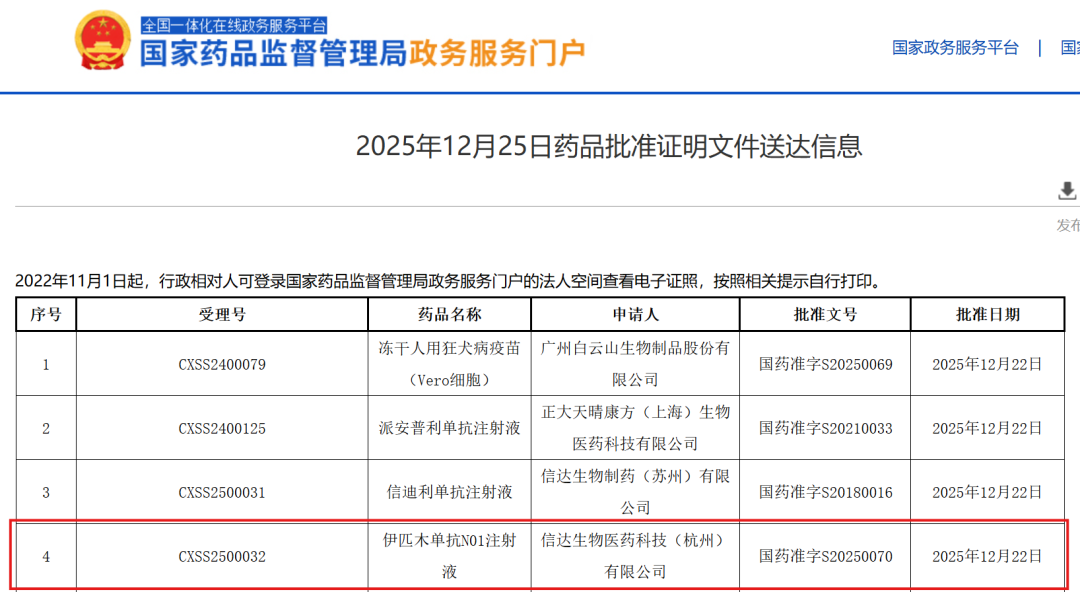
信达生物自主研发抗CTLA-4单抗获批上市
Zheng Quan Ri Bao Wang· 2025-12-25 12:11
Group 1 - The core point of the news is that Innovent Biologics has received approval from the National Medical Products Administration (NMPA) for its self-developed anti-CTLA-4 monoclonal antibody, Daberhe, in combination with the PD-1 inhibitor, Dabeoshu, for neoadjuvant treatment of resectable IIB-III stage microsatellite instability-high (MSI-H) or mismatch repair deficient (dMMR) colorectal cancer patients, marking a significant milestone in China's oncology treatment landscape [1][2] - Daberhe becomes the first domestically approved anti-CTLA-4 inhibitor in China and represents the world's first "dual immunotherapy" neoadjuvant treatment regimen for this indication [1] - The combination of Daberhe and Dabeoshu is now the ninth approved indication for Dabeoshu in China, which has already been approved for multiple indications including lung cancer, liver cancer, and esophageal cancer [1] Group 2 - With the approval of Daberhe, Innovent Biologics has successfully launched seven innovative drugs by 2025, focusing on key disease areas such as oncology (PD-1 and CTLA-4 combination), metabolism (GCG/GLP-1 dual-target drugs), autoimmune diseases (IL-23p19), and ophthalmology (Tebentafusp N01) [2] - The company is transitioning from a single focus on oncology to a dual-driven model of "oncology + chronic diseases," with plans to establish a comprehensive commercialization platform for chronic diseases [2] - As of now, Innovent Biologics has a total of 18 innovative drugs approved for market, and with the ongoing strengthening of its R&D and commercialization systems, the company is expected to further expand its leading position in the domestic biopharmaceutical industry [2]
信达生物免疫药物达伯欣®获批 为首个国产获批上市的抗CTLA-4抑制剂
Zheng Quan Shi Bao· 2025-12-25 11:12
Core Viewpoint - The approval of the anti-CTLA-4 monoclonal antibody Daberxin® (Ipilimumab N01 injection) by the National Medical Products Administration (NMPA) marks a significant breakthrough in the treatment of resectable IIB-III stage microsatellite instability-high (MSI-H) or mismatch repair-deficient (dMMR) colorectal cancer patients in China, establishing it as the first domestically developed anti-CTLA-4 inhibitor approved for this indication [1][2]. Group 1 - Daberxin® is now the first domestically approved anti-CTLA-4 inhibitor in China, representing a global first for a "dual immunotherapy" neoadjuvant treatment regimen for colorectal cancer [1][2]. - Approximately 15% of resectable colorectal cancer patients are classified as MSI-H/dMMR, who have historically lacked effective pre-surgical treatment options, often relying on "surgery + chemotherapy" with high recurrence risks [1]. - The NeoShot-III study demonstrated that 82% of the first 50 patients receiving the "dual immunotherapy" neoadjuvant treatment achieved pathological complete response (pCR), with a 100% surgical resection rate and no additional safety risks compared to direct surgery [2]. Group 2 - As of 2025, the company has successfully launched seven innovative drugs, with significant products or key data emerging in oncology, metabolism, autoimmune diseases, and ophthalmology [3]. - The company is transitioning from a single-focus on oncology to a dual-driven approach encompassing both oncology and chronic diseases, aiming to establish a comprehensive commercialization platform in the chronic disease sector [3]. - The company targets to exceed 20 billion yuan in product revenue by 2027, supported by the continued growth of chronic disease products and stable contributions from core oncology products [3].
信达生物免疫药物达伯欣获批 为首个国产获批上市的抗CTLA-4抑制剂
Zheng Quan Shi Bao Wang· 2025-12-25 11:04
Core Insights - The approval of the anti-CTLA-4 monoclonal antibody Daberxin® (Ipilimumab N01 injection) by the National Medical Products Administration (NMPA) marks it as the first domestically developed anti-CTLA-4 inhibitor approved in China, providing a significant breakthrough in neoadjuvant treatment for resectable IIB-III stage microsatellite instability-high (MSI-H) or mismatch repair-deficient (dMMR) colorectal cancer patients [2][3] Group 1: Drug Approval and Clinical Impact - Daberxin® is now part of the first "dual immunotherapy" neoadjuvant treatment regimen approved globally for this indication, which is expected to change clinical practices and fill a gap in the neoadjuvant treatment landscape for colorectal cancer [2][3] - In a phase III registration study (NeoShot-III), 82% of the first 50 patients treated with the "dual immunotherapy" showed no residual tumors in surgical specimens, achieving pathological complete response (pCR), with no additional safety risks compared to direct surgery [3] Group 2: Company Development and Market Position - As of now, the company has successfully launched 7 innovative drugs by 2025, with a focus on oncology, metabolism, autoimmune diseases, and ophthalmology, indicating a robust pipeline and commercialization strategy [4] - The company is transitioning from a single-focus on oncology to a dual-drive model that includes chronic diseases, aiming to establish a comprehensive commercialization platform in this area [4] - With the ongoing launch of new chronic disease products and stable contributions from core oncology products, the company's goal of exceeding 20 billion yuan in product revenue by 2027 is becoming increasingly realistic [4][5]
信达生物免疫药物达伯欣 获批 为首个国产获批上市的抗CTLA-4抑制剂
Zheng Quan Shi Bao Wang· 2025-12-25 10:49
Group 1 - The approval of the anti-CTLA-4 monoclonal antibody Daberxin (Ipilimumab N01 injection) by the National Medical Products Administration (NMPA) marks it as the first domestically developed anti-CTLA-4 inhibitor approved in China, providing a significant breakthrough in neoadjuvant treatment for resectable IIB-III stage microsatellite instability-high (MSI-H) or mismatch repair deficient (dMMR) colorectal cancer patients [1][2] - The approval is based on the interim analysis results of the Phase III registration study NeoShot-III, which showed that 82% of the first 50 patients receiving the "dual immune" neoadjuvant therapy achieved pathological complete response (pCR), with no additional safety risks compared to direct surgery [2] - The combination of Daberxin and the PD-1 inhibitor DabuShu (Sintilimab injection) is expected to change clinical practice and fill the gap in neoadjuvant treatment for colorectal cancer, benefiting more patients [2] Group 2 - As of 2025, the company has successfully launched 7 innovative drugs, with significant products or key data emerging in oncology, metabolism, autoimmune diseases, and ophthalmology [3] - The company is transitioning from a single focus on oncology to a dual-driven model of "oncology + chronic diseases," aiming to become a leader in the chronic disease innovation sector [3] - The company has set a target of exceeding 20 billion yuan in product revenue by 2027, supported by the continued growth of chronic disease products and stable contributions from core oncology products [3]
信达生物伊匹木单抗N01注射液获国家药监局批准上市
Xin Lang Cai Jing· 2025-12-25 09:28
Core Viewpoint - The announcement by Innovent Biologics regarding the approval of IBI310 (Ipilimumab N01 injection) by the NMPA marks a significant advancement in the treatment of MSI-H or dMMR colorectal cancer patients, indicating a potential growth opportunity in the oncology market in China [1] Group 1 - Innovent Biologics has received approval from the National Medical Products Administration (NMPA) for IBI310, a CTLA-4 monoclonal antibody [1] - IBI310 is to be used in combination with Sintilimab for neoadjuvant therapy in patients with resectable stage IIB-III MSI-H or dMMR colorectal cancer [1] - This approval highlights the company's commitment to addressing unmet medical needs in oncology and expanding its product portfolio [1]
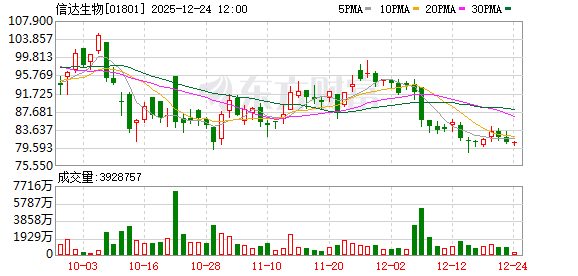
信达生物(01801)股东将股票存入香港上海汇丰银行 存仓市值45.98亿港元
智通财经网· 2025-12-25 00:14
Group 1 - The core viewpoint of the article highlights that Cinda Biologics has deposited shares worth HKD 45.98 billion into HSBC, representing 3.31% of its market value [1] - UBS has reported that six new products from Cinda Biologics and a new indication for its drug Sintilimab have been included in the latest version of the National Basic Medical Insurance, Maternity Insurance, and Work Injury Insurance Drug List for 2025 [1] - Cinda Biologics has officially been included in the Hang Seng Index, and UBS maintains a "Buy" rating with a target price of HKD 137.4 [1]
信达生物股东将股票存入香港上海汇丰银行 存仓市值45.98亿港元
Zhi Tong Cai Jing· 2025-12-25 00:13
Core Viewpoint - The latest data from the Hong Kong Stock Exchange indicates that on December 24, shareholders of Innovent Biologics (01801) deposited shares worth HKD 45.98 billion, representing 3.31% of the total [1] Group 1: Company Developments - UBS reported that six new products from Innovent Biologics and a new indication for Tyvyt (sintilimab) have been included in the latest version of the National Basic Medical Insurance, Maternity Insurance, and Work Injury Insurance Drug List (2025) [1] - Innovent Biologics has officially been included in the Hang Seng Index [1] Group 2: Analyst Ratings - UBS maintains a "Buy" rating for Innovent Biologics with a target price of HKD 137.4 [1]
信达生物“染蓝”:中国创新药从故事到资产的成人礼
2 1 Shi Ji Jing Ji Bao Dao· 2025-12-23 02:37
Core Viewpoint - The inclusion of Innovent Biologics (信达生物) in the Hang Seng Index marks a significant milestone for the Chinese innovative drug industry, reflecting its transition from a biotech company to a biopharma entity and gaining recognition in the mainstream capital market [2][3][6] Company Transition - Innovent Biologics is the first Chinese innovative drug company to transition from biotech to biopharma and be included in the Hang Seng Index since the implementation of the Chapter 18A listing rules [2][4] - This transition signifies a broader trend where local innovative drug companies are moving beyond the initial "burning cash" phase to achieve sustainable profitability and global competitiveness [3][6] Market Recognition - The company's inclusion in the Hang Seng Index is seen as a validation of its value as a leading innovative drug enterprise, attracting long-term investors and enhancing its stock liquidity [6][7] - Analysts estimate that the inclusion could bring in approximately $300-400 million in passive funds, significantly improving the stock's liquidity and reducing valuation volatility [7] Financial Performance - As of Q3 2025, Innovent's product revenue exceeded 3.3 billion yuan, representing a year-on-year growth of approximately 40%, with a total of 17 products launched [11] - The company has achieved a significant improvement in profitability, with its non-IFRS net profit and EBITDA aligning for the first time, indicating a self-sustaining business model [11] Strategic Planning - Innovent's strategic planning involves setting long-term goals and adjusting them annually based on market changes, which has allowed the company to effectively seize market opportunities [4][19] - The company focuses on developing key products in high-potential therapeutic areas, such as PD-1 and GLP-1, which have become significant revenue drivers [13][14] International Expansion - Innovent is pursuing a dual strategy of sustainable domestic growth and international expansion, with ambitious goals for product entry into international multi-center clinical trials by 2030 [15][17] - The recent strategic partnership with Takeda Pharmaceutical is a key step in its internationalization efforts, involving a co-development model that allows Innovent to leverage its clinical efficiency while sharing development costs and risks [17][18] Industry Trends - The Chinese innovative drug sector is evolving from being seen as high-risk to becoming a significant player in the global pharmaceutical market, with increasing amounts of foreign licensing agreements and collaborations [21][22] - The success of Innovent Biologics serves as a beacon for other Chinese innovative drug companies, indicating a shift towards a more stable and competitive landscape in the industry [22]
破局“青少年肥胖”难题 信达生物发布最新研究成果
Jing Ji Guan Cha Wang· 2025-12-15 06:08
Core Viewpoint - Chinese innovative pharmaceutical company Innovent Biologics (01801.HK) announced that its self-developed GCG/GLP-1 dual receptor agonist, Ma Shidu Peptide, achieved its primary endpoint in Phase Ib clinical trials among the adolescent obesity population in China [1] Group 1: Clinical Research Findings - The study showed significant reductions in body mass index (BMI) and weight after 12 weeks of treatment with Ma Shidu Peptide, along with comprehensive improvements in multiple metabolic indicators [1] - The initial results in adolescents mirrored the strong weight loss and metabolic improvement characteristics observed in adult studies, providing a solid scientific basis for further clinical development [1] Group 2: Market Implications - With the ongoing research, Ma Shidu Peptide is expected to address the lack of local innovative drugs for adolescent obesity patients in China [1]