Coca-Cola(KO)

Search documents
AI扫脸测“班味”,可口可乐这瓶“解压水”真能让打工人自愿掏钱?
3 6 Ke· 2025-06-25 02:59
Group 1 - The article discusses the concept of "banwei," a term used to describe the fatigue and stress experienced by office workers, and the growing demand for solutions to alleviate this condition [1][3] - Coca-Cola, through its investment in the relaxation beverage brand CHILL OUT, has launched an AI tool called "Stress Check Mirror" to help individuals identify their stress levels and promote the consumption of relaxation drinks [3][10] - CHILL OUT, positioned as a relaxation beverage, emphasizes the need for relaxation rather than energy, with its mission to alleviate stress for both individuals and the planet [5][8] Group 2 - The latest version of CHILL OUT contains 28mg of GABA, along with other relaxing ingredients like L-theanine and hops extract, and features a unique flavor profile designed to promote relaxation [5][8] - The relaxation beverage market is experiencing rapid growth, with the U.S. market projected to increase from approximately $193.1 million in 2018 to $1.01 billion by 2026, particularly in California [5][8] - In Japan, around 60% of the population faces work-related stress, indicating a significant market opportunity for relaxation beverages, despite low public awareness of this new category [5][8] Group 3 - Coca-Cola has been leveraging AI in its marketing strategies, including the use of AI-generated content and interactive campaigns to engage consumers and enhance brand experience [15][18] - The company has launched various AI-driven initiatives, such as the "Create Real Magic" competition, which encourages global artists to create content using AI tools, resulting in over 120,000 original artworks [18][21] - Despite facing challenges and criticisms regarding AI-generated advertisements, Coca-Cola remains committed to exploring the intersection of technology and creativity in its marketing efforts [26][29]



大厂正在将AI广告带入“伪人”时代?
Hu Xiu· 2025-06-24 11:29
Core Insights - The advertising industry is increasingly adopting AI technologies, with major companies like TikTok and Meta launching new AI advertising tools to streamline the creation of video content [1][2][3] - The cost-effectiveness of AI-generated advertisements is a significant advantage, with some tools reducing production costs by up to 95% compared to traditional methods [3][5][6] - Despite the benefits, there are concerns about the quality and reception of AI-generated content, particularly regarding the "uncanny valley" effect and the potential for homogenized advertising [19][20][30] Group 1: AI Advertising Tools - TikTok introduced a new AI advertising feature that generates 5-second video ads from images or text prompts [1] - Meta upgraded its image-to-video advertising tool, allowing marketers to create multi-scene video ads using AI [2] - Google's Veo3 tool can create complete videos from a single prompt, significantly reducing production time and costs [3] Group 2: Cost Efficiency - AI-generated advertisements can be produced at a fraction of the cost of traditional ads, with some companies claiming costs as low as $1 per ad compared to $200 previously [6][8] - The use of AI tools allows for faster production timelines, with some ads being completed in just a few days [3][8] Group 3: Industry Trends - A significant portion of advertisers (53.1%) are already using AI-generated content in their marketing strategies, indicating a shift towards AI integration in advertising [2] - The trend towards AI in advertising is expected to continue, with many small and medium-sized companies adopting these technologies to remain competitive [11][13] Group 4: Quality Concerns - There are growing concerns about the quality of AI-generated content, with some users expressing dissatisfaction with the "creepy" appearance of AI-generated characters [19][20] - Reports indicate that AI-generated ads may lack the emotional connection and engagement that traditional ads provide, leading to a negative perception among consumers [23][24][30] Group 5: Future Outlook - The debate over the effectiveness of AI-generated content versus traditional advertising is likely to persist, as companies weigh the cost benefits against potential drawbacks in consumer engagement [31][33] - While AI tools are becoming more accessible, there remains a belief in the value of human creativity and expertise in advertising [18][33]



关税子弹击中美国本土食品制造商!钢铁铝关税翻倍或掀起“包装革命”
智通财经网· 2025-06-24 09:07
Core Viewpoint - The doubling of tariffs on steel and aluminum to 50% by the Trump administration is significantly impacting U.S. food manufacturers, leading them to reconsider their packaging strategies and shift towards alternatives like sterile cartons, glass, and plastic [1][2][3]. Group 1: Impact on Food Manufacturers - Pacific Coast Producers, a major canned food supplier, is facing a 6% increase in special steel costs due to the new tariffs, which could lead to annual losses of up to $40 million and a planned 24% price increase for customers [1][3]. - The influx of imported canned goods from China and Southeast Asia has been driving down prices for domestic products since 2017, exacerbating the impact of the new tariffs [1][3]. - Companies are exploring alternative packaging solutions, such as sterile cartons from Tetra Pak and SIG Group, to mitigate rising costs [2][3]. Group 2: Industry Response and Trends - The beverage industry is also affected, with Coca-Cola indicating a potential shift towards plastic packaging if aluminum costs rise significantly [2][5]. - The American Glass Packaging Association is seeing opportunities to capture market share from aluminum cans due to the tariffs [3][4]. - Analysts suggest that if tariffs persist, companies will need to rethink their packaging strategies to maintain profitability [3][4]. Group 3: Challenges in Transitioning Packaging - Transitioning to alternatives like glass or sterile cartons presents logistical and cost challenges, as glass is generally more expensive due to its heavier weight [4][5]. - The majority of aluminum used in beverage cans is recycled, which may shield some manufacturers from tariff impacts [4][5]. - Companies that have diversified their packaging options, like Coca-Cola, may adapt more easily to tariff changes compared to those focused solely on canned products [5][6].
“为啥只有烟民能理直气壮下楼摸鱼?” TikTok上打工人开始抽更适合夏天的“冰镇香烟”?
3 6 Ke· 2025-06-24 05:43
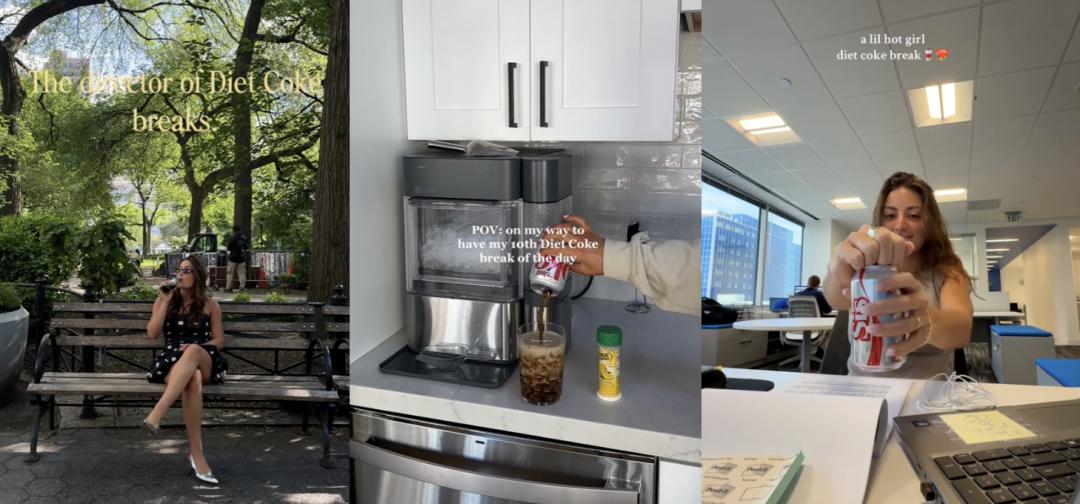
Core Viewpoint - The article discusses the emerging trend of "Diet Coke Break" as a modern alternative to traditional smoke breaks, particularly among Gen Z and Millennials, highlighting its social and psychological benefits in the workplace [1][3][7]. Group 1: Trend Description - "Diet Coke Break" is a practice where employees take short breaks to enjoy a can of Diet Coke, providing a refreshing escape from work [3][5]. - The trend has gained popularity on social media platforms, with TikTok users sharing their experiences, leading to over 290,000 likes on a related video [3][5]. - The term "fridge cigarette" has been coined to describe this practice, emphasizing its role as a socially acceptable break similar to smoking [5][7]. Group 2: Comparison with Smoking - The article compares the social aspects of smoking and drinking Diet Coke, noting that both activities serve as a means of relaxation and social interaction [5][7]. - Diet Coke is presented as a healthier and more cost-effective alternative to smoking, with a 12-pack costing $8.12 compared to over $10 for a pack of cigarettes in New York [5][7]. - The health implications of choosing Diet Coke over cigarettes are highlighted, as it is a low-calorie, sugar-free option [5][7]. Group 3: Historical Context - The concept of "Diet Coke Time" originated from a 1994 advertising campaign aimed at attracting urban women by featuring attractive male models [7][9]. - The campaign was unexpectedly successful, leading to multiple sequels and becoming a cultural reference point for workplace breaks [9][12]. - The revival of "Diet Coke Time" in 2023 reflects a shift in societal values, focusing on work-life balance and alternative relaxation methods [12][19]. Group 4: Broader Implications - The article notes that similar trends are emerging in other cultures, with alternatives like apples and hand cream being used as new social rituals [13][16]. - The desire for healthier and socially acceptable break options indicates a changing workplace culture that prioritizes well-being [18][19]. - The ongoing popularity of these trends suggests a potential long-term shift in how employees approach breaks and social interactions at work [19].
Coca-Cola: A Classic Investment or a Cautionary Tale?
The Motley Fool· 2025-06-23 23:00
Anand Chokkavelu, CFA has no position in any of the stocks mentioned. Jason Hall has no position in any of the stocks mentioned. Rick Munarriz has no position in any of the stocks mentioned. The Motley Fool has no position in any of the stocks mentioned. The Motley Fool has a disclosure policy. ...

Coca-Cola (KO) Laps the Stock Market: Here's Why
ZACKS· 2025-06-23 22:51
Group 1 - Coca-Cola's stock closed at $69.74, reflecting a 1.31% increase, outperforming the S&P 500's 0.96% gain on the same day [1] - Over the past month, Coca-Cola shares have decreased by 4.08%, underperforming the Consumer Staples sector's loss of 1.5% and the S&P 500's gain of 0.5% [1] Group 2 - Coca-Cola is expected to report earnings of $0.83 per share on July 22, 2025, indicating a year-over-year decline of 1.19%, while projected revenue is $12.61 billion, a 1.99% increase from the same quarter last year [2] - For the full year, earnings are projected at $2.97 per share and revenue at $48.25 billion, reflecting increases of 3.13% and 2.54% respectively from the previous year [3] Group 3 - Recent changes to analyst estimates for Coca-Cola are linked to stock price performance, with positive revisions indicating optimism about the business outlook [3][4] - The Zacks Rank system, which assesses estimated changes, currently ranks Coca-Cola at 3 (Hold) [5] Group 4 - Coca-Cola has a Forward P/E ratio of 23.22, which is higher than the industry average of 19.39, and a PEG ratio of 3.61 compared to the industry average of 2.61 [6] - The Beverages - Soft drinks industry, part of the Consumer Staples sector, holds a Zacks Industry Rank of 91, placing it in the top 37% of over 250 industries [7]
Coca-Cola vs. Monster: Which Stock is Positioned for the Top Spot?
ZACKS· 2025-06-23 16:26
Core Insights - The non-alcoholic beverage industry is transforming due to changing consumer preferences, with Coca-Cola and Monster Beverage Corp. as key competitors for market dominance [1][2] - Coca-Cola holds over 40% market share in carbonated soft drinks (CSD), while Monster commands nearly 30% of the global energy drink market [1][2] Coca-Cola (KO) - Coca-Cola's broad portfolio includes carbonated soft drinks, water, juice, and sports beverages, maintaining a strong market presence in over 200 countries with 30 billion-dollar brands [3][4] - In Q1 2025, Coca-Cola achieved 6% organic revenue growth and 2% unit case growth, alongside expanding gross and operating margins [4][8] - The company emphasizes health-conscious offerings, with one-third of its volume from low or no-calorie beverages, and leverages a vast distribution network to solidify its leadership [4][5] - Coca-Cola's digital engagement strategies and localized marketing efforts, particularly in emerging markets, enhance its brand relevance and consumer trust [6][7] - The company maintains a strong balance sheet and anticipates 2025 EPS growth of 2-3% and organic revenue growth of 5-6% despite tariff impacts [8][9] Monster Beverage Corp. (MNST) - Monster Beverage is a leader in the high-growth energy drink market, reporting a 5.1% increase in operating income and a 10.2% rise in adjusted EPS in Q1 2025 [10][14] - The company's international sales account for 40% of total revenues, with a gross margin of 56.5% driven by pricing and supply-chain optimization [10][14] - Monster's product innovation targets diverse consumer segments, including athletes and gamers, with a focus on affordability and demographic reach [11][12] - The company is expanding its product offerings and retail penetration through Coca-Cola's distribution network, despite challenges from its Alcohol Brands segment [12][13] - With no debt and $500 million authorized for share repurchases, Monster is positioned as a financially robust growth stock [14] Comparative Analysis - The Zacks Consensus Estimate suggests Coca-Cola's 2025 sales and EPS growth of 2.5% and 3.1%, respectively, while Monster's estimates indicate 5.8% sales growth and 14.8% EPS growth [15][17] - Coca-Cola trades at a forward P/E ratio of 22.34X, while Monster's is higher at 32.14X, reflecting its stronger growth potential [18][20] - Over the past year, Monster's stock has increased by 27.5%, outperforming Coca-Cola's 7.6% growth, indicating a preference for Monster among growth-oriented investors [20][21] Conclusion - Both Coca-Cola and Monster possess strong brands and resilient business models, but Monster's growth trajectory in the energy drink market positions it favorably for investors seeking high returns [21][22] - Monster's valuation premium reflects its consistent margin strength and market confidence in its expansion potential, making it a compelling choice for growth-focused investors [22]

消费者行为杂谈
Hu Xiu· 2025-06-23 03:23
Group 1 - The article discusses consumer behavior and preferences, highlighting how regional differences influence food choices, such as rice in the south and wheat in the north of China [2][3] - It emphasizes the difficulty of changing established taste preferences, as seen in the author's experience with northern workers in Guangdong who preferred their hometown cuisine over local dishes [2][3] - The article uses Coca-Cola as an example of a product with universal appeal, noting its low price point of 2.5 yuan per can and the company's strong brand presence that allows it to maintain market dominance [3][4] Group 2 - The article introduces See's Candies as a differentiated company in the candy industry, which has historically struggled with profitability [5][6] - It highlights that 80% of See's sales come from gift-giving occasions, particularly during holidays, indicating a unique market positioning [5][6] - The brand's strong reputation in California allows it to command higher prices, as consumers associate it with quality, making it a preferred gift choice [6][7] Group 3 - The article points out that See's Candies has not expanded beyond California despite its strong local brand recognition, illustrating the challenges of replicating brand loyalty in new markets [7][8] - It discusses the concept of weak demand for candy as a product category, emphasizing that without a strong local brand presence, consumers may not consider candy a suitable gift [8][9] - The article concludes that understanding consumer psychology and behavior is crucial for analyzing and appreciating the strength of a consumer brand [9][10]

The Boring Is Beautiful Portfolio: 3 Stocks for a Worried World
MarketBeat· 2025-06-22 14:21
Core Insights - Investors in 2025 are facing a challenging market characterized by persistent inflation and global uncertainty, leading to a shift towards high-quality, stable companies rather than high-risk growth stocks [1][2] Company Summaries Coca-Cola - Coca-Cola is recognized for its predictability and financial strength, boasting a dividend yield of 2.96% and an annual dividend of $2.04, with a 64-year track record of dividend increases [4][5] - The company recently announced a 5.2% increase in its dividend, marking its 63rd consecutive year of growth, supported by strong brand loyalty and pricing power [5][6] - Coca-Cola's strong organic revenue growth of 9% was attributed to successful price adjustments, demonstrating its ability to shield profits from inflation [6][7] PepsiCo - PepsiCo offers a diversified business model across beverages and convenient foods, with a dividend yield of 4.41% and an annual dividend of $5.69, maintaining a 54-year dividend increase track record [9][11] - The Frito-Lay division contributes significantly to PepsiCo's cash flow, with a recent 6% organic revenue growth, enhancing the overall stability of the company [10][11] - PepsiCo announced its 53rd consecutive dividend increase of 5%, reflecting management's confidence in its dual-engine business model [11][12] Realty Income - Realty Income focuses on providing a reliable monthly dividend, with a dividend yield of 5.63% and an annual dividend of $3.22, having made over 660 consecutive monthly payments [13][14] - The company operates as a Real Estate Investment Trust (REIT) with long-term, triple-net leases, insulating it from inflationary pressures [14][15] - Realty Income's focus on investment-grade tenants in defensive industries ensures a high occupancy rate above 98%, contributing to its financial stability [15][16] Investment Strategy - The companies highlighted demonstrate that stability and predictability are key attributes for long-term investment success, especially in uncertain market conditions [17][18]


Can Coca-Cola Stock Continue to Beat the Market?
The Motley Fool· 2025-06-20 21:18
Group 1 - Coca-Cola has had a strong performance in 2025, up 15%, outperforming the S&P 500 which is up 3% [1] - The company is the largest beverage company globally, with $48 billion in trailing-12-month sales and about 200 brands, 30 of which generate over $1 billion in sales each [2] - Coca-Cola demonstrates resilience even in tough economic conditions, often outperforming when investors seek safe stocks [3] Group 2 - The company benefits from low exposure to tariffs due to its localized production approach, with most U.S. products made domestically [5] - In Q1, Coca-Cola reported a 2% year-over-year increase in unit case volume and gained market share across all beverage categories [6] - Organic revenue increased by 6%, adjusted operating income rose by 10%, and comparable operating margin improved to 33.8% from 32.4% [7] Group 3 - Coca-Cola has transformed under CEO James Quincey since 2018, restructuring its brand portfolio and emerging stronger post-pandemic [10] - The company is now positioned for growth with a 10-year high in EPS and various strategies to enhance affordability and marketing [12] - The overall beverage industry is expected to grow in the mid-single digits, providing Coca-Cola with organic growth opportunities [13] Group 4 - Coca-Cola has significant room for growth in emerging markets, holding only 7% market share despite 80% of the world's population being in these regions [14] - The company continues to acquire new global brands that integrate well into its distribution system, contributing to high-margin revenue [15]