Coca-Cola(KO)

Search documents
Coca-Cola Vs Pepsi Stock: Which is the Better Investment for 2026?
ZACKS· 2026-01-08 02:20
Core Viewpoint - As the stock market approaches all-time highs, investors are looking for defensive options, with Coca-Cola and Pepsi being prime candidates due to their consistent performance during market corrections [1] Company Performance - Coca-Cola's return on invested capital (ROIC) is 18%, showing a positive trend towards 20% or higher, while Pepsi's ROIC is at 14%, indicating a decline in recent quarters [3][4] - Coca-Cola's fiscal 2025 earnings per share (EPS) rose 3% to $2.98, with a projected 8% increase to $3.22 for FY26, alongside a sales increase of 3% for FY25 and a projected 5% increase to $51.01 billion for FY26 [6] - Pepsi's FY25 EPS is expected to slightly dip to $8.12 but is projected to rebound by 5% to $8.55 in FY26, with sales expected to rise 2% for FY25 and 4% to $97.07 billion in FY26 [9] Valuation and Dividend Analysis - Pepsi trades at 16 times forward earnings and near 2 times forward sales, aligning with industry averages, while Coca-Cola trades at a premium of 6 times forward sales [10] - Coca-Cola offers a 3% annual dividend yield, matching the industry average, while Pepsi has a higher yield of 4%, with both companies classified as "Dividend Kings" for increasing dividends for over 50 consecutive years [12] Investment Outlook - As 2026 begins, Pepsi appears to meet more investor criteria despite Coca-Cola's stronger ROIC, with Coca-Cola potentially facing short-term weakness due to its higher valuation compared to Pepsi and its beverage peers [13]



Coca-Cola Trades Below 200-Day SMA: Opportunity or Warning Sign?
ZACKS· 2026-01-07 18:26
Core Viewpoint - The Coca-Cola Company (KO) has experienced a decline in its stock price, falling below key technical indicators, which indicates weakening momentum and investor confidence [1][2][20]. Stock Performance - KO shares have decreased by 3.4% over the past six months, underperforming the Zacks Beverages – Soft Drinks industry, which declined by 1.3%, and the S&P 500, which increased by 13.8% during the same period [6]. - The stock is currently trading at $67.84, which is 11.7% above its 52-week low of $60.71 and 8.8% below its 52-week high of $74.38 [10]. Technical Indicators - The stock fell below its 200-day simple moving average (SMA) on January 5, 2026, closing at $67.94, which is below the 200-day SMA of $68.99, indicating bearish momentum [1][9]. - KO also fell below its 50-day SMA on December 23, 2025, and has remained under this level, suggesting a sustained short-term downtrend [2]. Volume Trends - Volume growth for KO remains fragile, with North America showing flat volumes and declines in the Asia Pacific region due to weaker consumer spending and adverse weather conditions [12][21]. - Europe also experienced volume declines, while Latin America volumes remained flat amid macroeconomic stress in Mexico [12]. Management Outlook - Management has reiterated confidence in full-year guidance, but recent improvements are seen as execution-driven rather than indicative of stronger demand, leading to uncertainty about a sustained rebound [13][21]. - Coca-Cola anticipates tougher volume comparisons in the fourth quarter, which may affect near-term momentum [13]. Valuation Metrics - KO's current forward 12-month price-to-earnings (P/E) ratio is 21.04X, which is higher than the industry average of 17.64X, indicating that the stock may be relatively expensive [15][19]. - Compared to its key rival PepsiCo, which has a P/E of 16.23X, KO appears to be trading at a premium [19]. Competitive Landscape - KO's performance is notably weaker than competitors such as PepsiCo, Monster Beverage, and The Vita Coco Company, which have seen stock rallies of 2.9%, 22.9%, and 38.4%, respectively, over the past six months [7][20].
Congressman Chases Dividend Stocks: The Four Dow Jones Components He Bought In December
Benzinga· 2026-01-06 17:29
Core Insights - Retail investors are increasingly monitoring the stock trading activities of Congress members, which may indicate potential investment opportunities in stocks that could benefit from government contracts [1] - Congressman Lloyd Doggett has disclosed several stock purchases, primarily consisting of Dow Jones Industrial Average stocks, indicating a strategic investment approach [2][6] Group 1: Stock Purchases - Doggett's recent stock purchases include four Dow Jones Industrial Average stocks and PPG Industries, a paint and protective products company [2] - The stocks purchased by Doggett were made using dividends from existing holdings, a method known as dividend reinvestment [5] - The specific stocks purchased include Home Depot, Coca-Cola, PPG Industries, International Business Machines, and Johnson & Johnson, with investments ranging from $1,000 to $15,000 for each stock [8] Group 2: Dividend Yields and Performance - The dividend yields for the purchased stocks are as follows: Coca-Cola at 2.9%, PPG Industries at 2.7%, Home Depot at 2.7%, Johnson & Johnson at 2.5%, and International Business Machines at 2.2% [9] - Johnson & Johnson and IBM were among the best-performing stocks in the Dow Jones Industrial Average in 2025, with gains of 43.1% and 39.1% respectively, while Home Depot experienced a loss of 11.5% [10] - Doggett's strategy of reinvesting dividends in high-yielding blue-chip stocks is expected to enhance his share accumulation and dividend payments over time, provided the companies maintain their payouts [10]



3 Top Dow Jones Dividend Stocks to Buy for Passive Income in 2026
The Motley Fool· 2026-01-06 09:37
Core Viewpoint - High-quality, high-yielding dividend stocks such as Chevron, Coca-Cola, and Verizon are ideal for investors seeking sustainable passive income in 2026 [1][16] Group 1: Chevron - Chevron has a dividend yield of approximately 4.5%, significantly higher than the average Dow stock yield of 2% [4] - The company has increased its dividend payment for 38 consecutive years, showcasing its ability to grow dividends through various commodity cycles [4] - Chevron's net debt ratio stands at 15.1%, well below its target range of 20% to 25%, indicating a strong balance sheet [5] - The company expects to generate an additional $12.5 billion in free cash flow in 2026 at an average oil price of $70 per barrel, with a projected annual growth rate of over 10% through 2030 [7] Group 2: Coca-Cola - Coca-Cola's current dividend yield is around 3%, and it has raised its dividend for 63 consecutive years, qualifying it as a Dividend King [8] - The company generates steadily rising revenue and strong cash flows from its diverse beverage brands, supporting its financial goals of 4% to 6% annual organic revenue growth [10] - Coca-Cola has a strong balance sheet, allowing for acquisitions that drive earnings-per-share growth, such as Fairlife and Topo Chico [11] Group 3: Verizon - Verizon boasts the highest yield in the Dow at nearly 7%, with a history of increasing its dividend for 19 years [12] - The telecom giant is projected to produce between $37 billion and $39 billion in operating cash flow, ensuring ample cash to cover its annual dividend payments of about $11.5 billion [14] - Verizon plans to enhance its fiber capabilities through a $20 billion acquisition of Frontier Communications, which is expected to grow revenue and cash flow [15]




新CEO还未接棒,总部先开始裁员,可口可乐在2026年的第一个“坏消息”
3 6 Ke· 2026-01-06 06:32
Core Insights - Coca-Cola is set to lay off 75 employees at its Atlanta headquarters by February 28, coinciding with the transition from CEO James Quincey to his successor Henrique Braun [1][2] - The layoffs are targeted at specific roles within the corporate functions, indicating a shift towards reducing middle management in favor of AI and technology [2][6] - Quincey's previous comments reflect a dissatisfaction with the company's performance despite positive financial results, suggesting a need for significant operational changes [4][5] Group 1: Layoffs and Organizational Changes - The layoffs are described as a "targeted elimination," focusing on roles that do not directly contribute to production or sales, highlighting a shift in corporate strategy [2] - The absence of "bumping rights" indicates that these positions are permanently eliminated rather than replaced, emphasizing a move towards a leaner organizational structure [2] - The restructuring is framed as a proactive measure for growth and efficiency, leveraging AI to streamline operations and decision-making processes [6][8] Group 2: Market Challenges and Strategic Shifts - Coca-Cola has faced stagnation in sales growth, with only a 1% increase reported, prompting the need for cost-cutting measures to maintain a favorable balance sheet [5][15] - The company is experiencing significant competition in the Chinese market, particularly from local brands like "Oriental Leaf," which have captured a substantial market share in the no-sugar tea segment [11][12] - Quincey's acknowledgment of prioritizing profitability over volume in the Chinese market signals a strategic retreat from previously aggressive growth tactics [15]
Can Coca-Cola's Revenue Growth Management Fuel Next-Leg of Upside?
ZACKS· 2026-01-05 18:45
Core Insights - Coca-Cola's Revenue Growth Management (RGM) strategy is crucial for maintaining growth amidst challenging consumer conditions, with a focus on pricing, pack architecture, and channel mix [2][6] - In Q3 2025, Coca-Cola's revenues increased by 5% to $12.46 billion, with organic revenues rising by 6% and gaining value share in key markets [3][11] - The company is balancing pricing strategies with mix optimization, utilizing smaller pack sizes to address affordability while driving revenue growth [4][11] Revenue Growth Management Strategy - RGM involves refining brand-price-pack architecture to cater to diverse consumer needs, with smaller pack sizes like mini cans generating a $1 billion revenue stream in North America [4] - Coca-Cola is also enhancing its product mix with premium offerings, demonstrating RGM's role in both accessibility and premiumization [5] - The company emphasizes that recent growth is attributed to targeted RGM actions, collaboration with bottlers, and quicker local decision-making [6] Competitive Landscape - PepsiCo's revenue growth strategies are gaining traction through optimized promotions and affordable pack sizes, leading to improved volumes and sustained pricing discipline [8] - Keurig Dr Pepper's initiatives are yielding results with disciplined pricing and strong brand execution, contributing to solid net sales growth [9] Financial Performance - Coca-Cola's organic revenue growth of 6% in Q3 2025 aligns with the high end of its long-term growth algorithm [11] - The company's shares have appreciated by 13.6% over the past year, outperforming the industry growth of 9.6% [12] - Coca-Cola's forward price-to-earnings ratio stands at 21.45X, higher than the industry's 17.84X [14] Earnings Estimates - The Zacks Consensus Estimate for Coca-Cola's earnings implies year-over-year growth of 3.5% for 2025 and 8% for 2026, with estimates remaining unchanged over the past 30 days [16]
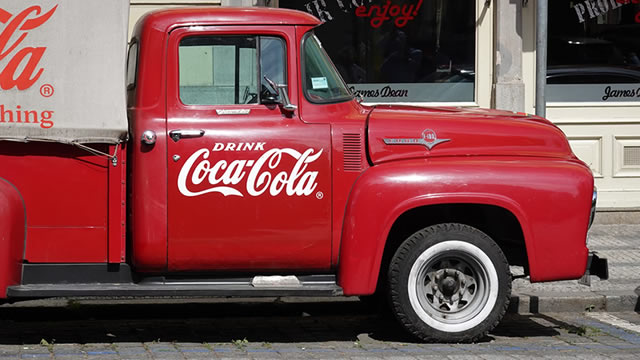
Coca-Cola begins corporate restructuring with 75 layoffs
Yahoo Finance· 2026-01-05 11:19
Group 1 - Coca-Cola is planning layoffs as part of a restructuring initiative, starting with 75 workers at its corporate headquarters, with further cuts expected in phases [7] - The company is adapting to changing consumer preferences, shifting focus from sugary drinks to waters and sports drinks, and is preparing for a transition to a new CEO in March [3][4] - Coca-Cola reported a 5% increase in net revenue to $12.5 billion in its third quarter and anticipates similar growth for the full year [4] Group 2 - Other consumer packaged goods (CPG) companies, including Nestlé, General Mills, and Molson Coors, have also announced workforce reductions recently [5] - Outgoing CEO James Quincey emphasized the need for Coca-Cola to drive revenue growth despite its strong market position during an October earnings call [7]
Nearly 65% of Warren Buffett's Portfolio Is Invested in These 5 Stocks as 2026 Begins
The Motley Fool· 2026-01-05 09:44
Core Viewpoint - Berkshire Hathaway's portfolio continues to reflect Warren Buffett's investment philosophy, even after he has stepped down as CEO, as he remains the largest shareholder and chairman of the board [2][3]. Group 1: Portfolio Composition - Nearly 65% of Berkshire Hathaway's portfolio is concentrated in five key stocks as of early 2026 [3]. - The largest holding is Apple, comprising 21.1% of the portfolio with 238,212,764 shares owned [5]. - American Express is the second-largest holding at 18.3% of the portfolio, with Buffett indicating it is a stock Berkshire would own indefinitely [8]. - Bank of America represents 10.2% of the portfolio, with a valuation of over $31 billion [9]. - The Coca-Cola Company is the fourth-largest holding, with 400 million shares owned, reflecting Buffett's long-term commitment to the brand [12]. - Chevron ranks fifth in the portfolio, with over 122 million shares owned, generating substantial income through its attractive dividend yield of 4.5% [14][16]. Group 2: Future Considerations - There is speculation that Greg Abel, Buffett's successor, may consider trimming the stake in Apple, although this is viewed as a potential mistake given Apple's strong customer loyalty and future product developments [7]. - It is unlikely that significant changes will occur in Berkshire's stake in American Express, as it is viewed as a "wonderful business" [9]. - The future of Bank of America under Abel's leadership remains uncertain, but no significant sales are expected due to its attractive valuation [11]. - Coca-Cola is expected to remain a long-term holding, with no anticipated sales under Abel's direction [13]. - While there may be some trimming of the Chevron position, it is expected that Berkshire will maintain a significant stake due to the income it generates [16].



可口可乐 × 小沈阳父女:马年营销 “新仪式感”
Jing Ji Guan Cha Bao· 2026-01-05 08:39
Core Insights - Coca-Cola's marketing campaign for the Year of the Horse focuses on a fresh approach to traditional Chinese New Year celebrations, blending traditional customs with modern interpretations to resonate with diverse audiences [1][2] Group 1: Marketing Strategy - The campaign features a collaboration with popular comedian Xiao Shenyang and his daughter, enhancing relatability and warmth, while promoting the idea of "new ways to celebrate" [2] - The advertisement effectively addresses the complex emotions surrounding the New Year, appealing to both older generations' nostalgia and younger generations' desire for individuality [1][2] Group 2: Audience Engagement - The campaign employs engaging questions and hashtags to invite user participation, encouraging the sharing of personal New Year experiences and fostering a sense of community [3] - By focusing on themes of "newness" and "family reunion," the campaign broadens its appeal and encourages user-generated content, enhancing brand visibility and engagement [3] Group 3: Emotional Connection - The advertisement emphasizes emotional insights, breaking away from conventional marketing clichés and instead focusing on genuine user needs and feelings associated with the New Year [3] - The use of a "national family" concept in the campaign creates a sense of closeness between the brand and consumers, making the marketing message feel authentic and warm [2][3]
《巴菲特致股东的信》:在别人贪婪的时候恐惧,在别人恐惧的时候贪婪
Sou Hu Cai Jing· 2026-01-05 08:00
Core Insights - The article emphasizes the psychological barriers of ignorance and greed that hinder effective investment decisions, leading to poor financial outcomes for many individuals [1][2][6][19]. Group 1: Investment Psychology - Many individuals experience anxiety when it comes to financial management and investment, often resulting in either inaction or impulsive decisions driven by market trends and rumors [1][2]. - The tendency to follow expert opinions or market trends without understanding the underlying value can lead to significant losses, as investors often buy high and sell low [3][4]. - The article references Warren Buffett's famous quote about being greedy when others are fearful and vice versa, highlighting the importance of contrarian thinking in investment strategies [6][7][8]. Group 2: Long-term Investment Philosophy - Buffett's investment philosophy advocates for a long-term perspective, suggesting that if an investor is not willing to hold a stock for ten years, they should not consider owning it for even ten minutes [16][18]. - The article illustrates this with Buffett's investment in BYD, where he recognized the company's potential in the electric vehicle market and held onto his shares despite market fluctuations, resulting in substantial returns [18]. Group 3: Understanding Risk - The article stresses that investment risk is closely tied to the investor's understanding of the investment itself; lack of knowledge can lead to significant risks [19][20]. - Buffett's approach involves investing only in businesses that he understands, avoiding sectors where he lacks insight, such as technology in his early career [21][22][23]. Group 4: Value vs. Price - The distinction between price and value is crucial; price is what is paid in the market, while value reflects the intrinsic worth of a company based on its fundamentals [12][13][14]. - Investors are encouraged to focus on the underlying value of companies rather than being swayed by short-term price movements, as exemplified by Buffett's investment in Coca-Cola [13][14]. Group 5: Learning and Growth - The article concludes that understanding fundamental investment principles can help investors avoid common pitfalls and make more informed decisions, emphasizing the importance of continuous learning in investment practices [25].