Coca-Cola(KO)

Search documents
Coca-Cola's Margins Soar: Can It Sustain the Efficiency Push?
ZACKS· 2025-12-05 17:51
Core Insights - The Coca-Cola Company demonstrated strong margin performance in Q3 2025, with a 120 basis points expansion in operating margin despite a slight 10 basis points dip in gross margin, driven by cost control and efficiency initiatives [1][9] - The company reported a 6% increase in comparable earnings per share to 82 cents, although results were impacted by a 6% currency headwind [1][2] Group 1: Margin Performance - The expansion in operating margin is attributed to a balance of reinvestment and productivity, with Coca-Cola focusing on marketing, digital transformation, and innovation while also improving efficiencies in cost of goods sold, advertising, and SG&A [2][9] - Key contributors to profitability include improved media productivity, supply-chain optimization, and tighter expense discipline [2][9] Group 2: Future Outlook - Coca-Cola anticipates further margin support from the completion of its refranchising strategy, particularly in India and Africa, which is expected to enhance the company's margin profile over time [3][9] - Management also expects a modest currency tailwind in 2026, which could provide additional support to earnings and margins if current rates persist [3] Group 3: Competitor Analysis - PepsiCo's margins showed improvement in Q3 2025, aided by cost optimization efforts, although higher supply chain and tariff-related costs created a headwind [6] - Monster Beverage reported strong margin expansion with gross margin rising to 55.7% from 53.2% year-over-year, driven by pricing actions and supply-chain optimization [7] Group 4: Financial Metrics - Coca-Cola's free cash flow generation was robust at $8.5 billion for the quarter, excluding fairlife-related payments, indicating a strong underlying margin structure [2] - The company trades at a forward price-to-earnings ratio of 21.99X, which is significantly higher than the industry's 18.16X [10] - The Zacks Consensus Estimate for Coca-Cola's earnings implies year-over-year growth of 3.5% for 2025 and 8% for 2026, with estimates remaining unchanged over the past 30 days [11]


Coca-Cola: The Market Is Overlooking KO's Cash Recovery And Dividend Power
Seeking Alpha· 2025-12-05 15:06
Group 1 - The article introduces Coca-Cola (NYSE: KO) as a global leader in the non-alcoholic beverages sector, indicating a potential investment opportunity in this industry [1] - The analyst, Dhierin-Perkash Bechai, specializes in aerospace, defense, and airline sectors, but is expanding coverage to include Coca-Cola, suggesting a broadening of investment analysis frameworks [1] - The investing group, The Aerospace Forum, aims to identify investment opportunities across various industries, leveraging data analytics for informed decision-making [1]
11.5元买一瓶“水”?不,是胖东来在卖的透明可乐
新消费智库· 2025-12-05 13:03
Core Viewpoint - The article discusses the recent trend of transparent beverages, particularly focusing on the launch of a transparent cola by Pepsi in Thailand, which has sparked consumer interest despite its higher price point compared to traditional cola products [5][10][33]. Group 1: Product Launch and Consumer Reaction - A transparent cola priced at 11.5 yuan for 550ml has gained attention on social media, with consumers intrigued by its unique appearance and taste, which is reported to be similar to regular sugar-free cola [5][10]. - The marketing campaign for Pepsi Clear emphasizes the concept of "clarity," aiming to convey a sense of freshness and purity through its advertising [11][12][15]. Group 2: Historical Context of Transparent Cola - The history of transparent cola dates back to World War II, with a notable early version being Crystal Pepsi launched in 1992, which aimed to cater to health-conscious consumers by removing caramel coloring [19][20]. - Despite initial sales success, Crystal Pepsi ultimately failed due to consumer dissatisfaction with its taste and the competitive response from Coca-Cola, which launched Tab Clear as a strategic counter [22][24][27]. Group 3: Market Trends and Innovations - The rise of transparent beverages reflects a broader consumer preference for products that appear lighter and less processed, aligning with health trends and the desire for "clean" labels [50][52]. - Other companies, including Suntory and Coca-Cola, have also introduced various transparent products, indicating a growing trend in the beverage industry towards innovation in product appearance and formulation [36][38][39].


一线饮料品牌释放“价格战”信号,2026饮料行业或将再迎来降价潮
Xin Lang Cai Jing· 2025-12-05 11:37
Core Insights - A leading beverage company in China has proactively lowered its growth target for 2026, indicating a significant reduction compared to its historical growth rates, while simultaneously pursuing aggressive expansion plans, suggesting the initiation of a "price war" [1][3] - Another major beverage player has announced a clear and aggressive strategy for the coming year, focusing on expanding market share through "internal competition" and seeking breakthroughs in new categories via price wars [1][3] Price War Dynamics - Historical trends show that when industry giants initiate internal competition, it often compels other players to follow suit, leading to a downward spiral into price wars [3] - The price decline in the beverage market has already begun to manifest, with average prices for sugar-free tea and "health water" dropping from approximately 5.6 yuan and 0.9 yuan per 100ml in 2023 to about 5.15 yuan and 0.86 yuan in 2025 [4][6] Pricing Strategies - New products in the health beverage category launched in the first half of the year have an average price of about 5 yuan per bottle, a 12% decrease from the 2024 average of 5.7 yuan [6] - Promotions such as "second bottle for 1 yuan" have led to actual transaction prices for health beverages dropping to between 3 and 5.5 yuan per bottle, representing a decline of over 40% [6] - The bottled water sector is also experiencing price reductions, with major brands like Nongfu Spring and Wahaha temporarily pausing before second-tier brands like Master Kong and Yili continue to push low-price strategies [8] Market Sentiment and Consumer Behavior - Distributors are feeling the impact of price reductions directly, with reports indicating that previously popular beverages priced at 6-8 yuan are now generally below 5 yuan [10] - The shift in pricing power from distributors to brand owners is evident, as brands are forced to lower prices to maintain market share and relationships with distributors amid high inventory levels [10][12] Promotional Tactics - Brands are employing sophisticated pricing strategies, including large packaging and "one yuan exchange" promotions, to capture market share without directly undermining existing price structures [12][15] - Some companies have officially announced price reductions by launching newly priced products, such as a major international cola brand introducing a 400ml product priced lower than its previous 500ml offerings [15] Industry Outlook - The signals from industry giants indicate that the beverage sector will become increasingly competitive in 2026, with price wars expected to be a primary battleground [16][20] - The ongoing price war is likely to impact all segments of the supply chain, including small brands, distributors, and consumers, with potential negative consequences for profit margins and product quality [20][22]




The Dividend Stocks That Keep Paying Even When Markets Stumble
247Wallst· 2025-12-04 21:06
Core Viewpoint - The article emphasizes the importance of dividend-paying stocks as a reliable investment strategy during market volatility, highlighting their ability to provide steady income even when stock prices decline [3][5]. Dividend Stocks Overview - Procter & Gamble (PG) has raised its dividend for 69 consecutive years, currently yielding 2.88% with an annual payout of $4.23 per share, demonstrating resilience during market downturns [4][6]. - Coca-Cola (KO) has increased its dividend for 62 straight years, also yielding 2.88%, and offers a quarterly dividend of $0.51, showcasing its strong brand and consistent operating margins [7]. - Johnson & Johnson (JNJ) has a dividend yield of 2.53% and an annual payout of $5.20 per share, with a history of 62 years of dividend increases, supported by a strong balance sheet and diversified revenue streams [9]. - Realty Income (O), known as "The Monthly Dividend Company," has a 5.57% yield and has increased its payout for 30 consecutive years, benefiting from a diversified tenant base and predictable rental income [11]. Investment Strategy - Dividend-paying companies are attractive during downturns as they operate in essential industries, maintaining healthy cash flows even when consumer spending tightens [5]. - These stocks provide a dependable income stream that is less dependent on stock price movements, helping investors avoid panic selling during market declines [5].



可口可乐CEO:饮料行业仍极具吸引力,关键按购买力细分运营,想再辉煌100年要靠“不满足”文化
3 6 Ke· 2025-12-04 00:25
Core Insights - The CEO of Coca-Cola, James Quincey, predicts that macroeconomic conditions will continue to worsen, likening the situation to increasing rain rather than a decrease [1] - Coca-Cola is focusing on controllable aspects such as marketing, innovation, execution, and pricing to navigate the challenging economic landscape [1] Economic Outlook - Quincey notes that consumer sentiment remains weak, particularly among lower-income groups, but he believes it is not yet a dire situation [4] - The balance of favorable and unfavorable economic factors is shifting towards more headwinds as the company looks ahead to next year [4] Segmentation Strategy - Coca-Cola is implementing a segmentation strategy based on purchasing power to better understand consumer behavior and tailor marketing efforts [4][6] - The company has adjusted product sizes and pricing in response to consumer pressures, such as offering 400ml bottles at a lower price in China [6] Acquisition Strategy - Quincey emphasizes the importance of innovation and potential acquisitions to fill gaps in the product portfolio, especially in a tightening consumer environment [7] - Coca-Cola currently has 30 brands worth over $1 billion, with half acquired through mergers and acquisitions [7] Competitive Landscape - The beverage industry is experiencing increased competition from new startups, which may also become potential acquisition targets for Coca-Cola [9] - Despite the influx of new products, the high barriers to scaling remain a challenge for smaller companies [9] AI Integration - AI is seen as a tool to enhance understanding of consumer behavior and improve marketing strategies, with plans to launch new products based on AI insights in 2026 [10] - The company has already utilized AI for more efficient advertising and sales processes, indicating a significant potential for revenue growth [13] Internal Culture and Succession Planning - Quincey highlights the importance of maintaining a culture of dissatisfaction to drive continuous improvement and innovation within the company [16][18] - The company has been working on a succession plan to ensure a smooth transition when the time comes [18]
Coca-Cola and Pepsi rival brings back iconic RC Cola brand
Yahoo Finance· 2025-12-03 19:47
Core Insights - The ongoing competition between Coca-Cola and PepsiCo, known as the Cola Wars, has seen significant developments, particularly with Dr Pepper emerging as a strong contender in the market [2][3][7]. Market Position - Coca-Cola remains the dominant player in the U.S. soda market with a market share of 19.2% [7]. - Dr Pepper has recently overtaken Pepsi to become the second-largest soda by sales volume, achieving a market share of 8.3% [7]. - Pepsi has dropped to the fourth position, following Dr Pepper and Sprite, which now holds the third spot [7]. Historical Context - The Cola Wars intensified in the 1980s, highlighted by Coca-Cola's controversial introduction of 'New Coke' in 1985, which ultimately benefited its sales [2][3]. - The rivalry between Coca-Cola and Pepsi has been characterized as a "blood feud," indicating the intensity and longevity of their competition [3]. Emerging Competitors - Keurig Dr Pepper is looking to revitalize RC Cola, a brand with over 120 years of history, in an effort to challenge the dominance of Coca-Cola and Pepsi [6].

San Francisco is suing Coca-Cola, Nestlé, and other makers of ultraprocessed foods. Here's why
Fastcompany· 2025-12-03 18:41
Core Viewpoint - The city of San Francisco has initiated a lawsuit against major food manufacturers, including Coca-Cola and Nestle, claiming that ultraprocessed foods are contributing to public health issues [1] Group 1: Lawsuit Details - The lawsuit targets some of the nation's leading food manufacturers, alleging that their ultraprocessed products are responsible for health problems [1] - The city argues that these companies have a responsibility for the negative health impacts associated with their products [1] Group 2: Implications for the Food Industry - This legal action may set a precedent for other cities to follow suit, potentially leading to increased scrutiny and regulation of ultraprocessed foods [1] - The lawsuit highlights growing concerns over public health and the role of food manufacturers in contributing to health crises [1]
San Francisco Sues Food Brands That Sell Ultraprocessed Food Products
Business Insider· 2025-12-03 05:55
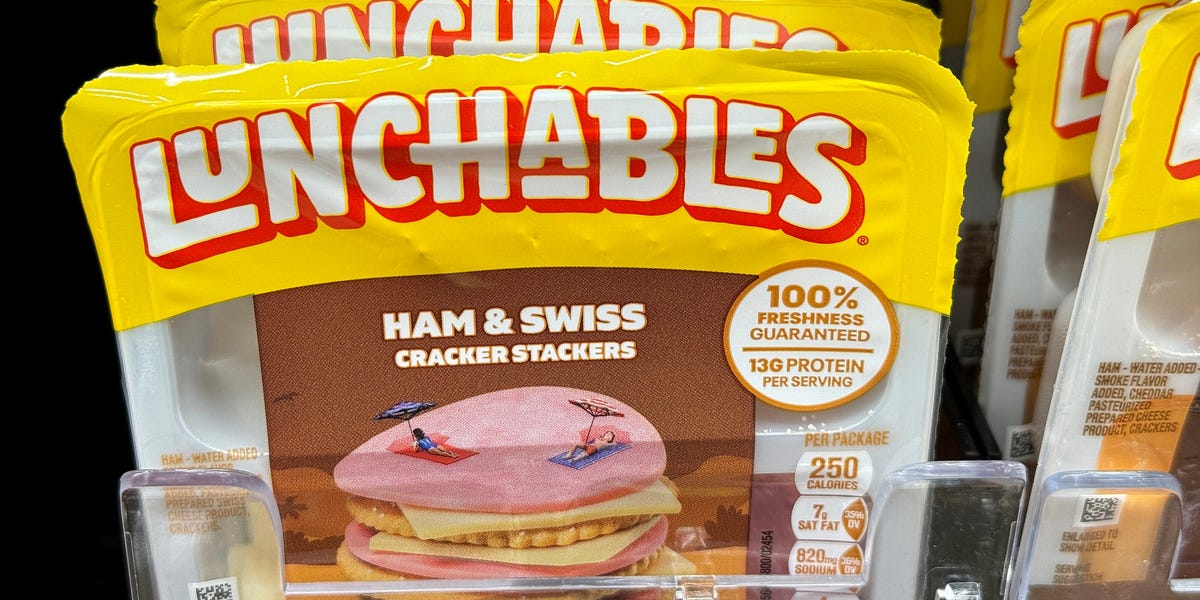
Core Viewpoint - San Francisco is suing major food brands for selling ultra-processed foods that contribute to public health issues, claiming these companies have profited from harmful products without proper health warnings [1][3][4]. Group 1: Lawsuit Details - The lawsuit, filed by San Francisco City Attorney David Chiu, is 64 pages long and targets 11 major food brands [1][2]. - The brands named in the lawsuit include Kraft Heinz, Mondelez, Coca-Cola, Pepsico, General Mills, Nestlé, and others [2]. Group 2: Accusations Against Brands - The lawsuit accuses these brands of creating addictive foods that lead to health problems, failing to provide health warnings, and making misleading claims about product healthiness [3][4]. - Ultra-processed foods are linked to obesity, type 2 diabetes, cardiovascular disease, and other chronic illnesses [4]. Group 3: Legal and Regulatory Context - Chiu is calling for the brands to stop deceptive marketing practices and to pay civil penalties to San Francisco [5]. - This lawsuit aligns with a broader movement in the U.S. to regulate processed foods, initiated by Health Secretary Robert F. Kennedy Jr. [5][6].


Senator Buys Coca-Cola, Hershey's Stock After Selling Magnificent Seven Stocks In 2025
Benzinga· 2025-12-03 00:23
Group 1 - Senator Sheldon Whitehouse (D-R.I.) disclosed three recent stock purchases on November 21, 2025, including two food and beverage stocks ahead of the holidays [2][5] - The senator's new holdings include Guardant Health and Hershey, while he previously purchased Coca-Cola shares in October 2024 and December 2023 [2][3] - The senator has sold shares of Magnificent Seven stocks, including Apple and NVIDIA, in multiple transactions throughout 2025 [3][5] Group 2 - The recent trades by Senator Whitehouse are relatively small compared to his previous transactions and have not garnered significant attention [5] - With the retirement of Rep. Nancy Pelosi in 2026, retail investors may need to monitor the trading activities of other Congress members for potential market outperformance [6]