Lilly(LLY)

Search documents
Eli Lilly’s (LLY) Focus on Innovation and Financial Strength Makes it a Long-Term Winner
Yahoo Finance· 2025-10-29 02:31
Core Insights - Eli Lilly and Company (NYSE: LLY) is recognized as a strong healthcare stock with a long history of innovation and a robust drug pipeline, indicating promising long-term growth potential [2] - The company is currently focused on two popular injectable GLP-1 products, "Mounjaro" for diabetes and "Zepbound" for weight loss, both containing the active ingredient tirzepatide, which shows potential for treating additional conditions [3] - Eli Lilly projects revenue between $60 billion to $62 billion for the current year and has consistently increased its dividend for 11 consecutive years, with a recent quarterly dividend of $1.50 per share [4] Financial Performance - The projected revenue for Eli Lilly in the current year is between $60 billion and $62 billion, showcasing strong financial performance [4] - The company has declared a quarterly dividend of $1.50 per share, maintaining its previous payout level, and has a dividend yield of 0.73% as of October 28 [4] Product Pipeline and Innovation - Eli Lilly's operations are centered around its GLP-1 products, with ongoing clinical trials suggesting that tirzepatide may also assist in managing fatty liver disease and potentially curb addiction [3] - The company plans to introduce a weight loss pill, possibly as early as next year, further expanding its product offerings [3]

开盘:三大指数集体高开 创指高开1.07% 高压氧舱板块涨幅居前
Xin Lang Cai Jing· 2025-10-29 02:12
Market Overview - The three major indices opened higher, with the Shanghai Composite Index at 3990.27 points, up 0.05%, the Shenzhen Component Index at 13484.01 points, up 0.40%, and the ChiNext Index at 3263.98 points, up 1.07% [1] Policy and Economic Development - The Central Committee of the Communist Party of China published suggestions for the 15th Five-Year Plan, emphasizing the cultivation of emerging industries and strategic sectors such as new energy, new materials, aerospace, and quantum technology [1] - The People's Bank of China reported on financial work, highlighting the need to prevent systemic financial risks and to strengthen the capital market [1] Industry Performance - The 11th batch of national drug centralized procurement included 55 commonly used drugs across various fields, indicating ongoing efforts in healthcare cost management [2] - Ganfeng Lithium reported a 364% year-on-year increase in net profit for Q3, driven by expanded sales [2] - Zhonghang Chengfei announced a net profit of 1.256 billion yuan for Q3, up 169.53% year-on-year [2] - Zhaoyi Innovation reported a net profit of 508 million yuan for Q3, a 61.13% increase year-on-year [2] - Huasheng Tiancai's Q3 net profit surged by 563.58% to 219 million yuan [2] - China Film's Q3 net profit reached 177 million yuan, up 1,463.17% year-on-year [2] - Shengyi Technology reported a net profit of 1.115 billion yuan for the first three quarters, a 498% increase [2] - Sungrow Power reported a net profit of 4.147 billion yuan for the first three quarters, up 57.04% year-on-year [2] - Huitian Technology announced a net profit of 2.718 billion yuan for the first three quarters, a 47.03% increase, benefiting from structural demand in AI [2] Corporate Developments - Lianqi Technology announced that its shareholders' combined stake fell below 5% [3] - Delong Huineng announced a change in its controlling shareholder and actual controller, leading to stock resumption [3] - Dahua Intelligent stated that it currently has no business related to quantum technology [4] International Market Trends - The U.S. Senate rejected a temporary funding bill, leading to a continued government shutdown [5] - U.S. stock indices collectively rose, with the Nasdaq up 0.8%, Dow Jones up 0.34%, and S&P 500 up 0.23% [5] - Nvidia's stock rose approximately 5%, nearing a market capitalization of $5 trillion [5] Technological Advancements - Eli Lilly announced the deployment of the world's largest and most powerful AI pharmaceutical factory, utilizing Nvidia's DGX supercluster [6] - Nvidia plans to ship 20 million Blackwell and Rubin GPUs, expecting a business scale of $500 billion over the next six quarters [7] - OpenAI reported a total investment of approximately $1.4 trillion for AI infrastructure construction [8] - Microsoft and OpenAI signed a new agreement to support OpenAI's capital restructuring, with Microsoft acquiring about 27% equity in OpenAI [8] - The U.S. Department of Energy announced collaborations with Nvidia and Oracle to build seven new AI supercomputers [9]



礼来联手英伟达建制药业最强超算和AI工厂:加速药物研发,发现人类无法找到的分子
硬AI· 2025-10-29 01:46
Core Viewpoint - Eli Lilly collaborates with NVIDIA to build a powerful supercomputer and AI factory aimed at accelerating drug development in the pharmaceutical industry, expected to launch in January next year [2][4]. Group 1: AI in Drug Development - The pharmaceutical industry's efforts to utilize AI for accelerating drug approvals are still in the early stages, with no AI-designed drugs yet on the market, but an increase in AI-discovered drugs entering clinical trials [4]. - Eli Lilly's Chief AI Officer, Thomas Fuchs, describes the supercomputer as a novel scientific instrument, akin to a giant microscope for biologists [5]. - The supercomputer will enable scientists to train AI models through millions of experiments, significantly expanding the scope and complexity of drug discovery [6]. Group 2: Precision Medicine - The new AI tools are not solely focused on drug discovery but represent a significant opportunity to discover new molecules that humans may not identify [7]. - Eli Lilly emphasizes that new scientific AI agents can support researchers and advanced medical imaging can help in observing disease progression and developing biomarkers for precision treatment [9][10]. - NVIDIA's healthcare VP, Kimberly Powell, states that achieving the promise of precision medicine requires AI infrastructure, which is being built, with Eli Lilly serving as a prime example [11]. Group 3: Open Platform for Data Sharing - Multiple AI models will be available on the Lilly TuneLab platform, launched by Eli Lilly in September last year, which allows biotech companies to access drug discovery models trained on proprietary research data valued at $1 billion [13]. - The platform aims to broaden industry access to drug discovery tools, with Powell noting the significance of assisting startups that might otherwise take years to reach similar stages [14]. - In exchange for access to the platform, biotech companies are expected to contribute some of their research and data to help train the AI models [15].



礼来联手英伟达建制药业最强超算和AI工厂:加速药物研发,发现人类无法找到的分子
美股IPO· 2025-10-29 01:11
Core Viewpoint - Eli Lilly collaborates with NVIDIA to build a powerful supercomputer and AI factory aimed at accelerating drug development, expected to launch in January next year [1][3] Group 1: Supercomputer and AI Factory - The supercomputer will consist of over 1,000 NVIDIA Blackwell Ultra GPUs connected through a unified high-speed network [3] - The system is designed to power an AI factory specifically for large-scale development, training, and deployment of AI models in drug discovery [3] - Eli Lilly's Chief Information and Digital Officer, Diogo Rau, indicated that significant returns from these new tools may not be realized until 2030 [3][6] Group 2: AI in Drug Discovery - Currently, no drugs designed using AI have been approved, but there is an increase in the number of AI-discovered drugs entering clinical trials [5] - Eli Lilly's Chief AI Officer, Thomas Fuchs, described the supercomputer as a novel scientific instrument that will allow scientists to train AI models through millions of experiments [6] - Rau emphasized that while drug discovery is a major focus, the new tools will also support other research areas [7] Group 3: Precision Medicine - Eli Lilly plans to use the supercomputer to shorten drug development cycles and enhance treatment efficacy [8] - Precision medicine aims to customize disease prevention and treatment based on individual genetic, environmental, and lifestyle differences [9] - NVIDIA's healthcare VP, Kimberly Powell, stated that AI infrastructure is essential for realizing the promise of precision medicine [10] Group 4: Data Sharing and Collaboration - Multiple AI models will be available on the Lilly TuneLab platform, which was launched last September, allowing biotech companies access to Eli Lilly's drug discovery models valued at $1 billion [12] - The platform aims to broaden industry access to drug discovery tools, with biotech companies contributing their research and data to help train AI models [13]
1 Undervalued Growth Stock Down 8% to Buy Before 2026
The Motley Fool· 2025-10-29 00:10
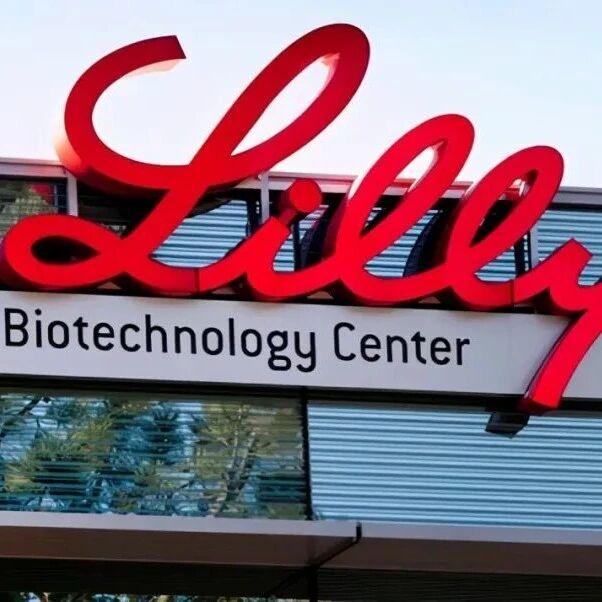
Core Viewpoint - Eli Lilly is experiencing a temporary stock pullback, presenting a buying opportunity as the company's long-term prospects remain strong and shares appear undervalued [1][2]. Valuation Metrics - Eli Lilly is trading at 27 times forward earnings, significantly above the healthcare industry average of 17.5 [3]. - Despite the high valuation, the company's ability to grow revenue and earnings faster than the industry average justifies this premium [5]. Future Growth Drivers - The market for weight management medicines is expected to grow, driven by breakthroughs in the field and an increasing population of overweight individuals [6]. - Eli Lilly's drug tirzepatide, marketed as Zepbound, is projected to generate peak annual sales of $25 billion, with current sales already reaching $14.7 billion in the first half of the year [7]. - New projections suggest tirzepatide could achieve sales of nearly $62 billion by 2030, placing it in a unique category of high-performing therapies [8]. Additional Growth Opportunities - Eli Lilly is nearing the launch of orforglipron, an oral GLP-1 medicine that has shown promising results in late-stage clinical trials [9][10]. - Orforglipron could generate up to $12.7 billion in sales by 2030, contributing to Eli Lilly's potential to become the world's top-selling pharmaceutical company [11]. Dividend Program - Eli Lilly has consistently increased its dividend payouts, doubling the dividend over the past five years, with a payout ratio of 37% indicating room for further increases [12]. - Although the forward yield is relatively low at 0.7%, the overall dividend profile remains strong, making Eli Lilly an attractive option for both income and growth investors [13].
X @The Wall Street Journal
The Wall Street Journal· 2025-10-28 18:45
Collaboration & Technology - Eli Lilly and Nvidia are partnering to develop a supercomputer [1] - The supercomputer will be used for AI-boosted drug discovery [1]
Lilly partners with Nvidia on AI supercomputer to speed up drug development
Reuters· 2025-10-28 18:31
Core Insights - Eli Lilly is collaborating with Nvidia to develop a supercomputer aimed at enhancing drug discovery and reducing development cycles, ultimately facilitating faster access to medicines [1] Company Summary - Eli Lilly is focusing on leveraging advanced technology in partnership with Nvidia to improve the efficiency of drug development processes [1] Industry Summary - The collaboration highlights a growing trend in the pharmaceutical industry to integrate artificial intelligence and high-performance computing to accelerate drug discovery and development timelines [1]

Lilly partners with NVIDIA to build the industry's most powerful AI supercomputer, supercharging medicine discovery and delivery for patients
Prnewswire· 2025-10-28 18:30
Core Insights - Eli Lilly and Company is developing the most powerful supercomputer in the pharmaceutical industry in collaboration with NVIDIA, aimed at enhancing drug discovery and development processes [1][2][3] Group 1: Supercomputer and AI Factory - The supercomputer will serve as an "AI factory," managing the entire AI lifecycle from data ingestion to high-volume inference, utilizing over 1,000 B300 GPUs on a unified networking fabric [1][2] - This initiative is expected to enable rapid learning and iteration, allowing scientists to train AI models on millions of experiments, significantly expanding drug discovery capabilities [3][4] Group 2: Applications and Benefits - Beyond drug discovery, the supercomputer will help shorten development cycles, improve medical imaging, and enhance manufacturing processes through digital twins and robotic technologies [4][5] - The AI models developed will be accessible via Lilly TuneLab, a collaborative platform aimed at expanding access to advanced discovery tools across the biopharma ecosystem [3][4] Group 3: Strategic Vision - Lilly aims to shift from using AI as a tool to embracing it as a scientific collaborator, embedding intelligence into workflows to deepen understanding of diseases and improve patient outcomes [5] - The company is committed to sustainability, ensuring the supercomputer operates on 100% renewable electricity and utilizes existing infrastructure for cooling [5]

Eli Lilly Partners With Nvidia to Build AI Supercomputer for Drug Discovery
WSJ· 2025-10-28 18:30
Core Insights - The drugmaker aims to utilize a supercomputer powered by Nvidia chips to enhance its drug discovery process and reduce lengthy research and development timelines [1] Company Summary - The company is focusing on leveraging advanced technology, specifically Nvidia's supercomputing capabilities, to improve efficiency in finding new drugs [1] - The initiative is expected to significantly accelerate the research and development phases, which are traditionally time-consuming in the pharmaceutical industry [1] Industry Summary - The pharmaceutical industry is increasingly adopting advanced computing technologies to streamline drug discovery and development processes [1] - The integration of supercomputing in drug research is seen as a pivotal move to address the challenges of lengthy R&D timelines faced by the industry [1]

Eli Lilly, Nvidia partner to build supercomputer, AI factory for drug discovery and development
CNBC· 2025-10-28 18:30
Core Insights - Eli Lilly and Nvidia are collaborating to create the pharmaceutical industry's most powerful supercomputer and AI factory to enhance drug discovery and development [1][2] - The partnership aims to reduce the time and costs associated with bringing new drugs to market, which typically takes about 10 years [2] - Eli Lilly expects the supercomputer and AI factory to be operational by January 2026, with significant benefits anticipated by 2030 [3] AI and Drug Discovery - The pharmaceutical industry's use of AI is still in its early stages, with no AI-designed drugs currently on the market, but there is progress in AI-discovered drugs entering clinical trials [4] - The supercomputer will utilize over 1,000 Nvidia Blackwell Ultra GPUs, creating a high-speed network to support AI model development for drug discovery [5] - Eli Lilly's Chief AI Officer described the supercomputer as a novel scientific instrument that will enable unprecedented scale in drug discovery [6] Opportunities and Platforms - The new tools will focus on discovering new molecules, which is seen as a significant opportunity for the industry [7] - Eli Lilly launched the Lilly TuneLab platform to provide biotech companies access to AI models trained on its proprietary research, valued at $1 billion [7][8] - The TuneLab platform employs federated learning, allowing companies to utilize AI models without directly sharing data [9] Precision Medicine - The company aims to support researchers with new AI agents and advanced medical imaging to develop new biomarkers for personalized care [10] - Precision medicine is a key goal, tailoring treatment based on individual genetic and lifestyle differences, which requires a robust AI infrastructure [11]