Lilly(LLY)

Search documents
Eli Lilly stock surges after company touts strong sales outlook as rival Novo Nordisk continues plunge
Yahoo Finance· 2026-02-04 19:11
Eli Lilly (LLY) stock rose as much as 10% in midday trading on Wednesday after the American drugmaker rolled out a strong sales outlook that touted the strength of its weight-loss portfolio and sent its market cap back near $1 trillion. The rally in Lilly also pressured shares of its main weight-loss rival, Danish drugmaker Novo Nordisk (NVO), for a second straight day. Novo stock fell as much as 6% in afternoon trade on Wednesday. Eli Lilly reported Wednesday morning that it expects 2026 revenue to gro ...


In Weight Loss Drug Battle For 2026, Eli Lilly Pulls Ahead Of Novo Nordisk
Benzinga· 2026-02-04 19:02
Core Viewpoint - Novo Nordisk's stock has dropped approximately 18% following a weaker outlook for fiscal 2026, indicating challenges in sales growth and competitive pressures in the obesity and diabetes markets [1]. Novo Nordisk 2026 Guidance - Novo Nordisk anticipates a sales decline of -5% to -13% at constant exchange rates (CER) for 2026, excluding $4.2 billion from the reversal of 340B provisions [2]. - The sales outlook is affected by lower realized prices due to the "Most Favoured Nations" agreement in the U.S., patent expirations for semaglutide in certain markets, and increased competition [2]. Revenue from Weight Loss Drugs - Sales of Novo Nordisk's Ozempic increased by 1% to 31.83 billion Danish kroner (approximately $5.03 billion), while Wegovy sales rose by 17% to 21.86 billion Danish kroner (around $3.46 billion) [4]. - Mounjaro's revenue more than doubled to $7.4 billion, and U.S. Zepbound revenue surged 122% to $4.2 billion [4]. One Year Stock Performance - Over the past year, Novo Nordisk's stock has decreased by around 42%, contrasting with Eli Lilly's stock, which has increased by approximately 34% [5]. - Novo Nordisk's pipeline primarily includes insulin products, heart disease medications, and weight loss drugs, while Eli Lilly has a broader pipeline that includes treatments for cancer, Alzheimer's, and other conditions [5]. Competitive Landscape - Novo Nordisk has significantly increased its U.S. advertising expenditure on Wegovy and Ozempic in 2025, surpassing Eli Lilly as competition intensifies in the obesity and diabetes sectors [6]. - Despite the advancements with Wegovy, Novo Nordisk has struggled to compete with Eli Lilly's Zepbound, which has outperformed Wegovy in weekly new prescriptions this year [6]. Price Action - At the time of publication, Novo Nordisk shares were down 5.85% at $47.35, while Eli Lilly shares were up 9.56% at $1,099.38 [7].

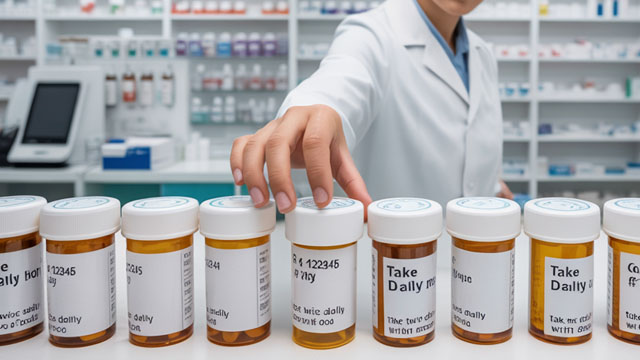
Eli Lilly soars past expectations to hit 45% sales growth in 2025
Yahoo Finance· 2026-02-04 18:38
Booming sales for GLP-1RA drugs fuelled a 45% surge in Eli Lilly’s revenue for 2025, cementing the drugmaker’s dominant position in the obesity market. Lilly’s total revenue reached $65.2bn for the full-year 2025, a significant increase from the $45bn recorded in 2024. Shares in Lilly jumped 7.1% to $1075.12 at market open on 4 February from a previous close of $1003.46. Share price continued to rise further to $1100 by 11.15am ET, a 9.62% increase on the 3 February close. Lilly’s market cap is fluctuati ...
Jim Cramer says the software sell-off creates opportunities in stocks outside of tech
CNBC· 2026-02-04 18:03
Every weekday the CNBC Investing Club with Jim Cramer holds a "Morning Meeting" livestream at 10:20 a.m. ET. Here's a recap of Wednesday's key moments. 1. Stocks were attempting to shake off continued fears that AI disruption could undermine traditional enterprise software companies. Some of the high-multiple names hit hardest in recent sessions, including Club name Microsoft , were trying to bounce Wednesday. Still, the broader market remained under pressure with the S & P 500 and Nasdaq down 1% and 2%, re ...


Nasdaq Dips Over 400 Points; Eli Lilly Shares Surge Following Upbeat Earnings - Adial Pharmaceuticals (NASDAQ:ADIL), DSS (AMEX:DSS)
Benzinga· 2026-02-04 17:32
Market Overview - U.S. stocks showed mixed performance, with the Nasdaq Composite falling over 400 points, while the Dow increased by 0.24% to 49,358.09 and the S&P 500 decreased by 0.89% to 6,856.40 [1] - Energy shares rose by 1.7%, while information technology stocks fell by 2.1% [1] Company Performance - Eli Lilly and Co. saw its stock jump approximately 10% after reporting fourth-quarter adjusted earnings of $7.54 per share, surpassing the consensus estimate of $6.67. The company's sales reached $19.3 billion, exceeding the consensus of $17.96 billion [2] Commodity Market - In commodity trading, oil prices increased by 0.4% to $63.46, while gold prices decreased by 0.5% to $4,909.70. Silver prices rose by 1.6% to $84.615, and copper prices fell by 3.2% to $5.8945 [3] European Market - European shares were mixed, with the eurozone's STOXX 600 gaining 0.03%, while Spain's IBEX 35 Index fell by 0.09%. London's FTSE 100 increased by 0.85%, Germany's DAX slipped by 0.72%, and France's CAC 40 gained 1.01% [4] Asian Market - Asian markets closed higher, with Japan's Nikkei surging by 0.78%, Hong Kong's Hang Seng Index gaining 0.05%, China's Shanghai Composite rising by 0.85%, and India's BSE Sensex increasing by 0.09% [5] Economic Indicators - The ISM Services PMI remained unchanged at 53.8 in January, matching the revised reading from December and exceeding market estimates of 53.5. The S&P Global composite PMI rose to 53.0 in January from a preliminary level of 52.8 and up from December's reading of 52.7 [7] - U.S. crude stocks declined by 3.455 million barrels for the week ending January 30, compared to market estimates of a 2 million-barrel draw [7]


Nasdaq Dips Over 400 Points; Eli Lilly Shares Surge Following Upbeat Earnings
Benzinga· 2026-02-04 17:32
U.S. stocks traded mixed midway through trading, with the Nasdaq Composite falling more than 400 points on Wednesday.The Dow traded up 0.24% to 49,358.09 while the NASDAQ dipped 1.87% to 22,819.29. The S&P 500 also fell, dropping, 0.89% to 6,856.40.Check This Out: How To Earn $500 A Month From Goldman Sachs Stock Ahead Of Q4 EarningsLeading and Lagging SectorsEnergy shares gained by 1.7% on Wednesday.In trading on Wednesday, information technology stocks fell by 2.1%.Top HeadlineEli Lilly and Co. (NYSE:LLY) ...

Here's What Key Metrics Tell Us About Lilly (LLY) Q4 Earnings
ZACKS· 2026-02-04 17:30
Eli Lilly (LLY) reported $19.29 billion in revenue for the quarter ended December 2025, representing a year-over-year increase of 42.6%. EPS of $7.54 for the same period compares to $5.32 a year ago.The reported revenue compares to the Zacks Consensus Estimate of $17.87 billion, representing a surprise of +7.95%. The company delivered an EPS surprise of +7.88%, with the consensus EPS estimate being $6.99.While investors closely watch year-over-year changes in headline numbers -- revenue and earnings -- and ...

Tech Sell-Off Weighs on Broader Market, Dow Defies Trend Amid Key Earnings and Economic Data
Stock Market News· 2026-02-04 17:07
Market Overview - The U.S. stock market is experiencing mixed trading patterns with a notable rotation out of technology giants and into broader market sectors [1] - The S&P 500 has slipped around 0.2% to 0.3%, marking a modest decline for the fourth time in the last five days [2] - The Nasdaq Composite has traded approximately 1% lower, with the Nasdaq 100 specifically seeing a 1.4% loss [2] - The Dow Jones Industrial Average has risen by as much as 389 points, or 0.8%, indicating a shift away from tech stocks towards firms expected to benefit from improving growth prospects [2] Economic Indicators - The yield on 10-year Treasuries has remained steady at 4.28% [3] - Upcoming economic data includes the ADP Employment Change and ISM Services PMI for January, which are crucial for assessing the labor market and services sector [5] - The week will culminate with the U.S. Employment Report on February 6th, which includes non-farm payrolls and average hourly earnings [6] Company-Specific Highlights - Advanced Micro Devices (AMD) shares dropped by as much as 15.7% despite stronger-than-expected profits, indicating high expectations for AI-related companies [9] - Uber Technologies (UBER) fell 3% to 5% after its quarterly results and profit forecast fell short of expectations [10] - Super Micro Computer (SMCI) rallied by 12% to 14% after delivering stronger-than-expected profits [10] - Eli Lilly (LLY) surged by 9.2% after exceeding profit expectations and providing strong guidance, driven by its obesity drugs [11] - Silicon Laboratories (SLAB) shares soared by 51% following the announcement of its acquisition by Texas Instruments for approximately $7.5 billion [13] - Nvidia (NVDA) shares declined 2.8% due to a broad tech sell-off and uncertainty surrounding its OpenAI investment [14]





ADP Payrolls Come in Way Below Expectations
ZACKS· 2026-02-04 16:50
Market Overview - Pre-market futures have shown a recovery from early lows, influenced by Q4 earnings reports and private-sector job numbers, with the Dow up by 142 points and the S&P 500 up by 10 points, while the Nasdaq is down by 66 points [1] Employment Data - Private-sector payrolls for January reported by ADP came in at +22K, significantly below expectations, and down from a revised +37K the previous month, marking the first back-to-back monthly job gains since April and May of the previous year [2] - Services employment accounted for most of the private-sector hires, with +21K in services compared to only +1K in goods-producing sectors; Healthcare Services led with +74K hires, followed by Financial Services with +14K and Construction with +9K, while Professional & Business Services lost -57K jobs [3] - ADP Chief Economist noted that hiring trends are following consumer demand rather than technology advancements, indicating a disconnect between stock market performance and private-sector job growth [4] Sector Insights - The job gains in the Construction sector may hint at increased labor demand due to data-center buildouts, although it is considered premature to draw definitive conclusions [5] - A new ADP methodology revealed a downward adjustment of -212K fewer hires for the private sector in 2025, reducing total expected hires from +771K in 2024 to +398K in 2025, which may provide a clearer picture of the labor market [6] Earnings Reports - Eli Lilly & Co. reported a +7.9% earnings surprise with earnings of $7.54 per share and revenues of $19.29 billion, driven by strong performance in diabetes and weight loss drugs [8] - AbbVie reported earnings of $2.71 per share, exceeding estimates of $2.66, while Novartis reported $2.03 per share, beating consensus by 4 cents; however, AbbVie shares fell by -3% despite the positive earnings [9] - Phillips 66 reported earnings of $2.47 per share, surpassing expectations of $2.11 and significantly improving from a loss of -$0.15 per share in the same quarter last year, with shares up by +1.3% in pre-market trading [10]



Eli Lilly: A Wonderful Company, But A Stock Priced For Perfection
Seeking Alpha· 2026-02-04 16:27
Core Viewpoint - The article discusses the competitive landscape between Eli Lilly and Novo Nordisk, highlighting their positions within the pharmaceutical industry and the potential for investment opportunities in these companies [1]. Group 1: Company Analysis - Eli Lilly (LLY) and Novo Nordisk (NVO) are compared as archrivals in the pharmaceutical sector, with a focus on their market strategies and financial performance [1]. - The analysis aims to identify potential high-return investments, specifically targeting small- and mid-cap companies in the life sciences sector [1]. Group 2: Investment Focus - The author emphasizes a fundamental analysis approach to uncover potential "5–10 baggers," indicating a focus on companies that could significantly increase in value [1]. - The investment strategy includes a focus on early-commercial-stage life sciences companies, insurers, homebuilders, and select consumer-facing businesses [1].