Lyft(LYFT)

Search documents
Lyft is getting into the robotaxi game with a big Chinese company
Business Insider· 2025-08-05 04:52
Core Insights - Lyft is partnering with Baidu to introduce robotaxis in Europe, starting with the UK and Germany in 2026, pending regulatory approvals [1][2] - The partnership aims to leverage Baidu's autonomous driving technology and Lyft's operational expertise to enhance mobility solutions for European users [2] - Baidu's Apollo Go service, launched in 2020, currently operates in 11 Chinese cities and plans to expand to Dubai and Abu Dhabi by 2026 [2] Company Developments - Lyft announced the acquisition of Freenow, a ride-hailing service in nine European countries, to strengthen its presence in the European market [7] - The collaboration with Baidu is part of Lyft's strategy to integrate advanced technology into its services, focusing on safety, reliability, and privacy for users [2] Industry Context - The robotaxi market is becoming increasingly competitive, with major players like Tesla and Waymo also vying for dominance in the US [8] - Analysts have expressed skepticism about the profitability timeline for driverless taxis, suggesting that the market may be overestimated [8]




萝卜快跑,“出海”新动作
Zhong Guo Ji Jin Bao· 2025-08-05 03:41
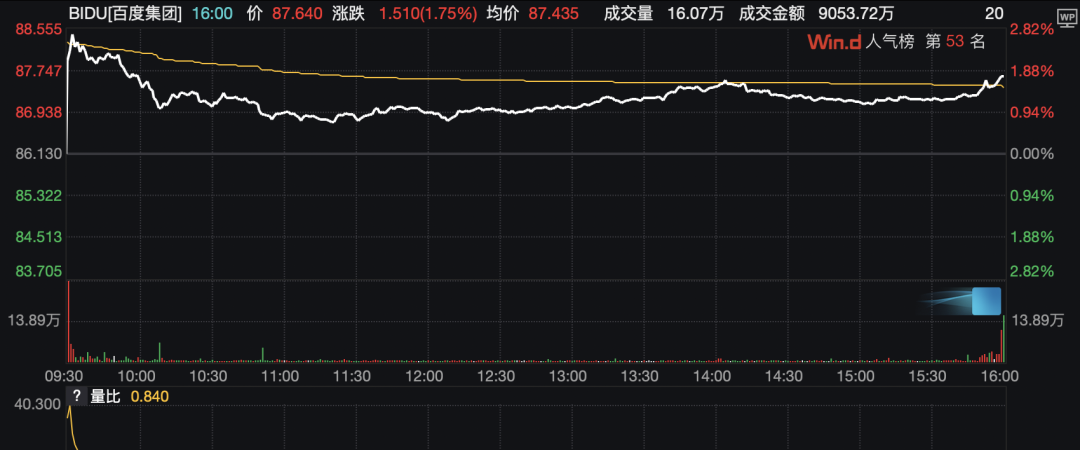
Core Viewpoint - The article highlights the expansion of autonomous driving service platforms into international markets, particularly focusing on Baidu's partnership with Lyft to provide self-driving services in Europe, marking a significant step in Baidu's global strategy [2][3]. Group 1: Baidu and Lyft Partnership - Baidu's autonomous driving service platform, "萝卜快跑," will collaborate with Lyft to offer self-driving services in Europe, starting with Germany and the UK by 2026 [2][3]. - The partnership aims to scale up to thousands of autonomous vehicles in the European market, leveraging Lyft's expertise in fleet management and user operations [3]. - Baidu's founder, Li Yanhong, emphasized that this collaboration is a crucial milestone in the global strategy of "萝卜快跑," aiming to provide safer and more efficient transportation services [3]. Group 2: Market Performance - Following the announcement of the partnership, Baidu's stock rose by 1.75%, while Lyft's stock increased by 3.38% [5]. Group 3: Industry Trends - Other domestic autonomous driving companies, such as 小马智行 and 文远知行, are also actively pursuing international markets, with 文远知行 recently obtaining the first autonomous driving license in Saudi Arabia [7][8]. - 文远知行 has expanded its services to multiple countries, including Singapore and the UAE, and is planning further international expansion [7][8]. - The domestic market is seeing favorable policies for autonomous driving services, with Shanghai's action plan aiming for significant advancements in autonomous vehicle deployment by 2027 [9].

腾讯开源四款小模型;萝卜快跑联手Lyft丨新鲜风向标
2 1 Shi Ji Jing Ji Bao Dao· 2025-08-05 03:03
Group 1: Technology Developments - Tencent announced the open-source of four small-sized models (0.5B-7B) to support deployment on devices like laptops and smartphones, showcasing high performance in long content processing and complex decision-making [2] - 360 Group upgraded its Nano AI brand to "Multi-Agent Swarm," achieving L4 level and introducing a unique "swarm collaboration framework" that enhances efficiency in video production and content creation [5] - Apple is testing its self-developed camera sensor featuring LOFIC technology, expected to be used in future iPhone models, marking a move towards reducing reliance on Sony [12] Group 2: Autonomous Vehicles - RoboTaxi announced a strategic partnership with Lyft to create the largest autonomous vehicle fleet in Europe, with plans to deploy thousands of self-driving cars by 2026 [3] Group 3: Financial Performance - Sohu reported Q2 2025 total revenue of $126 million, with a net loss of $20 million, reflecting a more than 40% year-over-year reduction in losses [11] Group 4: Corporate Strategies - Shanghai State-owned Assets Supervision and Administration Commission aims to enhance original technology development among state-owned enterprises, focusing on strategic and disruptive technologies [7] - Neta Auto is publicly recruiting restructuring investors as part of its bankruptcy reorganization process [8][9] Group 5: Product Innovations - DJI is secretly developing a panoramic drone expected to launch by the end of the year, indicating competition with the recently announced drone by YingShi [4] - Gaode Map announced the launch of the world's first AI-native intelligent agent, aiming to integrate AI into everyday travel experiences [13]





萝卜快跑,“出海”新动作!
Zhong Guo Ji Jin Bao· 2025-08-05 02:52
Core Viewpoint - Baidu's autonomous driving service platform, Luobo Kuaipao, is set to collaborate with the overseas ride-hailing platform Lyft to provide autonomous driving services in Europe, marking a significant step in the global expansion of autonomous driving services [1][2]. Group 1: Strategic Partnership - The partnership will see Luobo Kuaipao's sixth-generation autonomous vehicles debut in Germany and the UK by 2026, with plans to scale up to thousands of vehicles in the European market [3]. - Lyft, established in 2012 and headquartered in San Francisco, is the second-largest ride-hailing platform in the U.S., holding approximately 39% of the market share as of 2024 [3]. - Baidu's founder, Li Yanhong, emphasized that this collaboration is a crucial milestone in Luobo Kuaipao's global strategy, aiming to provide safer, greener, and more efficient transportation services to European users [3]. Group 2: Market Response - Following the announcement of the strategic partnership on August 4, Baidu's stock rose by 1.75%, while Lyft's stock increased by 3.38% [5]. Group 3: Industry Trends - Other domestic autonomous driving companies, such as Pony.ai and WeRide, are also actively expanding into international markets, with WeRide recently obtaining the first autonomous driving license in Saudi Arabia [7]. - Luobo Kuaipao has deployed over 1,000 autonomous vehicles globally, operating in 15 cities, including Dubai [7]. - The industry is witnessing a favorable policy environment in China, with Shanghai's plan aiming for L4 autonomous driving to achieve over 6 million passenger trips by 2027 [9].
萝卜快跑,“出海”新动作!
中国基金报· 2025-08-05 02:48
Core Viewpoint - Baidu's autonomous driving service platform, Luobo Kuaipao, is set to collaborate with the overseas ride-hailing platform Lyft to provide autonomous driving services in Europe, marking a significant step in its global strategy [3][4]. Group 1: Strategic Collaboration - Luobo Kuaipao will deploy its sixth-generation autonomous vehicles in Germany and the UK by 2026, with plans to scale up to thousands of vehicles in the European market [3]. - Lyft, established in 2012 and headquartered in San Francisco, is the second-largest ride-hailing platform in the U.S., holding approximately 39% market share as of 2024 [3]. - Baidu's founder, Li Yanhong, emphasized that this partnership is a crucial milestone in Luobo Kuaipao's globalization strategy, aiming to provide safer, greener, and more efficient travel services to European users [3]. Group 2: Market Expansion - Luobo Kuaipao has already deployed over 1,000 autonomous vehicles globally, operating in 15 cities, including Dubai [7]. - Other domestic autonomous driving companies, such as Pony.ai and WeRide, are also actively expanding into international markets, with WeRide recently obtaining the first autonomous driving license in Saudi Arabia [8]. - Pony.ai signed a strategic cooperation agreement with Dubai's Roads and Transport Authority to advance the commercialization of Robotaxi services, with initial testing set for 2025 [8]. Group 3: Policy Support - Recent favorable policies for autonomous driving services in China include the "Mosu Zhixing" action plan, which aims to achieve L4 level autonomous driving for over 6 million passengers by 2027 [9].
1家1000辆,百度联手Lyft、Uber推动Robotaxi全球化
3 6 Ke· 2025-08-05 01:05
联手Uber之后,百度又和另一家网约车国际巨头Lyft达成了合作。 8月4日,百度官方宣布旗下萝卜快跑与网约车平台Lyft达成战略合作,萝卜快跑将通过Lyft平台在欧洲提供无人驾驶出行服务。 双方计划于2026年率先在德国和英国部署萝卜快跑第六代无人车,并在欧洲市场逐步扩大规模至数千辆,实现无人驾驶规模化落地。 这是近期萝卜快跑又一个重大国际化举措。 7月15日,百度宣布,和与全球最大的出行平台Uber达成战略合作,在全球多个市场部署数千台无人驾驶汽车。 不过,两项合作的初始合作目标市场不同。与Uber的合作,重点是亚洲和中东地区;与Lyft的合作,目标先是英国和德国,最终目标是欧洲。 2022年之前,Lyft能在全球网约车平台中排名第二,仅次于Uber。但是,滴滴凭借庞大的中国市场跻身第二之后,Lyft退居第三。但在北美市场,Lyft是仅 次于Uber的存在。 此次百度与之联手开拓欧洲,对于Lyft也是重大挑战。Lyft此前在欧洲并没有多少"地盘"。但是,4月份,Lyft收购了德国网约车平台 FreeNow。 FreeNow并不知名,但也是出自名门,是宝马和奔驰联手创建的出行平台。FreeNow给了Lyft ...


又一家宣布进军欧洲市场,中国无人驾驶企业集体“出海”
Zheng Quan Shi Bao· 2025-08-04 23:58
消息发布后,百度、Lyft美股双双上涨。截至收盘,百度涨1.75%;Lyft涨3.38%,市值超59亿美元(420 亿元人民币)。 公开资料显示,成立于2012年的Lyft总部位于美国旧金山,是美国网约车第二大平台,截至2024年,占 据美国约39%的市场份额。2019年3月,Lyft登陆纳斯达克,成为"全球网约车第一股"。 对于最新合作,百度创始人李彦宏表示:"与Lyft合作在欧洲部署无人驾驶出行服务,并率先落地在德 国、英国,是萝卜快跑全球化战略的重要里程碑。我们将携手全球合作伙伴,让无人驾驶出行服务惠及 全球用户。未来,百度将持续深化前沿自动驾驶技术与Lyft平台运营经验的融合,为欧洲用户提供更安 全、绿色、高效的出行服务。" 国内自动驾驶"出海"再迎重要进展! 8月4日,百度宣布旗下无人驾驶出行服务平台萝卜快跑,将与海外网约车平台Lyft达成战略合作,通过 后者在欧洲提供无人驾驶出行服务。根据双方规划,萝卜快跑的第六代无人车将于2026年率先落地德国 和英国。 今年以来,包括萝卜快跑、文远知行和小马智行等国内多家自动驾驶企业频频发布进军海外市场的最新 动态。 国内方面,近期自动驾驶出行服务(Robot ...
又一家宣布进军欧洲市场!中国无人驾驶企业集体“出海”
券商中国· 2025-08-04 23:40
Core Viewpoint - The article highlights the significant progress of domestic autonomous driving companies, particularly Baidu's "萝卜快跑" (Luobo Kuaipao), in expanding their operations overseas, specifically through a strategic partnership with Lyft to provide autonomous ride-hailing services in Europe by 2026 [1][3]. Group 1: Baidu and Lyft Partnership - Baidu's autonomous ride-hailing service, Luobo Kuaipao, will collaborate with Lyft to launch autonomous services in Germany and the UK by 2026 [1][3]. - The partnership aims to scale up to thousands of autonomous vehicles in the European market, leveraging Lyft's established platform [3][4]. - Following the announcement, both Baidu and Lyft's stock prices increased, with Baidu rising by 1.75% and Lyft by 3.38%, valuing Lyft at over $5.9 billion (approximately 42 billion RMB) [3]. Group 2: Domestic Market Developments - In China, the autonomous ride-hailing sector is experiencing favorable policies, with Shanghai's plan aiming for L4 autonomous passenger transport to exceed 6 million rides by 2027 [2]. - The first batch of intelligent connected vehicle operation licenses was also issued in Shanghai [2]. Group 3: Other Domestic Companies' International Expansion - Other domestic companies like 文远知行 (WeRide) and 小马智行 (Pony.ai) are also making strides in international markets, with WeRide obtaining the first autonomous driving license in Saudi Arabia [8][9]. - WeRide plans to deploy Robotaxi services across six countries, including Saudi Arabia, China, UAE, Singapore, France, and the USA [8]. - Pony.ai has signed a strategic cooperation agreement with Dubai's Road and Transport Authority to advance Robotaxi commercialization in Dubai, with initial vehicle testing set for 2025 [9]. Group 4: Financial Performance of Autonomous Driving Companies - Despite the international expansion, many autonomous driving companies have yet to achieve profitability. For instance, Pony.ai reported a revenue of $75 million in 2024, with a net loss of $275 million, a 120% increase in losses year-over-year [10]. - WeRide's financials show a revenue of 361 million RMB in 2024, down 10.1%, with a net loss of 2.517 billion RMB, a 29% increase in losses [10].

Lyft And Baidu Are Launching Robotaxis In Europe: Opportunity And Risks
Seeking Alpha· 2025-08-04 17:27
Core Insights - The current market discussions are heavily influenced by the AI hype, overshadowing topics like autonomous vehicles and robotaxis, which would typically dominate conversations in other periods [1] Group 1: Industry Focus - The finance and investing sectors are experiencing significant interest, particularly in areas such as AI, fintech, and technology [1] - There is a growing emphasis on business analysis, fundamental analysis, and long-term growth within these sectors [1] Group 2: Company Analysis - The analysis of publicly traded companies is centered around their business models, earnings performance, and competitive positioning [1] - Investment strategies, earnings reports, and market trends are key topics of discussion for investors [1]

Lyft and China's Baidu look to bring robotaxis to Europe next year
TechCrunch· 2025-08-04 14:55
Core Insights - Lyft has announced a strategic partnership with Baidu to deploy Baidu's Apollo Go autonomous vehicles in Europe, specifically targeting Germany and the United Kingdom for robotaxi services by 2026, pending regulatory approval [1][2] Company Strategy - Lyft's CEO David Risher emphasized that the robotaxi service represents a "hybrid network approach," integrating autonomous vehicles (AVs) with human drivers to enhance customer options [2] - Lyft has historically focused on the U.S. market, contrasting with Uber's global expansion strategy, which includes food delivery services [2][3] Market Expansion - The acquisition of the German multi-mobility app FREENOW for approximately $197 million has enabled Lyft to enter the European market, where it previously only operated in the U.S. and Canada since its inception in 2012 [2][3] Competitive Landscape - Both Lyft and Uber have discontinued their internal autonomous vehicle programs and are now competing to form partnerships with technology companies like Baidu that have developed self-driving technology [3] - Uber has established partnerships with over 18 companies in various sectors, including ride-hailing and delivery, and has made significant investments in autonomous vehicle technology [4] Recent Developments - Lyft has made some progress in forming partnerships, including plans to integrate autonomous shuttles from Benteler Group into its network by late 2026 and deploying AVs from May Mobility in Atlanta later this year [5]