Pfizer(PFE)

Search documents
600亿BD大单,美元LP突然想给GP投钱了
3 6 Ke· 2025-08-17 07:35
Core Insights - The Chinese innovative drug sector has gained global recognition, with the Hang Seng Medical ETF rising over 90% and the Hong Kong Stock Connect Innovative Drug Index increasing by 130% this year, indicating a shift to the first tier of global pharmaceutical capabilities [1] - There is a trend where investors are actively engaging in business development (BD) transactions rather than waiting for IPOs, with international capital looking to invest in domestic biopharmaceutical firms to explore promising drug development projects [1][2] - The investment model has evolved, focusing on direct investments in drug development projects and supply chain management, leading to opportunities for domestic general partners (GPs) to raise USD funds and enter international supply chains [1][2] Investment Trends - BD transactions have become mainstream in the industry, particularly large deals exceeding USD 1 billion related to overseas licensing of drug pipelines [2] - For instance, the collaboration between 3SBio and Pfizer involves a potential total transaction amount exceeding USD 6 billion, with an upfront payment of USD 1.25 billion [2] - The total value of BD transactions in the first half of the year surpassed USD 60 billion, highlighting the significance of this investment approach [2] Target Investment Institutions - International limited partners (LPs) are seeking three types of domestic GPs for investment in innovative drug projects: 1. GPs that invest in U.S. biopharmaceutical companies, primarily to introduce Chinese drug projects [3] 2. GPs that invest in foreign companies with Chinese drug authorizations [3] 3. GPs that lead investments in newly established domestic companies (NewCos) focused on overseas sales of Chinese drugs [3] NewCo as a Strategy - Establishing NewCos allows domestic GPs to enhance their bargaining power in international collaborations by determining their share of profits and selecting international teams for management [5][6] - NewCos can be established at a low valuation, enabling domestic GPs to leverage investments while providing accountability to domestic LPs [6] - However, the effectiveness of this model depends on the specific terms of agreements, particularly regarding profit-sharing and distribution [6] Challenges and Market Alignment - Despite the potential advantages of NewCos, challenges remain, particularly in aligning drug development with international market demands [7][8] - Domestic GPs need to better understand U.S. market needs and integrate into the drug project initiation phase to facilitate marketization and internationalization [8] - The use of AI technology is being explored to match Chinese drug projects with international buyer demands, enhancing the likelihood of successful collaborations [8][9] Investment Focus Areas - International LPs are also interested in investing in AI pharmaceutical companies, platforms that incubate multiple projects, and specific types of research and development projects [9] - The emphasis on supply chain management capabilities is crucial for the success of these investments, reflecting a shift in biopharmaceutical investment strategies [9]

2 Top Dividend Stocks to Buy on the Dip
The Motley Fool· 2025-08-16 13:07
Group 1: Pfizer - Pfizer has faced declining financial results and competition, with key products like Eliquis and Xtandi losing patent protection in the coming years [4] - Despite recent stock performance challenges, Pfizer's shares are considered attractive due to a strong pipeline, particularly in oncology, with plans to increase blockbuster cancer medicines from five to eight by 2030 [5][6] - The company has launched a new RSV vaccine, Abrysvo, generating $143 million in sales in Q2 2023, and has plans for further label expansions [7] - Pfizer aims for $4.5 billion in net cost savings this year, which contributed to an earnings beat in Q2, enhancing profitability [8] - The company offers a solid dividend yield over 7%, with a 19.5% increase in payouts over the past five years, making it a good long-term investment for income-seeking investors [9] Group 2: Merck - Merck is experiencing challenges, particularly with increased competition for its leading drug Keytruda and an impending patent cliff in 2028 [10] - The company's Q2 revenue declined by 2% year over year to $15.8 billion, with adjusted earnings per share down 7% to $2.13 [10] - However, Merck's new product Winrevair reported sales of $336 million, and its animal health segment saw an 11% sales increase to $1.6 billion [11] - Merck has promising pipeline candidates, including a subcutaneous version of Keytruda, which could extend patent protection and mitigate revenue losses [12] - The company offers a forward dividend yield of 4.1%, with a 39% increase in dividends over the past five years, making it an attractive option for dividend investors [13]



Pfizer: This Is What Bulls Waited For
Seeking Alpha· 2025-08-16 08:19
Group 1 - The article discusses the benefits of subscribing to Beyond the Wall Investing, highlighting potential savings on equity research reports from banks [1] - Pfizer Inc. (NYSE: PFE) was given a "Buy" rating in February 2024 due to its depressed valuation, suggesting a potential investment opportunity [1] - The investing group offers features such as a fundamentals-based portfolio, weekly analysis from institutional investors, and alerts for short-term trade ideas based on technical signals [1] Group 2 - The article emphasizes that past performance is not indicative of future results, and no specific investment recommendations are provided [2] - It clarifies that Seeking Alpha does not act as a licensed securities dealer or investment adviser, and the views expressed may not represent the platform as a whole [2]

Pfizer experimental sickle cell drug fails phase 3 trial
CNBC Television· 2025-08-15 15:49
Company Performance - Pfizer's drug for sickle cell disease failed a phase three trial [1] - The failure impacts Pfizer's investment in Global Blood Therapeutics, acquired for approximately $5 billion [1] - Pfizer had to pull Oxbrida from the market due to safety concerns [2] - One remaining drug from the Global Blood Therapeutics acquisition is in phase three development [2][3] Industry Dynamics - Sickle cell disease primarily affects black people, with limited treatment options available [4] - Global Blood Therapeutics was developing easier-to-take pills and drugs for sickle cell disease [4] - Existing treatments, like gene editing, can be intensive, requiring hospitalization [5] - There is hope that Pfizer and other companies can develop easier treatments for patients [5]
AstraZeneca Rides Oncology Momentum With Blockbuster and New Drugs
ZACKS· 2025-08-15 15:01
Core Insights - AstraZeneca (AZN) is a leading player in the oncology sector, with oncology sales accounting for approximately 43% of its total revenues, which increased by 18% in Q2 2025, reaching $6.3 billion [1][9] - The oncology segment generated nearly $12 billion in the first half of 2025, reflecting a year-over-year growth of 16% [1] - Key drivers of this growth include drugs such as Tagrisso, Lynparza, Imfinzi, Calquence, and Enhertu, along with the newly launched Truqap [1][3] Oncology Product Portfolio - AstraZeneca is enhancing its oncology product portfolio through label expansions and advancing pipeline candidates [2] - Truqap, a new drug for HR-positive, HER2-negative breast cancer, achieved sales of $302 million in the first half of 2025, with expectations for further growth [3] - Datroway, another drug developed in partnership with Daiichi, received FDA approval for HR+ HER2- breast cancer and EGFR-mutated non-small cell lung cancer, generating early sales of $14 million [3][4] Pipeline and Future Growth - Important late-stage oncology candidates in AstraZeneca's pipeline include camizestrant, volrustomig, sonesitatug vedotin, and surovatamig, with regulatory applications for Imfinzi under review [4] - The company anticipates continued growth in its oncology medicines in the second half of the year, particularly for Tagrisso, Enhertu, Lynparza, and Imfinzi, projecting a compound annual growth rate (CAGR) of approximately 11.1% over the next three years [5] Competitive Landscape - Major competitors in the oncology space include Pfizer, Merck, and Bristol-Myers [6] - Pfizer's oncology revenues grew by 9% in the first half of 2025, bolstered by its acquisition of Seagen and a strong pipeline [7] - Merck's Keytruda, which accounts for about 50% of its pharmaceutical sales, saw a 6.6% increase in sales to $15.1 billion in the first half of 2025 [8]


After a Strong Quarterly Result, Is It Finally Safe to Buy Pfizer Stock Again?
The Motley Fool· 2025-08-15 11:15
Pfizer beat expectations last quarter and it raised its guidance. Pfizer (PFE -0.18%) was a hot stock during the pandemic, but it has been crashing in recent years. The company's COVID vaccine resulted in the business posting record sales and profits in 2022. But then, as things went back to normal and demand diminished for its vaccine, so too did interest in Pfizer's stock. What's startling, however, is the stock hasn't simply gone back to the levels it was at back before the pandemic - - it has been on a ...
纳瓦罗:特朗普或对医药产品推出232关税
Hua Er Jie Jian Wen· 2025-08-14 15:45
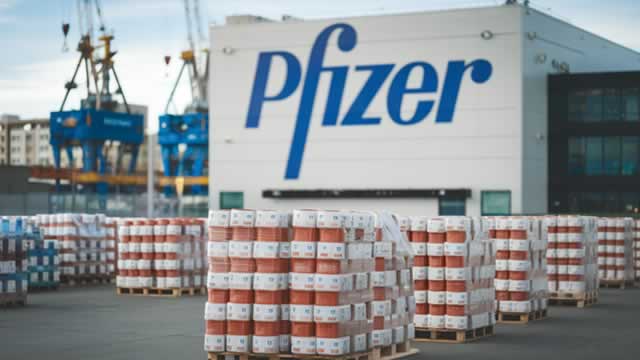
Group 1 - The core viewpoint is that U.S. President Trump's pharmaceutical tariffs may be implemented based on Section 232, as stated by White House advisor Navarro [1] - Following this announcement, Pfizer's stock dropped over 0.7%, while UnitedHealth fell more than 0.4%. Conversely, Amgen's stock increased by 0.6%, Johnson & Johnson rose by 0.1%, and AstraZeneca's ADR gained 0.4% [1]


不止药王“易主”,上半年全球药品销售TOP50解析:疫苗疲软、国产上榜、前列腺癌“王牌药”仍坚挺
Mei Ri Jing Ji Xin Wen· 2025-08-14 08:52
Core Insights - The global pharmaceutical sales ranking for the top 50 drugs has been revealed, with Novo Nordisk's semaglutide surpassing Merck's Keytruda to become the new sales champion, achieving over $16.6 billion in sales [1][3] - Eli Lilly's tirzepatide shows significant growth potential with a sales increase of 121.3%, reaching nearly $15 billion [1][2] - The entry of domestic innovative drugs into the ranking marks a notable shift in the competitive landscape [1] Group 1: Top Selling Drugs - Semaglutide, including Ozempic, Rybelsus, and Wegovy, generated sales of $16.632 billion, with a year-on-year growth of 29.8% [3][4] - Tirzepatide achieved sales of $14.734 billion, with a remarkable growth rate of 121.3% [3][8] - Dulaglutide, another Eli Lilly product, saw a decline in sales, highlighting the competitive pressures in the market [3][4] Group 2: Vaccine Sales Decline - Three vaccine products in the top 50 experienced sales declines, despite a favorable competitive landscape [4][5] - Gardasil 9, a nine-valent HPV vaccine, saw a nearly 50% drop in revenue [5][6] - The decline in vaccine sales is attributed to reduced government subsidies and market saturation [6][7] Group 3: Emerging Drugs and Growth - Over 70% of drugs in the ranking maintained positive sales growth, with only seven drugs exceeding a 30% growth rate [8] - Enzalutamide, approved for 13 years, continues to show over 30% growth, with sales projected to reach $4.6 billion in 2022 [9][10] - The competitive landscape for enzalutamide is expected to intensify as its core patent expires in 2026 [10]



PFE New & Acquired Drugs Back 1H Top-Line Growth: Will the Trend Last?
ZACKS· 2025-08-13 17:56
Core Insights - Pfizer's COVID product sales have declined post-pandemic, but non-COVID operational revenues are improving due to key products and acquisitions [1][4] - 2023 was a record year for new drug approvals, with nine new medicines/vaccines contributing to revenue growth [2] - The acquisition of Seagen is expected to significantly enhance Pfizer's oncology portfolio and revenue potential [5] Group 1: Revenue and Product Performance - Pfizer's recently launched and acquired products generated $4.7 billion in revenues in the first half of 2025, reflecting a 15% operational increase year-over-year [3][9] - The company anticipates continued positive momentum in revenue for the second half of 2025 [3] - Pfizer expects a compound annual growth rate (CAGR) of approximately 6% in revenues from 2025 to 2030, despite challenges such as loss of exclusivity [4] Group 2: Competitive Landscape - Pfizer is a major player in the oncology market, competing with companies like AstraZeneca, Merck, and Bristol-Myers [6] - AstraZeneca's oncology sales rose 16% in the first half of 2025, driven by key products [6] - Merck's Keytruda, a leading oncology drug, saw sales increase by 6.6% to $15.1 billion in the first half of 2025 [7] Group 3: Stock Performance and Valuation - Pfizer's stock has declined 2.1% year-to-date, compared to a 6.4% decrease in the industry [8] - The company's shares are trading at a forward price/earnings ratio of 7.95, lower than the industry average of 13.73 and its own 5-year mean of 10.79 [11] - Earnings estimates for 2025 and 2026 have seen upward revisions, indicating positive market sentiment [12]
FDA may revoke Pfizer COVID-19 vaccine authorization for kids under certain age
Fox Business· 2025-08-13 14:09
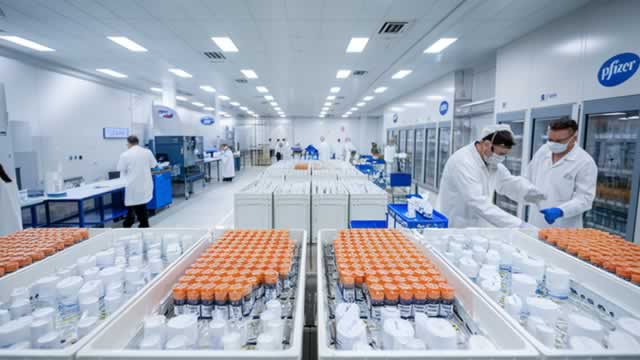
Core Viewpoint - The U.S. FDA may not renew the Emergency Use Authorization for the Pfizer-BioNTech COVID-19 vaccine for children under five, potentially removing the only available vaccine for this age group from the market [1][2]. Group 1: Regulatory Developments - Pfizer is in discussions with the FDA to keep the EUA for children under five in place for the 2025-2026 season, emphasizing that these discussions are unrelated to the vaccine's safety and efficacy [2]. - The CDC has updated its immunization schedule, allowing Moderna shots for moderately or severely immunocompromised children aged 6 months to 4 years, while different recommendations apply for older age groups [5]. - The HHS stated that the COVID-19 pandemic officially ended with the expiration of the federal public health emergency in May 2023, and any future regulatory changes should be regarded as speculation until officially announced [6]. Group 2: Public Health Implications - The removal of the COVID vaccine recommendation for healthy children and pregnant women has been noted, with a focus on restoring public trust in health agencies [7][9]. - The executive director of the American Public Health Association highlighted that the low vaccination rates would still be impacted by the potential removal of the vaccine for young children [9][10].