
PMI(PM)

Search documents
Philip Morris: Why The Good Times Are Likely To Continue
Seeking Alpha· 2026-01-30 02:09
Core Viewpoint - The article emphasizes the importance of conducting thorough due diligence before making any investment decisions, highlighting that past performance does not guarantee future results [2][3]. Group 1: Company Insights - The article does not provide specific insights or data regarding any particular company or its performance [1][2][3]. Group 2: Industry Analysis - The content does not include any detailed analysis or commentary on industry trends or developments [1][2][3].


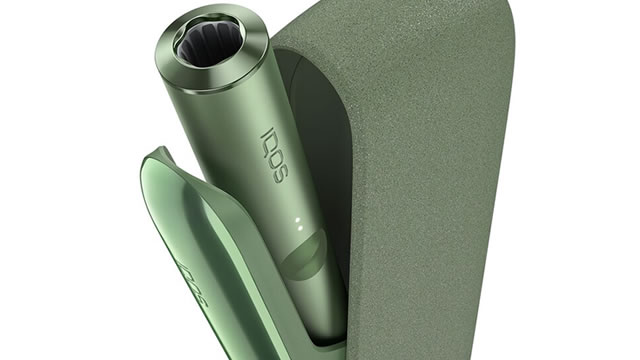
中金:日本HNB竞争加剧,技术壁垒驱动格局重塑
中金点睛· 2026-01-29 23:49
Core Viewpoint - Japan is the largest market for heated non-combustible (HNB) tobacco globally, with a strong growth momentum expected in the industry. The competition has intensified recently, but companies with core technological advantages and proprietary patents are likely to navigate through this competitive cycle successfully [4][6]. Group 1: Market Overview - Japan accounts for approximately 32% of the global HNB market, with a retail market size projected to reach about $11.92 billion in 2024 and expand to $17.76 billion by 2029, reflecting a CAGR of 8% from 2024 to 2029 [6][24]. - The penetration rate of HNB products in Japan has reached around 44% in 2024, with expectations to rise to 56% by 2029, driven by a shift from traditional cigarettes to HNB products among smokers [14][16]. Group 2: Competitive Landscape - The competition in the Japanese HNB market has intensified in the short term, particularly among international tobacco companies focusing on product pricing and distribution channels. British American Tobacco and Japan Tobacco are competing aggressively in the mid-range market, while Philip Morris International maintains a stable market share [4][29]. - The market is dominated by three major players: Philip Morris, Japan Tobacco, and British American Tobacco, with Philip Morris holding a significant market share of 69.8% in HNB products as of 2024 [30][35]. Group 3: Regulatory Environment - HNB products are the only legal category of new tobacco in Japan, while nicotine-containing e-cigarettes are subject to strict medical device regulations, limiting their market presence [18][19]. - The Japanese government has been adjusting the tax structure for HNB products to align more closely with traditional cigarettes, which is expected to stabilize the market and support industry growth [20][21]. Group 4: Pricing and Consumer Acceptance - HNB products are priced in the mid-to-high range compared to traditional cigarettes, with consumers showing a high acceptance level for these prices, which supports the growth of HNB penetration [26][28]. - The pricing strategy for HNB products is designed to encourage consumer retention, as the initial investment in heating devices can lead to lower marginal costs per use over time [26][28]. Group 5: Technological Barriers - The core technological capabilities and patent ownership are critical barriers to entry in the HNB market, with companies that can innovate and improve product performance likely to gain a competitive edge [4][44]. - The ongoing technological advancements in HNB products are expected to shape the competitive landscape, with companies focusing on product differentiation and user experience [33][42].
Jefferies Sees Limited Re-Rating Upside for Philip Morris (PM) in 2026
Yahoo Finance· 2026-01-27 07:11
Philip Morris International Inc. (NYSE:PM) is included among the 15 Best S&P 500 Dividend Stocks to Buy in 2026. Jefferies Sees Limited Re-Rating Upside for Philip Morris (PM) in 2026 On January 20, Jefferies analyst Edward Mundy moved Philip Morris International Inc. (NYSE:PM) to Hold from Buy and cut the firm’s price target to $180 from $220. In his note, he said Jefferies sees limited room for the stock to be re-rated in 2026. The analyst also pointed to tougher competition. He noted that British Amer ...
Philip Morris International Urges FDA Advisory Committee to Recommend Authorizing ZYN as a Modified Risk Tobacco Product
Businesswire· 2026-01-23 14:15
Core Viewpoint - Philip Morris International (PMI) is seeking a Modified Risk Tobacco Product (MRTP) designation from the U.S. FDA for its ZYN nicotine pouch products, which would allow the company to communicate to adult smokers that switching to ZYN reduces the risk of smoking-related diseases [1][3][6] Group 1: Scientific Evidence and FDA Review - Experts from PMI presented scientific evidence to the FDA's Tobacco Products Scientific Advisory Committee (TPSAC) regarding the health benefits of switching from cigarettes to ZYN [1][3] - The FDA indicated that the proposed modified risk claim regarding ZYN's lower risk of various health conditions is scientifically accurate [3][4] - Data presented showed that ZYN contains significantly lower levels of harmful chemicals compared to cigarettes, supporting its role in promoting complete switching from combustible products [5][11] Group 2: Market Authorization and Product Details - ZYN became the first nicotine pouch product to receive marketing authorization from the FDA through the Premarket Tobacco Product Authorization (PMTA) pathway in January 2025 [6] - The products submitted for MRTP designation include various flavors and strengths of ZYN, specifically 3 mg and 6 mg options across multiple flavors [6] - PMI has invested over $14 billion since 2008 in developing smoke-free products, with smoke-free products accounting for 41% of total net revenues in the first nine months of 2025 [8] Group 3: Consumer Impact and Usage Trends - The FDA's evaluation showed that a substantial proportion of adults who smoke have completely switched to ZYN, with over half reporting no cigarette consumption in the past 30 days [11] - Among those who continued to smoke after starting ZYN, 80.7% reduced their cigarette consumption, and 57.2% reduced their daily cigarette intake by more than 50% [11] - The TPSAC noted that youth usage of nicotine pouches is currently low, and exposure to the modified risk claim did not increase intentions to use ZYN among young adults [4][5]

Philip Morris International Opens Dialogue on the Future of Human Cognition as a Defining Frontier in the Age of AI
Businesswire· 2026-01-20 10:03
Core Insights - Philip Morris International Inc. (PMI) has released a white paper titled "Human Cognition: The Next Frontier?" which discusses the evolving role of human cognition in the context of artificial intelligence transforming work, society, and the economy [1][2]. Company Strategy - PMI emphasizes that human capabilities such as critical thinking, creativity, and adaptability will become essential "superskills" in an era of human-machine collaboration, as AI automates routine tasks [2]. - The company is committed to a smoke-free future, with smoke-free products accounting for 41% of its net revenues as of June 30, 2025, and aims to be predominantly smoke-free by 2030 [3][4][5]. Investment and Development - Since 2008, PMI has invested over $14 billion in developing and commercializing innovative smoke-free products, aiming to end cigarette sales entirely [5]. - The company has established world-class scientific assessment capabilities in various research areas, including pre-clinical systems toxicology and clinical research [7]. Cognitive Risks - The white paper outlines several cognitive risks associated with AI, including cognitive atrophy, attention erosion, the emerging cognitive divide, and trust and verification challenges [6]. - Cognitive atrophy refers to the risk of losing deep thinking and originality as AI automates more cognitive tasks [6]. - Attention erosion is caused by a digital environment that fragments focus, undermining decision quality and critical reasoning [6]. - The cognitive divide highlights the risk of unequal access to advanced learning and cognitive resources, potentially leading to socioeconomic disparities [6]. - Trust and verification challenges arise from the proliferation of synthetic media, necessitating new skills for information verification [6].


新消费&轻工周报:AI+消费迈入物理世界,新型烟草出口格局生变利好龙头-20260118
SINOLINK SECURITIES· 2026-01-18 12:12
Investment Rating - The report does not explicitly state an investment rating for the industry Core Insights - The report highlights various sectors including trendy toys, new tobacco, home furnishings, paper packaging, personal care, AI glasses, Xiaomi Group, pet food, and AI+3D printing, indicating a mixed outlook across these industries with some showing growth potential while others face challenges Trendy Toys - The collaboration between Honor and Pop Mart to launch the first trendy toy smartphone is expected to differentiate products in a competitive market, targeting younger consumers [8] - Despite a decline in overall online GMV for trendy toys, leading companies like Miniso and Bluku are experiencing significant growth, with Miniso's blind box category growing by 315% [10] New Tobacco - The cancellation of VAT export rebates for e-cigarettes is expected to pressure profits in the short term, but may benefit companies like Smoore in the long run as they can capture market share from smaller competitors [11] - The HNB market is anticipated to expand significantly with the upcoming launch of IQOS in the US [12] Home Furnishings - The domestic real estate market remains weak, with significant declines in new and second-hand home transactions [13] - Export figures show a decline for Chinese furniture, while Vietnam's furniture exports are growing, indicating a shift in regional competitiveness [14] Paper Packaging - The report notes fluctuations in paper prices, with a general decline in prices for various paper types, but anticipates a recovery in demand as packaging needs stabilize [15] - The overall retail growth in food, beverages, and daily necessities is expected to support the packaging sector's recovery [16] Personal Care and AI Glasses - The personal care sector shows mixed performance, with some brands experiencing growth while others decline [17] - Meta's plans to significantly increase the production capacity of AI glasses signal a positive outlook for the sector, potentially boosting demand across the supply chain [18] Xiaomi Group - Xiaomi continues to lead in the smartphone market, with expectations to integrate self-developed chips and AI models into their products by 2026 [19] - The company aims to enhance its brand positioning and profitability through technological advancements and strategic product launches [20] Pet Food - The pet food market is projected to grow, with a focus on new product introductions and market expansion strategies [23] - Recent data indicates a decline in GMV for pet food on major e-commerce platforms, highlighting competitive pressures [24] AI+3D Printing - The consumer-grade 3D printing market is expected to grow, driven by new product launches and community engagement initiatives [33] - Companies are focusing on lowering entry barriers and enhancing user experience to penetrate the market further [36]



Consumer Staples ETFs: XLP Focuses on Domestic Stocks, While KXI Offers International Exposure
Yahoo Finance· 2026-01-17 20:03
Core Insights - The article compares two ETFs in the consumer staples sector: State Street Consumer Staples Select Sector SPDR ETF (XLP) and iShares Global Consumer Staples ETF (KXI), highlighting their differences in focus, cost, performance, and holdings [1][5]. Group 1: ETF Overview - XLP consists of 36 U.S. consumer defensive stocks, including major companies like Walmart, Costco, and Procter & Gamble, providing targeted exposure to established U.S. staples [2]. - KXI, with a portfolio of 96 companies, offers global exposure, with 59% in U.S. stocks, 29% in European stocks, and 7% in Asian stocks, featuring both U.S. giants and international leaders like Nestle and Unilever [3][7]. Group 2: Performance and Fees - XLP has a lower expense ratio of 0.08% and a higher dividend yield of 2.7%, compared to KXI's expense ratio of 0.39% and dividend yield of 2.3%, making it more appealing for income-focused investors [4][8]. - Over the last five years, XLP generated a total return of 36.2% (CAGR of 6.4%), outperforming KXI, which had a total return of 28.1% (CAGR of 5.1%), although both funds lagged behind the S&P 500's CAGR of 14.6% [8]. Group 3: Investment Considerations - XLP is recommended for investors seeking exposure to the U.S. consumer staples market due to its better performance, yield, and fees, while KXI offers regional diversification as its main advantage [9].


Philip Morris International shares climb seven straight sessions (NYSE:PM)
Seeking Alpha· 2026-01-16 19:46
Core Insights - Philip Morris International (PM) shares experienced seven consecutive sessions of gains, with a 0.6% increase on Friday, reaching $173.61 [1] - The stock rose 8.7% in the previous six sessions, indicating strong upward momentum [1] - Year-to-date, the stock surged over 32% in 2025, outperforming the broader market which saw a 16.7% rise [1]

Philip Morris (PM) is Benefiting from Its Reduced-Risk Products
Yahoo Finance· 2026-01-12 14:23
Group 1 - Fundsmith Equity Fund's T Class Accumulation shares returned 0.8% in 2025, underperforming the MSCI World Index which returned 12.8% [1] - The fund's underperformance is attributed to index concentration, growth of assets in Index Funds, and weakness in the dollar [1] - Since inception, the fund has outperformed the index by 1.7% per annum [1] Group 2 - Philip Morris International Inc. (NYSE:PM) had a one-month return of 2.65% and a 52-week gain of 38.33% [2] - As of January 9, 2026, Philip Morris International's stock closed at $162.61 per share, with a market capitalization of $253.125 billion [2] - The company is recognized for its transition into reduced-risk products (RRPs) such as heat-not-burn tobacco products and nicotine pouches [3] Group 3 - Philip Morris International Inc. was held by 90 hedge fund portfolios at the end of Q3 2025, a decrease from 111 in the previous quarter [3] - While Philip Morris is acknowledged as a potential investment, certain AI stocks are considered to offer greater upside potential with less downside risk [3]
Earnings Preview: What to Expect From Philip Morris’ Report
Yahoo Finance· 2026-01-12 10:39
Core Viewpoint - Philip Morris International Inc. is a leading multinational tobacco and nicotine products company with a market cap of $253.1 billion, operating in over 180 markets worldwide [1] Financial Performance - Analysts expect Philip Morris to report an adjusted EPS of $1.67 for fiscal Q4 2025, reflecting a 7.7% increase from $1.55 in the same quarter last year [2] - For fiscal 2025, the expected adjusted EPS is $7.50, which is a 14.2% increase from $6.57 in fiscal 2024, with projections of an 11.3% annual rise to $8.35 in FY2026 [3] Stock Performance - Over the past 52 weeks, shares of Philip Morris have surged by 33.4%, outperforming the S&P 500 Index's 17.7% rise and the Consumer Staples Select Sector SPDR Fund's 2% increase [4] Dividend Announcement - On December 12, the Board of Directors declared a quarterly dividend of $1.47 per common share, scheduled for payment on January 14, 2026, reinforcing investor confidence in the company's cash generation and dividend sustainability [5] Analyst Ratings - The consensus view among analysts is highly optimistic, with a "Strong Buy" rating overall; nine out of 14 analysts recommend "Strong Buy," two suggest "Moderate Buy," and three advise "Hold" [6] - The average analyst price target of $186.92 indicates a potential upside of 14.9% from current market prices [6]