Restaurant Brands International(QSR)

Search documents
Goldman Sachs in talks on acquisition of Burger King’s Japan unit
Yahoo Finance· 2025-11-18 10:43
Group 1 - Goldman Sachs has secured exclusive rights to negotiate the purchase of Burger King's operations in Japan, with a potential deal valued at approximately Y70bn ($452m) [1] - Affinity Equity Partners has held the master franchise for Burger King in Japan since 2017, aiming to expand the brand's footprint in the Asia-Pacific region [2] - Burger King reported a 4% year-on-year rise in same-store sales in Q3 2025, driven by a 3.1% increase at its locations [2] Group 2 - Burger King is implementing a multi-year "Reclaim the Flame" program, which includes planned investments of up to $700m before the end of 2028 for various improvements [3] - A joint venture with Chinese private equity firm CPE was announced in November 2025, with CPE owning 83% of Burger King China and RBI retaining a 17% stake [4] - The partnership with CPE includes a $350m capital infusion to support new restaurant openings, marketing, and menu innovation [4]


3 Stocks Billionaire Bill Ackman Is Bullish (And Right) On
247Wallst· 2025-11-17 14:10
Core Insights - Bill Ackman, a prominent billionaire investor, has made significant investments in three companies: Restaurant Brands International, Uber Technologies, and Amazon, which are considered strong picks in the current market environment [3][4][8]. Company Summaries Restaurant Brands International (QSR) - Restaurant Brands is currently trading at its lowest valuation in recent history, offering a dividend yield of 3.5% [4][6]. - The company has shown robust revenue and earnings growth, benefiting from its portfolio of well-known fast-food brands like Burger King, Popeye's, and Tim Horton's [5]. - The defensive business model positions Restaurant Brands favorably during economic downturns, as consumers may opt for more affordable dining options [5]. Uber Technologies (UBER) - Uber is Ackman's largest holding, with 30.3 million shares valued at over $2.8 billion [6][7]. - The company has transitioned from generating losses to achieving significant free cash flow and profit growth, with gross bookings increasing by 21% in the last quarter [7]. - As Uber's margins improve with scaling, it is viewed as a compelling growth stock opportunity [7]. Amazon (AMZN) - Amazon remains a top holding for Ackman, recognized for its impressive growth in both e-commerce and cloud services [8][9]. - Despite its large market capitalization, Amazon's scale and importance in global infrastructure make it a long-term investment favorite [8]. - The company's focus on reinvesting profits into growth rather than issuing dividends is seen as a strategic advantage for future profitability [9].



Billionaire Bill Ackman Has 75% of His Hedge Fund's $15 Billion Portfolio Invested in Just 5 Big Stocks
The Motley Fool· 2025-11-15 15:00
Core Viewpoint - Bill Ackman sees significant upside potential in his investments, particularly in Uber, Brookfield Corporation, and Alphabet, among others, due to their strong fundamentals and growth prospects [1][2]. Investment Strategy - Ackman focuses on high-quality businesses with strong cash flow and limited downside risk, often taking activist positions to unlock shareholder value [2][3]. Portfolio Overview - Pershing Square Capital Management holds shares in 15 large-cap companies, with 75% of its $15 billion stock portfolio concentrated in five key holdings [3]. Key Holdings - **Uber Technologies (19.6%)**: Ackman appreciates Uber's strong network effects, management quality, operational performance, and cash flow, expecting earnings per share to grow over 30% annually [4][5]. - **Brookfield Corporation (17.7%)**: Added to the portfolio in 2024, Brookfield is positioned for growth due to AI infrastructure demand and an aging population, potentially quadrupling its wealth solutions asset base to $600 billion [6][8]. - **Alphabet (14.4%)**: Ackman has invested in Alphabet due to its rapid AI integration and strong financial performance, including $100 billion in revenue and a 33% year-over-year profit growth [9][11]. - **Howard Hughes Holdings (13.4%)**: Ackman aims to transform Howard Hughes into a diversified holding company, increasing its stake to 47% and focusing on unlocking value from real estate assets [12][13]. - **Restaurant Brands (10.6%)**: The company is valued for its capital-light business model and plans to enhance sales through investments in Burger King and expansion in Tim Hortons [14][17].




Happy Belly Food Group's Heal Wellness QSR Announces the Signing of a Franchise Agreement for Bradford, Ontario
Newsfile· 2025-11-14 11:00
Core Insights - Happy Belly Food Group Inc. has announced a franchise agreement for Heal Wellness in Bradford, Ontario, which aligns with its asset-light growth strategy in Canada [1][3] - Heal Wellness aims to become North America's leading smoothie bowl chain, focusing on strategic growth and strong store-level economics [3] - The franchisee will benefit from Happy Belly's established operating system, which has proven effective in optimizing unit performance and shortening ramp-up times [3][5] Company Overview - Happy Belly Food Group Inc. specializes in acquiring and scaling emerging food brands across Canada [9] - The company currently has 626 contractually committed retail franchise locations across various stages of development [5] Heal Wellness Brand - Heal Wellness is a quick-service restaurant brand that offers fresh smoothie bowls, açaí bowls, and smoothies, catering to health-conscious consumers [1][6] - The brand has 27 locations operating and over 168 in development, indicating significant expansion potential [5] Market Characteristics - Bradford is identified as an attractive market due to its fast-growing, family-oriented community and strong household incomes, which align with Heal's target customer base [3] - The demographic mix in Bradford, including young families and active professionals, supports the demand for convenient, health-focused meal options [3]

/C O R R E C T I O N -- Restaurant Brands International Inc./
Prnewswire· 2025-11-14 01:23
Core Viewpoint - Restaurant Brands International Inc. (RBI) announced a public offering of up to 17,626,570 common shares, initiated by HL1 17 LP, an affiliate of 3G Capital Partners Ltd. This offering is related to an exchange notice for Class B exchangeable limited partnership units of RBI LP [1][2]. Offering Details - The offering involves a forward sale agreement with BofA Securities, where up to 17,626,570 common shares will be sold. Of these, 9,785,784 shares are expected to be borrowed and sold through the underwriter, with an additional 7,840,786 shares available for current investors [2]. - RBI will not sell any common shares in the offering and will not receive any proceeds from the sale [3]. - The offering is expected to close on November 17, 2025, subject to customary closing conditions [5]. Company Overview - RBI is one of the largest quick service restaurant companies globally, with over $45 billion in annual system-wide sales and more than 32,000 restaurants across over 120 countries and territories. The company owns prominent brands such as TIM HORTONS®, BURGER KING®, POPEYES®, and FIREHOUSE SUBS® [7].

Happy Belly Food Group's Heal Wellness QSR Announces the Signing of a Franchise Agreement for London, Ontario
Newsfile· 2025-11-13 11:30
Core Insights - Happy Belly Food Group Inc. has announced a franchise agreement for its Heal Wellness brand in London, Ontario, marking a step in its asset-light expansion strategy across Canada [1][3] - Heal Wellness specializes in quick-service offerings such as smoothie bowls and smoothies, targeting health-conscious consumers [1][3] Company Expansion - The London franchise is part of Heal's strategy to establish itself as North America's leading smoothie bowl chain, focusing on organic growth and strong unit economics [3] - Heal currently operates 27 locations and has over 168 in development, contributing to Happy Belly's portfolio of 626 contractually committed retail franchise locations across various stages of development [5] Market Potential - London is identified as an ideal market due to its vibrant neighborhoods, strong daytime traffic, and a large student population from Western University, which has approximately 44,000 students [3] - The franchisee will utilize Happy Belly's proven operational strategies to enhance unit economics and expedite the opening process [3]

肯德基、麦当劳、星巴克、汉堡王⋯⋯外资餐饮为何在华密集“换老板”
Sou Hu Cai Jing· 2025-11-12 13:14
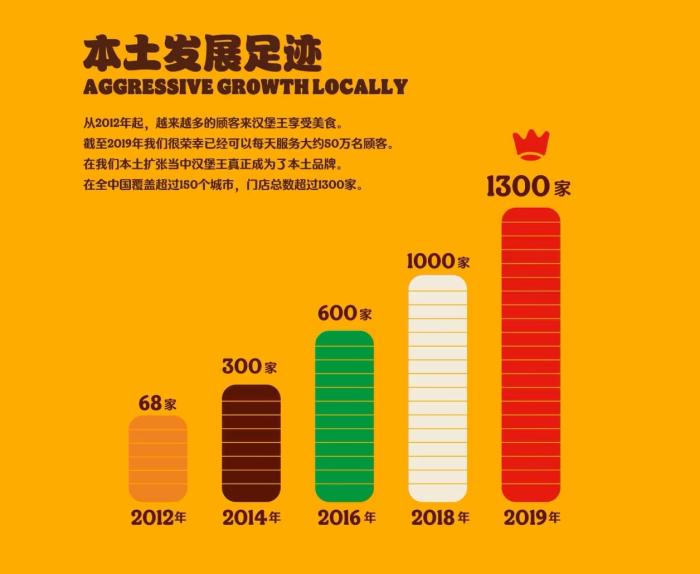
Core Insights - The strategic partnership between CPE Yuanfeng and RBI aims to revitalize Burger King's operations in China, where it has struggled to grow compared to competitors like KFC and McDonald's [1][2][9] - Burger King's store count in China has stagnated, decreasing from 1,300 in 2019 to approximately 1,250 currently, while KFC and McDonald's have significantly expanded their presence [1][9] - The shift in competitive dynamics in the Chinese market emphasizes the importance of local operational capabilities over foreign brand prestige [2][12] Company Performance - Burger King China has approximately 1,474 stores as of the end of 2024, while its global parent, RBI, has a total of 6,701 stores in the U.S. and fewer than 1,000 in other markets [9] - The partnership with CPE Yuanfeng involves an initial investment of $350 million to support expansion, marketing, and operational improvements [9][10] - The previous exclusive franchise rights held by TFI Group allowed for rapid expansion, increasing store count from about 50 to 1,000 in six years [8] Market Dynamics - The entry of foreign fast-food brands into China has evolved, with local partnerships becoming crucial for success, as seen with KFC and McDonald's [2][10] - The competitive landscape has shifted, with local brands like Tasting rapidly increasing their market share, highlighting the need for foreign brands to adapt [1][6] - The operational challenges faced by Burger King in China stem from its initial high-end positioning and slow adaptation to local market demands [6][12] Investment Trends - Chinese investment firms are increasingly acquiring foreign brands' operations in China due to established brand trust and user bases, which lower risks compared to building local brands from scratch [13][16] - The financial attractiveness of these acquisitions is underscored by the valuation differences between local and global operations, making them appealing to investors [13][16] - The potential for operational synergies and local market expertise is a key driver for these investments, as seen with CPE Yuanfeng's previous investments in other consumer brands [16][17]


CPE源峰与RBI达成战略合作 为汉堡王中国业务增长添新动力
Zhong Jin Zai Xian· 2025-11-12 09:32
Core Insights - CPE Yuanfeng has announced a strategic partnership with Burger King, owned by Restaurant Brands International (RBI), to establish a joint venture named "Burger King China" aimed at expanding the brand's presence in the Chinese market [1][2] - CPE Yuanfeng will inject an initial capital of $350 million into Burger King China to support restaurant expansion, marketing, menu innovation, and operational enhancements [1] - The joint venture will operate under a 20-year master development agreement granting exclusive rights to develop the Burger King brand in China, with CPE Yuanfeng holding approximately 83% of the equity and RBI retaining about 17% [1] Investment and Growth Strategy - The partnership aims to leverage CPE Yuanfeng's local market expertise and insights to enhance Burger King's product offerings and brand marketing, while also expanding physical store locations and digital capabilities [1][2] - The plan includes increasing the number of Burger King outlets in China from approximately 1,250 to over 4,000 by 2035, alongside achieving sustainable same-store sales growth [1]

星巴克之后,汉堡王也“牵手”中资机构
Zhong Guo Xin Wen Wang· 2025-11-11 14:43
Core Viewpoint - Burger King's parent company, RBI Group, has formed a strategic partnership with CPE Yuanfeng to establish a joint venture named "Burger King China," aiming to enhance its operations in the Chinese market, which has been underperforming compared to competitors like KFC and McDonald's [1][11]. Summary by Sections Partnership and Investment - The joint venture will be completed by the first quarter of 2026, with CPE Yuanfeng injecting an initial capital of $350 million into Burger King China [1]. - Post-transaction, CPE Yuanfeng will hold approximately 83% of the joint venture, while RBI Group retains about 17% [1]. Market Entry and Expansion - Burger King entered the Chinese market in 2005, nearly 20 years after KFC and McDonald's, and initially expanded slowly, reaching only 68 stores in the first seven years [1]. - By 2018, the total number of Burger King stores reached 1,000, but growth stagnated, with only 1,500 stores by the end of 2023 [4][8]. Competitive Landscape - As of now, KFC has 12,119 stores, McDonald's has 7,986, while local brands like Wallace and Tastin have over 19,648 and 10,442 stores respectively, highlighting Burger King's struggle with only 1,339 stores [4][8]. - The average annual sales per store for Burger King China in 2024 is projected to be around $400,000, significantly lower than its French counterparts [4]. Challenges Faced - Franchisee complaints about poor product quality and slow localization efforts have contributed to Burger King's struggles in China [5][7]. - The company previously terminated its partnership with TFI Group, regaining control of its operations in China in October 2024 [8]. Future Plans - The new partnership with CPE Yuanfeng aims to increase the number of Burger King stores in China from approximately 1,250 to over 4,000 by 2035, with a focus on sustainable same-store growth [11][12]. - The collaboration is expected to leverage CPE Yuanfeng's local market expertise and operational capabilities to unlock growth potential in the Chinese market [12].
关店潮下最后一搏!看汉堡王中国的“新主人”如何止跌
Hua Xia Shi Bao· 2025-11-11 12:36
Core Viewpoint - Burger King's strategic partnership with CPE Yuanfeng aims to revitalize its operations in China, where it has faced significant challenges in recent years [1][5]. Group 1: Partnership Details - CPE Yuanfeng will hold approximately 83% of the newly formed joint venture, Burger King China, while RBI retains about 17% [2]. - CPE Yuanfeng is set to inject $350 million into Burger King China to support restaurant expansion, marketing, menu innovation, and operational improvements [2][4]. - A 20-year master development agreement will grant Burger King China exclusive rights to develop the brand in China [2]. Group 2: Market Challenges - Burger King has struggled in the Chinese market, with a reduction in store count and issues such as unpaid employee wages [1][5]. - The competitive landscape includes major players like KFC and McDonald's, as well as local brands like Wallace and Tastin, which are rapidly expanding [1][6]. - The company plans to increase its store count from approximately 1,250 to over 4,000 by 2035, aiming for an annual increase of 275 stores [5][6]. Group 3: CPE Yuanfeng's Role - CPE Yuanfeng has extensive experience in the consumer sector, having invested around 10 billion in various leading companies [4]. - The focus will be on product upgrades, brand marketing, store expansion, online channel restructuring, digital system development, and financial optimization [4]. Group 4: Industry Dynamics - The fast-food sector in China is under pressure from both Western and local brands, with significant growth from Chinese fast-food chains like Laoxiangji and Xiangcunji [7]. - The rapid expansion of local brands poses a challenge for Western fast-food chains, necessitating quicker decision-making and adaptation to market changes [7].