Sanofi(SNY)

Search documents
赛诺菲将在2030年前至少在美国投资200亿美元,增加科研投入并扩大美国国内生产。
news flash· 2025-05-14 16:34
Group 1 - Sanofi plans to invest at least $20 billion in the U.S. by 2030 [1] - The investment will focus on increasing research and development efforts [1] - The company aims to expand domestic production within the United States [1]

Sanofi to invest at least $20 billion in the US through 2030, growing investments in science and expanding domestic manufacturing
Prnewswire· 2025-05-14 16:30
Investment Plans - Sanofi intends to invest at least $20 billion in the United States through 2030, focusing on research and development and US manufacturing [1][3] - The investment is expected to significantly increase R&D spending and expand manufacturing capacity in the US [3] Job Creation and Economic Impact - The anticipated investments are expected to create a significant number of high-paying jobs across multiple states [3] - Sanofi's activities in the US, along with those of its partners, are projected to contribute to job creation and innovation in various communities [2] Product Development and Market Strategy - Sanofi is preparing for the potential launch of numerous new first- or best-in-class medicines across various indications in the coming years [2] - The company aims to enhance the US supply chain and ensure the production of key medicines domestically [3]


MCE:B细胞自免疾病治疗新方向
Huachuang Securities· 2025-05-14 10:10
Investment Rating - The report provides a positive investment rating for the MCE therapy in the treatment of B cell autoimmune diseases, particularly systemic lupus erythematosus (SLE) [8][10]. Core Insights - The report highlights the urgent need for effective treatments for SLE, which currently lacks a root-cause therapy, and emphasizes the potential of B cell-targeted therapies like MCE to address this unmet clinical need [10][22]. - It discusses the advantages of MCE therapy over existing treatments such as CAR-T and TCE, particularly in terms of safety and efficacy in depleting pathogenic B cells [10][42]. - The report identifies key companies to watch in the clinical progress of MCE therapies, including 宜明昂科, 赛诺菲, Dren Bio, and LTZ Therapeutics [11][12]. Summary by Sections 1. B Cell Autoimmune Diseases: Diverse Types and Large Population - Autoimmune diseases involve the immune system mistakenly attacking the body's own tissues, with significant prevalence among conditions like rheumatoid arthritis (RA), systemic lupus erythematosus (SLE), multiple sclerosis (MS), and others [14][15]. 2. SLE: Large Population and Heavy Disease Burden - SLE affects approximately 7.8 million people globally, with a significant patient population in China, estimated at around 1 million [18][19]. - The disease presents severe symptoms and complications, leading to a high demand for effective treatments [19]. 3. SLE Treatment: Significant Unmet Clinical Needs, B Cell Therapy as a Mainstream Development - Current treatments for SLE are inadequate, with a low long-term remission rate and high recurrence risk [20][21]. - Innovative therapies that can achieve long-term remission or potential cures are urgently needed in the SLE treatment landscape [22]. 4. T Cell Killing: CAR-T and TCE - CAR-T and TCE therapies are explored for their potential to target and deplete pathogenic B cells, with CAR-T showing promising long-term efficacy in SLE patients [25][26]. - However, challenges such as high costs and safety concerns remain significant barriers to widespread adoption [32][33]. 5. Myeloid Cell Killing: MCE - MCE therapy utilizes myeloid cells to target and eliminate pathogenic B cells, showing potential for improved safety profiles compared to CAR-T and TCE therapies [47][50]. - The report emphasizes the innovative mechanisms of MCE and its potential to address the limitations of existing therapies [52].
科普|肥厚型心肌病药物研发再获突破,国内相关疗法已纳入医保
Di Yi Cai Jing· 2025-05-14 08:51
我国肥厚型心肌病的患病率约为十万分之八十。专家表示,该疾病虽然并不常见,但危害不容小觑,且严重影响患者的生活质量。 目前在肥厚型心肌病治疗领域,百时美施贵宝(BMS)的创新药玛伐凯泰(商品名:迈凡妥)已经在全球获批进入商业化。这种全球首创的心肌肌球蛋白 抑制剂能通过减少过多肌球蛋白和肌动蛋白横桥的形成,减轻心肌的过度收缩,从而改善舒张功能。 去年上半年,玛伐凯泰在中国获批,用于治疗梗阻性肥厚型心肌病,并于去年10月正式启动商业化。第一财经记者从相关医院了解到,小剂量玛伐凯泰一个 月的治疗费用约7000元。 自今年1月1日起,新版国家医保药品目录正式落地执行,心肌肌球蛋白抑制剂也已被纳入医保,报销后月治疗费用降至约2000元。 据券商韦德布什估计,到2026年,玛伐凯泰每年至少能产生26亿美元收入。而根据加拿大皇家银行资本分析师的预估,到2034年,aficamten作为一线治疗药 物的峰值销售额将达到9亿美元,该药物的总收入有望达到39亿美元。 美国当地时间5月13日,生物医药公司Cytokinetics表示,该公司研发的一款治疗梗阻性肥厚型心肌病(oHCM)的药物在一项后期研究中显著提高了患者的 运动能力, ...



2025Q1疫苗行业跟踪报告(附批签发)
Southwest Securities· 2025-05-11 06:23
Investment Rating - The report does not explicitly state an investment rating for the vaccine industry Core Insights - The overall trend in the vaccine industry shows a decline in batch approvals for most vaccine types in Q1 2025, with some exceptions showing recovery or growth in demand [7][29][46] Summary by Category Multi-Component Vaccines - In Q1 2025, multi-component vaccines saw a total of 17 batch approvals, a decrease of 26% compared to the previous year [11][15] - The five-component vaccine maintained its batch approval at 17, while the four-component vaccine had no approvals [15][12] Pneumonia Vaccines - Total batch approvals for pneumonia vaccines in Q1 2025 were 23, down 30% year-on-year [19][21] - The 13-valent pneumonia vaccine had 19 approvals, remaining stable, while the 23-valent vaccine saw a significant drop to 4 approvals, down 71% [24][19] HPV Vaccines - HPV vaccine approvals increased to 57 batches in Q1 2025, a growth of 63% [29][27] - The two-valent HPV vaccine saw a remarkable increase of 367%, with all approvals coming from Wantai Biological Pharmacy [29][32] Influenza Vaccines - Influenza vaccine approvals totaled 29 batches, a significant increase of 263% year-on-year [34][38] - The three-valent influenza vaccine had 28 approvals, while the four-valent vaccine had only 1 approval, down 67% [38][41] Rabies Vaccines - Batch approvals for rabies vaccines increased to 223 in Q1 2025, a growth of 37% [46][48] - The freeze-dried rabies vaccine accounted for the majority of approvals, with Chengda Biological achieving 105 approvals, a 110% increase [48][46] Varicella Vaccines - Varicella vaccine approvals slightly decreased to 83 batches, down 2% [53][54] - The largest contributor was Baike Biological, with 33 approvals, marking a 38% increase [54][53] Hib Vaccines - Hib vaccine approvals fell to 7 batches, a decrease of 50% [59][58] EV71 Vaccines - EV71 vaccine approvals continued to decline, with only 4 batches approved, down 69% [64][63] Rotavirus Vaccines - Rotavirus vaccine approvals totaled 21 batches, a decrease of 46% [68][67] DTP Vaccines - DTP vaccine approvals increased to 18 batches, a growth of 167% [72][73] Meningitis Vaccines - Meningitis vaccine approvals totaled 85 batches, down 34% [78][79] - The AC polysaccharide vaccine accounted for 55 approvals, a decrease of 47% [84][79] Hepatitis B Vaccines - Hepatitis B vaccine approvals increased to 87 batches, a growth of 28% [91][90] IPV Vaccines - IPV vaccine approvals totaled 22 batches, a decrease of 33% [93][92]



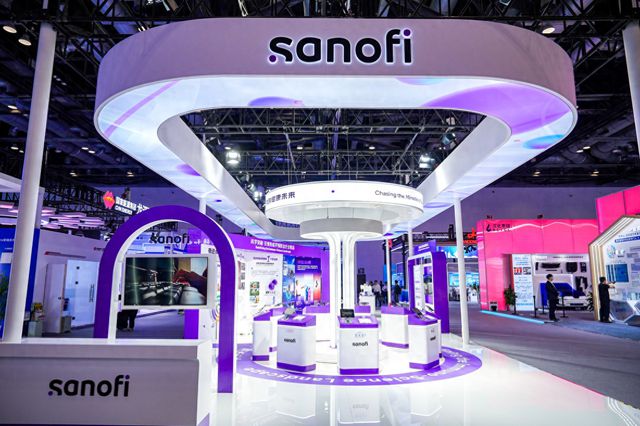
赛诺菲在科博会展示多项创新成果
Zhong Guo Jing Ji Wang· 2025-05-09 02:13
Core Viewpoint - Sanofi is showcasing its innovative products at the 2025 China Beijing International Science and Technology Industry Expo, emphasizing its commitment to advancing immunology and local healthcare integration in China [1][2] Group 1: Company Strategy - China is Sanofi's second-largest market, and the company is accelerating the introduction of over 60 innovative drugs and vaccines in the country [1][2] - Sanofi has established four local R&D centers in Beijing, Shanghai, Chengdu, and Suzhou, contributing to over 90% of its global R&D projects [2] Group 2: Collaboration and Partnerships - Sanofi collaborates with local biopharmaceutical companies like Jixing Pharmaceutical and Tianjing Biotech to advance research in oncology and immunology [2] - The company has formed a specialized pharmaceutical innovation fund with KKR to expedite the commercialization of local research outcomes [2] Group 3: Production and Supply Chain - Sanofi has developed a large-scale local production and supply network covering the Beijing-Tianjin-Hebei, Yangtze River Delta, and Greater Bay Area [2] - The Beijing production base in Yizhuang is the largest insulin injection production facility for Sanofi in the Asia-Pacific region [2]
赛诺菲携多个关键疾病领域全球创新产品亮相科博会
Bei Ke Cai Jing· 2025-05-08 12:52
Group 1 - The 2025 Beijing International Technology Industry Expo focuses on strategic emerging industries, particularly biomedicine, showcasing the achievements of Beijing's international technology innovation center [1] - Sanofi highlights its commitment to immunology innovation and local scientific ecosystem development, presenting nine breakthrough therapies across key disease areas [1] - Sanofi has introduced over 60 innovative drugs and vaccines to China, addressing seven of the top ten deadly diseases in the country [1] Group 2 - China is Sanofi's second-largest market, with over 90% of its global R&D projects involving Chinese participation, establishing China as a critical component of Sanofi's global R&D strategy [2] - Sanofi collaborates with leading local biopharmaceutical companies to accelerate the development of cutting-edge therapies in oncology and immunology [2] - The company has established a special pharmaceutical innovation fund in partnership with KKR to facilitate the commercialization of local research achievements [2] Group 3 - In December 2024, Sanofi announced a €1 billion investment to build an insulin production facility in Beijing, marking the largest single investment by the company in China [3] - Sanofi has developed a large-scale local production and supply network covering key regions in China, including Beijing-Tianjin-Hebei, the Yangtze River Delta, and the Greater Bay Area [3] - The company aims to strengthen its integrated industrial chain from R&D to production and operations in China, enhancing local healthcare development [3]
深耕中国市场,赛诺菲亮相第二十七届科博会
Huan Qiu Wang Zi Xun· 2025-05-08 07:22
Core Viewpoint - Sanofi showcased its global innovative products at the 2025 Beijing International Technology Industry Expo, emphasizing its commitment to the Chinese market and its role in advancing the local biopharmaceutical ecosystem [1][3]. Group 1: Company Strategy and Market Position - Sanofi focuses on immunology innovation, presenting nine breakthrough therapies addressing key disease areas such as respiratory diseases, skin immunity, and metabolic diseases [3]. - The company has introduced over 60 innovative drugs and vaccines to China, covering seven of the top ten deadliest diseases in the country, thereby addressing unmet medical needs [3]. - China is Sanofi's second-largest market, and the company aims to leverage global resources to enhance local practices and accelerate the translation of pharmaceutical innovations [3]. Group 2: Research and Development - Sanofi has established four local R&D centers in Beijing, Shanghai, Chengdu, and Suzhou, creating a nationwide research network [3]. - Over 90% of Sanofi's global R&D projects involve China, highlighting the country's significant role in the company's innovation capabilities [3]. Group 3: Local Partnerships and Collaborations - Sanofi collaborates with leading local biopharmaceutical companies such as Jinxing Pharmaceutical and Tianjing Biotech to advance research in oncology and immunology [3]. - The company has formed a specialized pharmaceutical innovation fund with KKR to accelerate the commercialization of local research outcomes [3]. - Sanofi actively explores innovative business models with industry partners like Shanghai Pharmaceuticals to improve accessibility to primary healthcare services [3]. Group 4: Manufacturing and Investment - Sanofi has developed a large-scale local production and supply network covering the Beijing-Tianjin-Hebei, Yangtze River Delta, and Greater Bay Area [4]. - The Beijing production base, designed to international standards, is the largest insulin injection production facility in the Asia-Pacific region [4]. - In December 2024, Sanofi announced a €1 billion investment to establish a new insulin production base in Beijing, marking the company's largest single investment in China [4].
Sanofi: Investing in prevention builds Europe's health and competitiveness
GlobeNewswire News Room· 2025-05-06 11:08
Core Insights - The Polish Presidency of the EU Council emphasizes health policy as a central element of Europe's strategic agenda, focusing on healthcare resilience and digital transformation [1] - Sanofi advocates for a shift from reactive treatment to proactive prevention strategies, highlighting the economic benefits of investing in prevention [2] - The importance of innovation in healthcare systems is underscored, with a call to close the innovation gap and adopt advanced technologies for Europe's long-term prosperity [3][4] Group 1: Prevention and Economic Impact - Sanofi's investment in prevention yields significant returns, with every €1 invested bringing €14 back, and up to €19 for adult immunization [2] - Real-world evidence shows an 80% reduction in winter hospitalizations among infants due to RSV immunization, emphasizing the effectiveness of prevention [2] - Chronic respiratory diseases are a major public health concern in Europe, affecting over 36 million people and accounting for 6% of healthcare expenditure [2] Group 2: Innovation and Competitiveness - The need for Europe to rebuild its leadership in pharmaceutical innovation is critical, as global R&D investments are shifting away [4] - Collaboration between industry and academia, support for emerging biotechnologies, and a conducive regulatory environment are essential for fostering innovation [4] - Digital health and data-driven research are highlighted as transformative elements for strengthening healthcare systems and economic future [3] Group 3: Human Dimension of Innovation - Scientific progress must translate into improved lives for individuals and communities, with a focus on immunization as a key tool [5][6] - The mission is to transition healthcare from treatment to prevention, with immunization saving 154 million lives globally over the past 50 years [6] - Prevention and immunization should be viewed as economic stabilizers, emphasizing the need for a model built on innovation and long-term strength [7]

跨国药企CEO年薪晒一晒
Xin Lang Cai Jing· 2025-05-06 09:25
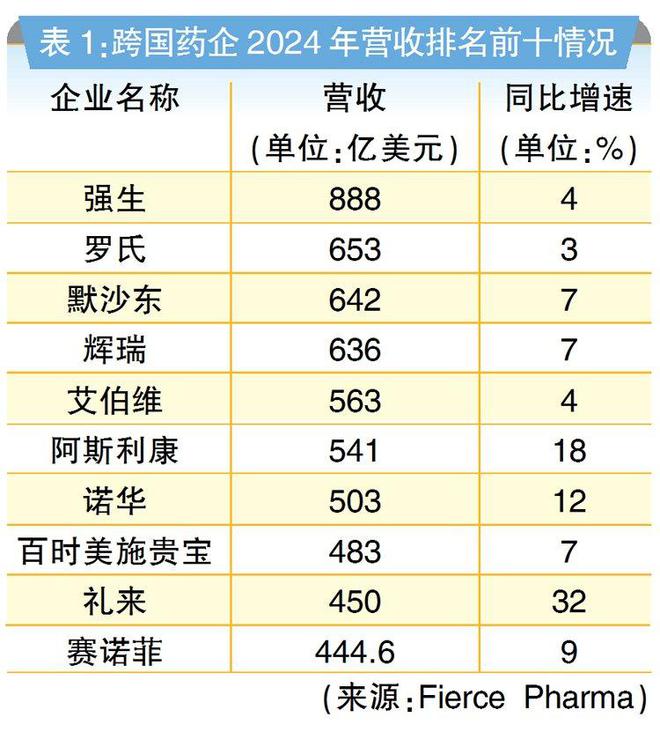
Core Insights - Johnson & Johnson remains the top revenue-generating pharmaceutical company with projected 2024 revenue of $88.8 billion, a 4% year-over-year increase [1][3] - The CEO compensation landscape has shifted, with Eli Lilly's CEO David Ricks now the highest-paid in the industry, earning $29.2 million in 2024, a 10% increase from 2023 [4][6] - The pharmaceutical industry is facing challenges from biosimilars, particularly affecting sales of established drugs like Humira and Stelara [2][1] Revenue Rankings - Johnson & Johnson leads with $88.8 billion in revenue, followed by AbbVie at $65.3 billion and Merck at $64.2 billion [3] - Other notable companies include Pfizer with $63.6 billion, and AstraZeneca with $54.1 billion, showing varying growth rates [3] CEO Compensation - Eli Lilly's David Ricks has surpassed Johnson & Johnson's Joaquin Duato, whose compensation decreased by approximately 14% to $24.6 million in 2024 [4][6] - Pfizer's CEO Albert Bourla earned $24.6 million, reflecting a 14% increase, while Merck's Robert Davis earned $23.2 million, also up by 14% [5][6] - Notably, Bristol Myers Squibb's CEO saw the highest percentage increase in compensation, rising by 122% [4][6] Market Dynamics - AbbVie's Humira faced a 37.6% decline in sales to $8.9 billion due to biosimilar competition, but its successors Skyrizi and Rinvoq are projected to generate over $17 billion in 2024 [2] - Merck's Keytruda and Gardasil are expected to account for approximately 59% of the company's total sales in 2024, highlighting the importance of these products [2]