
TI(TXN)

Search documents
全球与中国PCIe芯片市场现状及未来发展趋势
QYResearch· 2025-10-20 09:23
Core Viewpoint - The PCIe chip market is experiencing rapid evolution and expansion, driven by the increasing demand for high-speed interconnect technologies in AI, big data, and high-performance computing applications. The market is projected to grow significantly, with a compound annual growth rate (CAGR) of 16.38% from 2025 to 2031, reaching $4.998 billion by 2031 [6][11]. Product Definition and Statistical Scope - PCI Express (PCIe) is a crucial computer bus standard that supports high-speed serial communication and offers features like active power management and error reporting. The report categorizes PCIe chips into PCIe switch chips and PCIe signal enhancement chips [2]. Current Development Status of PCIe Chip Industry - **AI and High-Performance Computing Driving Demand**: The emergence of AI training, inference, and cloud computing has led to exponential growth in system bandwidth and I/O capabilities, particularly in data centers and AI servers [3]. - **Accelerated Technological Iteration**: The PCIe standard has rapidly evolved from Gen3 to Gen6, with each generation doubling the speed and increasing design complexity [3]. - **Deepening Industry Chain Collaboration**: The PCIe chip ecosystem is becoming more open and standardized, with established design norms and testing processes enhancing collaboration among chip manufacturers, motherboard makers, and system vendors [3]. Development Trends of PCIe Chip Industry - **Expansion from Motherboard to System Level**: Future trends indicate that PCIe interconnects will evolve from motherboard-level to system-level integration, driven by AI clustering and modular server architectures [4]. - **Advancement Towards Gen6**: The PCIe 6.0 standard, released in 2022, significantly increases data rates and imposes higher requirements on signal processing and error correction capabilities [4]. - **Intense Manufacturer Competition**: The core competitiveness of PCIe chip manufacturers will increasingly depend on their ability to collaborate with CPU/GPU/DPU manufacturers and system integrators, moving towards system-level solutions [4]. Market Overview - The global PCIe chip market is projected to reach $1.427 billion in sales by 2024 and grow to $4.998 billion by 2031, with China expected to account for a significant share of the market [6][7]. - The top five manufacturers (Broadcom, Astera Labs, Microchip, Texas Instruments, ASMedia) hold over 91% of the market share, with Broadcom leading in technology and market presence [7]. Product Technology Pathways - PCIe chips are categorized into switch chips and signal enhancement chips, with the market size for switch chips expected to reach $1.040 billion in 2024 and $2.515 billion by 2031, while signal enhancement chips are projected to grow from $384 million to $2.483 billion in the same period [8]. Application Segments - Servers remain the primary application for PCIe chips, accounting for 65.46% of demand in 2024, with expectations to rise to 75.83% by 2031 [9]. The increasing use of PCIe technology in AI training and real-time computing tasks highlights its critical role in modern data architectures [9]. Standard Evolution - The PCIe standards have matured, with PCIe 3.0 dominating the market at $532 million in 2024, while PCIe 4.0 and 5.0 are also gaining traction. By 2031, PCIe 4.0 and 5.0 are expected to grow to $871 million and $403 million, respectively [10]. Policy Analysis - The Chinese government has introduced several strategic policies, such as "Made in China 2025" and the "14th Five-Year Plan," aimed at enhancing the semiconductor industry, which includes support for PCIe chip development [11][13].



艾睿风波,竟然“帮TI 清了波库存”?
芯世相· 2025-10-20 09:06
Core Viewpoint - The article discusses the recent developments regarding Arrow Electronics, specifically its removal from the U.S. Entity List by the Bureau of Industry and Security (BIS), and the implications for the semiconductor market, particularly for Texas Instruments (TI) [3][4][5]. Group 1: Company Developments - Arrow Electronics has been notified by the BIS that several of its subsidiaries in mainland China and Hong Kong have been removed from the Entity List, which will be officially published in the Federal Register soon [3][4]. - The removal allows Arrow and its partners to export and re-export certain controlled items without the usual licensing requirements until February 14, 2026, or until the official announcement is made [4][5]. - The initial listing of Arrow on the Entity List was due to its involvement in procuring U.S.-made electronic components for organizations in Iran, which were used in drones [7]. Group 2: Market Impact - Following Arrow's listing on the Entity List, there was a significant impact on the supply chain, leading to increased demand for TI products as Arrow was a key distributor for TI [9][10]. - The revenue for Arrow in 2022 was reported at $27.9 billion, a 16% decline year-over-year, while its competitor, WPG Holdings, surpassed it with $29.3 billion in revenue [9]. - The market has seen fluctuations in pricing for TI products, with reports of price increases for certain materials, although some market participants noted a lack of significant price changes [10][11]. - After Arrow's removal from the Entity List, the market has become more cautious, with customers adopting a wait-and-see approach rather than rushing to place orders [10][11].


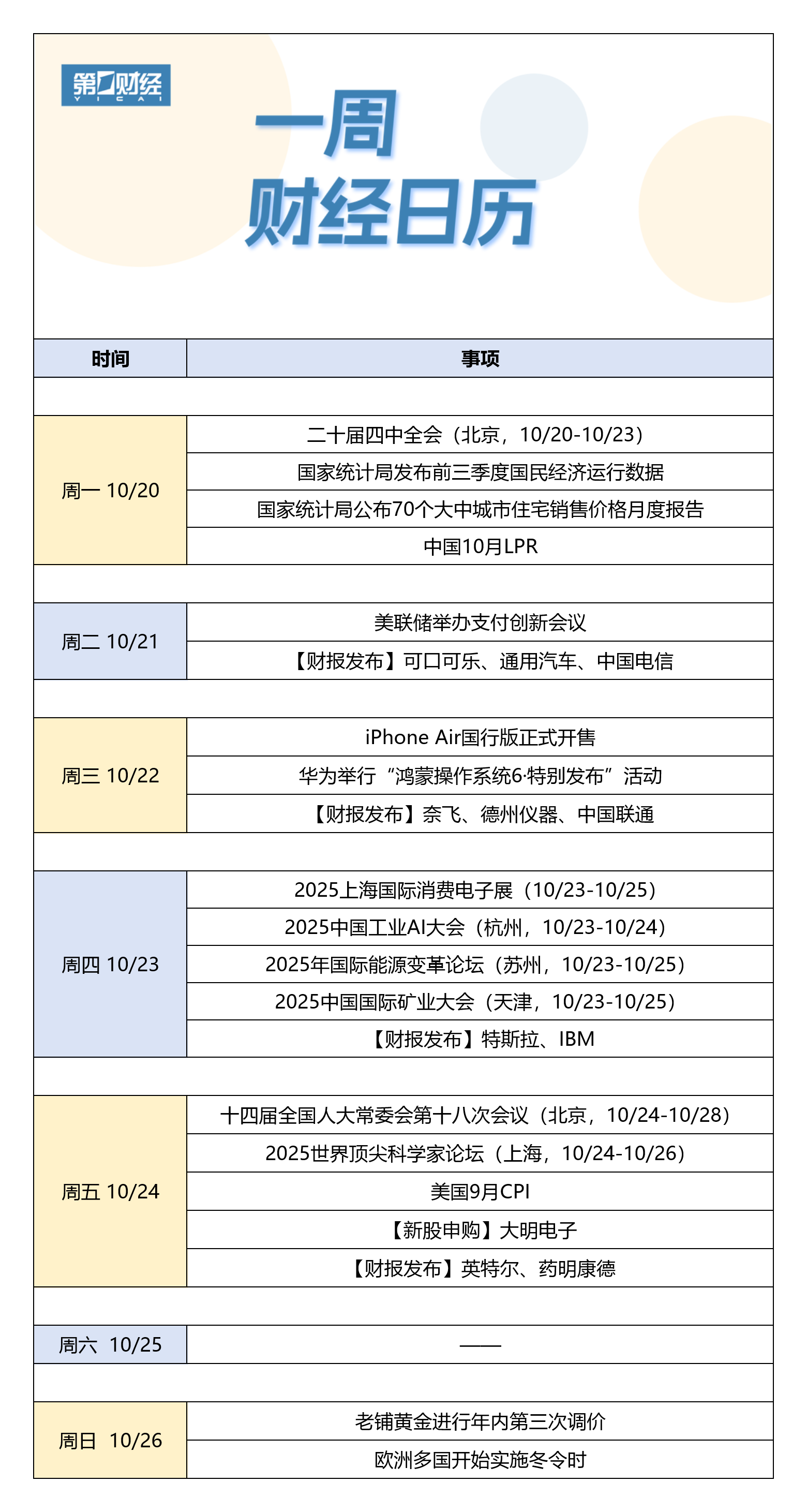
【下周财经日历】10月20日-10月26日
Di Yi Cai Jing· 2025-10-18 13:01
Group 1 - The 20th Central Committee's Fourth Plenary Session took place in Beijing on October 2, focusing on national economic statistics for the first three quarters [1] - The National Bureau of Statistics released data on residential sales in 70 large and medium-sized cities in China [1] - The People's Bank of China announced the October Loan Prime Rate (LPR) [1] Group 2 - The Federal Reserve hosted a payment innovation conference on October 21 [2] - Major companies including Coca-Cola and General Motors are scheduled to release their financial reports [2] - The iPhone Air's official launch in China occurred on October 22 [2] Group 3 - Huawei held a special event for the Harmony Operating System 6 on October 22 [2] - Financial reports from Netflix and Texas Instruments are also expected on the same day [2] - The 2025 Shanghai International Consumer Electronics Show is set for October [2]


Wall Street Roundup: Financial Earnings, Golden Highs, Data Dearth
Seeking Alpha· 2025-10-17 18:00
Financial Earnings - Financial stocks had a strong earnings week, with Wells Fargo (WFC) up 7%, Morgan Stanley (MS) up 5%, Citi (C) up 4%, and Bank of America (BAC) up 4% following their earnings releases [6][5] - The IPO market is opening up with numerous deals being announced, indicating strength in deal-making and investment banking [7] - Despite positive earnings from major banks, regional banks faced challenges, with Zion Bancorp (ZION) down 13% due to a loan write-down, Jefferies (JEF) down 11% from exposure to a bankrupt auto parts maker, and Western Alliance (WAL) down 11% after suing a borrower for fraud [8] Economic Data and Government Shutdown - The ongoing government shutdown has resulted in a lack of economic data, with the market remaining resilient despite the shutdown lasting 17 days [11][12] - The upcoming CPI data and delayed jobs report are critical, as investors are currently "flying blind" regarding economic indicators [14][15] - Inflation is expected to remain in the 2.8% to 3% range, while the lack of jobs data could reveal underlying economic weaknesses [16][17] AI Deal Making - The AI sector continues to drive market enthusiasm, with significant deals announced, including OpenAI partnering with Broadcom (AVGO), Salesforce (CRM), and Walmart (WMT), the latter seeing a 5% stock increase [19][20] - The spread of AI technology is impacting various sectors, with companies like Caterpillar (CAT) benefiting from AI infrastructure build-outs, leading to a 48% year-to-date increase in its stock price [24][25] Gold and Precious Metals - Gold prices have surged 62% year-to-date, peaking just below $4,380 an ounce, driven by inflation concerns and a flight to safety amid economic uncertainty [35][36] - The market is experiencing a "barbell philosophy," with investments in both high-growth AI stocks and traditional safe-haven assets like gold [36] Cryptocurrency Market - Bitcoin has shown significant volatility, peaking at $126,000 before dropping to $106,000, contrasting with gold's upward trend [39] - The crypto market is still maturing, with liquidations occurring as investors may be using crypto as a first source of cash during economic difficulties [40] Bond Market - The bond market has seen a decline in yields, with the 10-year bond dropping from 4.5% to around 4%, reflecting a flight to safety amid economic concerns [41][42] - The bond market is viewed as a barometer for overall economic sentiment, with mixed signals from the stock market and ongoing fears of an AI bubble [43][46] Upcoming Earnings Reports - Upcoming earnings reports from major companies like Tesla (TSLA), Netflix (NFLX), General Motors (GM), Ford (F), Texas Instruments (TXN), Intel, and Amazon (AMZN) are anticipated to provide insights into consumer spending and economic conditions [47][48][51]



TXN Set to Post Q3 Earnings: What's in Store for the Stock?
ZACKS· 2025-10-17 16:36
Core Insights - Texas Instruments (TXN) is set to report its third-quarter 2025 results on October 21, with expected earnings per share (EPS) ranging from $1.36 to $1.60, and a Zacks Consensus Estimate of $1.47, reflecting an 11.9% year-over-year increase [1][9] - The anticipated revenue for the third quarter is between $4.45 billion and $4.80 billion, with a Zacks Consensus Estimate of $4.65 billion, also indicating an 11.9% growth compared to the previous year [2][9] - TXN has consistently surpassed the Zacks Consensus Estimate in the last four quarters, with an average surprise of 11.23% [2] Revenue Drivers - The recovery in industrial and automotive end markets, which contribute approximately 70% of TXN's annual revenues, is expected to positively impact the third-quarter results [3] - Growth in other markets such as Personal Electronics, Enterprise Systems, and Communications Equipment, driven by the semiconductor cycle recovery, is likely to enhance TXN's top line [4] - A recovery in demand as customers focus on rebuilding inventory is anticipated to benefit the Analog and Embedded Processing segments during the quarter [4] Challenges - The U.S.-China trade war and tariff hikes may negatively affect TXN's performance, as over 20% of its annual revenues are derived from China [5] - Rising manufacturing costs due to planned capacity expansions and decreased factory loadings are expected to be significant headwinds for TXN in the upcoming quarter [5] - The company's expansion of its Lehi factory in Utah will incur additional costs, further impacting profitability [5] Earnings Prediction Model - The current Zacks model does not predict a definitive earnings beat for Texas Instruments, as it has an Earnings ESP of 0.00% and a Zacks Rank of 3 (Hold) [6][7]
Wall Street's Most Accurate Analysts Spotlight On 3 Tech Stocks Delivering High-Dividend Yields


Benzinga· 2025-10-17 13:06
Core Insights - During market turbulence, investors often seek dividend-yielding stocks, which typically have high free cash flows and offer substantial dividends [1] Group 1: Company Ratings and Analyst Insights - Infosys Ltd (NYSE:INFY) has a dividend yield of 3.14%. BMO Capital analyst Keith Bachman maintained a Market Perform rating and raised the price target from $18 to $20, with an accuracy rate of 79%. Stifel analyst David Grossman maintained a Hold rating and reduced the price target from $18 to $17, with an accuracy rate of 65% [7] - Texas Instruments Inc (NASDAQ:TXN) has a dividend yield of 3.24%. Citigroup analyst Christopher Danely maintained a Buy rating but cut the price target from $260 to $235, with an accuracy rate of 80%. B of A Securities analyst Vivek Arya downgraded the stock from Neutral to Underperform and reduced the price target from $208 to $190, with an accuracy rate of 82% [7] - Skyworks Solutions Inc (NASDAQ:SWKS) has a dividend yield of 3.81%. Citigroup analyst Atif Malik maintained a Sell rating and raised the price target from $63 to $66, with an accuracy rate of 83%. Susquehanna analyst Christopher Rolland maintained a Neutral rating and increased the price target from $60 to $75, with an accuracy rate of 77% [7] Group 2: Recent Company News - Infosys reported better-than-expected quarterly results on October 16, 2025 [7] - Texas Instruments appointed CEO Haviv Ilan as board chairman effective January 2026, succeeding Rich Templeton [7] - Skyworks appointed Phil Carter as chief financial officer on August 25, 2025 [7]

Texas Instruments board declares fourth quarter 2025 quarterly dividend
Prnewswire· 2025-10-16 20:28
Core Points - Texas Instruments Incorporated (Nasdaq: TXN) declared a quarterly cash dividend of $1.42 per share, payable on November 12, 2025, to stockholders of record on October 31, 2025 [1] - Texas Instruments is a global semiconductor company that designs, manufactures, and sells analog and embedded processing chips for various markets including industrial, automotive, personal electronics, enterprise systems, and communications equipment [1] - The company aims to make electronics more affordable through semiconductors, focusing on innovation to enhance reliability, affordability, and lower power consumption [1] Company Updates - Texas Instruments announced the election of President and CEO Haviv Ilan as chairman of the board [2] - The company will webcast its third quarter 2025 earnings conference call on October 21, 2025, at 3:30 p.m. [3]

美国半导体-2025 年第三季度多元化半导体预览_保持稳定,但尚未出现广泛的拐点迹象
2025-10-16 13:07
Summary of Conference Call Notes Industry Overview: Semiconductors Key Insights - **Stability in Demand**: The semiconductor industry is experiencing stable trends in Q3 and Q4, with diversified semiconductor sales expected to grow 6.5% QoQ in Q3, which is 180bps above seasonal trends. However, Q4 is projected to be flat QoQ, 290bps above a historical decline of -3% [1][2] - **Cyclical Recovery**: Despite expectations for a broad-based recovery, demand remains tepid, particularly in the automotive sector, which is still facing challenges [1][2][3] - **Utilization Rates**: Commentary on utilization rates in Q4 and Q1 will be critical for assessing vendor confidence in recovery [1] Sector-Specific Trends - **Industrial Semiconductors**: Companies like TXN and ADI are expected to grow 13% and 21% YoY in CY25, respectively. However, all major PMIs are currently below 50, indicating potential impacts on recovery confidence [2] - **Automotive Semiconductors**: The automotive sector shows mixed signals, with strong performance in China but ongoing struggles in the US and Europe. Companies like NXPI are favored due to their unique product offerings [3] - **AI and Data Center Demand**: Fast-growing segments such as data centers and defense are expected to drive upside, with companies like MCHP and ON benefiting from AI-related sales [1][2] Company-Specific Insights Texas Instruments (TXN) - **Outlook**: TXN is rated as Underperform with a price objective of $190. Q3 results are expected to be in line, but Q4 may face headwinds due to muted cyclical trends [11][12] - **Sales Projections**: Expected Q3 sales of $4.64 billion (+4.2% QoQ) and Q4 guidance could be below consensus [12][13] NXP Semiconductors (NXPI) - **Outlook**: NXPI is rated as a Buy with a price objective of $270. Q3 sales are expected to be in line with consensus at $3.16 billion (+8.1% QoQ) [14][15] - **Segment Performance**: The automotive segment is expected to drive growth, with potential upside from channel refill and EV tax credit pull-ins [16] ON Semiconductor (ON) - **Outlook**: ON is rated Neutral with a price objective of $52. Q3 results are expected to beat consensus, while Q4 is projected to be in line [17][18] - **Sales Expectations**: Anticipated Q3 sales of $1.51 billion (+3.2% QoQ) with potential upside from automotive demand [19] Microchip Technology (MCHP) - **Outlook**: MCHP is rated Neutral with a price objective of $70. Q3 results are expected to be in line, with potential upside in Q4 [20][21] - **Sales Forecast**: Expected Q3 sales of $1.14 billion (+6.1% QoQ) with a focus on strategic defense and data center businesses [22] Allegro MicroSystems (ALGM) - **Outlook**: ALGM is rated Buy with a price objective of $34. Q3 results are expected to show upside, while Q4 is projected to be in line [23][24] - **Sales Projections**: Anticipated Q3 sales of $211 million (+3.5% QoQ) with strong design-win momentum in the automotive sector [25] Additional Considerations - **Tariff and Trade Tensions**: Ongoing tariff uncertainties and trade tensions are impacting demand and pricing strategies across the semiconductor sector [1][2][3] - **China Market Dynamics**: The Chinese market remains a focal point for growth, particularly in the automotive sector, but poses risks due to geopolitical tensions and local competition [9][34] - **Memory Demand**: The demand for memory chipsets is expected to remain strong, driven by major tech companies and AI applications [10] This summary encapsulates the key points from the conference call, highlighting the current state of the semiconductor industry and specific company outlooks.


9份料单更新!出售TI、NXP、ORIENT等芯片
芯世相· 2025-10-16 08:22
Core Insights - The article discusses the challenges of managing excess inventory in the semiconductor industry, highlighting the financial burden of storage and capital costs associated with unsold materials [1] - It emphasizes the services provided by Chip Superman, which has served 21,000 users and offers rapid inventory clearance solutions [8] Group 1: Inventory Management - Excess inventory of 100,000 units incurs monthly storage and capital costs of at least 5,000, leading to a potential loss of 30,000 after six months [1] - The article suggests that companies struggling to sell their materials can utilize Chip Superman's services for better pricing and faster transactions [1][9] Group 2: Inventory Offerings - Chip Superman has a substantial inventory, with over 1,000 models and 50 million chips valued at over 100 million [7] - The article lists various semiconductor components available for sale, including specific brands and quantities, indicating a diverse inventory [4][5] Group 3: Purchase Requests - The article includes a section for companies looking to purchase specific semiconductor components, indicating a demand for certain materials [6] Group 4: Service Efficiency - Chip Superman claims to complete transactions in as little as half a day, showcasing its efficiency in clearing inventory [8]


美国半导体及半导体设备:半导体资讯:SEMICON West 回顾、盈利预览US Semiconductors and Semi Equipment:SemiBytes: SEMICON West Recap, Earnings Previews
2025-10-16 01:48
Summary of Key Points from the Conference Call Industry Overview: Semiconductors and Semi Equipment - **Positive Inflection in Orders**: There has been a significant increase in orders for semiconductor equipment suppliers, particularly from memory manufacturers, indicating a strong demand for NAND-related products as companies upgrade their technology [2][2] - **WFE Spending Projections**: The forecast for wafer fabrication equipment (WFE) spending is approximately $109 billion in 2025, representing a 12% year-over-year increase, and around $118 billion in 2026, an 8% year-over-year increase, with DRAM WFE expected to rise by about 25% year-over-year [2][2] - **System Technology Co-Optimization (STCO)**: The industry is increasingly focusing on a holistic approach to optimize performance, power, cost, and form factor through innovations in heterogeneous integration, advanced memory on logic, and power delivery co-design [2][2] Company-Specific Insights Texas Instruments (TXN) - **Revenue Expectations**: TXN is expected to report revenue of $4.8 billion for the upcoming quarter, with a conservative guidance for the following quarter at approximately $4.5 to $4.6 billion [3][3] - **Market Recovery**: There are improving demand signals across various end markets, including industrial and automotive sectors, following previous tariff uncertainties [3][3] - **Revised Estimates**: TXN's revenue and EPS estimates for CY25 have been lowered to $17.9 billion and $5.60, respectively, reflecting a cautious outlook but maintaining a positive long-term recovery perspective [3][3][10][10] Lam Research Corporation (LRCX) - **Strong FQ1:26 Outlook**: LRCX is anticipated to report strong results for the first quarter of fiscal year 2026, with revenue expectations around $4.9 billion, slightly above market expectations [5][5] - **Memory Orders Impact**: The company is expected to benefit from a recent uptick in memory orders, particularly in DRAM and NAND, although the full impact may not be realized until later in the fiscal year [5][5] - **Valuation Update**: The price target for LRCX has been raised from $120 to $155, reflecting a positive outlook on market growth and share performance [5][5] Intel Corporation (INTC) - **In-Line Results Anticipated**: INTC is expected to report results in line with expectations, with a modest upside bias due to improvements in the PC and server markets [6][6] - **Key Focus Areas**: Investors are likely to focus on the progress of the 18A process technology, updates on the foundry business, and INTC's AI strategy in light of recent partnerships [6][6] - **Revised EPS Estimates**: EPS estimates for CY25 and CY26 have been adjusted slightly upward to $0.15 and $0.40, respectively, reflecting a more optimistic outlook [6][6] Additional Insights - **Market Sentiment**: There is a notable shift in sentiment among buyers in the US supply chain, with a rebound in confidence, while sentiment in China appears to be declining [3][3] - **Tariff Impact**: The ongoing investigations related to China are not expected to significantly impact TXN's operations, as management has not received notifications regarding any probes [3][3] - **Sector Dynamics**: The semiconductor sector is experiencing a transition with a focus on advanced technologies and co-optimization strategies, which may lead to increased competition and innovation [2][2] This summary encapsulates the key insights and projections from the conference call, highlighting the positive trends in the semiconductor industry and the specific outlooks for major companies within the sector.
