
Uber(UBER)

Search documents
Trade Tracker: Steve Weiss buys Uber, says it has 'pole position' in autonomous and robotaxis
CNBC Television· 2025-07-28 17:34
Autonomous and Robo Taxis - Uber has the pole position in autonomous and robo taxis, surpassing Tesla [1] - Uber benefits from a favorable cost profile in the autonomous vehicle sector because Waymo bears the costs [1] Earnings Performance - Industry anticipates Uber will report a good quarter [1] - Demand has remained strong despite price increases [1]



Trade Tracker: Steve Weiss buys Uber
CNBC Television· 2025-07-28 17:28
Autonomous Driving & Robo-Taxis - Uber holds a leading position in autonomous driving and robo-taxis, surpassing Tesla [1] - Uber benefits from a favorable cost profile in the autonomous driving sector because Waymo bears the costs [1] Market Demand & Pricing - Despite price increases, demand for Uber services has not decreased [1] Financial Outlook - The analysis suggests Uber is positioned to report a positive quarter [1]

Should You Buy This Magnificent Autonomous Driving Stock Before Aug. 6?
The Motley Fool· 2025-07-26 08:29
Core Viewpoint - Autonomous vehicles are poised to significantly impact the ride-hailing industry, with companies like Uber potentially benefiting from reduced operational costs and increased market opportunities through partnerships with self-driving vehicle providers [1][2][12]. Company Overview - Uber operates the largest ride-hailing network globally, relying on 8.5 million human drivers, which constitutes its largest expense [2][5]. - In Q1 2025, Uber reported gross bookings of $42.8 billion, with $18.6 billion paid to drivers, resulting in $11.5 billion in revenue after deducting costs [5][6][7]. - The company is expected to release its Q2 2025 operating results on August 6, with strong revenue and earnings growth anticipated [3][10]. Financial Performance - For Q1 2025, Uber's GAAP net profit was $1.7 billion, indicating a low profit margin relative to its gross bookings [6][7]. - Projections for Q2 2025 suggest gross bookings between $45.7 billion and $47.2 billion, translating to approximately $12.5 billion in revenue, representing a year-over-year growth of 16.4% [10][11]. Autonomous Vehicle Partnerships - Uber has partnerships with 18 self-driving vehicle providers, up from 14 six months prior, leveraging its large user base of 170 million monthly active users [12]. - Waymo, a key partner, is completing over 250,000 paid autonomous ride-hailing trips weekly across five U.S. cities, utilizing both its and Uber's networks [13]. - As of Q1 2025, Uber's network completed 1.5 million annualized autonomous trips and deliveries, with expectations for updates on this figure in the upcoming report [14]. Market Outlook - Uber's stock has increased by 42% in 2023, currently trading near record highs, with a price-to-sales ratio of 4.2, aligning with its 10-year average [15]. - The potential for accelerated revenue growth due to autonomous vehicles suggests that the stock may be worth holding, especially for long-term investors [17][18].
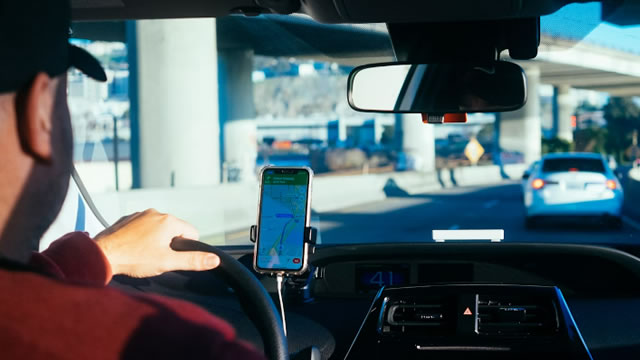
X @TechCrunch
TechCrunch· 2025-07-25 15:39
Autonomous Driving Initiatives - Lyft 计划在 2026 年增加自动驾驶班车服务 [1] - Uber 签署了更多自动驾驶协议 [1] Industry Trends - 自动驾驶技术在出行领域的应用正在扩展 [1]
Lyft to add autonomous shuttles in 2026 as Uber inks more self-driving deals
TechCrunch· 2025-07-25 15:33
Core Insights - Lyft will introduce autonomous shuttles from Benteler Group to its network by late 2026, in collaboration with U.S. cities and airports, with potential for future expansion [1] - The shuttles will be electric, branded under Holon, and designed without steering wheels or pedals, accommodating up to nine seated and six standing passengers [2] - Lyft is still in the process of integrating autonomous vehicles into its fleet, with plans to add AVs from May Mobility in Atlanta later this year and is collaborating with Mobileye for technology [3] Company Developments - The partnership with Benteler allows Lyft to utilize urban electric shuttles, enhancing its service offerings amid competition from Uber, which is expanding its robotaxi fleet [2] - Lyft's ongoing efforts to incorporate autonomous vehicles include testing with various partners, indicating a gradual approach to AV integration [3] - The technology powering the Holon shuttles comes from Mobileye, although Lyft clarified that the current deals are separate from those involving Mobileye [3] Competitive Landscape - Lyft's announcement comes at a time when Uber is aggressively expanding its robotaxi services with multiple partnerships, highlighting the competitive dynamics in the autonomous vehicle market [2] - The introduction of Benteler's shuttles may position Lyft to better compete with Uber's advancements in the autonomous transportation sector [2] - Lyft's strategy to partner with established manufacturers like Benteler reflects a trend in the industry towards collaboration for technological advancement [1][2]

Uber Just Made a Huge Investment in Its Robotaxi Future. Here's What Investors Need to Know.
The Motley Fool· 2025-07-25 11:00
Core Perspective - Uber Technologies is making a significant commitment to autonomous vehicles through a multi-year partnership with Lucid and Nuro, which could reshape its future in the ride-hailing market [1][9]. Investment Details - Uber will invest $300 million in Lucid and a separate "multi-hundred-million-dollar" investment in Nuro, aiming to deploy at least 20,000 robotaxis over the next six years [2]. Strategic Shift - This partnership marks a major shift in Uber's strategy, as it will own and operate the vehicles rather than just providing a user-facing platform, indicating a desire for more control in the evolving ride-hailing market [4][13]. Vehicle Specifications - The robotaxi fleet will utilize Lucid's Gravity SUV, which features a long 450-mile range and hardware redundancies, making it suitable for autonomous operations [6]. Competitive Landscape - The move is crucial as robotaxis are becoming a reality, with competitors like Waymo and Tesla already offering autonomous rides [7]. Control Over Future - By investing directly in Nuro and Lucid, Uber aims to secure its position in the market and avoid being sidelined by competitors who may choose to offer driverless rides through their own platforms [9][10]. Platform Advantages - Uber possesses strong brand recognition, extensive routing and pricing data, and expertise in fleet management, which may provide an edge over competitors in the autonomous vehicle space [11]. Current Business Performance - Uber's core business is performing well, with a 14% revenue increase to $11.5 billion in Q1 2025, and strong free cash flow generation, allowing time for the robotaxi fleet development [14][15]. Future Challenges - Building a robotaxi fleet is capital-intensive and requires effective execution, with production of vehicles not expected to begin until late 2026, amidst increasing competition [16]. Market Positioning - Uber is proactively making multiple investments in the robotaxi space to ensure it remains competitive as the market evolves, with the potential for significant returns if it becomes a leader in this sector [17].

Robotaxi竞赛升温!特斯拉(TSLA.US)加速布局 优步(UBER.US)-Lucid(LCID.US)-Nuro结盟出击
智通财经网· 2025-07-25 07:16
Group 1 - The revolution of robotaxi services is gaining momentum, with Tesla aiming to cover half of the U.S. population by the end of 2025 [1] - Currently, Tesla's robotaxi fleet operates in a limited area in Austin, Texas, requiring the presence of employees or safety drivers in the vehicles [1] - Uber has partnered with Lucid Group and Nuro to launch a next-generation robotaxi service that combines high-end electric vehicles, mature autonomous driving technology, and Uber's global ride-hailing platform [1] Group 2 - Uber plans to deploy 20,000 or more Lucid vehicles equipped with Nuro's autonomous driving system within six years, making it one of the largest announced robotaxi collaborations to date [2] - The base model of these vehicles will have a range of approximately 450 miles per charge, and the Nuro Driver system will support Level 4 autonomous driving capabilities [2] - The robotaxi service is set to launch in a major U.S. city in 2026, with plans to expand to dozens of markets globally over the following six years [2]
Is This Artificial Intelligence (AI) Transportation Stock the Ultimate Threat to Tesla's Autonomous Ambitions?
The Motley Fool· 2025-07-25 07:14
Core Viewpoint - Tesla is facing a challenging year with significant stock volatility and mixed investor sentiment, while Uber is gaining traction in the autonomous driving space, potentially posing a competitive threat to Tesla's ambitions in this market [1][8]. Group 1: Tesla's Position and Strategy - Tesla's stock has decreased by approximately 13.3% as of July 21, underperforming the broader market [1]. - The company is developing a Model Y for its autonomous fleet and is exploring a model where Tesla owners can rent their vehicles to the robotaxi fleet, creating a new income stream [5]. - Tesla's cost advantage in producing driverless vehicles is notable, with the cost of the Model Y being just 1/7 that of Waymo's vehicles [9]. Group 2: Uber's Approach and Competitive Landscape - Uber is not developing its own autonomous driving technology but is partnering with other companies to integrate their autonomous vehicles into its platform, viewing this as a significant market opportunity [2]. - Uber has established partnerships with companies like WayMo, WeRide, and Pony AI, which could enhance its operational efficiency by reducing driver costs [6]. - Year-to-date performance shows Uber's stock has increased by 51%, while Tesla's has decreased by 21%, indicating a shift in market dynamics as the race for autonomy intensifies [7]. Group 3: Market Dynamics and Future Outlook - Experts suggest that the autonomous transportation industry may support multiple winners, but competition between Uber and Tesla could escalate, potentially leading to a zero-sum game [8]. - Despite challenges, Tesla remains a key player in the autonomous space, with many experts considering it the company to watch as it continues to develop its technology [11]. - There is a possibility of a future partnership between Tesla and Uber if the complexities of the autonomous industry prove challenging for both companies [11].
金十图示:2025年07月25日(周五)全球主要科技与互联网公司市值变化




news flash· 2025-07-25 03:14
Group 1 - The article provides a summary of the market capitalization changes of major global technology and internet companies as of July 25, 2025, highlighting both increases and decreases in their valuations [1][3][4]. - Notable companies with significant market capitalization include Tesla at $983.3 billion, which saw a decrease of 8.2%, and Apple at $1253 billion, which experienced a slight increase of 0.53% [3][4]. - Other companies like Oracle and Tencent showed minor increases in their market values, with Oracle at $682 billion (+0.38%) and Tencent at $138.2 billion (+0.03%) [3][4]. Group 2 - The report lists various companies with their respective market capitalizations and percentage changes, indicating a mixed performance across the sector [5][6]. - Companies such as AMD and ServiceNow reported increases of 2.19% and 4.16%, respectively, while Intel and Alibaba experienced declines of 3.66% and 1.17% [5][6]. - The data reflects a competitive landscape where companies are experiencing varying degrees of market performance, influenced by broader economic factors and individual company strategies [7][8].
