
UPS(UPS)

Search documents
Best Insurance Stocks To Research – October 28th
Defense World· 2025-10-30 08:06
Core Insights - The article highlights seven insurance stocks to watch, including United Parcel Service, Berkshire Hathaway, Wells Fargo & Company, Progressive, Arthur J. Gallagher & Co., Brown & Brown, and Everest Group, based on their high trading volumes recently [2] Group 1: Company Profiles - United Parcel Service (UPS) is a package delivery company that offers a range of services including transportation, delivery, distribution, and insurance, operating through U.S. Domestic Package and International Package segments [3] - Berkshire Hathaway Inc. engages in insurance, freight rail transportation, and utility businesses, providing various insurance products and operating railroad systems in North America [4] - Wells Fargo & Company is a diversified financial services company offering banking, insurance, investments, and mortgage services, operating through multiple segments including Consumer Banking and Lending, and Corporate and Investment Banking [5] - Progressive Corporation provides personal and commercial auto and property insurance products, operating in three segments: Personal Lines, Commercial Lines, and Property [6] - Arthur J. Gallagher & Co. offers insurance brokerage and consulting services, operating through Brokerage, Risk Management, and Corporate segments [6] - Brown & Brown, Inc. is an insurance agency and brokerage firm providing various insurance services, operating through Retail, National Programs, Wholesale Brokerage, and Services segments [7] - Everest Group, Ltd. provides reinsurance and insurance products globally, operating through Insurance and Reinsurance segments [7]



已裁员4.8万人!美国巨头,公布_发现频道_中国青年网
Sou Hu Cai Jing· 2025-10-30 02:04
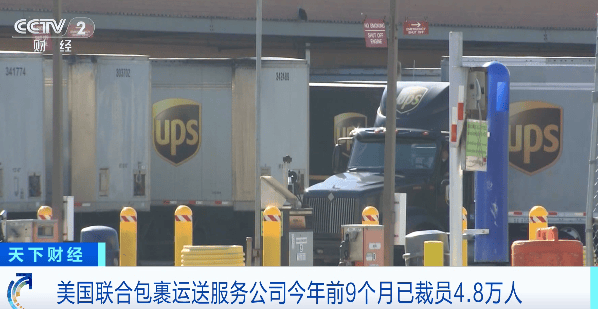
Core Insights - United Parcel Service (UPS) reported a significant workforce reduction, with 48,000 employees laid off in the first nine months of the year, exceeding previous plans [1][3] - The company achieved cost savings of approximately $2.2 billion through layoffs and facility closures, with an annual target of $3.5 billion [1] - UPS's stock price rose about 8% following the earnings report, which exceeded analyst expectations for revenue and earnings per share [5] Group 1 - UPS's layoffs included approximately 34,000 drivers and warehouse workers, while 14,000 were management personnel [1] - Earlier in the year, UPS indicated a shift from growth-oriented strategies to focusing on higher-margin businesses, reducing reliance on low-profit operations and Amazon package deliveries [3] - As of the end of 2024, UPS is expected to have around 490,000 employees globally [3] Group 2 - The cost-cutting measures have positively impacted UPS's financial performance, leading to better-than-expected revenue and earnings for the quarter ending September 30 [5]
The CEOs of Apple, Airbnb, and PepsiCo agree on one thing: life as a business leader is incredibly lonely
Yahoo Finance· 2025-10-29 23:05
Core Insights - The loneliness experienced by CEOs and top executives is a significant issue, with many leaders feeling isolated despite their high positions and responsibilities [1][2][3][4]. Group 1: Personal Experiences of Loneliness - Brian Chesky, CEO of Airbnb, highlighted the loneliness that comes with leadership, noting that he felt unprepared for the isolation after becoming CEO [1]. - Blake Mycoskie, founder of Toms, experienced depression and loneliness after scaling his business, prompting him to seek mental health support through a retreat [2]. - Indra Nooyi, former CEO of PepsiCo, expressed the challenges of finding someone to confide in due to the confidential nature of executive responsibilities, leading her to rely on self-reflection [5]. - Carol Tomé, CEO of UPS, initially underestimated the loneliness of the CEO role but later acknowledged it as extraordinarily isolating [7]. - Tim Cook, CEO of Apple, confirmed the loneliness of the position, noting that executive teams often wait for the CEO to leave before discussing matters privately [8]. Group 2: Impact on Mental Health and Well-being - A study from Harvard Medical School indicated that at least 40% of executives are contemplating leaving their jobs due to feelings of isolation and lack of energy [2]. - A 2022 Deloitte study found that approximately 70% of C-suite leaders are seriously considering quitting for roles that better support their well-being [2]. - Seth Berkowitz, CEO of Insomnia Cookies, emphasized the importance of building genuine connections to combat the loneliness that often accompanies entrepreneurship [11][12]. Group 3: Recommendations for Leaders - Chesky suggested that leaders should share their power to alleviate the mental burden of entrepreneurship [3]. - Tim Cook advised leaders to surround themselves with bright individuals who can help them grow and avoid isolation [9].


Stock Of The Day: Is The UPS Rally Over?
Benzinga· 2025-10-29 16:00
Core Viewpoint - Shares of United Parcel Service, Inc. (NYSE:UPS) increased by approximately 8% following the company's earnings report, indicating positive investor sentiment [1] Group 1: Stock Performance - UPS stock may face resistance around the $104 level, which was a previous resistance point in June [1] - Some investors who purchased shares at $104 in June may look to sell if the stock returns to that price, potentially creating selling pressure [3] Group 2: Market Conditions - The stock is currently considered overbought, driven by aggressive buying that has pushed the price above its typical range [4] - Overbought conditions often lead to sellers entering the market, anticipating a price decline, which could exert downward pressure on the stock [4] Group 3: Technical Indicators - Bollinger Bands indicate that UPS is overbought, as the stock price has exceeded two standard deviations above the 20-day moving average [5] - The Rate of Change (ROC) indicator also shows overbought conditions, with the blue line reaching an extreme upward level [6] - The combination of being overbought at a resistance level suggests a potential bearish reversal if UPS reaches $104 again [7]

UPS, Postal Service to reunite for delivery of low-budget shipments
Yahoo Finance· 2025-10-29 15:13
Core Insights - UPS has reached a tentative agreement with the U.S. Postal Service to provide last-mile delivery for its Ground Saver service, addressing previous tensions over rate hikes [1][2] - The agreement is part of UPS's strategy to reduce costs amid declining volumes in its domestic parcel business [1] Group 1: Ground Saver Service - Ground Saver is UPS's low-cost ground service, which was rebranded after the Postal Service raised prices on its SurePost product [3] - The service typically takes one to two days longer than regular Ground delivery and is mainly used by large businesses for low-value e-commerce shipments [4] Group 2: Financial Performance and Challenges - UPS faced higher delivery expenses, totaling $85 million in Q2, due to an inability to optimize delivery stops, which impacted profitability despite a 5.5% increase in domestic revenue per piece [5] - The company raised Ground Saver rates significantly, aiming to encourage retailers to opt for more premium shipping options, but this led to a diminished value proposition for Ground Saver [6] Group 3: Market Dynamics - Price increases for Ground Saver resulted in retailers seeking cheaper shipping alternatives, as they typically absorb e-commerce shipping costs to prevent cart abandonment [7] - In Q3, Ground Saver's average daily volume dropped by 32.7% year-over-year, attributed to the decision to phase out 50% of Amazon volumes by mid-2026 and a decline in lower-yielding e-commerce volumes [8]
UPS Adds More Gig Drivers to Offset eCommerce Surges
PYMNTS.com· 2025-10-29 14:41
Core Insights - UPS is increasing its reliance on gig delivery drivers to manage the growing eCommerce volumes, particularly during peak seasons [1][2][3] - The company is facing challenges with lightweight residential packages that do not sufficiently cover labor costs, prompting a strategic shift towards more profitable industrial and healthcare clients [4][5][8] Group 1: Gig Delivery Drivers - UPS has historically utilized gig drivers during busy holiday seasons and for last-mile deliveries in collaboration with the U.S. Postal Service [2] - The rise in eCommerce has led to more frequent surges in package volumes, necessitating the hiring of additional gig drivers to meet demand [3] Group 2: Strategic Realignment - UPS is undergoing a significant strategic shift aimed at reducing costs and enhancing profitability, which includes layoffs and buyouts of 34,000 drivers and warehouse workers, resulting in approximately $2.2 billion in cost reductions this year [4][6] - The company reported a 2.6% decline in domestic revenue for Q3, attributed to a planned decrease in volume, while international operations saw a 4.8% increase in average daily volume [7]

X @Xeer


Xeer· 2025-10-29 13:35
Layoff Trends Across Sectors - Various sectors are experiencing layoffs, impacting both traditional industries and tech companies [1][2] - The data highlights significant workforce reductions across multiple major corporations [2] Specific Company Layoff Numbers - UPS announced layoffs of 48 thousand employees [2] - Amazon reduced its workforce by 30 thousand employees [2] - Intel cut 24 thousand positions [2] - Nestle laid off 16 thousand employees [2] - Accenture and Ford both reduced their workforce by 11 thousand employees each [2] - Novo Nordisk experienced layoffs of 9 thousand employees [2] - Microsoft's layoffs impacted 7 thousand employees [2] - PwC reduced its workforce by 56 thousand employees [2] - Salesforce laid off 4 thousand employees [2] - Paramount's layoffs impacted 2 thousand employees [2] - Target reduced its workforce by 18 thousand employees [2] - Kroger laid off 1 thousand employees [2] - Applied Materials cut 14 thousand positions [2] - Meta experienced layoffs of 600 employees [2]
UPS CFO on Amazon pullback and driving a growth strategy
Yahoo Finance· 2025-10-29 12:27
Core Insights - UPS is strategically repositioning itself for long-term growth by reducing its partnership with Amazon, which has been in place for nearly 30 years [1][4] - The company reported Q3 revenue of $21.4 billion and adjusted EPS of $1.74, exceeding Wall Street expectations, and projects Q4 revenue of approximately $24 billion [1] Business Refocus - UPS is transforming its U.S. operations to concentrate on high-margin market segments such as small and midsized businesses, health care logistics, and B2B delivery, moving away from low-return, capital-intensive volume [3] - The decision to halve Amazon delivery volume by late 2026 reflects a strategic shift, as UPS aims to focus on areas where it can add the most value [4] Operational Adjustments - UPS has cut about 34,000 operational positions in 2025, primarily through attrition and targeted buyouts, and closed operations at 93 facilities while eliminating 14,000 management jobs [6] - The company expects a 20% volume increase from Q3 to Q4, translating to roughly 4 million additional packages per day, indicating readiness for the holiday season despite reduced Amazon volume [7] Health Care Growth - UPS's health care segment has grown significantly, from zero to a $10 billion business since 2016, driven by targeted acquisitions and a focus on cold chain logistics, quality assurance, and regulatory oversight [8][9] - The health care customers are noted for their longevity and faster growth, contributing to higher margins, which is seen as a sustainable growth strategy [9]
X @The Wall Street Journal
The Wall Street Journal· 2025-10-29 11:46
Instead of the iconic brown trucks, UPS has been funneling smaller, lower-value parcels to gig drivers who use their personal vehicles to make deliveries https://t.co/dQFzhrxhIR ...
Where Will UPS Be in 5 Years?
Yahoo Finance· 2025-10-29 11:31
Positive Outlook for UPS - United Parcel Service (UPS) reported better-than-expected third-quarter results, leading to a significant increase in its stock price [1] - The company is expected to navigate current challenges, with some issues likely to resolve by the end of the decade [2][8] Future Challenges and Opportunities - Tariffs are anticipated to be less of a concern in five years due to potential changes in the political landscape [2] - The impact of reduced Amazon shipment volumes is expected to be fully absorbed by 2030, ultimately enhancing profitability [3] - Advancements in technology, including AI and robotics, are projected to improve operational efficiency and reduce fuel costs through electric vehicle innovations [4] Market Position and Demand - The demand for package delivery is expected to remain strong, with UPS's scale providing a competitive advantage [5][8] - UPS has maintained a high dividend yield of over 7% and has consistently increased its dividend since 1999, making it attractive to income investors [7] Potential Risks - There are concerns regarding a possible dividend cut in the future, which could negatively impact investor sentiment [9]