
Walmart(WMT)

Search documents
Strategas' Verrone charts Walmart, Costco stock performance through 2025
Youtube· 2025-12-09 23:24
Group 1 - Walmart has shown strong performance, breaking through the $110 resistance level recently, and is expected to continue its upward trend, with a target of $130 [2][3] - Costco, in contrast, has been in a topping formation for the last 18 months and is considered oversold in the short term, with a target around $800 [3][5] - The consumer sector is showing strength, as indicated by the XRT index reaching highs without contributions from Amazon or Costco, suggesting a robust consumer sentiment [4] Group 2 - Walmart's revenue growth is outpacing that of Costco, making it a more attractive investment option, especially if valuations were equal [8] - There are opportunities for investors to buy Walmart shares, particularly after a period of consolidation [9]



Squawk Pod: Walmart CEO Doug McMillon & Scott Jennings - 12/09/25 | Audio Only
CNBC Television· 2025-12-09 18:42
Walmart is now the largest company to switch its public listing exchange, debuting trading on the Nasdaq today. Walmart CEO Doug McMillon discusses his soon-ending tenure and the company’s new focus on AI and technology. Then, Republican strategist Scott Jennings discusses capitalism, the evolution of conservatism in the United States, and his new book, “A Revolution of Common Sense.” Plus, President Trump will allow Nvidia to ship its H200 AI chips to approved customers in China, Paramount Skydance CEO Dav ...
Walmart Gives Last Minute Shoppers More Time to Order Gifts
Businesswire· 2025-12-09 18:00
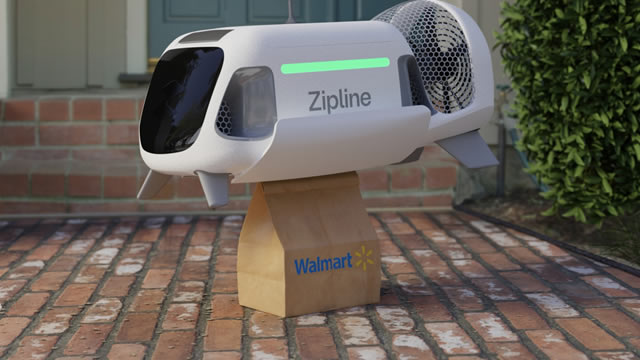
Core Insights - Walmart is enhancing the shopping experience for last-minute holiday shoppers by offering Express Delivery in as fast as one hour for orders placed by 5 p.m. local time on Christmas Eve [1] - The company has introduced a "Get it Now" option in its app, allowing customers to see estimated delivery times and place orders quickly, improving the overall shopping experience [2] - Walmart's delivery capabilities now reach 95% of U.S. households in under three hours, making it easier for customers to receive their orders during the holiday season [2] Company Overview - Walmart Inc. is a leading omnichannel retailer with a fiscal year 2025 revenue of $681 billion and approximately 2.1 million employees worldwide [3] - The company serves around 270 million customers weekly across more than 10,750 stores and various eCommerce platforms in 19 countries [3] - Walmart is committed to sustainability, corporate philanthropy, and providing employment opportunities [3]

The Big 3: CME, IBM, WMT
Youtube· 2025-12-09 18:00
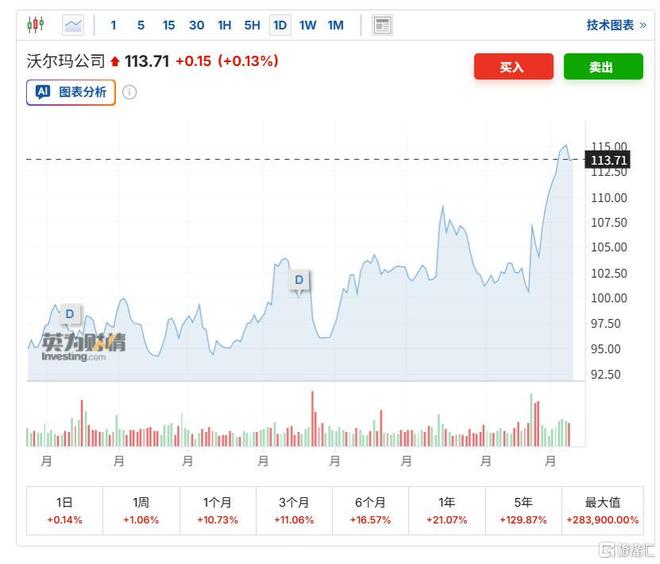
Market Overview - The current market action is heavily influenced by the Federal Reserve meeting, with particular attention on Fed Chair Powell's commentary and its impact on the bond market [2][3][4] CME Group - CME Group is identified as a long-term investment opportunity, driven by the increasing participation of retail traders in the derivatives and options markets, particularly in event contracts [5][6] - The company is positioned to standardize and centralize trading in these emerging markets, similar to historical developments in the options and futures markets [7][8] - Current technical analysis indicates a downward trend with potential support around 270, while resistance is noted between 281 to 286 [10][11][12] IBM - IBM's recent acquisition of Confluent for $11 billion enhances its capabilities in real-time data streaming, crucial for AI applications, thereby strengthening its enterprise solutions [15][18] - The acquisition aligns with IBM's strategy to partner with AI models rather than compete, positioning the company favorably in the enterprise AI modernization space [16][19] - Technical analysis shows IBM's stock is currently trading at 312.48, up 42% year-to-date, with notable support around 288 and resistance near 315 [25][21][20] Walmart - Walmart has reported strong earnings, reflecting a shift towards a diversified tech-enabled platform, with a focus on e-commerce and AI to enhance operational efficiency [26][28] - The company is evolving its business model to include high-margin growth engines such as digital ads and memberships, which are expected to improve long-term profitability [29] - Technical analysis indicates Walmart is trading at 113.91, up over 21% in the last 12 months, with key support levels around 109 and resistance near 116.27 [36][31][32]


Walmart stock is making a historic change today. Here's why WMT is moving from the NYSE to the Nasdaq
Fastcompany· 2025-12-09 17:50
Core Viewpoint - Walmart has transitioned its stock listing from the New York Stock Exchange (NYSE) to the Nasdaq Global Select Market, marking a significant shift in its financial journey after over 53 years on the NYSE [1][2][4]. Group 1: Historical Context - Walmart's shares have been traded on the NYSE since 1972, following its public offering in 1970 [2][3]. - The company's stock has appreciated over 536,000% during its time on the NYSE, highlighting its substantial growth [3]. Group 2: Market Capitalization - As of its last trading day on the NYSE, Walmart's market capitalization exceeded $905 billion, making it the largest company to ever transfer stock exchanges [4][12]. - The previous largest company to switch exchanges was Linde, with a market value of $180 billion at the time of its move [12][13]. Group 3: Reasons for the Move - Walmart's decision to move to the Nasdaq is influenced by its desire to align with a more technology-focused image, distancing itself from legacy companies typically associated with the NYSE [5][7]. - The Nasdaq is home to many high-growth tech companies, which Walmart aims to be associated with as it integrates automation and AI into its operations [8][9]. Group 4: Potential Impact on Stock Performance - The move to the Nasdaq could psychologically position Walmart as a tech-focused growth stock, potentially attracting more investor interest [15]. - Walmart's shares have performed well in 2025, with a year-to-date increase of over 25%, and are nearing an all-time high [17]. - The company is approximately $95 billion away from reaching a market cap of $1 trillion, needing a 10.5% increase in stock price to achieve this milestone [17][18].
沃尔玛转板至纳斯达克上市
Bei Jing Shang Bao· 2025-12-09 15:44
Core Viewpoint - Walmart's migration from the New York Stock Exchange to the Nasdaq marks the largest exchange migration in U.S. history, reflecting a shift towards a technology narrative in traditional industries [1][2] Group 1: Company Strategy - Walmart aims to enhance its image as a tech-driven retailer by integrating automation and artificial intelligence, setting new standards for omnichannel retail [1][3] - The company is positioning itself as a direct competitor to Amazon, rather than traditional discount retailers like Costco or Target, indicating a paradigm shift in the retail industry [3][4] - Over 60% of Walmart's goods are transported through automated distribution centers, with more than half of online orders completed in automated facilities, showcasing its commitment to technological advancement [3][4] Group 2: Market Implications - The move to Nasdaq allows Walmart to potentially be included in the Nasdaq 100 index, attracting more passive fund investments [1][4] - The migration is seen as a strategic effort to align Walmart with high-growth tech companies, enhancing its brand as a "tech retail" entity [4] - The lower costs associated with listing on Nasdaq, although minor for Walmart, align with the company's cost-saving ethos [4]
零售巨头“换赛道”!沃尔玛转板纳斯达克,8500亿市值刷新纪录
Xin Lang Cai Jing· 2025-12-09 14:58
Core Viewpoint - Walmart has officially transferred its stock listing from the New York Stock Exchange to the Nasdaq Global Select Market, setting a record for the largest exchange migration in history with a market capitalization of $853.1 billion, surpassing PepsiCo's previous record of $166 billion in 2017 [1][3]. Group 1: Company Transition - The stock began trading on Nasdaq on December 9, 2025, under the same ticker symbol "WMT" [5]. - This transition reflects Walmart's commitment to a technology-driven transformation, aligning with its long-term strategy of being people-centric and technology-enabled [6][8]. - Walmart's CFO highlighted that the move resonates with the company's focus on integrating automation and AI technologies to enhance its retail ecosystem [6]. Group 2: Technological Investments - Walmart has invested over $10 billion in technology areas such as AI, supply chain automation, and digital payments from fiscal years 2023 to 2025 [7]. - The company has achieved over 60% of its goods processed by automated facilities in distribution centers, significantly improving logistics efficiency [7]. - Collaborations with OpenAI have led to a 90% automation rate in replenishment orders and a reduction in inventory turnover days to 30, compared to the industry average of 60 days [7]. Group 3: Financial Performance - In the third quarter, Walmart reported revenues of $179.5 billion, a year-over-year increase of 5.8%, with adjusted operating profit rising by 8% [9]. - The adjusted earnings per share reached $0.62, exceeding analyst expectations [9]. Group 4: Market Impact - Walmart's migration to Nasdaq enriches the market composition, with approximately 40 companies from the S&P 500 having migrated to Nasdaq, 24 of which are now part of the Nasdaq 100 index [10]. - Analysts suggest that Walmart is likely to be included in the Nasdaq 100 index following its transfer [11][12].
零售商新老势力混战“自有品牌” 谁能更胜一筹?
Mei Ri Jing Ji Xin Wen· 2025-12-09 14:53
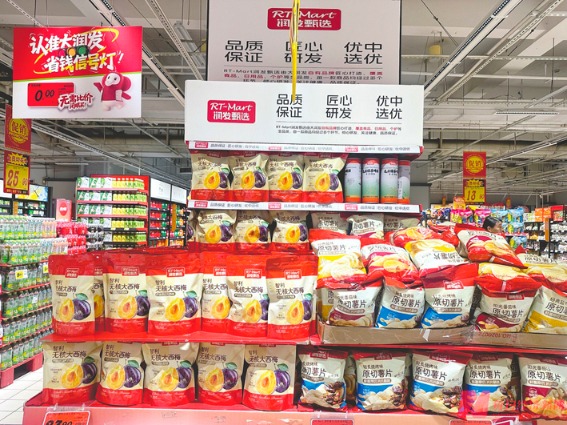
Core Viewpoint - Walmart is intensifying its focus on private label brands, particularly "Wojixian," as a strategic response to competition from e-commerce and emerging retailers, while also addressing the declining image of its Sam's Club brand [1][2][4]. Group 1: Walmart's Strategy - Walmart's private label "Wojixian" has been upgraded to cover essential categories like fresh produce, food, and beverages, emphasizing low prices and health attributes [2][4]. - The company is facing challenges as traditional retail formats struggle against e-commerce platforms, prompting a shift towards private labels to enhance competitiveness [1][4]. - The strategy of launching private labels is seen as a "last resort" to revitalize the hypermarket format amid increasing competition [1][4]. Group 2: Market Competition - Other traditional retailers, such as RT-Mart, are also focusing on private labels, with a similar emphasis on low prices and health trends [2][4]. - New players like Hema and Dingdong Maicai have established private labels as core competitive advantages, highlighting the shift in market dynamics [6][9]. - The competition for quality suppliers is intensifying as both established and emerging retailers seek to enhance their private label offerings [7][8]. Group 3: Financial Performance - RT-Mart's parent company, Gao Xin Retail, reported a revenue decline of 12.1% year-on-year, indicating the financial pressures faced by traditional retailers [5]. - Walmart's performance in China is primarily driven by Sam's Club, while its hypermarket segment has been experiencing store closures [5]. Group 4: Private Label Development - The private label penetration varies significantly among retailers, with Aldi achieving a 90% share in China, while Hema's community stores have nearly 60% [7]. - Successful private label strategies require strong brand value and supply chain management to maintain competitive pricing and quality [7][8]. - Walmart's approach involves stringent supplier selection, with only a small percentage of potential suppliers making it through the rigorous evaluation process [8].
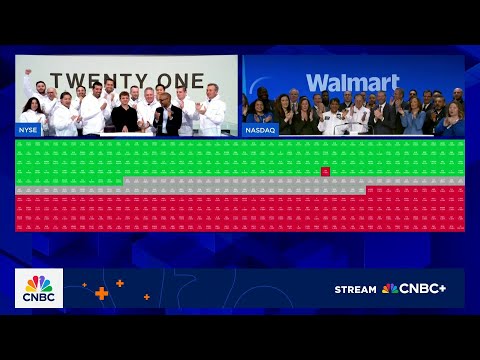
Opening Bell: December 9, 2025
CNBC Television· 2025-12-09 14:49
He is a light individual who offers real substantive things was very very helpful. I'm going to have David on tonight but I got David Joiner. I had his predecessor on and I was so concerned that in the end it was going to pivot on how you could not get people to buy things digits under lock and key.He didn't even mention it. It's not even in the >> forward to tonight. Let's get the opening bell and the CNBC realtime exchange.At the big board, it's Crypto Spect 21 Capital celebrating a listing. CEO Jack Matt ...
零售商新老势力混战“自有品牌”,谁能更胜一筹?
Mei Ri Jing Ji Xin Wen· 2025-12-09 14:43
Core Insights - Walmart is developing its private label "Wojixian" as a response to the declining image of its high-end membership store Sam's Club, indicating a strategic shift in its retail approach [1][2] - The competition in the retail market is intensifying, with traditional retailers like Walmart and RT-Mart facing pressure from e-commerce and emerging players [1][4] Group 1: Walmart's Strategy - Walmart's "Wojixian" brand focuses on affordability and health, with products prominently displayed at low price points [2][3] - The company is adopting a strategy similar to RT-Mart, which is also enhancing its private label offerings, emphasizing low prices and health attributes [2][3] - The shift towards private labels is seen as a necessary response to market competition and performance pressures, as evidenced by declining revenues and profits reported by RT-Mart's parent company [3][4] Group 2: Market Competition - New retail players like Hema and Dingdong Maicai have established their private labels as core competitive advantages, launching various products since 2017 [4][5] - The self-owned brand strategy is crucial for retailers to attract customers and improve profit margins by defining product standards and reducing intermediary costs [4][5] - The competition for quality suppliers is intensifying as traditional retailers ramp up their private label initiatives, with companies like Dingdong Maicai investing in direct sourcing and partnerships [5][6] Group 3: Supply Chain and Brand Development - The success of private labels relies heavily on effective supply chain management and the ability to create strong brand value [5][6] - Walmart is currently focusing on supplier selection and has a rigorous evaluation process for potential suppliers, which limits the number of partnerships [6] - The retail landscape is evolving, with established players like Walmart actively learning from newer competitors to enhance their product offerings and market positioning [6]