YUM CHINA(YUMC)

Search documents
食品饮料2026年投资策略:拐点显现、板块次第筑底、积极布局
China Post Securities· 2025-11-28 13:40
Group 1: Economic Indicators and Consumer Trends - The CPI in October showed a slight improvement, with a year-on-year increase of 0.2% and a month-on-month increase of 0.2%, indicating a potential recovery trend that may continue into the first half of next year [6][10] - The retail sales of consumer goods in October reached 46,291 billion yuan, growing by 2.93% year-on-year, with significant improvements in essential consumption categories such as food and beverages [10] - The restaurant sector saw a monthly revenue of 5,199 billion yuan in October, reflecting a year-on-year growth of 3.8%, driven by the National Day and Mid-Autumn Festival holidays [10] Group 2: Frozen and Food Supply Industry - The frozen food and catering industry is witnessing a shift from price wars to product innovation and channel development, with companies focusing on quality and service rather than just price competition [11] - Major players like Anjiyuan and Qianwei Central Kitchen are transitioning their strategies to emphasize product quality and operational efficiency, leading to improved profitability [11][15] - The industry is entering a "hard strength reshuffle period," where companies are expected to enhance their product offerings and service capabilities to maintain competitiveness [11] Group 3: Snack Food Sector - The snack food sector is experiencing a weak recovery, with a clear differentiation in growth among brands and channels, driven by strategic adjustments and product innovations [33][34] - The emergence of the konjac category as a significant growth driver, with market potential expected to reach 300 billion yuan by 2025, indicates a strong consumer demand for healthy snacks [34][40] - Companies like Yummy Foods and Salted Fish are leveraging their core products and channel strategies to achieve substantial growth, with a focus on high-margin products and efficient cost management [34][42] Group 4: Specific Company Strategies - Anjiyuan is focusing on high-margin products and channel expansion, with significant growth in its core offerings like volcanic stone grilled sausages and high-end dumplings [12][13] - Qianwei Central Kitchen is seeing improvements in its direct sales and distribution channels, with a focus on enhancing profitability through strategic adjustments in customer structure and resource allocation [15][18] - Salted Fish is capitalizing on the konjac trend and optimizing its product mix to improve profitability, with a strong emphasis on high-margin products and efficient channel management [40][41]




发力新模块与多元市场 百胜中国加速扩张
BambooWorks· 2025-11-28 10:52
Core Viewpoint - Yum China aims to significantly expand its store count, targeting over 25,000 stores by the end of 2028 and exceeding 30,000 by 2030, representing a growth of over 70% from the current level of 17,514 stores [1][3]. Store Expansion Plans - Yum China plans to increase its store count by over 40% in the next three years, with a target of more than 25,000 stores by the end of 2028 [2]. - The company intends to enhance restaurant profit margins from approximately 16.2%-16.3% this year to at least 16.7% by 2028 [2][6]. - The expansion strategy includes a focus on high-tier cities and deeper penetration into lower-tier markets through flexible store models [3][5]. Financial Performance and Projections - The company projects a compound annual growth rate (CAGR) for system sales in the mid to high single digits over the next three years, with operating profit also expected to grow at a high single-digit CAGR [6]. - Yum China plans to return approximately 100% of its free cash flow to shareholders starting in 2027, with expected annual shareholder returns of about $900 million to over $1 billion during 2027 and 2028 [6]. Brand-Specific Strategies - Pizza Hut's expansion plan is aggressive, aiming to increase its store count from 4,022 to over 6,000 in the next three years, while KFC will adopt a more conservative growth strategy, increasing its stores from 12,640 to over 17,000 by the end of 2028 [7]. - KFC is promoting a "small town model" to accelerate franchise expansion in lower-tier markets, with investment costs significantly lower than traditional stores [8]. Innovation and Technology - The company is implementing AI projects for store management, delivery operations, and customer service to enhance efficiency [11]. - Yum China is also focusing on resource sharing and integration across its brands to create stronger synergies [5][10]. Recent Financial Results - In the latest financial report, Yum China reported a 4% year-over-year increase in total revenue to $3.2 billion, with operating profit rising 8% to $400 million [12].


百胜中国(09987.HK)11月27日耗资1947.9万港元回购5.18万股
Ge Long Hui· 2025-11-28 09:54
格隆汇11月28日丨百胜中国(09987.HK)发布公告,2025年11月27日耗资1947.9万港元回购5.18万股,回 购价格每股372.8-378.8港元。 ...
百胜中国11月27日斥资1947.87万港元回购5.18万股
Zhi Tong Cai Jing· 2025-11-28 09:52
百胜中国(09987)发布公告,该公司于2025年11月27日斥资1947.87万港元回购5.18万股股份,每股回购 价格为372.8-378.8万港元。 ...
百胜中国(09987)11月27日斥资1947.87万港元回购5.18万股
智通财经网· 2025-11-28 09:51
智通财经APP讯,百胜中国(09987)发布公告,该公司于2025年11月27日斥资1947.87万港元回购5.18万股 股份,每股回购价格为372.8-378.8万港元。 ...
百胜中国(09987) - 翌日披露报表
2025-11-28 09:44
FF305 翌日披露報表 (股份發行人 ── 已發行股份或庫存股份變動、股份購回及/或在場内出售庫存股份) 表格類別: 股票 狀態: 新提交 呈交日期: 2025年11月28日 如上市發行人的已發行股份或庫存股份出現變動而須根據《香港聯合交易所有限公司(「香港聯交所」)證券上市規則》(「《主板上市規則》」)第13.25A條 / 《香港聯合交易所有限公司GEM證券 上市規則》(「《GEM上市規則》」)第17.27A條作出披露,必須填妥第一章節 。 | 第一章節 | | | | | | | | --- | --- | --- | --- | --- | --- | --- | | 1. 股份分類 | 普通股 | 股份類別 | 不適用 | 於香港聯交所上市 | 是 | | | 證券代號 (如上市) | 09987 | 說明 | | | | | | A. 已發行股份或庫存股份變動 | | | | | | | | | | | 已發行股份(不包括庫存股份)變動 | 庫存股份變動 | | | | | 事件 | 已發行股份(不包括庫存股份)數 目 | 佔有關事件前的現有已發 行股份(不包括庫存股 份)數目百分比 (註3) | ...
心系香港灾情 快消企业紧急驰援


Zhong Guo Jing Ying Bao· 2025-11-28 08:56
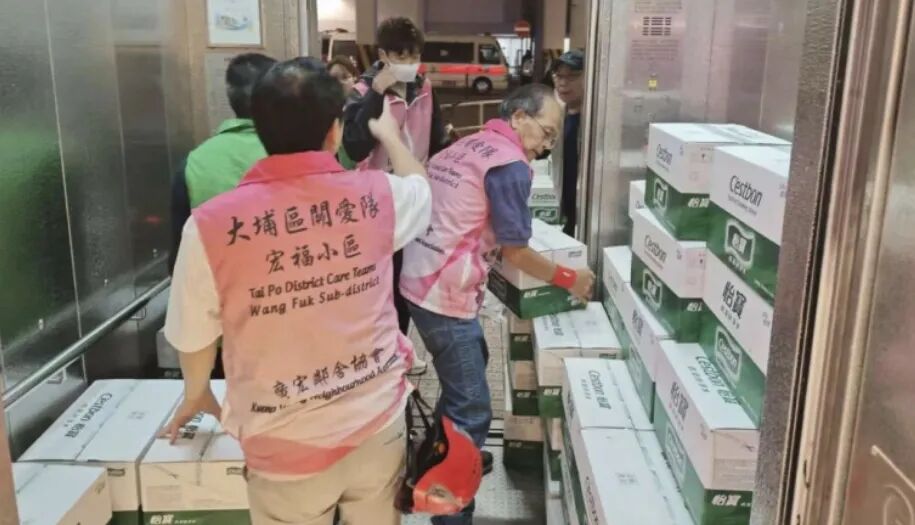
Core Viewpoint - Following the fire incident in Hong Kong's Tai Po district, multiple fast-moving consumer goods (FMCG) companies from mainland China quickly initiated donation efforts to support local rescue operations and assist affected residents, demonstrating corporate responsibility [1]. Group 1: Donations by Companies - Anta Group donated a total of HKD 30 million, which includes HKD 10 million in cash and HKD 20 million in cold-weather gear [1] - Bosideng contributed HKD 30 million [1] - Nongfu Spring donated HKD 10 million in cash and HKD 5 million in supplies [1] - Li Ning Group donated HKD 20 million in cash and equipment [1] - Xtep Group donated HKD 20 million in cash and equipment [1] - 361° Group donated HKD 15 million in cash and equipment [1] - Heytea donated HKD 5 million [1] - Cha Baidao donated HKD 5 million [1] - Mixue Ice City donated HKD 20 million [1] - Bawang Tea Princess donated HKD 500,000 to the Tung Wah Group of Hospitals in Hong Kong and provided 1,000 blankets [1] - Wens Foodstuff Group donated a total of HKD 40 million in cash and supplies [1] - Yili Group, in collaboration with the Red Cross Society of China, donated HKD 10 million [1] - Chow Tai Fook Group donated HKD 20 million and provided temporary accommodation and food support for affected residents [1] - Laopu Gold donated HKD 10 million [1] - Yum China, along with its brands, donated RMB 3 million [1] - Haitian Flavor Industry Co., Ltd. donated HKD 10 million [1]
紧急捐赠!多家企业捐款捐物 驰援中国香港大埔火灾救援


Zheng Quan Ri Bao· 2025-11-28 07:42
Group 1 - Multiple companies have pledged significant donations to support fire relief efforts in Hong Kong, demonstrating corporate social responsibility and community support [1][2][3][4][5][6] - China Resources Group has donated 20 million HKD for emergency rescue and medical assistance for victims [1] - Anta Group has committed a total of 30 million HKD, including 10 million HKD in cash and 20 million HKD in cold-weather gear for disaster relief [1] - Xtep Group has announced a donation of 20 million HKD in cash and equipment for disaster recovery efforts [1] - Bosideng has pledged 10 million HKD in cash and 20 million HKD in supplies for post-disaster support [2] - Nongfu Spring has donated 10 million HKD in cash and 5 million HKD in supplies for emergency relief and recovery [2] - Heytea has contributed 5 million HKD for resident support and rebuilding efforts [3] - Alibaba has initiated a donation of 20 million HKD and activated an emergency response mechanism to provide essential supplies [5] Group 2 - Companies are actively coordinating with local organizations to ensure timely delivery of aid and resources to affected residents [5][6] - Meituan's delivery platform Keeta has donated 5 million HKD for transitional housing and community recovery [5] - JD Group has mobilized resources to provide essential supplies and meals to affected individuals and rescue workers [5] - Ctrip Group has pledged 10 million HKD to assist affected residents and communities [5] - Various companies are continuing their support efforts, indicating a sustained commitment to aid the recovery process [6]
华润饮料、伊利、霸王茶姬、绿茶……多家食品饮料企业驰援香港
Guo Ji Jin Rong Bao· 2025-11-28 07:29
Core Viewpoint - The fire disaster in Hong Kong's Tai Po district has resulted in significant casualties and property damage, prompting a swift response from various companies to provide aid and support for recovery efforts [1]. Company Responses - China Resources Beverage activated its emergency response mechanism, delivering 10,080 bottles of water within two hours to ensure basic drinking water safety for affected residents [1]. - China Resources Vanguard coordinated with local welfare agencies to provide over 5,000 essential supplies, including milk and instant noodles, to support disaster relief efforts [1]. - China Resources Charity Fund donated HKD 20 million for emergency rescue, medical assistance, and emotional support for victims [1]. - Wens Foodstuff Group pledged HKD 40 million in cash and supplies to assist local residents with recovery and rebuilding efforts [1]. - Nongfu Spring delivered drinking water and beverages to shelters and donated HKD 10 million in cash and HKD 5 million in supplies for emergency relief and recovery [5]. - Haitian Flavoring & Food Company donated HKD 10 million for medical aid, emergency housing, and rebuilding efforts [7]. - Heytea contributed HKD 5 million to support disaster relief and subsequent recovery efforts for affected residents [11]. - Cha Baidao initiated a donation of HKD 5 million for medical assistance and rebuilding efforts for the affected population [13]. - Yum China, through its brands, donated RMB 3 million to aid Hong Kong's Tai Po fire relief efforts [15]. - Green Tea Group donated HKD 1 million for emergency assistance to affected residents and will continue to monitor the situation [18]. - Haidilao initiated an emergency response, sending over 1,200 boxes of instant food and donating RMB 4 million for medical aid and essential supplies [22].

百胜中国 CFO 揭秘,如何扩张,如何赚钱,如何提效
晚点LatePost· 2025-11-27 13:18
Core Viewpoint - Yum China believes that the current challenging environment in the restaurant industry presents a unique opportunity for expansion, aiming to increase its store count to over 30,000 in five years, with a focus on penetrating lower-tier cities [2][5]. Expansion Strategy - The company plans to open 4,500 new stores across various counties and cities, effectively doubling its current count of over 17,000 stores [2]. - Financial targets include maintaining same-store sales growth between flat and 2%, improving group profit margins, and increasing return on invested capital (ROIC) from 16.9% to 20% [2][15]. Store Models and Innovations - Yum China has developed a "three-in-one" store model, combining KFC, K Coffee, and KPRO (light meals), which has reportedly doubled weekly sales in some locations [3][8]. - The company is diversifying its product offerings to cater to different consumer preferences, including introducing Chinese-style toppings on Western dishes [3][5]. Market Penetration - The penetration rate of chain restaurants in China is around 20%, significantly lower than over 50% in the US, Europe, and Japan, indicating substantial growth potential in lower-tier cities [5]. - The company is focusing on a mix of direct ownership and franchising to expand its presence, particularly in lower-tier cities where market density is low [5][22]. Cost Management and Efficiency - The company aims to improve operational efficiency by optimizing supply chain management and reducing costs through direct sourcing from suppliers [18][20]. - Innovations in menu design and product offerings are intended to enhance customer experience while managing costs effectively [19][20]. Pricing Strategy - Yum China has adopted a strategy of lowering prices to increase customer traffic, with Pizza Hut's average transaction value dropping from over 100 RMB in 2019 to around 70 RMB in recent quarters [10]. - The company plans to maintain stable effective pricing while introducing value-driven products to attract consumers without sacrificing profitability [24]. Franchise Management - The company has shifted its franchise agreements from a 10-year to a 5-year renewal cycle to provide more flexibility and assurance for franchisees [22][23]. - Training and support for franchisees are emphasized to ensure compliance with food safety standards and operational efficiency [22]. Brand Differentiation - Yum China is focusing on enhancing its brand offerings by introducing new modules rather than entirely new brands, leveraging the established brand strength of KFC and Pizza Hut [28]. - The company is also exploring the coffee market with its K Coffee and LAVAZZA brands, aiming to differentiate through quality and unique product offerings [26][27].