大疆创新

Search documents
GoPro的“英雄末路”
2 1 Shi Ji Jing Ji Bao Dao· 2025-12-22 06:11
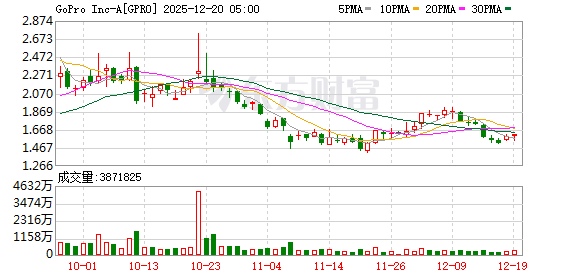
Core Insights - GoPro, once a dominant player in the action camera market, has seen its market value plummet by 98% from its peak, now valued at only $254 million, with its global market share dropping from over 75% to less than 20% [7][16] - The handheld smart imaging device market continues to grow rapidly, with a compound annual growth rate (CAGR) of 15.9%, projected to reach $79.93 billion by 2030 [9] - Competitors like Insta360 and DJI have emerged as strong players, effectively pushing GoPro out of the main competitive landscape [9][18] Company Background - GoPro was founded by Nick Woodman in 2004, initially targeting extreme sports enthusiasts with a compact, durable, and waterproof camera [4][11] - The company experienced explosive growth, with revenues soaring from $64 million in 2010 to $986 million in 2013, and reaching a market cap of $13 billion in 2014 [12][13] Market Dynamics - The rise of smartphones and the popularity of short videos and vlogs shifted consumer demand from professional athletes to everyday users, who now seek features like stabilization and ease of editing [14] - Competitors like Insta360 and DJI have capitalized on these trends, introducing innovative products that meet the evolving needs of consumers [14][18] Strategic Missteps - GoPro's failure to innovate and adapt to market changes, including a disastrous entry into the consumer drone market with the Karma drone, led to significant financial losses and damage to its reputation [15][16] - The company's focus on minor updates to existing products rather than groundbreaking innovations allowed competitors to gain a foothold and surpass GoPro in market share [15][16] Current Status - As of Q3 2025, GoPro has reported consecutive quarterly losses, with its stock price significantly detached from its historical highs, trading at $1.59 per share [18][20] - The company has lost its competitive edge, with its market share in the action camera segment dropping from 84% in 2022 to 18% in 2025 [16][20] Lessons Learned - The decline of GoPro serves as a cautionary tale about the importance of continuous innovation and market awareness, highlighting that even market leaders can fall from grace if they become complacent [20][21]


屈宏斌:中国制造为何这么牛?
Xin Lang Cai Jing· 2025-12-21 10:52
Core Viewpoint - The article emphasizes that scale economy is an often underestimated advantage of Chinese manufacturing, particularly through industrial clusters that enhance competitiveness in the global market [1][8]. Group 1: Economic Performance - In the first eleven months of the year, China's goods trade surplus exceeded $1 trillion, setting a new record in world trade history [1]. - The mold industry in Huangyan is projected to achieve an annual output value of 48 billion yuan in 2024, making it one of the densest and most responsive industrial clusters globally [1][8]. Group 2: Industrial Clusters - Huangyan, known as the "hometown of molds," hosts over 2,200 mold enterprises and employs more than 120,000 people [1][8]. - The mold industry in Huangyan is characterized by a "few kilometers radius" ecosystem that allows for complete processes within a 5-kilometer range, enhancing efficiency and collaboration [2][9]. Group 3: Competitive Advantages - Over 60% of Huangyan's mold enterprises serve leading global brands like Bosch and Philips, meeting stringent requirements for mold lifespan and precision [3][10]. - The ability of Huangyan's mold companies to engage deeply in product design phases has led to significant cost reductions and performance improvements for clients [3][10]. Group 4: Technological Innovation - The drone industry cluster in Shenzhen exemplifies "technology acceleration," with major companies and over 500 related enterprises operating within a 10-kilometer radius [4][11]. - The Shenzhen drone industry is expected to surpass 35 billion yuan in output value in 2024, capturing over 70% of the global consumer drone market [4][11]. Group 5: Collaborative Ecosystem - The collaborative ecosystem in both Huangyan and Shenzhen fosters rapid innovation and adaptation, allowing companies to quickly respond to market demands and technological trends [5][12]. - This interconnected network of enterprises enhances the resilience and competitiveness of Chinese manufacturing, making it difficult to replace [6][12].
资本重新盯上3D打印
创业邦· 2025-12-21 03:09
Core Insights - The 3D printing industry is experiencing a resurgence, transitioning from a niche technology to a mainstream application, driven by significant investments and technological advancements [5][7][18] - Major investments from companies like DJI and Snapmaker indicate a strong belief in the growth potential of the 3D printing sector [7][8] - The market is witnessing a shift towards consumer-grade 3D printing, with companies like Creality and Tiertime leading the charge [27][30] Investment Trends - DJI's strategic investment in Smart 3D Printing Technology marks a significant entry of a major player into the 3D printing space, highlighting the industry's growing importance [7][8] - Snapmaker's recent B-round financing, led by Hillhouse Capital and Meituan, further emphasizes the influx of capital into the sector [8][11] - The total investment in the domestic 3D printing industry reached approximately 8.4 billion yuan in 2025, marking a historical high and reversing the downward trend of 2024 [11][16] Market Dynamics - The number of financing events in the 3D printing sector surged to 100 in 2025, nearly tripling from previous years, indicating heightened investor interest [8][11] - The average financing amount also increased, with 2023 seeing a total of 7.3 billion yuan, primarily driven by significant capital raises from key players [11][16] - The industry is witnessing a clear segmentation, with companies focusing on consumer applications and those targeting industrial solutions [13][16] Technological Advancements - Recent breakthroughs in 3D printing technology, including cost reductions and improved production speeds, are facilitating broader adoption [18][21] - The integration of AI with 3D printing is simplifying the design process, allowing users to create models without extensive technical skills [20][21] - The cost of materials, such as PLA plastic, has significantly decreased, enhancing the affordability and accessibility of 3D printing [21][23] Industry Outlook - The global 3D printing market is projected to reach $29.8 billion by 2025, with China's market share expected to grow to 35% [24][30] - The consumer-grade segment is poised for rapid growth, with leading companies capturing significant market shares and achieving substantial revenue milestones [27][30] - Despite challenges such as market saturation and user retention, the long-term prospects for 3D printing remain positive, driven by the potential for personalized manufacturing and digital consumption [30][31]

大疆的“印钞机”,被手机厂商盯上了
虎嗅APP· 2025-12-21 03:05
Core Viewpoint - DJI stands out in the consumer electronics market by maintaining high profit margins while achieving significant market share in niche categories like drones and action cameras, unlike most competitors who are engaged in price wars and low margins [5][9]. Group 1: Market Position and Performance - DJI has consistently held over 70% market share in the consumer drone sector for the past decade, and it is projected to capture 66% of the action camera market by Q3 2025, a significant shift from GoPro's 84% in 2022 [5][9]. - The newly launched Osmo360 panoramic camera achieved a 49% market share in China and 43% globally within three months, significantly impacting the previous market leader [8]. - The Pocket series, particularly Pocket 3, is expected to sell over 5 million units in 2024, generating approximately 175 billion yuan in revenue, which is 3.5 times the total revenue of the previous market leader [19]. Group 2: Competitive Landscape - Major smartphone manufacturers like Vivo and OPPO are entering the handheld imaging market, with significant resources allocated to develop competing products, indicating a strategic shift in focus towards this segment [12][13]. - Xiaomi is also planning to launch a competitive product, aiming for a million units in sales, leveraging partnerships to enhance its market position [14]. Group 3: Unique Business Model - The success of Pocket 3 represents a departure from the typical low-margin, high-volume model prevalent in consumer electronics, achieving high pricing power and low competition [18]. - Pocket 3 has maintained a strong resale value, with second-hand prices remaining close to the original price, contrasting sharply with the typical depreciation seen in smartphones [19]. Group 4: Core Competencies and Barriers - DJI's competitive advantage lies in its advanced mechanical stabilization technology, which has been miniaturized for consumer use, making it difficult for competitors to replicate [24]. - The company has integrated its supply chain effectively, with most components being self-developed or customized, creating a barrier for new entrants [24]. Group 5: Strategic Adjustments - DJI has recently reduced the price of Pocket 3 to 2599 yuan, targeting younger consumers and Vloggers, while maintaining a profit margin that competitors find hard to match [27]. - The company is also expanding its distribution channels to reach a broader audience, indicating a shift towards making its products more accessible [27].

中国十大AI巨头,阿里领衔,BAT之外还有谁?
Sou Hu Cai Jing· 2025-12-20 23:38
Core Insights - China has emerged as the most innovative market globally, particularly with the launch of the Sci-Tech Innovation Board, which has unleashed the potential of innovation-driven companies in AI and IoT [1][19] - Major technology giants are shifting their strategic focus towards AI and IoT, leading to widespread applications of AI across various sectors such as urban management, security, finance, manufacturing, and healthcare [1][19] Company Summaries Alibaba - Alibaba's market capitalization is $449.2 billion (approximately ¥3.17 trillion), making it the largest listed company in Asia [2][20] - The company has transformed from a pure e-commerce giant to a technology innovation enterprise, leading in IoT, cloud services, and AI applications [2][20] - At the Hangzhou Cloud Conference, Alibaba announced that its AI is called over 1 trillion times daily, serving 1 billion people globally, processing 1 billion images, 1.2 million hours of video, 550,000 hours of voice, and 500 billion natural language sentences [2][20] Tencent - Tencent's market capitalization is HK$3.047 trillion (approximately ¥2.75 trillion) [5][23] - The company has initiated a strategic upgrade focusing on cloud and smart industries, aiming to assist various sectors in digital transformation [5][23] - Tencent AI has been applied in over a hundred industries, including education, retail, industrial, government finance, and healthcare, enhancing efficiency and accuracy in areas like smart healthcare [7][25] Huawei - Huawei's estimated market value is ¥1.78 trillion, supported by significant R&D investments totaling nearly ¥500 billion over the past decade [8][26] - The company envisions a future of interconnected and intelligent devices, leveraging 5G and AI technologies to create a vast ecosystem [8][26] - Huawei plans to invest $1.5 billion over the next five years to develop its industrial ecosystem and continue advancing its AI capabilities [8][26] Ant Group - Ant Group, part of Alibaba, is valued at $160 billion (approximately ¥1.13 trillion), making it the largest unicorn globally [9][27] - The company integrates AI into financial services, enhancing accessibility and efficiency in financial technology [9][27] - Ant Group's intelligent platforms support extensive data processing capabilities, significantly improving risk assessment and credit rating applications [9][27] ByteDance - ByteDance is valued at $75 billion (approximately ¥530 billion), making it one of the most valuable unicorns after Ant Group [10][28] - The company has successfully utilized AI algorithms to drive its information flow products, establishing a strong position against major competitors [10][28] Industrial Fulian (Foxconn) - Industrial Fulian has a market capitalization of ¥321.3 billion and is transitioning towards smart manufacturing and industrial internet [11][29] - The company has implemented over 80,000 robots, significantly reducing labor costs and increasing production efficiency [11][29] Hikvision - Hikvision's market capitalization is ¥297.4 billion, leading the smart security industry with substantial revenue growth from ¥3.6 billion in 2010 to ¥49.8 billion in 2018 [12][30] - The company has integrated AI into its products, enhancing capabilities in data collection and analysis [12][30] - Hikvision's innovative business segments, including smart home and robotics, have shown rapid growth, contributing to its long-term development [13][31] Baidu - Baidu's market capitalization is $36.1 billion (approximately ¥255.3 billion) and is recognized as an early adopter of AI technology among the major internet companies [14][32] - The company has developed a comprehensive deep learning platform, serving over 1.5 million developers and facilitating AI applications across various industries [14][32] Xiaomi - Xiaomi's market capitalization is HK$216.3 billion (approximately ¥195.1 billion), recognized as one of the fastest-growing tech companies globally [15][33] - The company has launched a dual strategy focusing on smartphones and AIoT, with significant growth in its IoT platform, connecting over 196 million devices [15][33] DJI - DJI is valued at $24 billion (approximately ¥169.7 billion) and is a leading player in consumer technology, particularly in the drone industry [16][34] - The company has expanded its applications of AI in various sectors, including agriculture and construction, enhancing operational efficiency [16][34] Industry Trends - The AI sector is experiencing unprecedented growth, with significant investments from technology giants, leading to rapid advancements and widespread adoption [17][35] - China's vast user base, data resources, and application scenarios are propelling the development of AI, positioning Chinese tech companies as leaders in the global market [18][36]



115亿,“大疆教父”又去IPO了
创业家· 2025-12-19 10:52
Core Viewpoint - The successful IPO of Xidi Zhijia marks a significant milestone for the company and its founder, Li Zexiang, highlighting the growing market for autonomous mining vehicles in China and the potential for further expansion in the smart mining sector [4][5][14]. Company Overview - Xidi Zhijia, established in 2017, focuses on autonomous driving technology for commercial vehicles in closed environments, particularly in mining [4][10]. - The company has delivered 414 autonomous mining trucks and holds a 37.7% market share in China's autonomous mining truck solutions market as of June 30, 2025 [4][11]. Financial Performance - Xidi Zhijia's revenue surged from 31.1 million yuan in 2022 to 410 million yuan in 2024, reflecting a compound annual growth rate of 263.1% [12]. - The gross margin improved from 20.2% in 2023 to 24.7% in 2024, indicating a steady enhancement in profitability [12]. Market Potential - The smart mining market in China is projected to exceed 2.3 trillion yuan by 2030, with the autonomous mining truck segment expected to grow from 1.9 billion yuan in 2024 to 39.6 billion yuan by 2030 [14]. - Xidi Zhijia's early market entry and validated business model position it favorably to capitalize on this growth [14]. Investment and Financing - The company completed eight rounds of financing, attracting nearly 1.5 billion yuan from prominent investors, including Sequoia China and Lenovo Holdings [16][22]. - Li Zexiang's reputation as a leading figure in the tech investment space has significantly contributed to the company's ability to secure funding [16][22]. Technological Development - Xidi Zhijia's technology integrates self-developed algorithms with commercial hardware, enabling remote operation and scheduling of mining trucks [11][12]. - The company achieved a significant milestone in 2022 by launching the world's first fully electric autonomous mining truck project [11]. Ecosystem and Support - The company benefits from a robust ecosystem in Changsha, which has developed a comprehensive industrial chain for artificial intelligence and sensors, supporting innovation and talent development [25][26]. - Local government initiatives have established a capital ecosystem aimed at fostering new technologies, further enhancing the operational environment for companies like Xidi Zhijia [27][28].

900亿巨头英雄末路,市值蒸发98%
2 1 Shi Ji Jing Ji Bao Dao· 2025-12-19 10:41
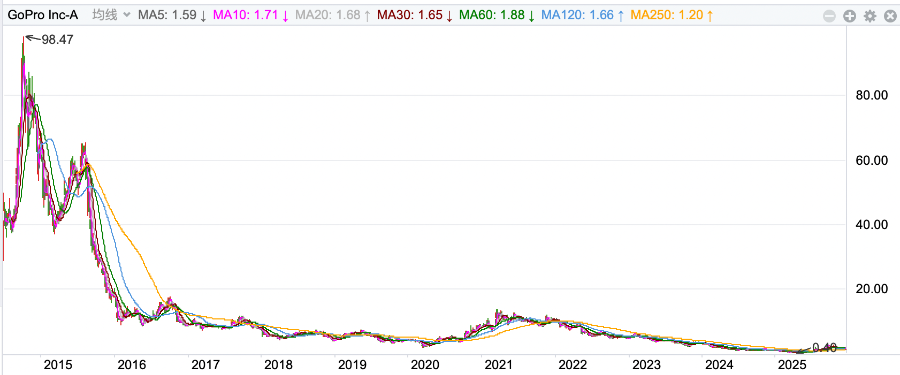
Core Insights - GoPro, once a leader in the action camera market, has seen its market value plummet by 98% from its peak, now valued at only $254 million [4][15] - The company has lost significant market share, dropping from over 75% to less than 20% in the action camera segment, while competitors like DJI and Insta360 are thriving [4][14] Company Overview - GoPro was founded by Nick Woodman in 2004, initially targeting extreme sports enthusiasts with a compact, durable camera that captured first-person perspectives [9][10] - The brand's slogan "Be a Hero" became synonymous with adventure and extreme sports, contributing to its early success [3][11] Market Dynamics - The global handheld imaging device market is growing rapidly, with a compound annual growth rate (CAGR) of 15.9%, projected to reach 79.93 billion yuan by 2030 [6] - Competitors DJI and Insta360 have emerged as strong players, capturing market share and innovating in ways that GoPro has struggled to match [6][15] Competitive Landscape - GoPro's market dominance was challenged by the rise of smartphones and the demand for more versatile imaging solutions, leading to a shift in consumer preferences [12][16] - DJI and Insta360 have successfully introduced innovative products that cater to the evolving needs of consumers, such as 360-degree cameras and advanced stabilization technology [12][14] Strategic Missteps - GoPro's failure to innovate and adapt to changing market demands has led to a decline in its competitive position, as it focused on less relevant areas like media and consumer drones [13][16] - The company's slow product iteration and reliance on its established Hero series have resulted in a loss of market relevance [13][14] Financial Performance - GoPro's revenue skyrocketed from $64 million in 2010 to $986 million in 2013, but has since declined significantly, with recent reports indicating ongoing losses [10][15] - As of December 19, GoPro's stock price was $1.59 per share, a stark contrast to its historical high of $93.85, reflecting its diminished market presence [15][18] Lessons Learned - The decline of GoPro serves as a cautionary tale about the importance of continuous innovation and market awareness in the tech industry [18] - The rise of DJI and Insta360 highlights the need for companies to remain vigilant and adaptable to avoid becoming obsolete [18]
900亿巨头英雄末路,市值蒸发98%
21世纪经济报道· 2025-12-19 10:36
Core Viewpoint - GoPro, once a dominant player in the action camera market, has seen its market value plummet by 98% from its peak, losing its competitive edge to emerging rivals in the handheld imaging device market [1][3][12]. Group 1: Company Background and Rise - GoPro was founded in 2004 by Nick Woodman, who created a camera solution for surfers, leading to the establishment of a new market for action cameras [6]. - The company capitalized on the gap in the market for compact, durable, and waterproof cameras, particularly appealing to extreme sports enthusiasts [6][7]. - GoPro's revenue skyrocketed from $64 million in 2010 to $986 million in 2013, with a market share exceeding 75% by the time of its IPO in 2014 [7][8]. Group 2: Market Dynamics and Competition - The global handheld imaging device market is projected to grow at a CAGR of 15.9%, reaching a size of 79.93 billion yuan by 2030, while GoPro's market share has drastically declined [3][12]. - Competitors like Insta360 and DJI have emerged, focusing on consumer needs for enhanced image quality and ease of use, effectively capturing market share from GoPro [10][11]. Group 3: Strategic Missteps and Decline - GoPro's failure to innovate and adapt to changing consumer demands, particularly the shift from professional athletes to everyday users, has led to its decline [15]. - The company faced significant setbacks with its drone product, Karma, which was recalled shortly after launch due to design flaws, damaging its reputation and diverting resources from core product innovation [11]. - By 2025, GoPro's market share in the action camera segment fell from 84% in 2022 to 18%, while its share in the consumer-grade panoramic camera market dropped from 21.5% in 2021 to 9.2% in 2023 [11][12]. Group 4: Lessons and Future Outlook - The decline of GoPro serves as a cautionary tale about the importance of continuous innovation and market awareness, as even established leaders can be overtaken by more agile competitors [15][16]. - Companies like DJI and Insta360 are now leading the market, emphasizing the need for a robust ecosystem that integrates hardware, software, and community engagement [15][16].

“禁了大疆,美国无人机压根救不了火”
Guan Cha Zhe Wang· 2025-12-18 15:58
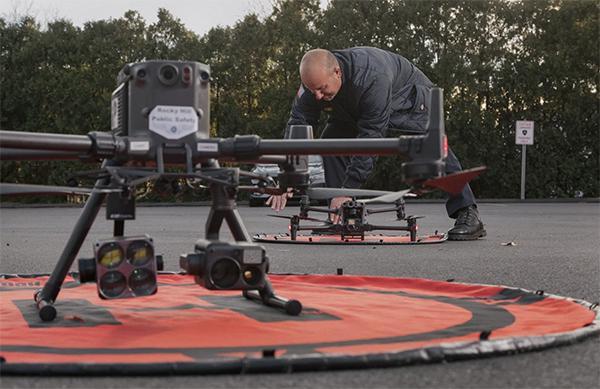
而站在这些议员对面的是一群美国一线执法工作人员,他们在日常工作中非常依赖"质量可靠"的大疆设 备来扑灭火灾、处理交通事故…… 美国康涅狄格州洛基希尔的消防局副局长马克·詹蒂莱(Mark Gentile)直言,使用大疆无人机让他可以 站在0.25英里(约合400米)外看清目标,而美国制造的无人机"在实际消防工作中,对我们来说毫无用 处"。 北达科他州伯利县警长办公室拥有5架大疆无人机,该团队负责人吉姆·赫尔姆(Jim Hulm)称赞 说,"大疆的设备对我们帮助很大,质量非常可靠"。 【文/观察者网 王一】距离美国国会此前对中国无人机制造商大疆创新设定的12月23日安全审查最后期 限只剩下几天,一些美国议员又跳出来炒作所谓的"安全威胁",要求特朗普政府加紧审查并封禁大疆无 人机。 一名美国消防员正架设大疆无人机。 彭博社 "大疆的设备对我们帮助很大,质量非常可靠" 美国彭博社18日报道称,美国特朗普政府面临一项关键期限——他们必须在23日前决定大疆是否构成国 家安全威胁,而这一决定可能导致美国各地警察和消防部门正在使用的数千架无人机被迫停飞。 美国国会去年通过了一项法案,要求美国政府必须在今年12月底前完成对大疆 ...
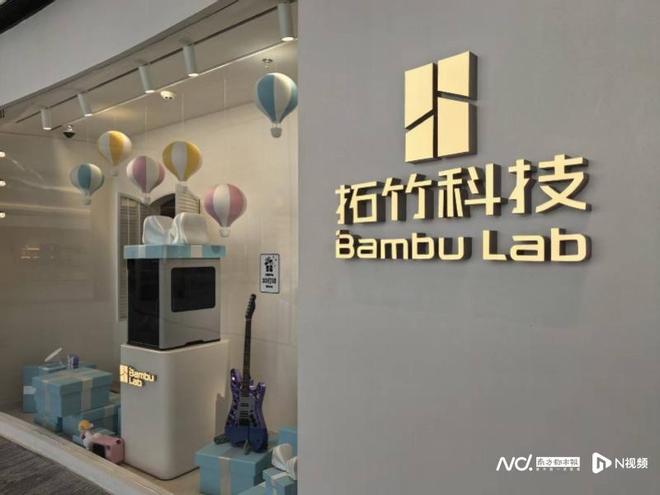
占全球九成市场份额!深圳3D打印天团“暗战”升级
Nan Fang Du Shi Bao· 2025-12-17 12:52
手机软件一键操作,小至鞋子、潮玩手办,大至跑车、房屋装修器材,生活里能想到的统统"打印"出来 ——消费级3D打印正在以更低门槛、更强体验进入大众视野。 今年9月30日,拓竹科技在深圳湾万象城开出全球首家直营旗舰店:超大3D打印沙盘、由28台打印机协 作"组装"的巨型培养皿、"胶佬空间"和儿童书房、CyberBrick火车环店穿行,现场用可见可玩的方式 把"3D打印生活"具体化。 拓竹科技全球首家直营旗舰店。 两个月后,线下竞赛再被拉到新高度。12月,深圳宝安地标"湾区之眼"迎来创想三维3D打印全球超级 旗舰店,体量超过600㎡,主打沉浸式全链路体验与"从设备到成品"的完整生态展示。业内认为,消费 级3D打印的线下体验时代正在加速到来。 券商研报普遍认为消费级市场处于快速增长期:一方面主流机型价格下探至消费者可承受区间,另一方 面"模型社区繁荣+耗材成本下降"让用户更容易把创意转化为实物;申万宏源研报预计到2028年全球市 场规模将达到71亿美元,年复合增长率19.2%。 创想三维3D打印全球超级旗舰店。 就在门店扩张、用户教育加速的同时,赛道暗战同步升级:11月,大疆投资智能派(Elegoo)的消息在 市场发 ...