郑州银行

Search documents
险资持续“扫货”银行股 后续增持空间依然看好
Zhong Guo Jing Ying Bao· 2026-01-10 09:35
Core Viewpoint - Recently, Ping An Life has announced increased holdings in Agricultural Bank and China Merchants Bank H-shares, reflecting a broader trend among insurance companies to invest in bank stocks, particularly H-shares, due to their attractive dividend yields and valuation discounts [1][2]. Group 1: Investment Activities - Ping An Life announced that it has increased its stake in China Merchants Bank H-shares to 20% as of December 31, 2025, with a book value of 43.956 billion yuan, representing 0.78% of total assets [1]. - Similarly, Ping An Life has increased its stake in Agricultural Bank H-shares to 20% as of December 30, 2025, with a book value of 32.428 billion yuan, accounting for 0.58% of total assets [1]. - Multiple life insurance companies, including Ping An Life, have been actively acquiring shares in various banks, particularly H-share listed banks, throughout 2025 [1]. Group 2: Reasons for Increased Investment - The increase in insurance capital allocation to bank stocks, especially H-shares, is driven by favorable policies encouraging long-term capital market entry and the stable nature of bank stocks, which offer high dividends [2]. - The current low interest rate environment and "asset shortage" have highlighted the advantages of bank stocks as high-dividend, low-volatility investments, making them attractive to insurance funds [2]. - H-shares of banks are generally priced at a 15%-30% discount compared to their A-share counterparts, enhancing their appeal due to higher post-tax dividend yields [2][3]. Group 3: Impact of Increased Holdings - The rising shareholding of insurance funds in banks is expected to influence corporate governance and business strategies, promoting more sustainable dividend policies and enhancing governance structures [4]. - Insurance funds are likely to push for more rigid and tiered dividend policies, potentially increasing the average cash dividend payout ratio by 3-5 percentage points [4][5]. - The collaboration between insurance companies and banks is anticipated to deepen, leading to optimized financial services and improved operational efficiencies [5]. Group 4: Future Outlook - Analysts predict that there remains significant room for insurance capital to increase its holdings in banks, driven by ongoing regulatory encouragement and the need for asset allocation [5]. - The focus of insurance capital is expected to shift towards banks with clear dividend returns and strong asset quality, with H-shares likely remaining a primary target due to their cost-effectiveness [5].
筑牢风控合规防线 银行两大首席官密集迎新
Bei Jing Shang Bao· 2026-01-10 05:34
Core Viewpoint - The banking industry is undergoing a restructuring of risk prevention and compliance management systems, driven by stricter financial regulations and increasing complexity of industry risks, leading to an accelerated appointment of Chief Compliance Officers (CCOs) and Chief Risk Officers (CROs) [1][2] Group 1: Appointment Trends - In recent months, nearly 10 banks have intensified the hiring of CCOs and CROs, with over 20 banks and branches receiving regulatory approval for relevant positions since the beginning of 2025 [2] - The appointment of these two key positions reflects the dual drivers of industry risk prevention needs and regulatory guidance, as banks face increasing pressure from non-performing asset management and new risks associated with financial technology [2][3] Group 2: Role Differentiation - The roles of CCOs and CROs have distinct responsibilities; CCOs focus on ensuring compliance with laws and regulations, while CROs manage various operational risks such as credit and market risks [4][5] - The establishment of these roles aims to address the need for specialized governance within banks, with CCOs ensuring adherence to external rules and CROs managing uncertainties in operations [4][5] Group 3: Governance Models - Two governance models are emerging: "one person holding both positions" and "separate positions," each with its advantages and disadvantages [5][6] - The "one person" model emphasizes decision-making efficiency and is suitable for smaller banks, while the "separate" model allows for specialized oversight and is better for larger, more complex banks [6] Group 4: Talent Requirements - The effective functioning of CCOs and CROs relies on the availability of composite talent, characterized by frontline business experience, cross-regional perspectives, and professional qualifications [7][8] - The current supply of such composite risk and compliance professionals is limited, necessitating banks to develop internal training and rotation mechanisms to cultivate talent [8]
瑞茂通供应链管理股份有限公司关于公司及子公司新增诉讼、仲裁及进展情况的公告
Shang Hai Zheng Quan Bao· 2026-01-09 19:22
Core Viewpoint - The announcement details the ongoing litigation and arbitration involving Ruimaotong Supply Chain Management Co., Ltd. and its subsidiaries, highlighting the potential financial implications and the uncertain outcomes of these legal proceedings [2][4]. Group 1: Litigation and Arbitration Details - The company is currently a defendant in a lawsuit related to a financial loan contract dispute with Zhengzhou Bank Jinshui Branch, with the amount in dispute adjusted from RMB 51,791.2 million to RMB 34,371.1 million due to a guarantee deposit of RMB 17,420.1 million being deducted [3]. - The total amount involved in undisclosed litigation and arbitration matters over the past 12 months is approximately RMB 114,912.7323 million, which accounts for 14.57% of the company's most recent audited net assets [2]. - The cumulative amount of ongoing litigation and arbitration matters in the last 12 months is approximately RMB 320,062.1455 million, representing 40.57% of the company's most recent audited net assets [3]. Group 2: Financial Impact and Uncertainty - The impact of the ongoing litigation and arbitration on the company's current and future profits remains uncertain, pending court rulings or execution results [2][4]. - The company acknowledges the possibility of further legal actions, asset freezes, and obligations arising from guarantees provided, and commits to timely information disclosure as per regulatory requirements [4].

WEMONEY研究室·数字金融周报|光大银行“乐惠金”现幽灵债务;国有大行黄金积存业务再提门槛
Sou Hu Cai Jing· 2026-01-09 11:07
Group 1: Banking Sector Developments - Major state-owned banks are raising the threshold for gold accumulation business, requiring personal clients to have a risk tolerance level of C3 or above to purchase gold starting January 12, 2026 [1] - A wave of deposit maturities is expected, with an estimated 50 trillion yuan in one-year and above fixed deposits maturing this year, primarily concentrated in two to three-year deposits [2] - In 2025, city commercial banks faced significant penalties, totaling 875 million yuan, with the Shenzhen Rural Commercial Bank receiving the largest fine of 12.84 million yuan for multiple violations [3] Group 2: Investment Activities - Several financial asset investment companies (AIC) under joint-stock banks have begun investing in emerging industries, with notable investments in sectors like semiconductors and clean energy [4] - The establishment of Yunnan Rural Commercial Bank is underway, aiming to become the first bank in the province with over 1 trillion yuan in deposits, consolidating various rural credit institutions [6] Group 3: Insurance Sector Changes - The insurance industry is experiencing a wave of personnel changes, with 81 instances of leadership transitions reported in 2025, indicating a trend towards internal promotions and a preference for specialized talent [6] - Ping An Life has made significant stock purchases in Agricultural Bank and China Merchants Bank, triggering regulatory notifications due to increased shareholding [7] Group 4: Consumer Finance Updates - China Bank Consumer Finance has undergone a major equity change, with its bad loan sales reaching 13.84 billion yuan, and the non-performing loan rate increasing from 2.80% in 2022 to 3.56% in 2024 [9] - Beijing Financial Regulatory Bureau has approved an increase in registered capital for North Bank Consumer Finance by 150 million yuan, raising its total registered capital to 1 billion yuan [10] Group 5: Financial Technology Developments - The People's Bank of China has revoked the payment license of China Steel Yintong, marking the 108th payment license cancellation, indicating ongoing regulatory scrutiny in the payment sector [11] - Guangzhou Heli Bao Payment Technology has been fined over 74 million yuan for multiple regulatory violations, highlighting compliance challenges in the payment industry [12]

去年险资举牌增至41次
Zheng Quan Ri Bao· 2026-01-08 23:37
Core Viewpoint - Ping An Life Insurance has increased its stake in both Agricultural Bank of China and China Merchants Bank, triggering regulatory thresholds for shareholding, reflecting a recovery in market confidence and the impact of supportive measures [1][2]. Group 1: Investment Activities - In 2025, Ping An Life increased its holdings in Agricultural Bank of China by approximately 95.58 million shares, reaching a total of about 6.181 billion shares, representing 20.10% of the bank's H-shares [2]. - On December 31, 2025, Ping An Life also increased its stake in China Merchants Bank by about 14.01 million shares, totaling around 922 million shares, which is 20.07% of the bank's H-shares [2]. - The total number of shareholding increases by insurance funds in 2025 reached 41 times, with a significant focus on bank stocks, indicating a trend towards increased equity investment by insurance capital [3]. Group 2: Market Trends and Analysis - The trend of insurance capital increasing its stake in bank stocks is attributed to the low interest rates in the bond market and the need for reallocation of assets, leading to a preference for high-dividend, low-volatility bank stocks [2][3]. - In 2025, 34 out of 41 shareholding increases by insurance funds were in H-shares, which are generally perceived to be undervalued compared to A-shares, providing higher dividend yields and potential returns [3]. - Experts suggest that the behavior of insurance capital in increasing stakes is likely to continue and become more normalized, focusing on high-quality companies with core competitiveness and reasonable valuations [4].



平安人寿连发两份举牌公告 去年险资举牌增至41次
Zheng Quan Ri Bao· 2026-01-08 16:52
Core Viewpoint - Ping An Life Insurance has increased its stake in both Agricultural Bank of China and China Merchants Bank, triggering regulatory thresholds for shareholding disclosure, reflecting a strategic focus on bank stocks amid a recovering market sentiment [1][3][5] Group 1: Investment Activities - Ping An Life announced that it will hold 20.10% of Agricultural Bank of China H-shares and 20.07% of China Merchants Bank H-shares by the end of 2025, marking its fourth stake increase in both banks [1][3] - In 2025, the total number of stake increases by insurance funds reached 41, indicating a growing trend in equity investments [2][5] Group 2: Market Trends - The preference for bank stocks is attributed to their high dividend yields and stable performance, making them attractive to insurance funds seeking to enhance equity allocations [4][5] - The trend of insurance funds increasing their equity investments is driven by declining bond yields and the need for better returns, with H-shares being particularly appealing due to their valuation discounts compared to A-shares [5][6] Group 3: Future Outlook - The behavior of insurance funds in increasing stakes is expected to continue and become more normalized, with a focus on acquiring shares in companies that align with national strategies and possess core competitiveness [6] - High dividend strategies are anticipated to remain mainstream, while the diversity of targeted industries may increase, although the core principles of long-termism and value investing will persist [6]
银行集体补位首席风险官
Bei Jing Shang Bao· 2026-01-08 15:45
岁末年初,银行密集官宣首席合规官及首席风险官的聘任进展:张家港农商行近日宣布聘任吴开为首席 合规官,在2025年的最后一个月里,郑州银行、江阴农商行、平安银行、华夏银行、兴业银行等近10家 上市银行集中加码首席合规官或首席风险官配置。拉长时间维度看,自2025年初以来,已有超20家银行 及分支机构的相关任职资格获得监管部门核准。 两大首席官岗位持续扩容,背后是行业风险防控的现实需求与监管导向的双重驱动。近年来,银行业不 良资产处置压力攀升,贷后管理难度加大,叠加金融科技快速发展背景下反洗钱、数据合规等新型风险 挑战加剧,对银行风险防控与合规体系的专业性、前瞻性提出更高要求。在此背景下,2024年12月,国 家金融监督管理总局发布《金融机构合规管理办法》,明确金融机构可根据自身经营情况单独设立首席 合规官,也可由高级管理人员、省级分支机构或者一级分支机构的高级管理人员兼任。政策落地后,多 家机构迅速响应,由董事长、行长亲自"挂帅"统筹的态势也愈发明显。 而首席风险官制度探索则更早一步,早在2006年、2007年,工商银行、建设银行、交通银行等大行就已 启动首席风险官管理机制。2016年原银监会发布的《银行业金融 ...


筑牢风控合规防线,银行两大首席官密集迎新
Bei Jing Shang Bao· 2026-01-08 11:05
而首席风险官制度探索则更早一步,早在2006年、2007年,工商银行、建设银行、交通银行等大行就已启 动首席风险官管理机制。2016年原银监会发布的《银行业金融机构全面风险管理指引》提及,规模较大的 或业务复杂的银行业金融机构应当设立风险总监,即首席风险官。此后,首席风险官的设立进入快车道, 尤其是在2024年之后,增设首席风险官的银行阵营不断扩大,包括光大银行、兴业银行等在内的银行均完 成了这一岗位的人员聘任。 缘何在首席风险官后又出现了首席合规官?苏商银行特约研究员武泽伟表示,"事实上,这两个岗位的差 别很大,从核心职责来说,既有重合也有差异、各有侧重,同时设立主要是基于内部治理的专业化分工需 要"。他进一步指出,首席风险官主要负责全面管理银行在经营中面临的各类风险,其工作侧重于对信用 风险、市场风险、操作风险等具体业务风险进行识别、评估、计量、监测和控制,旨在保障银行资产安全 与业务稳定运行;而首席合规官的职责则更加聚焦于确保银行的经营管理行为和员工履职行为符合所有适 用的法律、行政法规及监管规范,其核心目标是防范因违反规则而导致的合规风险。简言之,风险官主要 应对经营中的"不确定性"可能带来的损失,而 ...

城商行板块1月8日跌0.89%,重庆银行领跌,主力资金净流入673.97万元
Zheng Xing Xing Ye Ri Bao· 2026-01-08 08:56
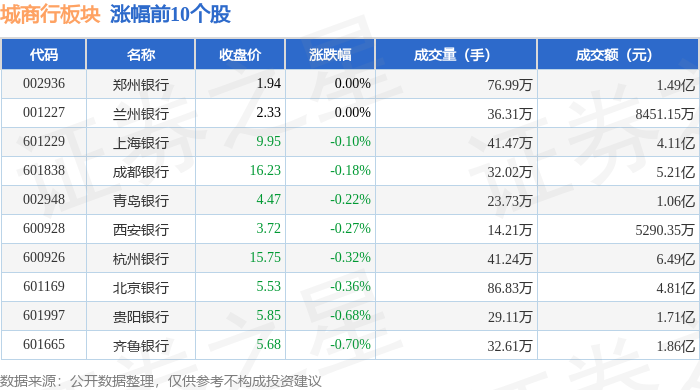
Market Overview - The city commercial bank sector experienced a decline of 0.89% on January 8, with Chongqing Bank leading the drop [1] - The Shanghai Composite Index closed at 4082.98, down 0.07%, while the Shenzhen Component Index closed at 13959.48, down 0.51% [1] Individual Stock Performance - Zhengzhou Bank closed at 1.94 with no change, while Lanzhou Bank also remained unchanged at 2.33 [1] - Shanghai Bank closed at 9.95, down 0.10%, and Chengdu Bank closed at 16.23, down 0.18% [1] - Chongqing Bank saw a significant decline of 2.70%, closing at 10.45, with a trading volume of 99,000 shares [2] Trading Volume and Turnover - The trading volume for Zhengzhou Bank was 769,900 shares with a turnover of 149 million yuan, while Lanzhou Bank had a trading volume of 363,100 shares and a turnover of 84.51 million yuan [1] - The highest turnover was recorded for Nanjing Bank at 1.342 billion yuan with a trading volume of 1,217,000 shares [2] Capital Flow Analysis - The city commercial bank sector saw a net inflow of 6.7397 million yuan from institutional investors, while retail investors experienced a net outflow of 70.5351 million yuan [2] - Chengdu Bank had a net inflow of 87.0825 million yuan from institutional investors, but a net outflow of 46.0321 million yuan from retail investors [3] Summary of Capital Flows - Institutional investors showed a positive net flow for several banks, including Hangzhou Bank with 77.8301 million yuan and Qingdao Bank with 8.4480 million yuan [3] - Conversely, Chongqing Bank had a negative net flow of 535,600 yuan from institutional investors, indicating a lack of confidence [3]
中小银行改革化险提速,开年吉林、江西、海南等多地传新进展
Xin Lang Cai Jing· 2026-01-07 13:34
Core Insights - Multiple provinces in China are advancing reforms in rural credit cooperatives and village banks, with significant consolidations and mergers taking place [2][11][12] Group 1: Recent Developments - Yunnan plans to integrate 123 rural commercial banks and credit cooperatives to form a provincial-level rural commercial bank [2][11] - Jilin Rural Commercial Bank has been approved to absorb and merge 56 institutions, including 8 rural commercial banks and 48 village banks [3][13] - Hainan Rural Commercial Bank has received approval to absorb Hainan Baoting Rongxing Village Bank [4][14] - Zhengzhou Bank and Zhongyuan Bank have been approved to acquire 5 village banks [4][14] - Jiangxi Rural Commercial Union Bank has been approved to acquire stakes in multiple rural commercial banks and to take over shares from other banks due to debt settlements [4][14] Group 2: Reform Progress - The reforms in Jilin, Hainan, and Jiangxi have progressed significantly, with previous steps already completed [5][15] - Jilin Rural Commercial Bank was established in August 2025 through the merger of 13 institutions and aims to unify the province's rural banking under one legal entity [6][15] - Hainan Rural Commercial Bank, established in May 2024, has also been actively merging with local banks since its inception [6][16] - Jiangxi Rural Commercial Bank, which opened in April 2025, has been deepening its equity reforms and has been approved for significant capital injections [6][16] Group 3: Reform Strategies - The gradual reform approach taken by provinces like Jilin, Hainan, and Jiangxi aims to maintain financial stability while consolidating rural financial institutions [7][18] - The strategy of phased mergers allows for better management of risks and challenges associated with integrating multiple institutions [7][18] - The ongoing reforms have seen 13 provinces complete their rural credit cooperative reforms, with various models adopted, including unified legal entities and joint banking systems [8][18]