
Blue Origin

Search documents
Billionaires are exploiting space—here's how we do better | Karlie Noon | TEDxCanberra
TEDx Talks· 2025-11-30 18:00
Core Argument - The modern space industry risks repeating colonial patterns of exploitation in space, driven by a desire for being first, occupying the most space, and using more resources than one planet can provide [3][4][5] - Indigenous cultures offer valuable perspectives on humanity's relationship with the cosmos, emphasizing respect, sustainability, and interconnectedness, contrasting with the exploitative approach of the modern space industry [7][10][11] - Current conservation efforts, including designated zones, are insufficient to protect species or habitats, highlighting the need for holistic and sustainable approaches [12][13][14] Proposed Solution - The industry should embrace indigenous-led astroenvironmentalism, drawing on the 65,000 years of experience of Aboriginal and Toouristra Islander communities in caring for country [15][16] - A shift in perspective is needed, viewing space not as a frontier to be conquered but as a shared heritage and a part of our home, recognizing the interconnectedness of land, sea, and sky [17][11] Historical Context - The speech by the former US President Donald Trump used terms reminiscent of European colonial conquest, paralleling the concept of terranullius used to justify the seizure of indigenous lands in Australia [1][2][3] - The term "outer space" is in direct opposition to indigenous communities' understanding of their relationship with the sky, where land, sea, and sky are all connected [11]


“明星回春”传言背后的真实
3 6 Ke· 2025-11-25 04:35
Core Viewpoint - The discussion around "celebrity rejuvenation" highlights the ongoing advancements in the global biomedical field, which are bringing humanity closer to extending lifespan through various innovative therapies and technologies [1][2]. Group 1: Advances in Biomedical Technology - Continuous breakthroughs in life sciences are making the ancient human desire for longevity increasingly attainable, pending large-scale commercialization and official endorsement [1]. - Technologies such as stem cells, mitochondrial transplants, and induced pluripotent stem cells (iPSC) are at the forefront of research aimed at extending human life [1][14]. - The approval of the first mesenchymal stem cell product for treating children with steroid-refractory acute graft-versus-host disease (SR-aGVHD) in the U.S. marks a significant milestone in stem cell therapy [23]. Group 2: Market Dynamics and Commercialization - The commercial pathways for longevity-related drugs and therapies are becoming clearer, with a growing demand driving initial implementations in aging delay and specific disease treatments [2]. - The pricing of stem cell therapies in China is significantly lower than similar products in the U.S., making them more accessible [25]. Group 3: Ethical and Social Considerations - There are substantial ethical concerns regarding the commercialization of longevity treatments, particularly the potential for creating a divide where only the wealthy can afford life-extending therapies [22][30]. - The pursuit of longevity by the elite raises questions about the implications for societal dynamics and the potential emergence of a "blood-hunting" class [22][30]. Group 4: Historical Context and Future Outlook - Historical attempts at achieving immortality, from ancient practices to modern biomedical research, reflect a long-standing human fascination with life extension [30]. - The future of longevity research may focus more on treating prevalent diseases rather than solely extending life for a select few, emphasizing the importance of quality of life over mere lifespan [29][30].

X @The Wall Street Journal
The Wall Street Journal· 2025-11-25 03:43
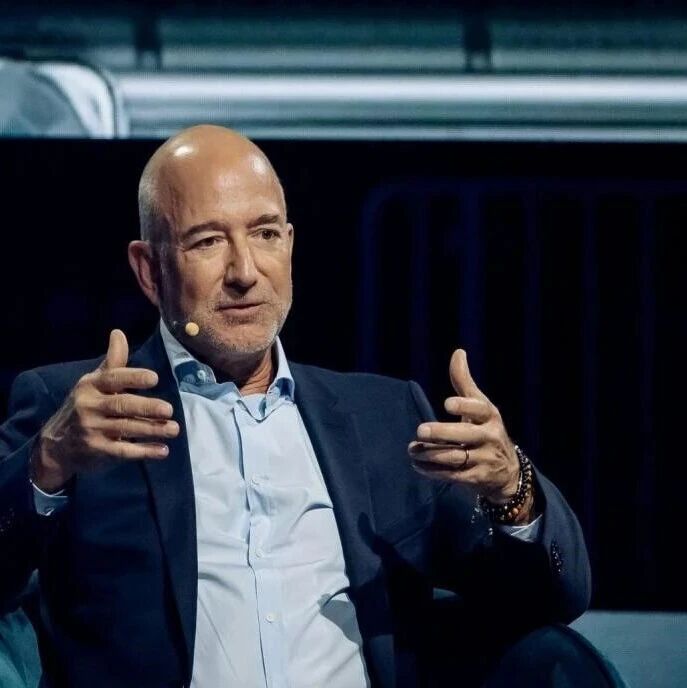
Jeff Bezos has been talking publicly for the past year about how his schedule is filled with work at his private rocket company, Blue Origin, and, increasingly, with artificial intelligence https://t.co/hpas1n30Vo ...
商业航天与卫星互联网:关注火箭产业链突破
2025-11-24 01:46
Summary of Key Points from the Conference Call on Commercial Aerospace and Satellite Internet Industry Overview - The commercial aerospace industry is experiencing multiple turning points, driven by increased policy support and positive performance changes in key companies during Q3 2025, indicating an acceleration in industry development [1][2][12]. Core Insights and Arguments - **Turning Points in Commercial Aerospace**: Three turning points identified include: 1. **Policy Support**: The establishment of commercial aerospace agencies announced by the State Council [2]. 2. **Performance Changes**: Positive Q3 performance from key beneficiary companies [2]. 3. **Technological Developments**: Focus on reusable rocket technology and NTN standard systems, with several domestic companies planning intensive launches by the end of 2025 [2][6]. - **Global Competition in Reusable Rocket Technology**: - SpaceX's Falcon 9 and Starship are operational, while Blue Origin's New Glenn has achieved first-stage recovery [3][4]. - Domestic companies like Blue Arrow are also preparing for multiple launches, marking a new phase in global commercial aerospace [1][3]. - **Challenges in Computing Power in Space**: - Issues such as bandwidth limitations, complex space environments, and equipment depreciation pose challenges for deploying computing power in space, necessitating exploration of solutions [5]. - **2026 Commercial Aerospace Outlook**: - The first year of the "15th Five-Year Plan" is expected to see significant changes, including reduced satellite launch costs and increased launch capacity due to the intensive launch schedule of domestic companies [6][12]. - **Significance of Zhuque 3 Launch**: - Zhuque 3, a commercial rocket, launched ahead of state-backed projects, showcasing advancements in domestic aerospace technology and boosting confidence in the sector [7][8]. Additional Important Insights - **Global and Chinese Launch Performance**: - As of November 2025, there have been 277 global orbital launches, with China leading in numbers, having completed 72 launches, surpassing the total for the previous year [9][12]. - **SpaceX Starship Testing Progress**: - SpaceX's Starship project has faced challenges but is crucial for the Artemis program and the global heavy-lift market, highlighting the difficulties even leading companies face in technological innovation [10]. - **Recent Breakthroughs in China's Reusable Rocket Technology**: - Significant advancements have been made, with companies like Blue Arrow achieving rapid progress in developing reusable rockets, aiming to reduce launch costs by 80-90% [11]. - **Policy Support in the US and China**: - Both countries have implemented supportive policies for the commercial aerospace sector, enhancing the industry's competitiveness and commercialization [12]. - **Key Technologies of Blue Origin's New Glenn Rocket**: - New Glenn features a height of 98 meters and a payload capacity of over 50 tons, designed for reusability to lower overall launch costs [13][14]. - **Challenges Faced by Rocket Lab**: - Rocket Lab's Neutron rocket development has been delayed, with plans for a 2026 launch, emphasizing the need for innovative designs to reduce costs [15]. - **Current Status of Domestic Private Rocket Companies**: - These companies have developed a robust ecosystem, with leading firms achieving multiple successful launches and diversifying their technological approaches [16]. - **Launch Site Resource Constraints**: - There is a shortage of launch site resources in China, prompting expansions and new constructions to meet growing demand [17]. - **Investment Directions in the Rocket Industry**: - The rocket industry value chain includes high-tech materials, manufacturing, and launch services, with potential investment opportunities in companies preparing for IPOs [18].
X @Elon Musk
Elon Musk· 2025-11-23 22:26
RT Captain Eli (@TheCaptainEli)2007A 36-year-old Elon Musk sits down for a quiet PBS interview and says, almost casually:“The most important thing we can do for the future of consciousness is to become a multi-planetary species… Everything else pales in comparison.”He then predicts, with zero hype:•Fully reusable rockets that land like airplanes•Electric cars that outperform gasoline in every way and go mass-market•Solar + batteries becoming the cheapest energy on Earth•Humans on Mars and a self-sustaining ...

Blue Origin CEO explains why building bases on the moon is so important
Yahoo Finance· 2025-11-23 19:00
New Glenn Rocket & Mission Success - Blue Origin's New Glenn rocket successfully completed its second test flight, including a landing on the drone ship "Jaclyn" approximately 375 miles (603.5 kilometers) offshore [1] - The New Glenn rocket successfully sent NASA's escapade mission to Mars, an 11-month journey [1] - The rocket is over 320 feet (97.5 meters) tall and generates millions of pounds of thrust [3] - Blue Origin became the first commercial company to land an orbital class booster on its second attempt [3] Future Plans & Vision - Blue Origin plans to send the largest lander ever to the moon early next year [10][21] - The company aims to build infrastructure in space to move heavy industry off Earth [11] - Blue Origin envisions building data centers in space within the next 5-10 years, powered by solar energy [11][12] - The company has a large backlog of customers and is focused on ramping up production to meet the high demand for launches [18][19] CEO Insights & Strategy - Manufacturing expertise is crucial for Blue Origin, focusing on becoming the world's best manufacturing company [17] - Jeff Bezos is described as tactically impatient but strategically patient, with a long-term vision [22][23] - Jeff Bezos is also described as intensely curious, driving deep dives into ideas and becoming an expert [24]
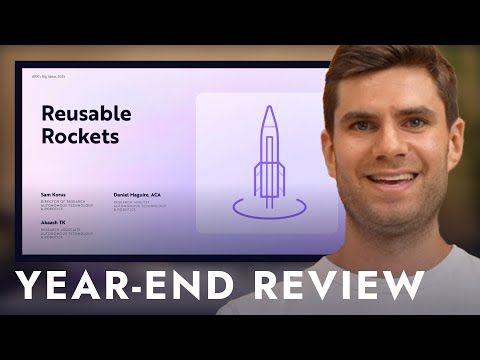
ARK Reusable Rockets Research | 2025 Year-End Review
ARK Invest· 2025-11-20 17:30
Industry Overview - The reusable rocket industry is characterized by a dramatic cost decline, leading to business model changes and significant opportunities [1] - SpaceX has a 10-year lead in reusable rocket technology, consistently reducing launch costs through improved refurbishment and reuse [3][4] - Lower launch costs are enabling new opportunities in low Earth orbit (LEO) [9] Market Trends & Opportunities - The industry identifies a $130 billion annual revenue opportunity in space, primarily driven by global broadband and direct-to-device capabilities [13] - Direct-to-device (smartphone to satellite connectivity) is estimated to be a $48 billion opportunity, assuming $0.50 per month from 8 billion cell phone subscribers [15] - Broadband access for households, RVs, boats, aircraft, and ships represents a $40 billion opportunity [16] Company Updates & Competitive Landscape - Blue Origin and Rocket Lab are developing reusable rockets, aiming to launch and reuse them [6][7] - Starlink and T-Mobile launched direct-to-device service in July [18] - Firefly went public, increasing the number of space companies available for public investment [20] Technological Advancements - Low Earth Orbit (LEO) has opened up due to declining launch costs, enabling applications like high-speed internet via satellites [9][11] - Starlink Mini offers easy setup and reliable high-speed internet [12]
X @TechCrunch
TechCrunch· 2025-11-20 17:09
Blue Origin reveals a super-heavy variant of its New Glenn rocket that is taller than a Saturn V https://t.co/8jkH5DJnAz ...
贝佐斯再创业,新公司估值62亿美元
财富FORTUNE· 2025-11-20 13:04
Core Insights - Jeff Bezos is returning to a significant operational role as co-CEO of an AI startup named "Prometheus Engineering," marking his first major position since stepping down as Amazon's CEO in 2021 [2][3] - The startup has raised $6.2 billion in funding, with some contributions coming from Bezos personally, and focuses on AI applications in various industries including aerospace and automotive [3] - Bezos envisions a future where millions may live in space, driven by advancements in robotics and AI, which he believes will create new forms of labor and innovation [4][5] Company Overview - "Prometheus Engineering" is co-led by Vik Bajaj, a former director at Google's X project, and aims to explore AI technology's applications in engineering and manufacturing [3] - The company remains low-profile, with limited public information available about its founding and operations [3] Industry Context - Bezos's optimistic view on AI contrasts with some skepticism in the tech community, as he believes that AI will significantly impact human civilization and the future of the solar system [5][6] - He acknowledges the existence of a bubble in the AI sector, comparing it to the biotechnology bubble of the 1990s, but emphasizes the long-term societal value of AI technology [6] - The launch of "Prometheus Engineering" is seen as both a technological declaration and a philosophical statement about the potential of technology to enhance civilization [5]

X @Bloomberg
Bloomberg· 2025-11-19 15:12
Landing a booster was a breakthrough for Blue Origin but is routine for Musk’s SpaceX. https://t.co/SWqCiIcP85 ...