
Panasonic

Search documents
松下本间哲朗:进博会为外企高管提供理解中国市场非常好的机会
Bei Ke Cai Jing· 2025-11-02 11:57
Core Insights - The 8th China International Import Expo (CIIE) will open on November 5, with Panasonic participating for the eighth consecutive year [1] - Panasonic aims to enhance production efficiency in the Chinese market and plans to increase its R&D personnel, particularly in software development [1] - The Panasonic booth will feature AI-powered smart home appliances and a design area, showcasing a vision of life from home to city [1] - A strategic release event will be held on November 6, focusing on Panasonic's AI strategy in China [1] Company Strategy - Panasonic's strategy will focus on AI applications, including generative AI technology for consumer appliances and components for China's infrastructure [2] - The company aims to apply Chinese AI technology in core business transformations, enhancing efficiency across product development, procurement, and sales [2] - Panasonic emphasizes the importance of adapting to "Chinese cost, speed, and model" to remain competitive in the global manufacturing landscape [2] Industry Context - The CIIE provides a valuable platform for foreign executives to understand the Chinese market [2] - The Chinese government supports foreign enterprises through platforms like CIIE, facilitating communication and collaboration [2]
Best ETF For The Critical Minerals Boom? Here Are Rare Earth Winners
Benzinga· 2025-10-31 17:22
Core Insights - A significant demand for critical minerals is emerging, essential for electric vehicles, batteries, and clean energy systems, with two U.S.-listed ETFs, VanEck Rare Earth And Strategic Metals ETF (REMX) and Amplify Lithium & Battery Technology ETF (BATT), positioned at the forefront of this trend [1][2] ETF Overview - REMX focuses on rare earth and strategic metal miners, tracking the MVIS Global Rare Earth/Strategic Metals Index, and includes companies like MP Materials Corp, Lynas Rare Earths, and Pilbara Minerals, which are crucial in the U.S.-China supply chain dynamics [3] - BATT tracks the EQM Lithium & Battery Technology Index, combining miners such as Albemarle Corp and Glencore with downstream manufacturers like Panasonic and Samsung SDI, thus capturing both extraction and downstream demand from the EV and energy storage sectors [4] Performance Metrics - Both ETFs have expense ratios between 0.58% and 0.59%, with REMX managing approximately $1.3 billion in assets and BATT around $91 million; REMX has shown a 79% year-to-date return, while BATT has returned 55% year-to-date, reflecting differing investor interests and market conditions [5] - REMX's performance is heavily influenced by Chinese policy risks, while BATT's broader focus ties its performance to EV adoption and battery margins [6] Investment Implications - For investors interested in mining geopolitics, REMX offers a concentrated investment in supply scarcity, while BATT may appeal to those seeking a more diversified exposure to the clean energy sector [7]


松下进博剧透:AI赋能下的“未来之家”与“智慧之城”长这样
Sou Hu Wang· 2025-10-31 14:08
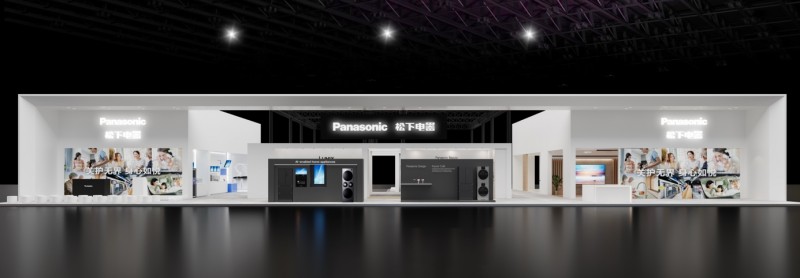
Core Viewpoint - The 8th China International Import Expo (CIIE) will be held in Shanghai on November 5, 2025, with Panasonic showcasing its innovative solutions under the theme "A Better Life from Home to City" [1][22]. Group 1: Exhibition Overview - Panasonic will present a 903 square meter exhibition space at the CIIE, focusing on the integration of home and urban living solutions [22]. - The exhibition will feature immersive areas that highlight Panasonic's technological capabilities and social value, including a dedicated AI-driven smart home appliance section [4][22]. Group 2: Strategic Release - A strategic release event will take place on November 6, 2025, where Panasonic's global vice president will discuss the company's AI strategy in China and its role in the digital future [1][23]. Group 3: Living Space Innovations - Panasonic will address the growing demand for home renovations by offering customized living solutions that integrate embedded appliances, targeting various demographics such as young couples and families [5]. - Specific products include a 75-inch smart TV and a climate control solution for urban couples, and a new kitchen appliance series designed for efficient cooking and family interaction [5]. Group 4: Residential Technology - The exhibition will showcase Panasonic's WELL Living Lab innovations, presenting health-oriented solutions focused on air, water, and light [6]. Group 5: Home Appliance Lineup - The display will include a range of cleaning and kitchen appliances, highlighting Panasonic's technological heritage and innovation, including the 60th anniversary of its high-end audio brand Technics [7]. Group 6: Public Space Innovations - Panasonic has over 40 years of experience in battery development, providing energy solutions across various sectors including IoT and healthcare [8]. - The company will present solutions for smart cities, including rail station safety systems and components for electric vehicles [9][10]. Group 7: Smart Manufacturing Solutions - Panasonic will demonstrate its intelligent welding systems and advanced manufacturing technologies aimed at enhancing production efficiency [11][13]. Group 8: AI-Driven Home Appliances - The exhibition will feature the world's first four-drum heat pump washer-dryer, showcasing AI integration for enhanced laundry experiences [19]. - Panasonic will also unveil AI capabilities in kitchen appliances, including a food ingredient management system and voice cooking assistance [20]. Group 9: Design Philosophy - Panasonic's design philosophy, "Future Craft," emphasizes harmony with space and user experience, showcasing award-winning products that reflect this ethos [21].
专访松下中山正春:期待在中国推广“好房子”的日本经验
2 1 Shi Ji Jing Ji Bao Dao· 2025-10-31 11:48
Group 1 - The core idea of the articles emphasizes the shift in China's real estate market from merely having properties to focusing on the quality of housing, termed as "good houses" [1][2][3] - The Chinese government has introduced policies aimed at promoting high-quality housing, including the "good house" concept, which encompasses safety, comfort, sustainability, and intelligence [1][2] - The demand for high-quality residential spaces in China is expected to evolve in three major trends: moving from "single product intelligence" to "whole-house intelligence," transitioning from "green certification" to demonstrable "health outcomes," and upgrading from "standardized solutions" to "personalized customization" [3][4] Group 2 - The real estate sector is transitioning from a focus on sales to long-term operational and service-oriented models, which presents challenges such as information silos and a lack of operational experience among developers [4][5] - The introduction of artificial intelligence (AI) in the real estate industry is anticipated to optimize design and construction processes, reduce material waste, and enhance customer engagement through data collection [5][6] - The concept of "green premium" is being addressed as a necessary investment for sustainable living, with companies like Panasonic committing to environmentally friendly practices and technologies [6][7] Group 3 - Panasonic's WS flagship store in Shanghai represents a strategic move to tap into the growing demand for health-oriented living solutions in the Chinese market, leveraging its extensive experience in building healthy communities [7][8] - The company aims to integrate Japanese design principles into the Chinese market, focusing on creating comfortable living spaces that align with the "good house" philosophy [8]
12月降息或仍是大概率事件,流动性宽松下看好恒生科技配置价值
Sou Hu Cai Jing· 2025-10-31 06:56
Core Viewpoint - The Hang Seng Technology Index fell over 2% on October 31, with significant declines in tech stocks, semiconductor sector, and automotive stocks, following the Federal Reserve's decision to lower interest rates by 0.25% to 3.75%-4% [1] Group 1: Market Performance - The Hang Seng Technology Index ETF (513180) followed the index's downward trend, with major holdings like Huahong Semiconductor, SMIC, BYD, Alibaba, Kuaishou, and Tencent experiencing substantial losses, including Huahong Semiconductor dropping over 8% [1] - As of October 30, the latest valuation (PETTM) of the Hang Seng Technology Index ETF (513180) was 23.50 times, which is approximately 32.84% below historical averages, indicating a potential safety margin for investors [2] Group 2: Federal Reserve Insights - The Federal Reserve's October meeting resulted in a cautious stance from Chairman Powell, emphasizing that a rate cut in December is not guaranteed, influenced by uncertainties in labor market data due to government shutdowns and differing views among officials regarding future growth and inflation risks [1] - Despite the cautious tone, there is a belief that a rate cut in December remains likely, as the job market is gradually cooling and the impact of tariffs on inflation is manageable, supporting a "preventive" rate cut strategy [2] Group 3: Future Outlook - The technology sector in Hong Kong is expected to benefit from current trends in AI, with potential foreign capital inflows exceeding expectations due to the Federal Reserve's rate cuts and continued accumulation of southbound funds, suggesting a positive outlook for the Hang Seng Technology Index in Q4 [2]
松下计划2035年将电动汽车电池成本降低约40%
Huan Qiu Wang Zi Xun· 2025-10-30 07:03
Group 1 - Panasonic Holdings plans to reduce the cost of lithium-ion batteries for electric vehicles by approximately 40% by the fiscal year 2035, aiming to enhance cost efficiency across the electric vehicle supply chain [1][3] - The company will focus on optimizing core materials and production processes, with nickel as a key component that accounts for about 40% of the total battery cost. Panasonic aims to reduce nickel usage by over 40% by around 2030 and simplify battery processing to cut costs [1][3] - Panasonic Energy intends to expand production scale and improve factory operational efficiency to leverage economies of scale, targeting a battery cost of less than $60 per kilowatt-hour [1][3] Group 2 - Tesla, as a major customer, plays a crucial role in Panasonic's ability to achieve its cost reduction goals, as the sales performance of Tesla directly impacts battery order volumes and production loads [3] - The average price of battery packs, including those for electric vehicles and energy storage systems, is projected to drop to about one-seventh of 2013 levels by 2024, with electric vehicle battery packs expected to fall below $100 per kilowatt-hour [3] - Currently, Panasonic Energy does not produce lithium iron phosphate batteries due to limitations in capacity and performance, but plans to enhance the competitiveness of its nickel-based batteries to maintain and expand its market share in the electric vehicle battery sector [3]
Panasonic cuts full-year profit forecast on weaker outlook for automotive battery business
Reuters· 2025-10-30 06:49
Core Viewpoint - Panasonic Holdings has reduced its full-year operating profit forecast by 13.5%, primarily due to an anticipated decline in profits from its energy unit that supplies batteries to Tesla and other automakers [1] Group 1 - The forecast cut indicates significant challenges within Panasonic's energy division, which is crucial for its overall profitability [1] - The reduction in profit expectations is linked to the performance of the energy unit, highlighting its importance in the company's financial health [1]

中国工业科技_2025 年三季度机器人自动化格局分析_市场份额如何变化China Industrial Tech_ 3Q25 Robot_Automation Landscape Analyzer_ How are market shares shifting_
2025-10-30 02:01
Summary of China Industrial Robot & Automation Landscape - 3Q25 Industry Overview - The report focuses on the **China Industrial Robot (IR)** and **Industrial Automation (IA)** sectors, analyzing market shares and sales data for 3Q25 [1][2]. Key Observations - **Market Share Growth**: Domestic IR players increased their total market share to **55%** in 3Q25, up **2 percentage points (pp)** year-over-year (yoy) and **1 pp** quarter-over-quarter (qoq) [3][27]. - **Sales Volume Growth**: Domestic brands experienced a **12% yoy** growth in sales volume, significantly outpacing overseas brands, which only grew by **2% yoy** [3][27]. - **Total Industrial Automation Market**: The IA market saw a **2% yoy decline** in 3Q25, with project markets down **4% yoy** and OEM markets up **2% yoy**. The full-year outlook for 2025 is expected to be flat at **0% yoy** [27][30]. Sales Data - **Total IR Unit Sales**: Reached **81,000 units** in 3Q25, marking a **7% yoy** increase but a **6% qoq** decline, indicating a slowdown from the previous quarter's **20% yoy** growth [27][31]. - **Cobot Segment**: Continued strong growth at **31% yoy**, although this was a deceleration from **52% yoy** in 2Q25 [27]. - **Performance by Robot Type**: - Large 6-axis robots grew **6% yoy** - Small 6-axis robots grew **5% yoy** - SCARA robots grew **2% yoy** [27]. Market Dynamics - **End-Market Performance**: - Strong growth in sectors like **Semiconductor (+30% yoy)**, **Lithium battery (+17% yoy)**, and **Auto electronics (+16% yoy)**, although these were lower than in 2Q25. - The **Solar** sector was a significant underperformer, declining **22% yoy** [27][35]. Company Performance - **ESTUN**: Maintained the 1 position in the IR market with a **10% market share**, despite a **11% qoq** decline in sales volume [27][40]. - **Inovance**: Ranked 4 with an **8% market share**, showing **7% yoy** growth in sales volume but a **8% qoq** increase [27][40]. - **Market Share by Robot Type**: - **Small 6-axis Robots**: Domestic brands increased their market share to **58%**. ESTUN led with **10%**, while Inovance held **6%** [27][42]. - **Large 6-axis Robots**: Domestic brands maintained a **33%** market share, with ESTUN at **15%** and Inovance at **2%** [27][44]. - **SCARA Robots**: Inovance's market share increased to **25%**, recovering from previous declines [27]. Component Market - **IA Components**: Inovance retained its 1 position in **Servo** (32% share) and **Low Voltage Inverter** (21% share) markets, although both saw slight declines in market share [27][28]. Inventory and Production Insights - There was a notable discrepancy between industrial robot production and domestic sales, with approximately **123,000 units** produced in 3Q25 and **51,000 units** exported [27][28]. Conclusion - The China Industrial Robot and Automation sectors are experiencing a shift towards domestic players gaining market share, with strong performance in specific end-markets. However, overall growth is tempered by declines in certain segments and a slowdown in sales volume growth compared to previous quarters.


X @Anthropic
Anthropic· 2025-10-29 14:29
Our APAC momentum has been extraordinary—companies like Rakuten, Nomura Research Institute, and Panasonic are now using Claude, and our run rate revenue in the region has grown over 10x in the past year. Our Japanese Claude page is available here: https://t.co/hm8DdQrzQG ...
X @Bloomberg
Bloomberg· 2025-10-29 01:57
SoftBank, Panasonic and Hitachi shares outperformed Wednesday after they were listed among companies interested in launching projects in the US during President Donald Trump’s visit to Tokyo https://t.co/qSo7rQMWhH ...