圆通速递

Search documents
圆通速递(600233) - 2025 Q2 - 季度财报
2025-08-27 10:15
Financial Performance - The company's operating revenue for the first half of 2025 reached RMB 3,588,325.11 million, representing a 10.19% increase compared to RMB 3,256,452.32 million in the same period last year[26]. - The total profit for the period was RMB 223,121.95 million, a decrease of 11.49% from RMB 252,079.71 million year-on-year[26]. - The net profit attributable to shareholders was RMB 183,063.26 million, down 7.90% from RMB 198,762.74 million in the previous year[26]. - The net cash flow from operating activities increased by 13.99% to RMB 263,424.88 million, compared to RMB 231,095.41 million in the same period last year[26]. - Basic earnings per share decreased by 8.00% to RMB 0.5311 from RMB 0.5773 in the same period last year[27]. - The weighted average return on net assets was 5.62%, down 1.05 percentage points from 6.67% in the previous year[27]. - The company reported non-recurring gains and losses totaling RMB 65,148,496.22, after accounting for tax effects and minority interests[28]. Assets and Liabilities - The total assets at the end of the reporting period were RMB 4,934,220.31 million, reflecting a 2.17% increase from RMB 4,829,406.39 million at the end of the previous year[26]. - The net assets attributable to shareholders increased by 1.90% to RMB 3,227,315.61 million from RMB 3,167,233.80 million at the end of the previous year[26]. - The operating cost was RMB 3,279,676.34 million, reflecting a 12.24% increase year-on-year, primarily due to the growth in express delivery volume[75]. - Total liabilities increased to CNY 16,561.41 million, compared to CNY 16,085.98 million at the end of the previous year[160]. Operational Efficiency - The company operates a comprehensive express logistics service network covering all 31 provinces, autonomous regions, and municipalities in China, with a county-level coverage rate of 99.93%[32]. - The company has a fleet of nearly 8,300 line-haul transport vehicles, including 6,733 owned vehicles and a self-owned airline fleet of 13 aircraft[32]. - The company achieved a 12.81% year-on-year decrease in single ticket transportation costs, which amounted to 0.37 yuan, down 0.06 yuan from the previous year[61]. - The average efficiency of the company's centers improved by over 13% due to enhanced management and technology applications[61]. - The company has implemented real-time monitoring of franchisees' performance, focusing on key metrics such as order resolution rate and timely delivery rates[50]. Market and Industry Trends - In the first half of 2025, the company's express delivery volume reached 14.863 billion pieces, a year-on-year increase of 21.79%, exceeding the industry average growth rate by 2.5 percentage points[54]. - The express delivery industry in China saw a total business volume of 95.64 billion pieces in the first half of 2025, a year-on-year increase of 19.3%, and total revenue of 718.78 billion yuan, up 10.1%[52]. - The company is focusing on expanding its terminal store network to improve last-mile delivery capabilities and enhance customer engagement[43]. Digital Transformation and Innovation - The company is advancing its digital transformation by integrating AI technologies into its operations, enhancing decision-making efficiency and optimizing logistics routes[55]. - The company has developed digital systems to provide delivery path suggestions to couriers, improving delivery efficiency and tracking capabilities[40]. - The company has invested in digital transformation, leading to the development of a comprehensive management system that monitors the entire lifecycle of parcels, improving service quality and operational efficiency[71]. Strategic Initiatives - The company is enhancing its international development strategy, optimizing its cross-border logistics product matrix, and improving its global comprehensive service capabilities[32]. - The company is committed to international expansion, enhancing its cross-border logistics capabilities and integrating domestic and international services[53]. - The company has opened over 150 cargo flight routes, enhancing its international logistics capabilities[67]. Social Responsibility and Community Engagement - The company donated 400,000 yuan to support rural drinking water projects in Chaoyang Cave Village, benefiting 68 households and over 200 villagers[120]. - The company is actively exploring "agriculture + commerce" projects to support the rural revitalization strategy, enhancing the distribution channels for agricultural products[120]. - The "Dream Action" project has helped 20,000 disabled employees and their families achieve employment and entrepreneurship opportunities[121]. Risks and Challenges - The company faces risks from macroeconomic fluctuations, market competition, and changes in customer demand[105]. - Labor costs are rising, leading to a decline in gross margin due to increased wages and benefits, alongside potential fluctuations in fuel prices[109]. - The company faces risks related to service timeliness, especially during peak e-commerce promotional periods, which may affect service quality[109]. Governance and Compliance - The company has maintained a good integrity status during the reporting period, with no significant legal or financial issues reported[127]. - The company is committed to maintaining transparency and compliance with regulatory requirements in its financial disclosures[130]. - The company has not reported any significant losses exceeding 10% of net assets in the consolidated financial statements, indicating sound financial health[153].

圆通速递:2025年上半年净利润18.31亿元,同比下降7.90%
Xin Lang Cai Jing· 2025-08-27 10:01
圆通速递公告,2025年上半年营业收入358.83亿元,同比增长10.19%。净利润18.31亿元,同比下降 7.90%。 ...
谋求新突破 快递企业加速布局全球市场
Sou Hu Cai Jing· 2025-08-27 07:48
Core Viewpoint - The express delivery industry in China is experiencing a "volume increase and price drop" trend, prompting companies to focus on international markets for higher profits amid intensified domestic competition [1][4]. Industry Overview - The express delivery sector is a crucial part of the modern circulation system, connecting various industries and integrating online and offline services [3]. - In the first seven months of this year, China's express delivery volume reached 1,120.5 billion pieces, marking an 18.7% year-on-year increase [4]. Market Dynamics - The industry is projected to exceed 2.5 trillion pieces by 2030, with a compound annual growth rate of 8%-10%, leading to a market size surpassing 2.8 trillion yuan [4]. - Despite revenue growth, express delivery companies face declining per-package income, indicating a significant challenge in the industry [5][6]. Company Performance - In July, SF Express reported revenue of 24.847 billion yuan, a 9.95% increase, but with a 14.02% drop in per-package income [5]. - YTO Express, Yunda, and Shentong also reported revenue growth, but with continued declines in per-package income, highlighting the "volume increase and price drop" issue [5]. Competitive Landscape - The industry is shifting from a "low-price competition" model to a focus on service quality and efficiency, as companies aim to break the cycle of negative profit margins and declining service quality [6][7]. - Regulatory bodies are actively promoting measures to combat "involution" in competition, encouraging companies to enhance service quality rather than engage in price wars [6][7]. International Expansion - The global cross-border logistics market is expected to grow from 13.3 trillion yuan in 2020 to 18.6 trillion yuan by 2024, with a compound annual growth rate of 8.75% [8]. - Chinese express companies are accelerating their international expansion, with significant increases in their international development index [8][9]. - Companies like Cainiao and JD Logistics are enhancing their international logistics capabilities, establishing new routes and partnerships to improve service efficiency [9][10]. Future Outlook - The express delivery industry is expected to continue its internationalization, driven by the growth of cross-border e-commerce and international trade [10].




新视点|雪域高原也要实现“网购自由”
Ren Min Ri Bao· 2025-08-27 03:50
Core Insights - The logistics and express delivery sector in Tibet has experienced significant growth, with express delivery volume increasing from 4.843 million pieces in 2014 to 30.465 million pieces in 2024, reflecting an average annual growth rate of 20% [1] - The implementation of collective transportation and collaboration between postal and express services has notably reduced logistics costs for rural residents, enabling more people to enjoy online shopping [2] - The introduction of new technologies, such as unmanned delivery vehicles, has improved delivery speed and efficiency, allowing for same-day delivery in urban areas [3] - The establishment of smoother logistics channels has facilitated the export of local agricultural products, with the postal and express service network projected to drive sales of Tibetan specialty products exceeding 2 billion yuan in 2024 [4] Group 1: Growth in Express Delivery - The express delivery volume in Tibet has surged from 4.843 million pieces in 2014 to 30.465 million pieces in 2024, with a year-on-year growth of 26% in the first half of the current year [1] - The collective transportation model has led to a 130% increase in inbound packages for Tibet's express delivery services, with over half being collective transport items [2] Group 2: Technological Advancements - The deployment of unmanned delivery vehicles has enabled faster delivery times, with packages now arriving within four days instead of a week [3] - The implementation of smart sorting systems has increased processing capacity to 12,000 pieces per hour, enhancing overall logistics efficiency [3] Group 3: Agricultural Product Export - The logistics network has improved the export of local products, with fresh matsutake mushrooms being delivered nationwide within 48 hours [4] - The postal and express service network is expected to boost sales of Tibetan agricultural products to over 2 billion yuan in 2024 [4]
雪域高原也要实现“网购自由”(新视点)
Ren Min Ri Bao· 2025-08-26 22:22
Core Insights - The logistics and express delivery industry in Tibet has experienced significant growth, with express delivery volume increasing from 4.843 million packages in 2014 to 30.465 million packages in 2024, reflecting an average annual growth rate of 20% [1] - The implementation of collective shipping and advanced logistics technologies has improved delivery efficiency and reduced costs, enabling more residents to enjoy online shopping [2][3] - The development of a robust logistics network has facilitated the export of local agricultural products, contributing to a sales increase of over 2 billion yuan in 2024 [4] Group 1: Growth in Express Delivery - The express delivery volume in Tibet has surged, with a year-on-year growth of 26% in the first half of 2024 [1] - The establishment of a collective shipping center in Sichuan has led to an 80% reduction in shipping costs and a 20% improvement in delivery speed [2] Group 2: Technological Advancements - The introduction of unmanned delivery vehicles has significantly reduced delivery times, with packages now being delivered within four days instead of a week [3] - The implementation of smart sorting systems has increased processing capacity to 12,000 packages per hour, enhancing overall logistics efficiency [3] Group 3: Agricultural Product Export - The logistics network has enabled the rapid delivery of local products, such as fresh matsutake mushrooms, to national markets within 48 hours [4] - The postal and express service network has driven sales of agricultural products in Tibet to exceed 2 billion yuan in 2024 [4]
过去十年 西藏自治区快递业务量增长约五倍 雪域高原也要实现“网购自由”(新视点)
Ren Min Ri Bao· 2025-08-26 21:54
Core Insights - The logistics and express delivery industry in Tibet has experienced significant growth, with express delivery volume increasing from 4.843 million packages in 2014 to 30.465 million packages in 2024, reflecting an average annual growth rate of 20% [1] - The implementation of collective shipping and advanced logistics technologies has improved delivery efficiency and reduced costs, enabling more residents to enjoy online shopping [2][3] - The development of a robust logistics network has facilitated the sale of local agricultural products, contributing to over 2 billion yuan in sales for 2024 [4] Group 1: Growth in Express Delivery - The express delivery volume in Tibet surged to 30.465 million packages in 2024, with a year-on-year growth of 26% in the first half of the year [1] - The introduction of collective shipping has led to a 130% increase in inbound packages for Tibet's express delivery services, with over half being collective shipments [2] Group 2: Technological Advancements - The use of unmanned delivery vehicles has reduced delivery times significantly, with packages now being delivered within four days instead of a week [3] - The implementation of smart sorting systems has enhanced processing capabilities, allowing for the handling of up to 12,000 packages per hour [3] Group 3: Agricultural Product Sales - The logistics network has enabled local products like fresh matsutake mushrooms to reach national markets within 48 hours, with daily shipments exceeding 2,700 packages during peak seasons [4] - The postal and express service network in Tibet is projected to drive agricultural product sales exceeding 2 billion yuan in 2024 [4]
再无“8毛包邮全国”,小商家月增万元成本
Hu Xiu· 2025-08-26 11:50
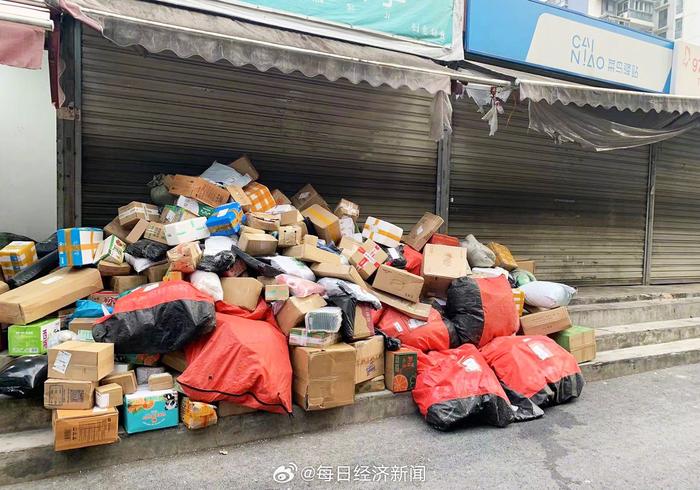
Core Viewpoint - The recent increase in express delivery fees in key e-commerce regions like Guangdong and Zhejiang is causing significant anxiety among small e-commerce businesses, as it directly impacts their profit margins and pricing strategies [1][2][3]. Summary by Sections Impact on Small E-commerce Businesses - Many small e-commerce merchants are feeling the pressure from the increase in delivery fees, with some reporting that even a small increase of 0.1 yuan can significantly erode their profits [3][5]. - For instance, a small business owner in Guangzhou noted that a 0.4 yuan increase in delivery fees has led to a 3% drop in profit margins, which is critical for low-margin products priced around 9.99 yuan [6][8]. - Another seller in Dongguan reported a more severe increase of 0.7 yuan per order, resulting in an additional monthly cost exceeding 12,000 yuan, effectively halving her monthly profit [8][9]. Cost Management Strategies - In response to rising costs, small merchants are seeking ways to cut expenses, such as switching to generic packaging and eliminating promotional discounts [9][10]. - The inability to pass on costs to consumers due to price sensitivity in the low-cost product segment is forcing these businesses to absorb the increased delivery fees [4][9]. Industry Context and Trends - The express delivery industry in Guangdong handled 42.5 billion packages last year, accounting for 24% of the national total, with a revenue of 304 billion yuan [12]. - Despite the increase in delivery fees, many express delivery workers have not seen a corresponding rise in their compensation, as their income remains tied to the volume of deliveries and service commissions [19]. - The current trend of rising delivery fees is seen as a response to the long-standing issue of "internal competition" within the industry, which has led to unsustainable pricing practices [20][24]. Future Outlook - Experts suggest that the recent price adjustments may signal a shift from a low-price competition model to one focused on service quality, potentially leading to further price increases in the future [24]. - The industry may undergo consolidation, with weaker players exiting the market, which could enhance overall market stability and profitability [24].

再无“8毛包邮全国”,小商家月增万元成本,快递员收入暂未上涨
3 6 Ke· 2025-08-26 11:41
Core Insights - Recent price increases in express delivery fees have caused significant concern among e-commerce operators, particularly small businesses that rely on low-cost shipping to maintain profitability [1][2][3] - The price adjustments, particularly in Guangdong and Zhejiang, range from 0.3 to 0.7 yuan per package, which can severely impact the already thin profit margins of small e-commerce vendors [1][2] - The rise in delivery costs is forcing small merchants to reconsider their pricing strategies and operational costs, with some opting to cut expenses in packaging and promotions rather than passing costs onto consumers [3][8] Delivery Fee Increases - In Guangdong, the average increase in delivery fees is reported at 0.4 yuan, which translates to a profit reduction of approximately 3% for small businesses selling low-cost items [2] - For example, a small business selling handmade products at 9.99 yuan experiences a significant profit squeeze due to the increased shipping costs, which now average around 2 yuan per package [2] - Another e-commerce operator in Dongguan reported a 0.7 yuan increase, leading to an additional monthly cost exceeding 12,000 yuan, effectively halving her monthly profit [3] Market Dynamics - The express delivery sector in Guangdong accounted for 425 billion packages last year, representing 24% of the national total, with revenues of 304 billion yuan [5] - Despite the price hikes, many delivery personnel have not seen an increase in their compensation, as their earnings are still tied to the volume of packages delivered and service commissions [9][8] - The current trend of rising delivery fees is seen as a response to the long-standing issue of "internal competition" within the industry, which has led to unsustainable pricing practices [11][13] Industry Response - Major express delivery companies are responding to regulatory calls to combat "internal competition" by raising prices, aiming to improve service quality and profitability [11][14] - Experts suggest that the industry is experiencing a "volume-price inversion," where low prices are leading to operational inefficiencies and increased pressure on delivery networks [14] - The anticipated shift from a low-price competition model to a quality-focused approach may lead to further price increases and industry consolidation in the future [14]


电商洗牌,1元运费成历史?
Hu Xiu· 2025-08-26 08:58
Core Viewpoint - Recent price increases in express delivery services in Guangdong and Zhejiang are primarily targeting e-commerce clients with low shipping costs, with adjustments ranging from 0.3 to 0.7 yuan per order and a minimum price set at 1.4 yuan per order [1][4]. Group 1: Price Increase Details - Multiple express delivery companies in Guangdong and Zhejiang have raised prices for e-commerce clients, with Guangdong being a key area for these adjustments [4]. - The price increase has been in effect since early August, with variations depending on the individual company's circumstances [4]. - Affected e-commerce businesses are those with previously low shipping costs, particularly in regions like Guangzhou, Shenzhen, and Dongguan [2][4]. Group 2: Industry Reactions and Implications - Industry experts predict that more regions will follow suit in adjusting e-commerce delivery prices, which may improve the performance of express delivery companies in the short term [3][8]. - However, there is skepticism among industry insiders regarding whether the price increase will lead to a corresponding rise in courier wages, with many calling for a minimum wage for couriers instead [5][6]. Group 3: Long-term Industry Trends - The ongoing price war in the express delivery sector has led to significant pressure on companies, particularly those operating under a franchise model, resulting in declining revenue per shipment [7]. - Experts foresee potential mergers and acquisitions in the industry as a response to the current challenges, with a shift towards a more concentrated market [8][9]. - The recent price adjustments are viewed as a potential starting point for broader improvements in the industry, including better capital expenditure, technology development, and labor conditions [9].
广东浙江快递费涨价,商家月增3万成本
Mei Ri Jing Ji Xin Wen· 2025-08-26 07:27
Core Insights - The article highlights the recent price increases in express delivery services affecting e-commerce businesses in key regions like Guangdong and Zhejiang, with price hikes ranging from 0.3 to 0.7 yuan per package [1] - Affected e-commerce merchants report an increase in monthly expenses by at least 30,000 yuan due to these delivery cost adjustments, which are challenging to offset through product price increases [1] - The price adjustments are seen as a response to the prolonged price war in the express delivery industry, particularly among franchise-based companies like the Tongda system [1] Industry Impact - The express delivery sector is experiencing a shift in pricing strategy, moving away from aggressive price competition that has characterized the market for years [1] - The price war is linked to the current economic environment and the performance assessment systems used by franchise-based delivery companies, which emphasize package volume [1]