
罗氏

Search documents
关税摩擦下体外诊断行业震荡,上游原料迎来国产化窗口期
Xin Lang Cai Jing· 2025-04-23 10:04
Core Viewpoint - The U.S.-China trade friction has extended its impact to the in vitro diagnostics (IVD) industry, which is a crucial part of China's modern healthcare system, heavily reliant on global supply chains and facing significant import-export imbalances [1][2]. Industry Overview - The IVD industry in China is the only medical device sector where imports exceed exports, with imports of IVD reagents and instruments projected to reach 41.679 billion yuan and 15.408 billion yuan respectively in 2024, accounting for 17% and 6.28% of total medical device imports [1]. - The domestic IVD market is dominated by biochemical, immunological, and molecular diagnostics, which together account for over 70% of the market share [3]. Domestic Development and Market Dynamics - The domestic IVD industry has made significant strides in localization, with 60%-70% of products in key areas like biochemical diagnostics and PCR testing now being domestically produced [3]. - The immunodiagnostics segment is the largest in the IVD market, valued at approximately 50.3 billion yuan in 2023, representing 42.45% of the market share [4]. - Despite the growth in domestic production, foreign companies still dominate the immunodiagnostics market, with Roche holding a 25.4% market share [4][5]. Technological Advancements - The molecular diagnostics sector is experiencing rapid growth, particularly following the COVID-19 pandemic, which has increased public awareness and demand for such technologies [7]. - Domestic companies have achieved significant advancements in PCR technology, with local instruments demonstrating competitive efficiency compared to foreign counterparts [7][8]. Challenges and Opportunities - The IVD industry faces challenges in achieving complete self-sufficiency in core raw materials and processes, with many critical components still reliant on imports [9][10]. - The current tariff policies have increased the cost pressure on imports, creating a window of opportunity for domestic raw material suppliers to gain market share [12]. - The domestic market is characterized by a tendency towards product homogeneity, which poses a challenge for companies to achieve differentiation and quality control [13].
瑞士药企罗氏将在美国投资500亿美元,以避免特朗普的关税
news flash· 2025-04-22 11:39
金十数据4月22日讯,总部位于瑞士巴塞尔的跨国医药研发生产商罗氏周二表示,未来五年将在美国投 资500亿美元,创造超过1.2万个新工作岗位,这是全球企业对特朗普关税政策做出反应的最新大规模投 资。瑞士制药商诺华制药本月早些时候表示,将在美国投资230亿美元,而礼来和强生最近也宣布了大 规模投资。 瑞士药企罗氏将在美国投资500亿美元,以避免特朗普的关税 ...

BlueberryMarkets蓝莓外汇:欧洲股市在经济不确定性中谨慎交易
Sou Hu Cai Jing· 2025-04-22 08:01
Group 1: Market Overview - European stock indices opened cautiously after the Easter long weekend, with the DAX index down 0.3%, CAC 40 down 0.2%, and FTSE 100 nearly flat, reflecting fragile market sentiment [1] - Investors are grappling with economic uncertainty stemming from President Trump's unpredictable trade policies, which have created a tense market environment [1] - In the week ending April 16, investors net bought $11 billion in European stock funds and $3.6 billion in Asian stock funds, while U.S. stock funds saw an outflow of $10.6 billion, indicating a shift in investor sentiment towards different markets [1] Group 2: Economic Policy and Central Bank Actions - U.S. major indices fell sharply as Trump raised concerns about the independence of the Federal Reserve, calling for the replacement of Chairman Jerome Powell and advocating for "preemptive rate cuts" to avoid economic slowdown [3] - The Federal Reserve maintained interest rates in March, seeking "greater clarity" before making any adjustments, while Powell noted that tariffs could likely lead to a temporary rise in inflation, adding to market confusion [3] - The European Central Bank (ECB) recently cut rates for the seventh time in a year to support the struggling Eurozone economy, which faces significant impacts from U.S. tariffs, leading investors to bet on further rate cuts due to the region's weak economic outlook [3] Group 3: Corporate Developments - Roche announced plans to invest $50 billion in the U.S. over the next five years, expected to create over 12,000 new jobs, including nearly 6,500 construction jobs, marking one of the largest foreign investments since Trump's new tariff policies [4] - Mercedes-Benz launched a new all-electric luxury van segment called "Vision V," showcasing the company's innovative efforts in response to market changes [4] - Tesla is anticipated to release its earnings soon, with expectations low due to competitive pressures and backlash against CEO Elon Musk's far-right political stance, making the earnings report a focal point for market attention [4] Group 4: Oil Market Dynamics - Oil prices rebounded on Tuesday after a significant drop the previous trading day, with Brent futures up 1.2% to $67.04 per barrel and WTI futures up 1.4% to $63.27 per barrel, despite ongoing cautious sentiment due to global economic uncertainty from U.S. trade tariffs [5] - Both benchmark oil prices had previously fallen over 2% as Iran and the U.S. agreed to begin expert-level discussions on a potential nuclear agreement, reflecting the complex and volatile nature of the global economic landscape [5]

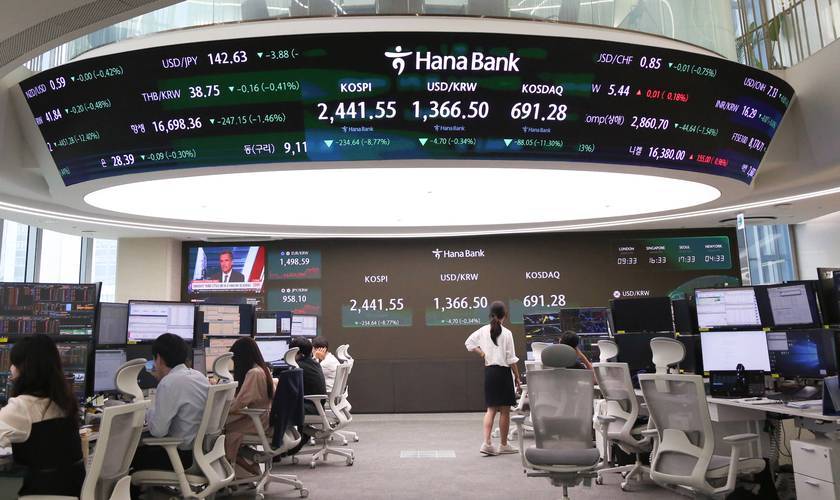
继诺华(NVS.US)后,罗氏(RHHBY.US)官宣500亿美元在美投资
Zhi Tong Cai Jing· 2025-04-22 07:00
Core Insights - Roche plans to invest $50 billion in the U.S. market over the next five years, following Novartis's $23 billion investment, as part of a response to the "America First" tariff policy [1] - This investment is expected to create over 12,000 direct jobs, including 6,500 in infrastructure and 1,000 from new factory construction and existing capacity expansion [1] - Roche aims to transition its U.S. subsidiary from a net importer to a net exporter of pharmaceuticals, enhancing the competitiveness of the domestic pharmaceutical industry [2] Investment Details - The investment will focus on building research and production facilities in Indiana, Pennsylvania, Massachusetts, and California, covering cutting-edge fields such as biopharmaceuticals and gene therapy [1] - The CEO of Roche emphasized that this investment is a commitment to the U.S. market and aims to ensure that the U.S. remains a leader in global biopharmaceutical innovation [1] Strategic Implications - The concentrated investment by multinational pharmaceutical companies indicates the ongoing strategic value of the U.S. market in the global biopharmaceutical landscape [2] - By establishing new R&D bases and smart factories, Roche aims to mitigate the cost impacts of tariff policies on its supply chain [2]
Eli Lilly's weight loss pill succeeds in first late-stage trial on diabetes patients
CNBC· 2025-04-17 10:45
Core Insights - Eli Lilly's daily obesity pill, orforglipron, has successfully met its goals in late-stage trials, demonstrating effectiveness in lowering blood sugar and body weight for Type 2 diabetes patients while maintaining safety comparable to existing injections [1][2][9] Company Summary - The trial results for orforglipron are highly anticipated within the pharmaceutical industry, positioning Eli Lilly to potentially offer a needle-free alternative in the expanding weight loss and diabetes market [2] - The highest dose of orforglipron resulted in an average weight loss of 7.9%, approximately 16 pounds, after 40 weeks, with no observed plateau in weight loss by the study's conclusion [4] - Eli Lilly plans to file for regulatory approval for orforglipron for obesity by the end of 2024 and for diabetes in 2026, which could enhance patient access and address supply shortages of current injection therapies [10] Industry Summary - The market for GLP-1 medications is projected to exceed $150 billion annually by the early 2030s, with oral GLP-1s potentially accounting for $50 billion of that total [12] - Eli Lilly's orforglipron is positioned to capture a significant market share as it is approximately three years ahead of competitors in developing oral versions of GLP-1 medications [11] - Unlike existing GLP-1 medications, orforglipron is not a peptide medication, allowing for easier absorption and eliminating the need for dietary restrictions [13]


Roche Gets Nod for Expanded Use of Columvi in Lymphoma in Europe
ZACKS· 2025-04-14 14:55
Core Viewpoint - Roche's lymphoma drug Columvi has received European Commission approval for second-line treatment of relapsed or refractory diffuse large B-cell lymphoma (DLBCL) [1][2] Regulatory Approval - The approval was anticipated following a recommendation from the Committee for Medicinal Products for Human Use in February [2] - Columvi is also under review in the United States, with a decision expected on July 20, 2025 [2] Clinical Data - The approval is based on the pivotal phase III STARGLO study, which demonstrated a statistically significant improvement in overall survival when Columvi was used in combination with GemOx compared to MabThera/Rituxan with GemOx [5][6] - The combination treatment showed a 41% reduction in the risk of death versus R-GemOx [6] Safety Profile - The Columvi/GemOx combination exhibited a safety profile consistent with the individual medicines [7] Market Context - DLBCL is the most common form of non-Hodgkin's lymphoma, accounting for approximately one-third of all NHL cases, with an estimated 160,000 new diagnoses globally each year [9] Ongoing Research - Roche is also evaluating Columvi in combination with other treatments in the phase III SKYGLO study for previously untreated DLBCL patients [10] Stock Performance - Year to date, Roche's shares have increased by 9.3%, contrasting with a 6.7% decline in the industry [3]
FDA计划逐步让“猴哥”退出新药研发? 提出三大替代方向,但业内认为还需更多研究
Mei Ri Jing Ji Xin Wen· 2025-04-12 14:44
Core Viewpoint - The FDA's recent policy shift aims to gradually eliminate mandatory animal testing in monoclonal antibody therapies and drug development, promoting alternatives like AI, organoids, and organ-on-a-chip technologies [1][2]. Group 1: Impact on Companies - Traditional CROs like Zhaoyan New Drug and Charles River Laboratories faced significant stock price declines following the announcement, with Charles River's stock dropping 28.13% and Zhaoyan's by 9.98% [1]. - The FDA's new policy is seen as a potential game-changer for the industry, providing a clear direction for reducing reliance on animal testing [3][4]. Group 2: Industry Perspectives - Industry experts acknowledge that while the new regulations indicate a shift, substantial clinical data is still needed to validate the effectiveness of organoids in toxicity prediction compared to animal testing [2][6]. - The TGN1412 incident highlights the limitations of animal testing, as severe reactions occurred in human trials that were not predicted by prior monkey studies, underscoring the need for alternative methods [2][5]. Group 3: Technological Advancements - Organoid and organ-on-a-chip technologies have been in development for over a decade and are now being recognized for their potential to simulate human responses more accurately than animal models [4][5]. - The FDA has identified specific organ models, such as liver and heart, that can be utilized in drug development, indicating a structured approach to integrating these technologies into regulatory frameworks [5][6]. Group 4: Financial and Market Trends - The organoid and organ-on-a-chip sectors are still in early development stages, with significant investments from major pharmaceutical companies like Johnson & Johnson and Merck, indicating growing confidence in these technologies [9][10]. - Despite a challenging investment climate, the organoid industry has seen optimistic funding trends, with companies securing millions in financing even during downturns [9]. Group 5: Future Outlook - The combination of organoids and AI is expected to enhance drug efficacy predictions and reduce toxicity screening failures, which are critical for successful drug development [10]. - As the industry moves towards adopting these technologies, the potential for improved drug safety and efficacy could redefine the landscape of pharmaceutical research and development [10].


Omeros' New Leukemia Drug Team Ignites Hope For Cancer Fight
Benzinga· 2025-04-11 19:06
Core Viewpoint - Omeros Corporation has established the Omeros Oncology Clinical Steering Committee to advance its OncotoX biologics program targeting acute myeloid leukemia (AML), which is a highly fatal form of leukemia accounting for about 80% of acute leukemias in adults and one-third of all blood/bone marrow cancers [1][4]. Group 1: OncotoX Program Development - The OncotoX program consists of proprietary targeted, engineered molecules that deliver a toxic payload directly into cancer cells, effectively killing them [2]. - The steering committee will aid in developing the OncotoX-AML program, designing clinical trials, and interacting with institutional review boards [3]. Group 2: Efficacy and Safety - In vivo and ex vivo studies indicate that OncotoX-AML is highly effective at low doses, providing significant survival benefits compared to existing therapies like AbbVie’s Venclexta and Bristol Myers Squibb’s Vidaza [4]. - OncotoX-AML targets both AML blasts and leukemia stem cells (LSCs), which are often resistant to chemotherapy, thus addressing potential relapse [5]. - Preliminary studies show that OncotoX is well tolerated at doses significantly higher than effective doses without causing neutropenia or major changes in blood chemistry [5]. Group 3: Market Potential and Analyst Insights - Omeros is initiating IND-enabling work for OncotoX-AML, which is crucial given the limited therapeutic options for AML, especially for elderly patients or those with high-risk mutations [6]. - Analyst Jason Kolbert maintains a Buy rating on Omeros with a price target of $36, highlighting the potential of OncotoX-AML to fill gaps in AML treatment [7]. - The company plans to submit a European marketing authorization application for its lead therapy, narsoplimab, in the first half of 2025 [8].


TPST to Evaluate Strategic Options for Pipeline Studies, Stock Up
ZACKS· 2025-04-10 16:05
Core Viewpoint - Tempest Therapeutics, Inc. is exploring strategic options to enhance stockholder value, which may include mergers, acquisitions, partnerships, or licensing arrangements [1] Company Development Plans - Tempest is developing amezalpat (TPST-1120), a PPAR-alpha antagonist, for first-line treatment of unresectable or metastatic hepatocellular carcinoma (HCC) [2] - The company is also working on TPST-1495, a selective EP2-EP4 dual antagonist, for treating familial adenomatous polyposis (FAP) [2] - Tempest has partnered with Roche to evaluate amezalpat in combination with Roche's Tecentriq and Avastin for HCC treatment [5] - The FDA has cleared Tempest to begin a pivotal phase III study for amezalpat in combination with Roche's therapy for HCC [6] - Ongoing studies have shown that amezalpat combined with Roche's therapy resulted in a six-month improvement in median overall survival compared to the standard therapy alone [7] - The FDA has granted Fast Track and Orphan Drug designations to amezalpat for HCC treatment [7] - Tempest has received a "Study May Proceed" letter from the FDA for a phase II study on TPST-1495, expected to start in 2025 [9] - The FDA has also granted Orphan Drug designation to TPST-1495 for FAP treatment [9] - Management believes that amezalpat has blockbuster potential in HCC, while TPST-1495 also shows promise [10] Stock Performance - Following the announcement of strategic options, Tempest's shares rose by 6.3% in after-hours trading on April 9 [2] - Year-to-date, Tempest's shares have decreased by 34.1%, compared to a 14.6% decline in the industry [3]


逾20亿元研发投入“打水漂”,百济神州一款在研抗肿瘤新药折戟
Xin Jing Bao· 2025-04-10 13:08
Core Viewpoint - BeiGene has decided to terminate the clinical development of its TIGIT inhibitor, ociperlimab, after an independent data monitoring committee recommended stopping the ongoing Phase III AdvanTIG-302 trial due to the likelihood of not meeting the primary endpoint of overall survival [1][2]. Group 1: Company Actions - BeiGene has invested a total of 2.09 billion RMB (approximately 20.9 million) in the ociperlimab project as of the first half of 2024 [1][2]. - The decision to terminate the trial was made after careful consideration of the efficacy and safety data, with no new safety signals identified [2]. - Following the termination of the trial, BeiGene will focus its resources on more promising candidates with clinical differentiation [2]. Group 2: Collaboration and Financials - In December 2021, BeiGene entered into an option agreement with Novartis, granting Novartis exclusive rights to develop, manufacture, and commercialize ociperlimab, for which BeiGene received a $300 million upfront payment [3]. - In July 2024, BeiGene and Novartis signed a termination agreement, allowing BeiGene to regain all global rights to ociperlimab [3]. - As of the end of 2023, BeiGene reported collaboration revenue related to the ociperlimab agreement of $192 million (approximately 1.41 billion RMB), which is expected to decrease to $18.26 million (approximately 134 million RMB) by the end of 2024 [4]. Group 3: Industry Context - The TIGIT pathway has been a popular target in cancer treatment development, with multiple pharmaceutical companies, including Roche, Bristol-Myers Squibb, and Merck, also halting their TIGIT antibody research due to unsatisfactory results [5][6]. - Despite the setbacks, some companies, such as AstraZeneca and GSK, continue to pursue TIGIT-related therapies, with ongoing clinical trials for their respective candidates [6].
