华大基因

Search documents
17连阳!“AI+”涨疯了
Ge Long Hui A P P· 2026-01-12 10:47
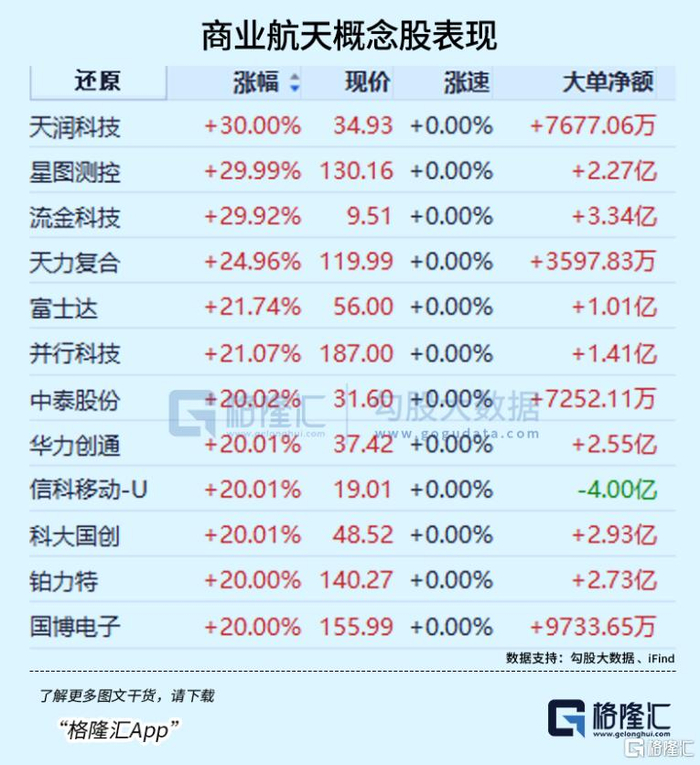
Core Viewpoint - The A-share market is experiencing a significant surge, with the Shanghai Composite Index rising by 1.09%, marking a 17-day consecutive increase and reaching a new high not seen in over a decade [1]. Market Performance - The single-day trading volume exceeded 3.6 trillion yuan, setting a new historical record, indicating heightened market enthusiasm [2]. - The "AI+" concept has seen a resurgence, with sectors such as AI healthcare, AI marketing, and various AI-related concepts leading in gains. The medical device ETF (562600) rose by 2.27% today and has increased by 11.66% year-to-date [3]. Sector Analysis - The "AI+" concept has concentrated its explosive growth, with sectors like AI applications, commercial aerospace, photovoltaics, retail, and precious metals showing significant gains, while oil and coal sectors faced declines [4]. - Notable stocks in the commercial aerospace sector include Luxin Venture Capital, which has seen 10 trading limits in 12 days, and other companies like Goldwind Technology and Tongyu Communication also performed well [4]. Specific Stock Performance - In the commercial aerospace sector, stocks such as Tianrun Technology (+30.00%), Xingtou Measurement Control (+29.99%), and Liujin Technology (+29.92%) have shown remarkable increases [6]. - The photovoltaic sector has also benefited from advancements in perovskite batteries and space photovoltaic concepts, with companies like Dongfang Risheng and Maiwei Shares leading the gains [7]. AI Applications - The AI application sector has collectively strengthened, with stocks like Yidian Tianxia and Liou Shares hitting the daily limit [9]. - Recent developments in AI applications include Walmart's collaboration with Google to enhance shopping experiences through AI [11]. Future Outlook - The AI industry is shifting focus from "computing power competition" to "application value," with 2026 expected to be a pivotal year for AI applications transitioning from "technology validation" to "commercial promotion" [14]. - The medical device ETF (562600) is highlighted for its significant exposure to the brain-computer interface sector, with a 23.79% concentration in this area, making it a key investment vehicle [20]. Investment Trends - The medical device ETF has seen a net inflow of 1.31 billion yuan over the past five days, indicating strong investor interest [22]. - The Hang Seng Medical ETF (159892) is also noted for capturing the trend of Chinese biopharmaceuticals going global, with significant inflows and a 13.56% increase year-to-date [24]. Conclusion - The integration of technology and healthcare is at a critical juncture, with investment strategies focusing on quality index tools to capitalize on long-term growth opportunities in AI healthcare and brain-computer interfaces [26].


17连阳!“AI+”涨疯了
格隆汇APP· 2026-01-12 10:29
Core Viewpoint - The A-share market is experiencing a significant surge, with the Shanghai Composite Index rising 1.09% and achieving a 17-day consecutive increase, reaching a 10-year high [2][3]. Group 1: Market Performance - The daily trading volume exceeded 3.6 trillion yuan, setting a new historical record, indicating heightened market enthusiasm [3]. - The "AI+" concept has seen a resurgence, with sectors such as AI healthcare, AI marketing, and various AI-related concepts leading in gains. The Medical Device ETF (562600) rose by 2.27% today and has increased by 11.66% year-to-date [4]. Group 2: Sector Analysis - AI applications, commercial aerospace, photovoltaics, retail, and precious metals sectors showed significant gains, while oil and coal sectors faced declines [5]. - Notable stocks in the commercial aerospace sector include Lushin Investment, which achieved 10 boards in 12 days, and Jin Feng Technology, which has seen a five-day consecutive increase [5]. Group 3: Commercial Aerospace - The commercial aerospace sector is highlighted by stocks such as Tianrun Technology (+30.00%), Xingtum Control (+29.99%), and Liujin Technology (+29.92%), among others, showcasing substantial net buying [6]. Group 4: Photovoltaic Sector - The photovoltaic sector is boosted by perovskite batteries and space photovoltaic concepts, with companies like Dongfang Risen, Maiwei Co., and Jiejia Weichuang leading the gains [7][8]. - The increasing focus on space power supply systems is expected to enhance the cost-effectiveness of photovoltaic systems [9]. Group 5: AI Applications - AI applications are gaining traction, with stocks like Yidian Tianxia and Liou Shares hitting the daily limit. Recent news indicates that major companies are rapidly entering various AI application scenarios [9][10]. - The GEO (Generative Engine Optimization) concept is emerging, focusing on optimizing content for AI searches, differing from traditional SEO strategies [11]. Group 6: AI in Healthcare - OpenAI has launched "ChatGPT Health," integrating health-related dialogues and electronic medical records, marking a significant step in AI's role in healthcare [12]. - The medical sector is witnessing a transformation from AI as an auxiliary tool to a comprehensive lifecycle management system, with high-value data creating competitive advantages for specialized firms [21][22]. Group 7: Investment Opportunities - The Medical Device ETF (562600) has a significant focus on brain-computer interface (BCI) technologies, with a 23.79% concentration in this area, making it a key investment vehicle [28]. - The Hang Seng Medical ETF (159892) is positioned to capture the trend of Chinese biopharmaceuticals going global, with a notable inflow of funds and a year-to-date increase of 13.56% [30][32]. Group 8: Future Outlook - The integration of technology and healthcare is at a pivotal point, with investors encouraged to leverage quality index tools to capitalize on long-term growth opportunities [34]. - The current low valuations in the Hong Kong pharmaceutical sector present a compelling case for investment, particularly in innovative drug development and AI applications [30][35].

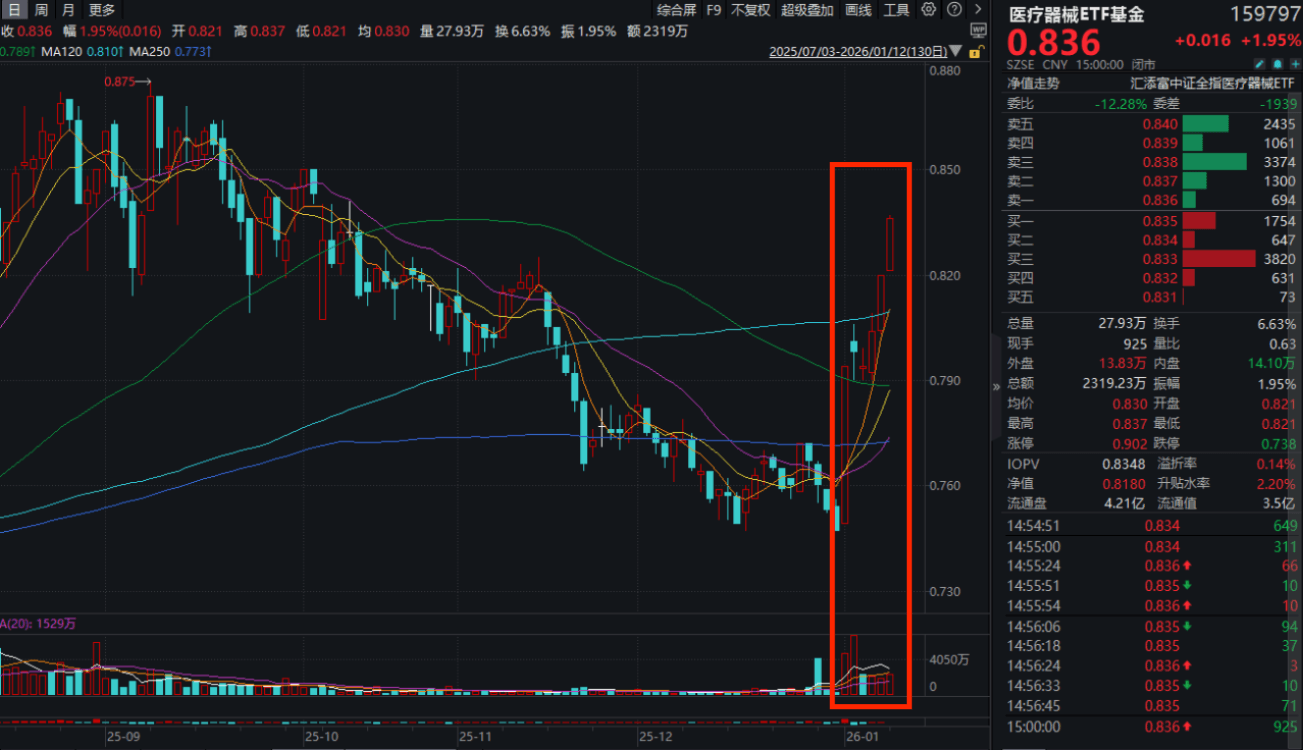
人类首次“太空脑机接口实验”!强脑科技以保密形式提交香港IPO申请!同类费率最低档的医疗器械ETF基金(159797)收涨近2%强势三连阳!
Sou Hu Cai Jing· 2026-01-12 10:18
Group 1: Brain-Computer Interface (BCI) Industry - Strong Brain Technology has submitted a confidential IPO application in Hong Kong, indicating a significant step in the BCI sector [1] - The Tianjin University BCI and Human-Machine Integration Laboratory has developed a comprehensive layout from high-performance devices to system integration, focusing on non-invasive BCI technology [1] - The BCI industry is experiencing a golden period of development, with a projected market size of $2.94 billion by 2025 and expected to grow to approximately $12.4 billion by 2034, reflecting a compound annual growth rate of 17.35% [7] Group 2: Clinical Applications and Innovations - The Tianjin University has launched a series of innovative medical devices for clinical applications, covering areas such as stroke rehabilitation, spinal cord injury assistance, depression treatment, and auditory disorders [1] - The BCI technology has been successfully applied in aerospace, including the development of a brain-machine interaction system for space stations, enhancing astronaut performance and emotional state monitoring [1] Group 3: Market Trends and Investment Opportunities - The BCI sector is characterized by active investment and financing activities, with the U.S., EU, and Japan leading in strategic initiatives [4] - The medical device ETF fund (159797) has shown strong performance, with significant net subscriptions, indicating investor confidence in the medical device sector [5][8] - The ETF fund covers core areas of medical devices, including high-value consumables and in vitro diagnostics, with the top ten weighted stocks accounting for 45.04% of the fund [8]
浙商证券:AI应用多点开花 看好AI+生物医药投资机会
智通财经网· 2026-01-12 08:02
智通财经APP获悉,浙商证券发布研报称,AI医疗应用在国家战略与市场需求的共振下已迈入商业化落 地的快速阶段。该行认为AI制药核心价值在于大幅提升药物早研效率,看好国内多家AI制药平台服务 能力全球领先。AI制药的高需求将带来较大的落地验证实验及合作需求,建议关注已与AI制药平台有 战略合作的传统CRO公司。此外,早研效率大幅提升将快速传导至临床前、安评以及临床CRO需求。 浙商证券主要观点如下: 该行认为AI制药核心价值在于大幅提升药物早研效率,以英矽智能Pharma.AI为例,其能够使候选药物 从靶点发现到临床前候选药物确认时间从4.5年大幅缩短到12至18个月,早研阶段的投入产出比大幅提 升。该行看好:1)国内多家AI制药平台服务能力全球领先,海外业务拓展持续高速已验证,关注英矽智 能、晶泰科技、泓博医药、维亚生物、成都先导等;2)AI制药的高需求将带来较大的落地验证实验及合 作需求,建议关注已与AI制药平台有战略合作的传统CRO公司,关注皓元医药、美迪西、百诚医药、 阳光诺和、药石科技、药明康德等;3)早研效率大幅提升将快速传导至临床前、安评以及临床CRO需 求,建议关注昭衍新药、美迪西、益诺思、泰格 ...

持续布局AI医疗应用和创新药械相关资产
Xinda Securities· 2026-01-12 06:54
Investment Rating - The investment rating for the pharmaceutical and biotechnology industry is "Positive" [2] Core Insights - The pharmaceutical sector experienced a weekly return of 7.81%, outperforming the CSI 300 index by 5.03%, ranking 6th among 31 primary sub-industry indices. The medical services sub-sector had the highest weekly increase of 12.34% [3][15] - The report highlights the impact of recent events such as Elon Musk's announcement regarding Neuralink's product mass production in 2026, Arrowhead Pharmaceuticals' promising clinical data for its siRNA therapy ARO-INHBE, and OpenAI's launch of "ChatGPT health," which have driven the sector's performance. The report suggests that while the brain-computer interface theme may be at a short-term emotional peak, AI medical applications still have room for growth [3][14] - Continuous investment in innovative drugs and related assets in the CXO and upstream life sciences sectors is recommended [3][14] Summary by Sections 1. Market Performance - The pharmaceutical sector's monthly return was 4.87%, outperforming the CSI 300 index by 1.37%, ranking 18th among 31 primary sub-industry indices. The medical services sub-sector had the highest monthly increase of 12.19% [15][20] 2. AI Medical Applications - AI applications in healthcare include AI+medical testing, AI+medical large models, AI+imaging, AI+e-commerce/precision marketing, and AI+gene sequencing, with notable companies such as KingMed Diagnostics, Dian Diagnostics, and BGI Genomics leading in these areas [4][16] 3. CXO and Upstream Life Sciences - Key global CXO leaders to watch include WuXi AppTec, WuXi Biologics, and Kelun Pharmaceutical. Domestic clinical CRO leaders include Tigermed and PPD. The report also highlights resource-based CXOs and upstream life sciences companies [5][16] 4. High-end Medical Devices - The report suggests focusing on companies involved in robotic applications, pharmaceutical equipment, and consumer medical devices, as demand is gradually recovering [5][16] 5. Innovative Drugs - Investment opportunities are identified in small nucleic acids, ADCs, and IO dual/multi-antibodies, with specific companies recommended for each category [6][16]
华大基因股价涨5.09%,易方达基金旗下1只基金位居十大流通股东,持有529.57万股浮盈赚取1392.78万元
Xin Lang Cai Jing· 2026-01-12 03:30
Group 1 - The core viewpoint of the news is that BGI Genomics has seen a stock price increase of 5.09%, reaching 54.32 CNY per share, with a trading volume of 595 million CNY and a turnover rate of 2.72%, resulting in a total market capitalization of 22.723 billion CNY [1] - BGI Genomics, established on July 9, 2010, and listed on July 14, 2017, is located in Shenzhen, Guangdong Province. The company specializes in providing research services and precision medical testing solutions through multi-omics big data technologies, including gene testing and mass spectrometry [1] - The revenue composition of BGI Genomics includes: 42.67% from precision medical testing solutions, 26.12% from reproductive health research and clinical application services, 17.08% from multi-omics big data services and synthesis, 11.00% from tumor and chronic disease prevention and translational medicine services, 2.36% from infection prevention research and clinical application services, and 0.78% from other services [1] Group 2 - From the perspective of the top ten circulating shareholders of BGI Genomics, E Fund's ETF (159915) reduced its holdings by 816,600 shares in the third quarter, now holding 5.2957 million shares, which accounts for 1.27% of the circulating shares. The estimated floating profit today is approximately 13.9278 million CNY [2] - E Fund's ETF (159915) was established on September 20, 2011, with a latest scale of 110.2 billion CNY. Year-to-date return is 3.92%, ranking 2883 out of 5579 in its category; the one-year return is 68.04%, ranking 566 out of 4202; and the return since inception is 279.68% [2]
更全更精细,首个千万级免疫细胞图谱发布
Xin Lang Cai Jing· 2026-01-10 04:02
Core Insights - A research team of Chinese scientists published the first high-resolution immune cell atlas with over 10 million peripheral blood immune cells, providing a comprehensive multi-omics analysis [1][2] Group 1: Research Significance - Establishing a high-precision immune cell atlas for the Chinese population is crucial for enhancing the understanding of disease health and advancing precision medicine in China [2] - The research team developed an efficient single-cell multi-omics platform, DNBelab C4, which significantly reduced the cost of single-cell sequencing, enabling large-scale studies [2] Group 2: Methodology and Findings - The study identified 73 immune cell subtypes, including rare cells that constitute less than 0.1% of blood, which play critical roles in specific immune responses [2] - A detailed "identity card" was created for each cell type, documenting their distribution and gene expression characteristics, while exploring associations with physiological factors like age and gender [3] Group 3: Genetic Insights - The research revealed a gene regulatory map showing how transcription factors precisely control over 10,000 target genes, with unique regulatory patterns for different immune cell types [3] - The study found 9,600 genetically regulated genes and over 50,000 chromatin open regions, with nearly one-third of regulatory effects being cell type-specific [4] Group 4: Disease Mechanisms - The analysis integrated data from 154 molecules and disease traits, identifying 1,196 significant genetic associations across 68 immune cell types, providing insights into mechanisms affecting conditions like asthma [5] - More than two-thirds of disease-related variants were found to be cell type-specific, indicating the necessity of studying the correct cell types to understand disease mechanisms [5] Group 5: Future Directions - The research team plans to expand the CIMA project to include patients with autoimmune diseases and chronic conditions, aiming to systematically analyze immune mechanisms in disease development and identify new therapeutic targets [5]
脑机接口+AI诊断火热!全市场规模最大的医疗器械ETF(159883)盘中获资金大幅申购超2.6亿
Sou Hu Cai Jing· 2026-01-09 06:53
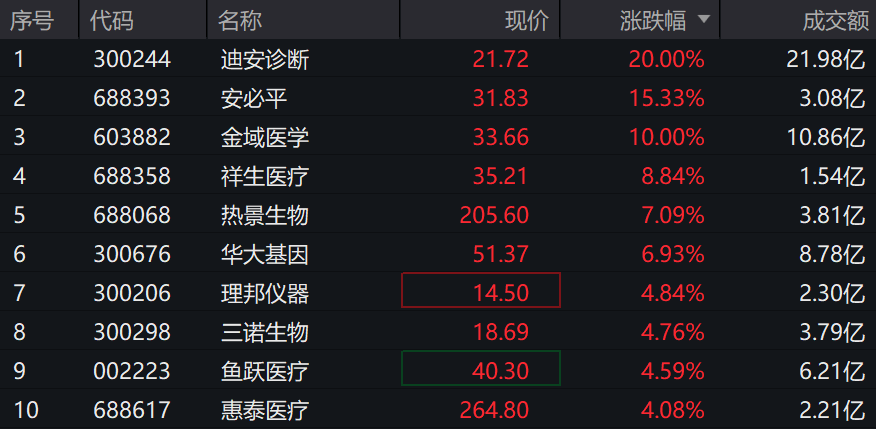
Core Viewpoint - The medical device sector is experiencing significant growth, with key stocks showing strong performance and substantial capital inflow into related ETFs, indicating a bullish market sentiment in this industry [1][4]. Group 1: Market Performance - The CSI All-Medical Device Index (H30217) rose by 1.59%, with notable stocks such as Di'an Diagnostics (300244) hitting a 20% limit up, and Kingmed Diagnostics (603882) reaching a 10% limit up [1]. - The largest medical device ETF (159883) saw a 1.53% increase, with over 260 million yuan in capital inflow during the afternoon session [1]. - Over the past four days, the medical device ETF has experienced continuous net inflows, totaling 1.232 billion yuan, with an average daily net inflow of 308 million yuan [1]. Group 2: Key Stock Movements - Di'an Diagnostics (300244) closed at 21.72 yuan, with a 20% increase and a transaction volume of 2.198 billion yuan [2]. - Anbiping (688393) rose by 15.33% to 31.83 yuan, with a transaction volume of 308 million yuan [2]. - Kingmed Diagnostics (603882) increased by 10% to 33.66 yuan, with a transaction volume of 1.086 billion yuan [2]. Group 3: Technological and Policy Developments - Shenzhen Hanyu Pharmaceutical and Huawei Cloud launched a "Peptide AI Process Optimization Assistant," reducing R&D cycles by 45% and improving decision-making efficiency by 90% [3]. - Guangzhou's new plan emphasizes biomedicine and health as a key emerging industry, aiming to build high-level innovation platforms around cell and gene technology [3]. - The Beijing action plan for 2026-2027 aims for widespread application of AI products in healthcare institutions by 2027 [3]. Group 4: ETF Characteristics - The medical device ETF (159883) has the highest brain-computer interface content in the market, accounting for over 23%, and is the largest ETF focused on the medical device sector [4]. - The ETF includes a strong representation of innovative domestic companies, with over 80% of its components from the Sci-Tech Innovation Board and the Growth Enterprise Market [4]. - The Hong Kong medical ETF (159366) tracks the CSI Hong Kong Stock Connect Medical Theme Index, providing exposure to high-quality assets in the medical sector [4].


脑机接口的“身份证”来了?新晋顶流,最强马斯克概念!
Jin Rong Jie· 2026-01-09 06:34
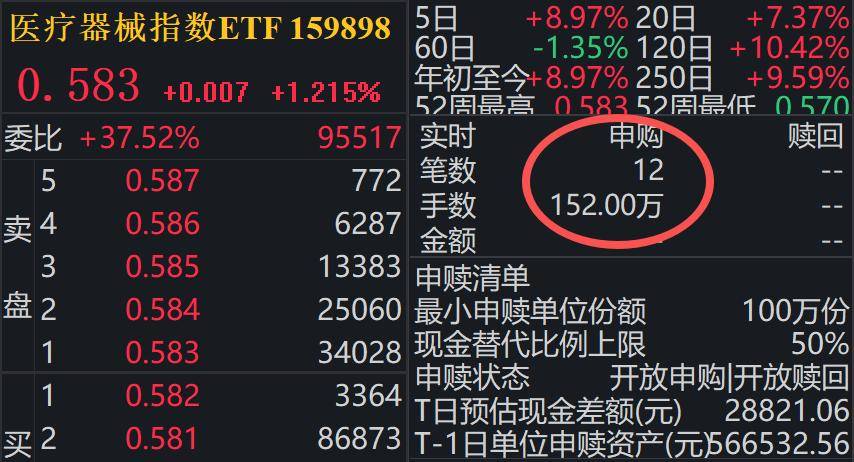
Core Insights - The announcement of the first non-invasive brain-computer interface (BCI) medical device registration in China marks a significant shift from laboratory research to clinical and market applications, indicating a new growth trajectory for the industry [1][2] - The medical device sector is experiencing a surge, with companies like Dean Diagnostics and Kingmed Diagnostics hitting their upper trading limits, reflecting strong market interest in BCI technologies [1][3] - The BCI sector is seen as a promising investment opportunity, with a clean chip structure and lower entry points compared to other tech sectors like satellites and chips [1] Industry Developments - The Chinese government has included BCI in its new five-year plan as a key future industry, signaling ongoing support for research and approval processes [2][3] - Major players in the industry are accelerating their efforts, with Neuralink announcing plans for large-scale production by 2026 and significant investments being made domestically [2][3] - Technological advancements in China, such as the ability for paralyzed patients to drink water using their thoughts, demonstrate the country's leadership in BCI technology [2] Market Dynamics - The BCI technology is categorized under medical devices, which are essential for addressing real and painful issues faced by patients, such as stroke recovery and spinal cord injuries [3][4] - The medical device index ETF (159898) includes approximately 24% of companies with substantial BCI business operations, providing an efficient investment vehicle for this emerging sector [3][4] - The medical device sector, which has faced declines over the past four years, is expected to see a turnaround driven by advancements in BCI technology [4]
国内首张非侵入式脑机接口证出炉!医疗器械指数ETF(159898)午后拉升、标的指数“含脑量”约24%
Sou Hu Cai Jing· 2026-01-09 06:21
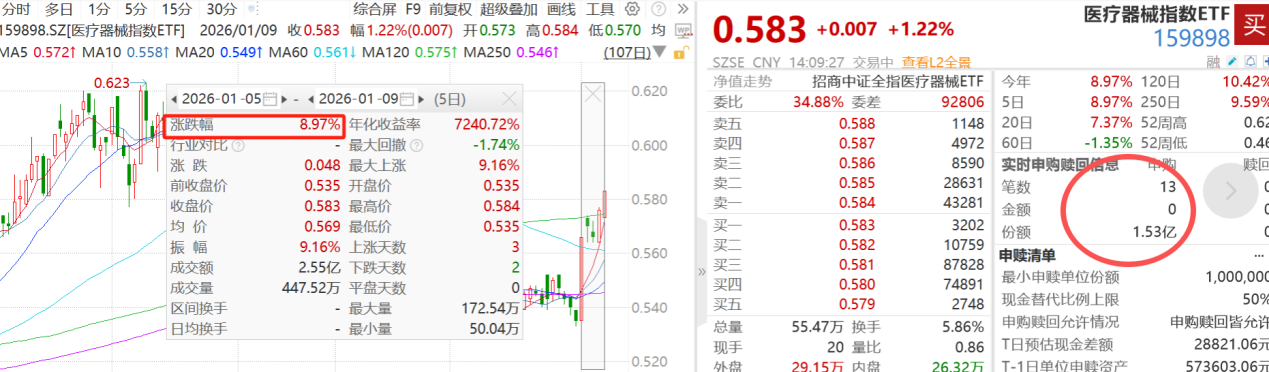
Group 1 - The medical device sector is experiencing a significant rally, with the Medical Device Index ETF (159898) seeing a net inflow of over 88 million yuan during intraday trading on January 8, following a previous inflow of over 116 million yuan [1] - Key stocks such as Di'an Diagnostics and Kingmed Diagnostics reached their daily limit, while others like Anbiping and Xiangsheng Medical saw gains exceeding 10% and 9% respectively [1] - The Medical Device Index ETF (159898) has a current scale of 659 million yuan, with approximately 24% of its holdings related to the brain-computer interface (BCI) concept [2][3] Group 2 - The brain-computer interface industry is highlighted as a key development area in the new five-year plan, with supportive policies for clinical trials, registration, and pricing [1] - Strong Brain Technology, a leading BCI company, recently completed a financing round of about 2 billion yuan, marking it as the second-largest financing in the BCI field globally, after Neuralink [2] - The Medical Device Index ETF (159898) includes several companies with substantial involvement in the BCI sector, making it a convenient and efficient tool for investment in this emerging field [3]