TDK

Search documents
美国市场考察行:除人工智能 计算领域外,投资者对硬盘驱动器(HDD)也有浓厚兴趣-Electronic Components-US Marketing Trip A Lot of Investor Interest in HDDs in Addition to AIComputing
2025-07-22 01:59
Summary of Conference Call Notes Industry Overview - **Industry**: Electronic Components in Japan - **Key Companies**: Ibiden, TDK, Murata, Taiyo Yuden, HDD manufacturers Core Insights 1. **Investor Interest in HDDs**: There has been a notable increase in investor inquiries regarding HDDs, particularly concerning the production bottlenecks and capacity increases for NL-HDDs in data centers. The production volume of NL-HDDs dropped from 7.45 million units in June 2022 to 2.60 million units in June 2023, with a partial recovery to 6.16 million units by May 2025 [8][8][8] 2. **Earnings Growth Expectations**: Investors have high expectations for Ibiden's earnings growth in the medium term, driven by its significant market share in FC packages for NVIDIA GPUs. However, there are concerns regarding near-term earnings for F3/26 [3][3][3] 3. **AI and Computing Demand**: Companies like Ibiden, TDK, and Murata are expected to benefit from the growing demand for computing components due to the rise of AI technologies. Ibiden is projected to see substantial increases in unit prices of its FC package boards with each new GPU generation [2][2][2] 4. **TDK's Market Position**: TDK has a ~40% share of the global mobile device battery market and is anticipated to see significant sales and profit growth from rechargeable batteries starting in F3/26 2Q. However, there is skepticism among investors regarding TDK's communication strategy about its earnings [4][4][4] 5. **Murata's Earnings Potential**: Investors believe that while Murata's F3/26 1Q earnings are favorable, concerns about declining sales of RF modules for 2025 model smartphones may hinder share price growth. The demand for MLCCs is expected to have a more significant impact on earnings than RF modules [7][7][7] Additional Important Points 1. **Production Bottlenecks**: The decline in NL-HDD production is attributed to workforce reductions during previous downturns, making it challenging to scale up production in response to rising demand. Companies like Suncall have exited the suspension manufacturing market, contributing to supply issues [8][8][8] 2. **Market Dynamics**: The market is demanding increased capacity for NL-HDDs, with manufacturers raising product capacities to 24TB and beyond. This shift is creating a competitive landscape where bottlenecks in production are a critical concern [8][8][8] 3. **Valuation and Risks**: Ibiden's valuation is based on a DCF model with a WACC of 6.3%. Risks include potential competition from overseas in the ABF package market and weaker-than-expected demand for CPUs [15][16][16] Conclusion The electronic components industry in Japan is experiencing significant interest from investors, particularly in the context of AI and computing advancements. Companies like Ibiden, TDK, and Murata are positioned to benefit from these trends, although they face challenges related to production capacity and market dynamics.
丘钛科技(1478.HK)25H1半年报预告点评:垂直整合积极推进 产品结构优化&非手机业务驱动高增
Ge Long Hui· 2025-07-19 11:17
Core Viewpoints - In 2025, the company's vertical integration will advance further, with investments in poLight and the acquisition of TDK's micro-driver solutions enhancing its competitiveness in high-end camera module solutions, laying a foundation for future growth [1][2] - The company's non-mobile business is a growth highlight, with non-mobile camera module shipments increasing by 48% year-on-year in the first half of 2025 [1][4] - The company expects significant improvements in the sales volume and product structure of fingerprint recognition modules, driving positive changes in gross margins [1][5] Financial Performance - The company forecasts a net profit of approximately 288 million to 323 million yuan for the first half of 2025, representing a year-on-year increase of 150% to 180% [1] - Mobile camera module shipments totaled 184 million units in the first half of 2025, a decrease of about 15% year-on-year, while non-mobile camera module shipments reached 8.08 million units, an increase of approximately 48% [1] Vertical Integration Strategy - The company emphasizes the importance of vertical integration for camera module manufacturers, which helps reduce supplier management costs and ensures product quality [2] - The company has invested in Taiwan's New Giant and poLight, becoming the largest shareholder of both, enhancing its competitive edge in customized lenses and zoom lens technology [2][3] Motor Solutions - The acquisition of TDK's micro-driver solutions will strengthen the company's high-end VCM motor competitiveness, leveraging TDK's extensive experience and technology in the micro-motor industry [3] - This acquisition is expected to enhance the company's product innovation capabilities in camera modules, particularly in autofocus, optical zoom, and optical stabilization [3] Non-Mobile Business Growth - The non-mobile camera module business, particularly in the automotive and IoT sectors, is expected to contribute positively to the company's profits due to higher ASP and profitability [4] - The company has become a core supplier for leading brands in the drone and handheld imaging device markets, benefiting from the growing market scale [5] Fingerprint Recognition Module Improvements - The fingerprint recognition module market is experiencing a competitive landscape improvement, with the company achieving a 60% year-on-year increase in shipments in the first half of 2025 [5] - The increase in ultrasonic fingerprint recognition penetration is positively impacting the company's product structure [5]
Is TDK (TTDKY) a Great Value Stock Right Now?
ZACKS· 2025-07-18 14:40
While the proven Zacks Rank places an emphasis on earnings estimates and estimate revisions to find strong stocks, we also know that investors tend to develop their own individual strategies. With this in mind, we are always looking at value, growth, and momentum trends to discover great companies.Considering these trends, value investing is clearly one of the most preferred ways to find strong stocks in any type of market. Value investors use a variety of methods, including tried-and-true valuation metrics ...


稀土产业链:全球主导地位稳固,高端应用描绘增长新曲线
材料汇· 2025-07-16 13:37
Core Viewpoint - China holds a dominant position in the global rare earth market, with significant reserves and production capabilities, accounting for approximately 49% of global rare earth oxide (REO) reserves and 68% of global production as of 2024 [10][36][42]. Group 1: Rare Earth Resources and Production - Global rare earth oxide (REO) reserves are estimated at around 90 million tons, with China possessing nearly 49% of this total [10]. - In 2024, China's REO production is projected to be approximately 39,000 tons, maintaining its status as the largest producer globally [10]. - China's rare earth mining and processing capabilities are highly developed, with the country meeting over 90% of global demand for rare earth metal processing [12][36]. Group 2: Export and Import Dynamics - China's rare earth exports have been increasing, with light rare earth exports reaching 3,823 tons in March 2025, indicating a continuous upward trend [11]. - The export proportion of rare earth concentrates has been declining, with self-use rates remaining high, reflecting a shift towards domestic consumption [11][12]. - In the first quarter of 2025, China's rare earth exports reached 14,177 tons, a year-on-year increase of 5.14% [18]. Group 3: Industry Structure and Policy - The rare earth industry in China is characterized by a "north light, south heavy" structure, with significant production capabilities in both regions [43]. - The Chinese government has implemented strict regulations on rare earth mining and processing, emphasizing protective mining and total quantity control [50][54]. - Policies are gradually shifting towards supporting high-end applications and strategic materials, with a focus on innovation in new materials and equipment [59][62]. Group 4: Downstream Demand and Applications - The demand for rare earth materials is growing in high-tech applications, including electric vehicles, wind power, and industrial motors, with significant growth expected in these sectors [85]. - Rare earth permanent magnets are crucial in various applications, including industrial robots, where they enhance performance and efficiency [78]. - The production of rare earth permanent magnets in China is substantial, with major companies like Jinli Permanent Magnet leading the market [70][72].
苹果折叠屏真要来了?首款iPhone Fold预计明年下半年发布,或定价1800美元起
Hua Er Jie Jian Wen· 2025-07-15 07:01
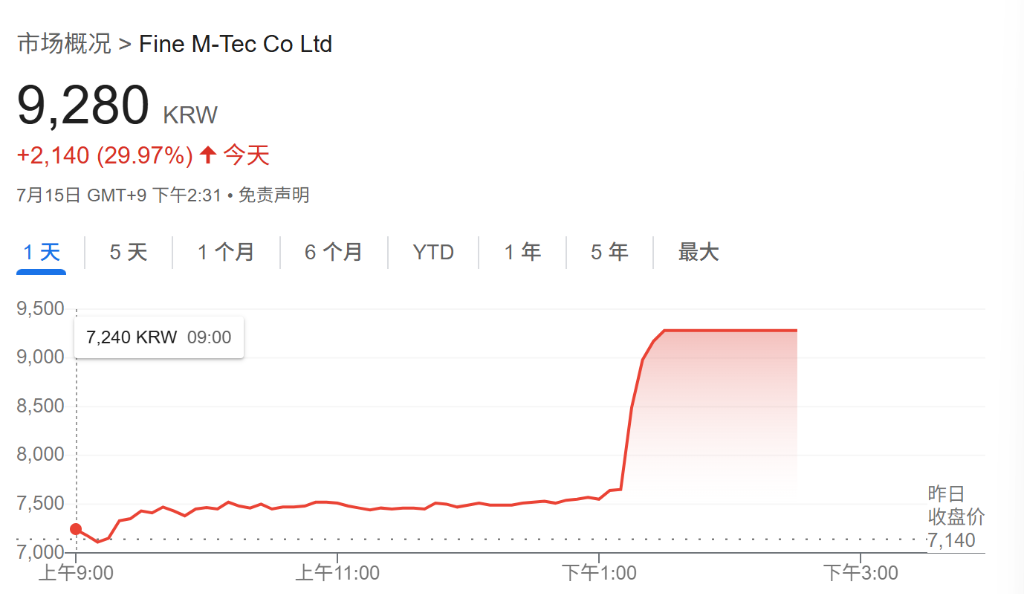
Core Viewpoint - Apple's first foldable iPhone is expected to be released in the second half of 2026, with a starting price of $1,800 [1] Group 1: Product and Pricing - The foldable iPhone will utilize Samsung Display's (SDC) wrinkle-free display design instead of Apple's own solution, ensuring mass production by the second half of 2026 [1] - The estimated bill of materials (BOM) cost for the iPhone Fold is approximately $759, which is 4% lower than the Samsung Z Fold SE [1] - Initial production is expected to be limited to 10-15 million units due to the technical complexity and high price point of foldable devices [1] Group 2: Supply Chain Dynamics - The adoption of SDC's design will reshape the supply chain, with Fine M-Tec being the largest beneficiary as a supplier of metal plates for the displays, expected to ship 13-15 million units starting Q1 2026 [2] - The unit price for the metal plates is projected to be around $30-35, significantly higher than traditional products priced at about $20 [2] - Samsung Display is anticipated to be the main supplier of 7-inch foldable OLED panels, with an annual capacity of 15 million units, while LG Display may also serve as an alternative supplier [2] Group 3: Market Response - Fine M-Tec's stock surged, reaching a closing increase of 29.83% to 9,270 KRW on the KOSDAQ market, driven by investor optimism regarding the foldable iPhone [3] - Analysts predict that the launch of the foldable iPhone will have a positive ripple effect across the supply chain, benefiting companies like Amphenol, Hirose, TDK, and Samsung SDI, which are currently trading below historical valuation averages [6] Group 4: Market Trends - The global foldable smartphone market is showing signs of fatigue, with growth slowing and a projected decline in 2025 due to high prices and concerns over durability and usability [6] - Samsung maintains a leading position in this segment with the most comprehensive foldable product line, while brands like OPPO, OnePlus, Google, Motorola, Honor, and Vivo are introducing unique foldable designs [6]

TTM Technologies, Inc. Prepares For the Future with the Acquisition of a Facility in Wisconsin and Land in Penang
Globenewswire· 2025-07-09 12:00
Core Insights - TTM Technologies, Inc. has announced the acquisition of a 750,000-square-foot facility in Eau Claire, Wisconsin, and land rights for a future manufacturing site in Penang, Malaysia, to enhance its manufacturing capabilities [1][3][4] Group 1: Acquisition Details - The Eau Claire facility was previously owned by TDK and is well-equipped for advanced technology PCB manufacturing, allowing TTM to reduce lead times for U.S. domestic capacity [3][4] - The new facility in Penang will support supply chain diversification beyond China, providing cost-competitive, high-quality PCB manufacturing in Southeast Asia [4] Group 2: Strategic Implications - These investments align with TTM's strategy to offer regionally optimized, globally connected manufacturing solutions, enhancing supply chain security and flexibility for global customers [2][4] - The Eau Claire facility is expected to support high-volume production for key markets, particularly in data center computing and networking for generative AI applications [3][4] Group 3: Economic Impact - The expansion in Wisconsin is seen as beneficial for the local economy, with the state recognized for its precision manufacturing capabilities [4] - TTM does not anticipate significant impacts on its operational results or financial condition for 2025 from these investments [5]


量子产业化,日本下血本了
Hu Xiu· 2025-07-08 01:29
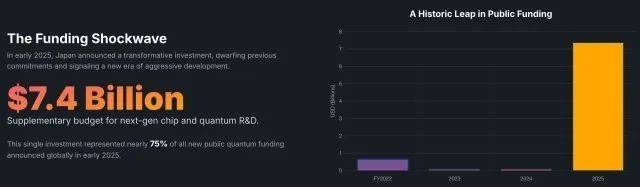
Group 1 - Japan's government has committed $7.4 billion (approximately 1.05 trillion yen) to quantum technology this year, which is more than three times the total investment over the past five years [1][2] - This investment represents a strategic shift driven by deep-seated concerns about historical failures in technology leadership, particularly in the semiconductor industry [3][4] - The Japanese government aims to transition from basic research to industrialization, with a clear goal of making quantum technology a pillar of future economic prosperity and national security [5][10] Group 2 - The investment is seen as a "preventive and high-risk" intervention to avoid being left behind in the global competition for technology leadership [7][9] - The government hopes to stimulate systemic change, encouraging research institutions, large enterprises, and potential startups to engage in the quantum race [8][9] - Japan's approach is characterized by a "collaborative giant ship" model, where the government leads and industrial giants collaborate, forming a powerful alliance [12][14] Group 3 - Major Japanese corporations like Toyota, NEC, and Fujitsu are expected to benefit significantly from government contracts and participation in core research projects [43][44] - The focus on building a self-sufficient supply chain for quantum technology components is a key aspect of Japan's strategy, aiming to avoid reliance on foreign suppliers [20][23] - The mixed quantum-classical computing strategy is seen as a pragmatic approach to leverage existing capabilities while aiming for quick results in various applications [17][18][19] Group 4 - Japan's commitment to quantum technology is likely to provoke responses from other major players, including the U.S. and China, potentially escalating a new round of "quantum arms race" [39][40][42] - The success of Japan's strategy will depend on overcoming challenges such as fostering a vibrant startup ecosystem and effectively translating research into marketable products [25][29][31] - Attracting and retaining top talent in the competitive global landscape is crucial for Japan to realize its quantum ambitions [32][34][38]


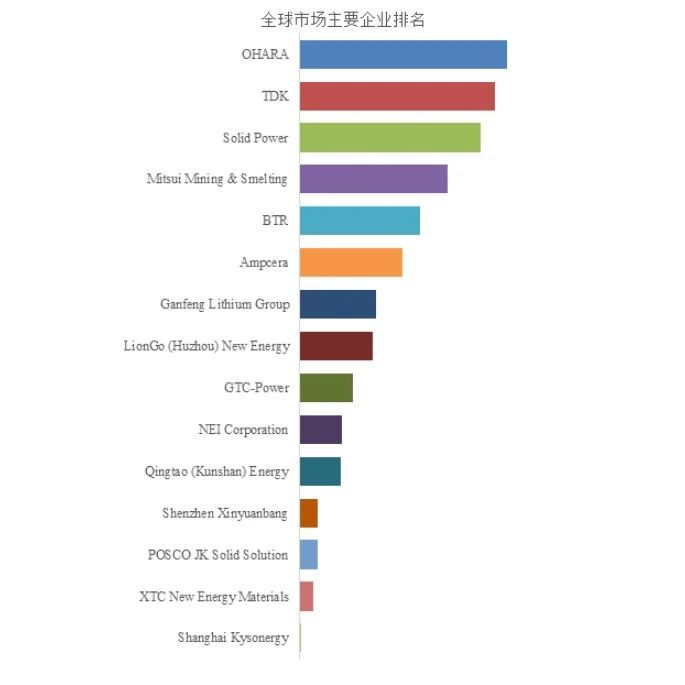
全球固态电池电解质市场前15强生产商排名及市场占有率
QYResearch· 2025-07-02 10:22
Core Viewpoint - Solid electrolytes are the core component that differentiates solid-state batteries from traditional liquid batteries, focusing on their technological development and market potential [1][9][17]. Market Overview - The global solid electrolyte market for solid-state batteries is projected to reach $3.31 billion by 2031, with a compound annual growth rate (CAGR) of 101.0% over the coming years [1]. - The top five manufacturers are expected to hold approximately 58.0% of the market share in 2024 [5]. Market Drivers - **Demand from New Energy Vehicles**: The penetration rate of electric vehicles in China is expected to exceed 50%, driven by policies such as vehicle replacement incentives and the EU's ban on fuel vehicles by 2035 [9][15]. - **Energy Storage Industry Growth**: The global demand for energy storage systems is growing at a CAGR of over 30%, with solid-state batteries being favored for their high safety and longevity [10][11]. - **Emerging Fields**: New applications in low-altitude economies, such as eVTOLs, require high energy density and safety, making solid-state batteries the preferred choice [12][13]. - **Policy and Capital Support**: Government initiatives and significant capital inflows are driving the development of solid-state batteries, with China and the EU investing heavily in this technology [14][16]. Future Outlook - The solid electrolyte market is expected to experience explosive growth due to technological breakthroughs, cost reductions, and supportive policies [17]. - Leading companies are likely to dominate the next generation of battery technology through monopolization, industry chain integration, and global expansion [17].
摩根士丹利:电子元件投研框架PPT
摩根· 2025-07-01 00:40
Investment Rating - Industry View: In-Line [3] Core Insights - Japanese electronic component companies are distinguished by their value-added products, which are characterized by more layers and components that are smaller, thinner, lighter, and more durable [5][11] - The demand for high-performance computing and data centers is expected to accelerate due to advancements in deep learning and AI [5][11] - The automotive sector is transforming into mobile communication and sensor devices, necessitating more sophisticated components [5][11] - The rise of 5G smartphones and AI smartphones will require components that are more value-added, smaller, thinner, and lighter [5][11] - AI smartphones and AI PCs will demand higher electric power and batteries with increased capacity [5][11] Summary by Sections Market Demand - There is a growing need for value-added components in high-performance computing, AI smartphones, and automotive applications [13][14] - The server market is experiencing growth driven by AI servers that require high value-added components [31] Component Specifications - High-performance computing requires more advanced ABF (flip chip) package substrates for CPUs and GPUs [14] - The automotive sector, including ADAS and electric vehicles, requires durable components with enhanced value [14] - AI smartphones are projected to consume more electricity and necessitate batteries with higher energy density, such as silicon anode lithium batteries [14] Market Share and Growth - Murata held a 47% market share in MLCCs in 2023, an increase from 28% in 2004, showcasing its leadership in value-added products [14] - The total sales in the electronic components market for F24 reached JPY 12,548.1 billion, with significant contributions from various sectors including smartphones and automotive [16] Component Usage - The number of components required in various applications highlights the importance of MLCCs, with smartphones requiring approximately 1,000 MLCCs per device [18] - The automotive sector can require between 5,000 to 8,000 components, emphasizing the complexity and demand for high-quality parts [18] Future Trends - The shift towards Chiplets in HPC semiconductors is anticipated, which will involve more complex packaging solutions [14] - Business opportunities in the mobility industry utilizing IoT technology are expected to expand, leading to increased demand for high-performance modules [14]
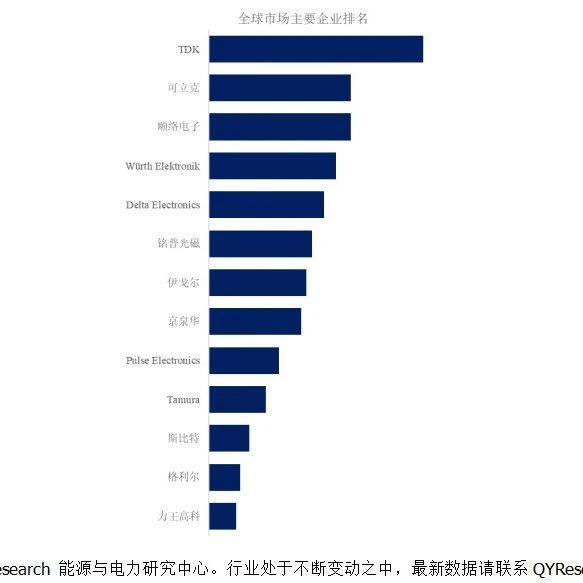
光伏&储能逆变器用磁性元器件,前13大企业占据全球71%的市场份额(2024)
QYResearch· 2025-06-30 09:52
Core Viewpoint - The global market for magnetic components used in photovoltaic (PV) and energy storage (ESS) inverters is projected to reach $3.3 billion by 2031, with a compound annual growth rate (CAGR) of 8.0% in the coming years [1]. Market Overview - The market for magnetic components in PV and ESS inverters is expanding significantly due to the rapid growth of the global photovoltaic and energy storage industries. China, as the largest market for photovoltaic installations, is experiencing a surge in demand for magnetic components [11]. - The top five manufacturers in this market hold approximately 42.0% of the global market share as of 2024 [5]. Technological Requirements - There is an increasing demand for high-performance magnetic components due to the rising efficiency of photovoltaic modules and the growing power requirements of energy storage systems. This necessitates innovations in material selection and manufacturing processes [12][14]. - New magnetic materials, such as nanocrystalline and amorphous alloys, are being adopted to enhance the performance of magnetic components [14]. Development Trends - High performance: Magnetic components are required to have higher precision, stability, and lower losses to meet the operational demands of inverters [14]. - Miniaturization and integration: The trend towards smaller and more integrated magnetic components is driven by space constraints in photovoltaic and energy storage systems, which can improve power density and reduce costs [14]. - Customization: Different applications in photovoltaic and energy storage systems require tailored magnetic components, leading manufacturers to offer customized products and solutions [14].