Waymo

Search documents
Waymo模擬世界狂練Tesla:真實數據才王道!#Waymo #TeslaFSD #自動駕駛 #ElonMusk #Robotaxi #AI世界模型
大鱼聊电动· 2026-02-07 08:18
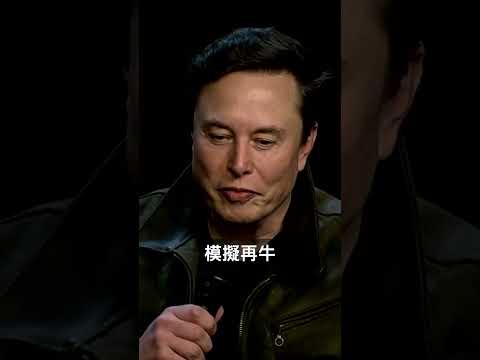
Waymo 又放大招了! 用DeepMind Genie 3 搞出World Model 虛擬世界裡 龍捲風 飛機砸高速公路 大象突然竄出來 全都能模擬練兵 聽起來 超瘋狂對吧? 工程師只要 打幾句提示 就能生成 超逼真場景 邊緣事件全包! 但是醒醒吧! 馬斯克早說過 模擬再牛 也比不過 真實世界 百萬輛車 每天碰上的怪事 而且Waymo 還得靠貴到爆的 LiDAR堆硬件 成本高擴張慢 Tesla純視覺 端到端 簡單粗暴 卻超能打 模擬只是補課 真實數據 才是王道! 你覺得誰更 接近真正的 無人駕駛? Waymo這波 能反殺 Tesla嗎?. ...


Waymo联手DeepMind打造世界模型:基于Genie 3,让自动驾驶「脑补」罕见场景
机器之心· 2026-02-07 07:00
Core Insights - Waymo has launched the Waymo World Model, a new standard in large-scale, hyper-realistic autonomous driving simulation, built on DeepMind's Genie 3 [1][4] - The model can generate highly realistic and interactive 3D environments tailored for the strict requirements of autonomous driving [4][8] - Waymo Driver has completed nearly 200 million miles of fully autonomous driving, enhancing road safety through extensive virtual world training [4][28] Group 1: Model Capabilities - Waymo World Model leverages Genie 3's extensive world knowledge to simulate rare events that are difficult to replicate in real life, such as tornadoes and encounters with elephants [4][9] - The model supports high-fidelity, multi-sensor data generation, including camera images and LiDAR point clouds, providing a comprehensive training and testing environment for autonomous systems [4][8] - The simulation allows for real-time adjustments through simple language prompts, driving inputs, or scene layouts, enhancing the model's adaptability [4][11][16] Group 2: Simulation Control Mechanisms - The model features three main control mechanisms: driving behavior control, scene layout control, and language control, enabling the simulation of various driving scenarios [11][13][16] - Driving behavior control allows for the simulation of counterfactual events, assessing how the Waymo Driver would respond under specific conditions [11] - Scene layout control enables customization of road layouts and traffic signals, while language control provides flexibility in adjusting time of day and weather conditions [13][16] Group 3: Realism and Accuracy - Waymo World Model can convert real-world videos into multi-modal simulations, achieving high levels of realism and factual accuracy [22] - The model's efficient variants allow for long-duration simulations while maintaining high fidelity, supporting large-scale testing [24] - By simulating rare scenarios, Waymo Driver prepares for complex driving situations, setting a higher safety benchmark for autonomous systems [28]


Google World Model AI Accelerates Waymo Robotaxi Expansion
PYMNTS.com· 2026-02-06 23:32
Core Insights - Waymo is enhancing its self-driving technology through the development of the Waymo World Model, which is based on Google DeepMind's Genie 3, aimed at improving real-world service scalability [1][2] Group 1: Waymo World Model - The Waymo World Model utilizes Genie 3's extensive world knowledge to simulate various scenarios, including extreme weather and safety-critical events [3][4] - This model allows engineers to modify simulations using simple language prompts and driving inputs, enhancing the controllability of the simulations [3][4] Group 2: Impact of Genie 3 - Genie 3 is designed to create 3D environments governed by physics, enabling AI agents to learn through exploration of virtual worlds rather than relying on static datasets [5] - Google DeepMind launched an experimental prototype, Project Genie, which allows users to interact with world-generation features [6] Group 3: Market Reaction and Investment - Following the announcement of Genie 3, the video game industry experienced a significant market value loss due to concerns over AI's capability to generate video games [7] - Waymo successfully raised $16 billion in a funding round, resulting in a post-money valuation of $126 billion, with Alphabet remaining its majority investor [7]

X @Demis Hassabis
Demis Hassabis· 2026-02-06 17:37
Super cool use case of Genie 3 simulations!Waymo (@Waymo):We’re excited to introduce the Waymo World Model—a frontier generative mode for large-scale, hyper-realistic autonomous driving simulation built on @GoogleDeepMind’s Genie 3.By simulating the “impossible”, we proactively prepare the Waymo Driver for some of the most rare and https://t.co/Pl80OMDqLC ...
X @Bloomberg
Bloomberg· 2026-02-06 16:10
Alphabet's Waymo said it is using DeepMind’s Genie 3 AI model to create realistic, digital worlds for its autonomous driving technology to train on edge-case scenarios https://t.co/bsrGAhvT8B ...
1111亿!一个月前还在被全网狂喷,转头竟拿下天价融资?
电动车公社· 2026-02-06 16:07
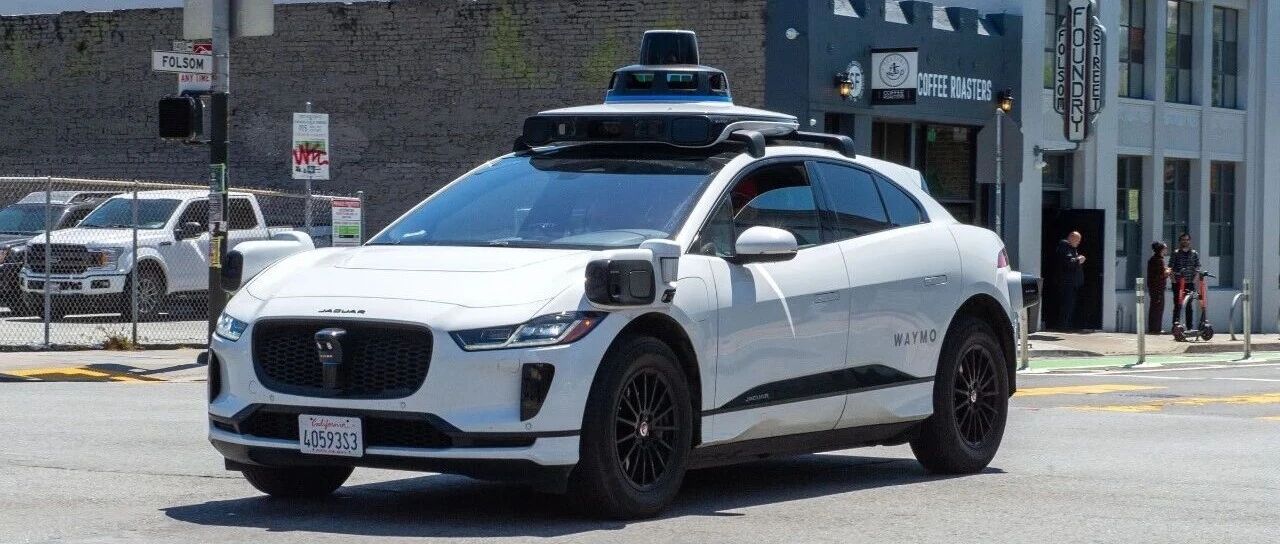
Core Viewpoint - Waymo has secured a record-breaking $16 billion funding round, marking the largest financing in the history of global autonomous driving, significantly boosting its valuation to $126 billion [1][3][7]. Funding and Valuation - The $16 billion funding is equivalent to approximately 111.1 billion RMB, which is over four times Tesla's projected net profit for 2025 [4]. - Cumulatively, Waymo has raised a total of $27.1 billion (about 188.1 billion RMB) across four funding rounds [6]. - Waymo's valuation has reached a peak of $126 billion (approximately 875.3 billion RMB), surpassing that of BYD [7]. Industry Context - The autonomous driving sector has seen significant investments, with major players like Cruise, Argo AI, and Zoox receiving billions in funding, although many have failed to achieve sustainable business models [14][16]. - In China, companies like Baidu's Apollo have invested heavily, with Baidu alone spending around 150 billion RMB over ten years [18]. Investment Dynamics - The allure of the autonomous driving market is driven by its potential for high returns, with estimates suggesting that the Robotaxi segment alone could reach a trillion-dollar market size [24]. - Despite the high risks and many companies failing, capital continues to flow into the sector, indicating a strong belief in the future profitability of autonomous driving [22][23]. Market Trends and Future Outlook - The investment landscape is changing, with a notable reduction in the number of companies receiving funding, leading to a "dragon effect" where leading firms like Waymo attract the majority of capital [51]. - Waymo is expanding its commercial operations, with plans to operate in over 20 cities globally by 2026, indicating a growing acceptance and integration of autonomous vehicles into everyday life [46][48]. Consumer Demand - Waymo's Robotaxi service is adapting to meet real-world needs, such as providing safe transportation for teenagers, which reflects a growing acceptance of autonomous vehicles in various aspects of daily life [54][59]. - The emergence of new use cases for Robotaxi services demonstrates the evolving landscape of consumer demand and the potential for autonomous vehicles to integrate into everyday scenarios [61][66].
1110亿,开年最大融资来了
投中网· 2026-02-06 06:53
Group 1 - Waymo completed a $16 billion financing round, achieving a post-money valuation of $126 billion, making it the first Robotaxi unicorn to surpass a $100 billion valuation [3][5] - The valuation increased from $45 billion in October 2024 to $126 billion in just over a year, reflecting a doubling in value [3][14] - The financing round was led by prominent investors including Dragoneer Investment Group, DST Global, and Sequoia Capital, with Alphabet contributing approximately $13 billion [6][8] Group 2 - Waymo's journey began in 2009 as a Google internal project and became an independent subsidiary of Alphabet in December 2016 [10][11] - The company launched its first commercial service, Waymo One, in late 2018, rapidly expanding its operations and accumulating significant user data [11][12] - By 2023, Waymo had established stable operations in several major U.S. cities, with weekly paid orders exceeding 450,000 [14] Group 3 - The autonomous driving sector saw a total of $58.2 billion in financing across 35 companies in 2025, nearly tripling the amount from 2023 [18][19] - Recent investments are increasingly focused on companies with clear commercial applications, such as L2 level assisted driving and L4 applications like Robotaxi and autonomous delivery vehicles [19][20] - The competitive landscape is expected to intensify as leading companies secure funding and vie for market share and commercialization progress [20]

四大证券报精华摘要:2月6日
Zhong Guo Jin Rong Xin Xi Wang· 2026-02-06 00:38
Group 1: Mechanical Industry - In 2025, the mechanical industry is expected to show a high-level slowdown with steady progress, achieving a growth rate of around 5.5% for the year [1] - The first quarter of 2025 had a good start, while the second quarter experienced a slowdown due to tariff fluctuations, but quickly stabilized [1] Group 2: Stock Market Trends - A-shares and Hong Kong stocks showed divergence, with Hong Kong's main index rising in the afternoon, particularly in the consumer sector [1] - Several public funds believe that Hong Kong stocks remain undervalued globally, with structural investment opportunities expected [1] Group 3: Autonomous Driving Industry - Waymo, a subsidiary of Alphabet, completed a financing round of over 100 billion yuan, marking a critical turning point for scaling autonomous driving [2] - Domestic leaders in autonomous driving, such as Xiaoma Zhixing and Wenyuan Zhixing, reported that their Robotaxi fleets have surpassed 1,000 vehicles, indicating a clearer path to profitability [2] Group 4: Cash Dividends in the Stock Market - Companies in the Shanghai market are actively distributing cash dividends, with nearly 20 companies set to distribute approximately 25.8 billion yuan before the 2026 Spring Festival [3] - The total cash dividends from Shanghai companies from December 2025 to before the 2026 Spring Festival are expected to exceed 347.6 billion yuan, a significant increase from the previous year's 300 billion yuan [3] Group 5: Fresh Food Instant Retail - Meituan announced the acquisition of Dingdong Maicai's China business for approximately 717 million USD, accelerating its layout in the instant retail sector [4] - This acquisition indicates a potential concentration of competition towards leading platforms in the industry [4] Group 6: Automotive Industry - In 2025, Chinese automakers are accelerating electrification, intelligence, and internationalization, with profit margins declining to the lowest in a decade [5] - The decline in profit margins is attributed to significant investments in R&D rather than industry recession, as companies focus on long-term assets [5] Group 7: Lithium Battery Industry - The lithium battery industry is gradually improving in supply and demand, leading to stabilized product prices and corporate profitability [6] - Over 70 A-share listed companies in the lithium battery sector have disclosed performance forecasts, with over 70% showing year-on-year profit growth [6] Group 8: Commercial Aerospace - Tianbing Technology's satellite launch facility has passed pre-acceptance review, marking a significant step in China's commercial aerospace sector [7] - The facility represents a transition from technology validation to engineering application, indicating a potential explosive growth period for the industry [7] Group 9: Capital Raising in Battery Manufacturing - Guoxuan High-Tech plans to raise no more than 5 billion yuan through a private placement to fund battery projects and supplement working capital [8] - This move is seen as a critical step for Guoxuan High-Tech to expand production capacity amid the high growth cycle of the global new energy vehicle and energy storage markets [8]



2亿用户,撑不起Uber的自动驾驶梦
汽车商业评论· 2026-02-05 23:06
Core Viewpoint - Uber's recent financial report highlights significant growth in user engagement and bookings, but concerns over profitability and market competition have led to a decline in stock price despite positive operational metrics [6][12][13]. Financial Performance - In Q4 2025, Uber reported a 22% increase in ride-hailing trips to 3.8 billion, with total bookings also rising 22% to $54.1 billion, and revenue growing 20% to $14 billion [6]. - Monthly active users reached a record 202 million, an 18% increase year-over-year, doubling from 100 million in 2019 [7][8]. - Operating profit for Q4 2025 was $1.77 billion, a 130% increase, but fell short of analyst expectations of $1.85 billion by $80 million [18]. Growth Drivers - The growth in bookings was attributed to new products and services, including the Uber One subscription service and expanded offerings in holiday travel and airport transportation [17]. - The food delivery segment also performed well, capturing market share from competitors by introducing more non-food merchants and increasing discounts [17]. Profitability Concerns - Despite revenue growth, Uber's profitability remains a concern, with significant losses from investments in companies like Lucid and Grab leading to a $1.6 billion write-down [19]. - The company anticipates a higher effective tax rate of 22%-25% in 2026, which could further pressure profit margins [22]. Autonomous Driving Strategy - Uber views autonomous driving as a key future growth area, investing heavily and forming partnerships with various technology firms [25][26]. - The company plans to deploy 25,000 autonomous vehicles on its platform and expand services to 15 global markets by the end of 2026 [28][30]. - Uber argues that its existing user base and operational experience will allow it to achieve better utilization and economic benefits from autonomous vehicles compared to independent operators [31]. Market Competition - The autonomous vehicle market is competitive, with companies like Waymo and Tesla advancing their own technologies, which poses a threat to Uber's strategy [42][44]. - Regulatory challenges in major cities may delay the rollout of autonomous services, impacting Uber's ability to capitalize on high-margin markets [46]. Investor Sentiment - Investor confidence is wavering, as the potential impact of autonomous vehicles on Uber's core business remains uncertain, leading to stock price volatility [47].