圆通速递

Search documents
国泰海通 · 晨报0815|物流仓储:反内卷保障良性竞争,监管力度决定持续性
国泰海通证券研究· 2025-08-14 13:29
Core Viewpoint - The article discusses the "anti-involution" measures in the express delivery industry, emphasizing that regulatory strength will determine the sustainability of price increases and future profitability [3][4][5]. Group 1: Industry Background - From late 2019, leading companies initiated price competition to increase market share, leading to irrational price wars that pressured performance and valuations in the express delivery sector [3]. - In early 2021, the instability of the express delivery network became evident, prompting the State Post Bureau to intervene and initiate "anti-involution" measures [3]. Group 2: Regulatory Actions - In April 2021, the State Post Bureau took decisive action against irrational price wars, stabilizing the network and increasing the minimum price for express services in Yiwu from 0.8 yuan to 1.4 yuan [3]. - By September 2021, regulations in Zhejiang Province mandated that express services could not be offered below cost without justification, further supporting the "anti-involution" initiative [3]. Group 3: Recovery and Future Outlook - The article notes that the profitability of leading companies is expected to recover in 2022 as competition eases and the network stabilizes [3]. - In 2025, the intensity of "anti-involution" measures is anticipated to exceed expectations, with short-term competitive pressure easing and long-term healthy competition being maintained [4]. Group 4: Profitability and Pricing - The net profit per ticket for major companies in 2024 is projected to be 0.26 yuan for Zhongtong, 0.15 yuan for YTO, 0.08 yuan for Yunda, and 0.05 yuan for Shentong, with expected declines in the second half of 2024 and Q1 2025 [5]. - If price increases are sustained, the industry may exhibit profitability elasticity and valuation recovery, contingent on the regulatory environment [5].


国泰海通|交运:反内卷保障良性竞争,监管力度决定持续性
国泰海通证券研究· 2025-08-14 13:29
Core Viewpoint - The express delivery industry is undergoing a "anti-involution" phase, which is expected to alleviate short-term competitive pressures while ensuring healthy competition in the long term [2][3]. Group 1: Industry Dynamics - From late 2019, leading companies initiated price competition to increase market share, leading to irrational price wars that pressured both performance and valuations in the express delivery sector [1]. - In April 2021, the State Post Bureau intervened to curb irrational price wars, which began to stabilize the market and improve profitability for leading companies by the end of 2021 [1]. - The introduction of policies to protect the rights of delivery personnel in June 2021 led to a collective price increase of 0.1 yuan per ticket by major e-commerce delivery companies, helping to alleviate cost pressures [1]. Group 2: Future Outlook - In 2025, the intensity of "anti-involution" efforts is expected to exceed expectations, with short-term competitive pressures easing and a focus on maintaining stable operations for grassroots outlets [2]. - The profitability of major express companies is projected to recover in the second half of 2025, contingent on the sustainability of price increases and regulatory support from the State Post Bureau [3]. - The net profit per ticket for major companies in 2024 is forecasted to decline, but a recovery is anticipated in the latter half of 2025 if price increases are maintained [3]. Group 3: Regulatory Impact - The regulatory strength of the State Post Bureau will play a crucial role in determining the sustainability of price increases and future profitability elasticity in the express delivery sector [3]. - Continuous regulatory efforts and policy guidance to protect the rights of delivery personnel are expected to enhance the potential for price increases and their sustainability [3].

物流板块8月14日跌0.66%,万林物流领跌,主力资金净流出5.1亿元
Zheng Xing Xing Ye Ri Bao· 2025-08-14 08:33
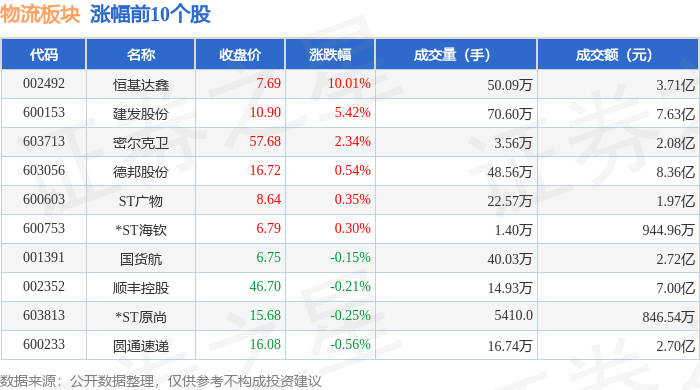
Market Overview - On August 14, the logistics sector declined by 0.66%, with Wanlin Logistics leading the drop [1] - The Shanghai Composite Index closed at 3666.44, down 0.46%, while the Shenzhen Component Index closed at 11451.43, down 0.87% [1] Individual Stock Performance - Hengji Dazheng (002492) saw a significant increase of 10.01%, closing at 7.69 with a trading volume of 500,900 shares and a turnover of 371 million yuan [1] - Jianfa Co. (600153) increased by 5.42%, closing at 10.90 with a trading volume of 706,000 shares and a turnover of 763 million yuan [1] - Wanlin Logistics (603117) experienced a decline of 5.34%, closing at 5.50 with a trading volume of 248,700 shares and a turnover of 138 million yuan [2] Capital Flow Analysis - The logistics sector experienced a net outflow of 510 million yuan from institutional investors, while retail investors saw a net inflow of 426 million yuan [2] - The table of capital flow indicates that Hengji Dazheng had a net inflow of 74.71 million yuan from institutional investors, while retail investors had a net outflow of 37.49 million yuan [3] Summary of Key Stocks - The top performers in terms of net inflow from institutional investors included Hengji Dazheng and Shunfeng Holdings (002352), which had a net inflow of 55.99 million yuan [3] - Other notable stocks with significant trading activity included Mierkewei (603713) and ST Guangwu (600603), with net inflows of 14.32 million yuan and 12.32 million yuan from institutional investors, respectively [3]




快递行业研究框架培训
2025-08-13 14:53
Summary of the Express Delivery Industry Research Conference Call Industry Overview - The express delivery industry is characterized by high labor costs, with labor accounting for nearly 50% of total costs in both headquarters and franchise networks [4][7] - The industry is segmented into two main categories: economical express delivery represented by Tongda system and high-end express delivery represented by SF Express [2] Key Insights - In 2024, the growth rate of express delivery package volume is expected to exceed the growth rate of e-commerce GMV and social retail sales, with Taobao's contribution dropping below 30% and Pinduoduo, Douyin, and Kuaishou reaching 35% and 30% respectively [1][4] - The express delivery industry has undergone four stages: 1. **Emergence Phase (Pre-2011)**: The industry was just starting [5] 2. **Growth Phase (2011-2016)**: Package volume grew at a compound annual growth rate (CAGR) of 50% [5] 3. **Capitalization Phase (2017-2021)**: Leading companies completed IPOs and expanded capacity, leading to an oversupply situation [5][6] 4. **Clearing Phase (2022-Present)**: Regulatory interventions have slowed the clearing process, but market share continues to concentrate among leading players [6] Financial Performance and Market Dynamics - Price wars have led to a decline in profitability, with headquarters' single ticket profit dropping from 0.5 yuan to around 0.2 yuan [8] - Recent regulatory interventions have improved profitability at headquarters, but terminal prices remain suppressed by low-cost e-commerce brands, increasing pressure on franchise operators [8] - The Guangdong province has raised the minimum price for e-commerce express delivery to approximately 1.4 yuan, which is expected to stabilize the market [9] Strategic Adjustments by SF Express - SF Express has diversified its operations into areas such as express freight, cold chain, and local delivery, while also penetrating the lower-end market, resulting in a decline in average order value from 25 yuan in 2019 to 15 yuan in 2021 [11] - The company has implemented a strategy to reduce redundancy and improve operational efficiency, aiming to cut costs by 1 billion yuan annually [12] - SF Express has undergone three major transformations, shifting from a franchise model to a direct operation model, enhancing service quality and operational efficiency [13] Future Outlook - SF Express plans to focus on industry transformation and international expansion, providing comprehensive logistics solutions and enhancing its cross-border logistics network through acquisitions [14][15] - The company has seen a decline in capital expenditures, stabilizing between 8 billion to 10 billion yuan annually, which has improved its operational and profitability metrics [16] - From 2024 to 2028, SF Express aims to gradually increase its cash dividend ratio from 35% to 40%, reflecting its transition into a value growth stock [17] Conclusion - The express delivery industry is poised for growth, driven by e-commerce trends and regulatory support, while companies like SF Express are strategically positioning themselves to enhance profitability and market share through operational efficiencies and diversified service offerings [1][10][18]

快递涨价了,但快递公司都在准备价格战
远川研究所· 2025-08-13 13:11
Core Viewpoint - The article discusses the recent price increase in the express delivery industry in Guangdong, which is seen as a response to the ongoing price war and declining average prices in the sector. The price adjustment is expected to have significant implications for the market dynamics and competition among delivery companies [4][6]. Group 1: Price Increase and Market Dynamics - Guangdong's express delivery base price was raised to 1.4 yuan per ticket, marking a 40% increase, aimed at curbing low-price competition and ensuring market stability [4][6]. - The express delivery sector in Guangdong is crucial, accounting for approximately 25% of the national total, with 234.3 billion packages sent in the first half of the year [4][6]. - Despite the price increase, the underlying issues of fierce competition and price wars in the express delivery industry remain unresolved [4][6]. Group 2: Historical Price Trends - The average price per express delivery ticket in China dropped from 8.14 yuan to 7.52 yuan in the first half of the year, a year-on-year decline of 7.7% [6]. - Over the past five years, the express delivery industry has experienced a continuous decline in average ticket prices, with a total decrease of 32% [11][22]. - The express delivery market has seen a tenfold increase in volume over the past decade, with a projected 1.758 billion packages to be delivered in 2024, reflecting a year-on-year growth of 21.5% [22][29]. Group 3: Competitive Landscape - The express delivery industry is characterized by intense competition, with major players struggling to establish a stable market structure. The top eight companies hold 85.2% of the market share, a modest increase of 2.7% over five years [19][22]. - The market remains fragmented, with new entrants and investments continuing to flood in, exacerbating the price competition [26][29]. - The industry's growth is heavily tied to the e-commerce sector, which drives demand for delivery services, further intensifying competition among providers [26][29]. Group 4: Investment and Operational Challenges - Companies in the express delivery sector are investing heavily in fixed assets, such as sorting facilities and transportation vehicles, often outpacing revenue growth [27][29]. - The fixed asset growth for companies like YTO Express has been significantly higher than revenue growth, indicating a focus on capacity expansion despite ongoing price wars [27][29]. - The article suggests that as long as the express delivery volume continues to grow rapidly, the price wars are unlikely to cease, creating a challenging environment for profitability [29].



快递费上调确认!继义乌后 广东也涨了:底价上调0.4元 各家不得低于1.4元揽收
Mei Ri Jing Ji Xin Wen· 2025-08-13 09:01
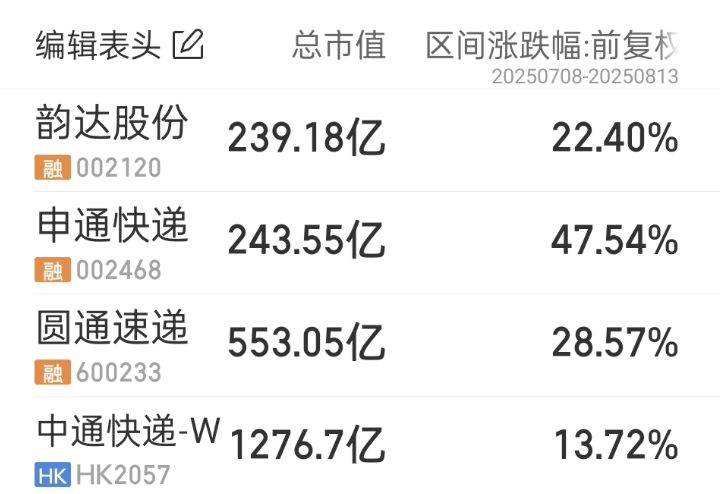
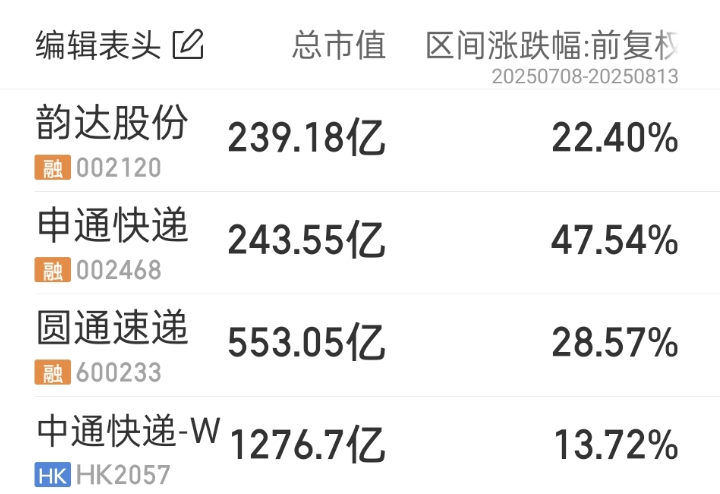
Core Viewpoint - The express delivery industry in Guangdong has implemented a price increase, raising the minimum charge to 1.4 yuan per ticket, which is expected to stabilize the financial situation of many delivery points [1][2]. Group 1: Price Increase Details - Starting from August 5, the overall base price for express delivery in Guangdong has been raised by 0.4 yuan per ticket, with the average price exceeding 1.4 yuan [1]. - The increase in base price is aimed at ensuring that no express company can collect below the cost price of 1.4 yuan, particularly affecting e-commerce customers who have high delivery demands [1]. - Prior to Guangdong, the city of Yiwu in Zhejiang had already initiated a price increase mechanism, raising the base price from 1.1 yuan to 1.2 yuan [1]. Group 2: Industry Context - The express delivery industry has been plagued by a "low-price for volume" competition, leading to reduced profit margins for delivery points and poor service quality [2]. - The average price per ticket for express delivery has significantly decreased from 28.55 yuan in 2007 to 7.49 yuan in June of this year [2]. - Major express companies like SF Express, Shentong, Yunda, and Zhongtong have seen their average ticket revenue drop by approximately 40% since 2017, with only Zhongtong showing a slight increase [2]. Group 3: Regulatory Environment - The State Post Bureau has emphasized the need for stronger industry regulation and has taken steps to combat "involutionary" competition and improve service quality [3]. - Following regulatory discussions, stocks of major express companies have surged, with Yunda's stock increasing by 22.4%, Shentong by 47.54%, and others also showing significant gains [3].

物流板块8月13日跌0.32%,恒基达鑫领跌,主力资金净流出4.21亿元
Zheng Xing Xing Ye Ri Bao· 2025-08-13 08:41
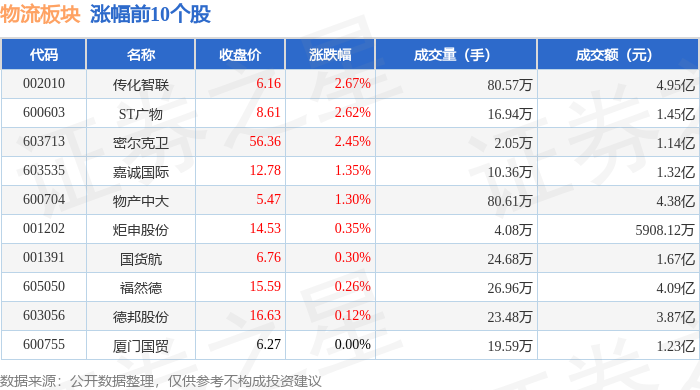
Market Overview - On August 13, the logistics sector declined by 0.32% compared to the previous trading day, with Hengji Daxin leading the decline [1] - The Shanghai Composite Index closed at 3683.46, up 0.48%, while the Shenzhen Component Index closed at 11551.36, up 1.76% [1] Stock Performance - Notable gainers in the logistics sector included: - Chuanhua Zhili (002010) with a closing price of 6.16, up 2.67% and a trading volume of 805,700 shares [1] - ST Guangwu (600603) closed at 8.61, up 2.62% with a trading volume of 169,400 shares [1] - Milkway (603713) closed at 56.36, up 2.45% with a trading volume of 20,500 shares [1] - Major decliners included: - Hengji Daxin (002492) closed at 6.99, down 5.41% with a trading volume of 388,400 shares [2] - Tiensheng Co. (002800) closed at 15.83, down 4.41% with a trading volume of 306,300 shares [2] - Haichen Co. (300873) closed at 26.01, down 3.60% with a trading volume of 163,100 shares [2] Capital Flow - The logistics sector experienced a net outflow of 421 million yuan from institutional investors, while retail investors saw a net inflow of 223 million yuan [2] - The main capital inflow and outflow for selected stocks included: - Chuanhua Zhili (002010) had a net inflow of 42.89 million yuan from institutional investors [3] - ST Guangwu (600603) saw a net inflow of 29.48 million yuan from institutional investors [3] - Yunda Co. (002120) had a net inflow of 16.05 million yuan from institutional investors [3]


快递费上调确认!继义乌后,广东也涨了:底价上调0.4元,各家不得低于1.4元揽收
Mei Ri Jing Ji Xin Wen· 2025-08-13 08:35
Core Viewpoint - The express delivery industry in Guangdong has implemented a price increase, raising the minimum cost per ticket to 1.4 yuan, which is expected to stabilize the financial situation of many delivery companies after a prolonged period of low pricing competition [1][2]. Group 1: Price Increase Details - Starting from August 5, the overall base price for express delivery in Guangdong has been raised by 0.4 yuan per ticket, with the average price exceeding 1.4 yuan [1]. - The increase in base price is aimed at ensuring that no express delivery company can collect below the cost price of 1.4 yuan, particularly affecting e-commerce clients who have high delivery demands [1]. - Prior to Guangdong, the city of Yiwu in Zhejiang province had already initiated a price increase mechanism, raising the base price from 1.1 yuan to 1.2 yuan [1]. Group 2: Industry Background - The express delivery industry has been suffering from a "low-price for volume" competition model, leading to reduced profit margins for grassroots outlets and poor service quality [2]. - The average price per ticket for express delivery in China has significantly decreased from 28.55 yuan in 2007 to 7.49 yuan as of June this year [2]. - Major express companies like SF Express, Shentong, Yunda, YTO, and Zhongtong have seen their average ticket revenues drop by approximately 40% since their listings in 2017, with only Zhongtong showing a slight increase [2]. Group 3: Regulatory Environment - The State Post Bureau has emphasized the need for stronger industry regulation and has opposed "involutionary" competition, aiming to improve service quality in the express delivery sector [3]. - Following these regulatory discussions, stocks of major express companies have surged, with Yunda's stock price increasing by 22.4%, Shentong by 47.54%, YTO by 28.57%, and Zhongtong by 13.72% [3][4].


快递费上调确认!继义乌后,广东 也涨了:底价上调0.4元,各家不得低于1.4元揽收
Mei Ri Jing Ji Xin Wen· 2025-08-13 08:26
Group 1 - The core point of the news is that starting from August 5, the minimum express delivery price in Guangdong Province has been raised to 1.4 yuan per ticket, with a cost increase of 0.4 yuan, impacting the entire industry [1][3] - The price increase is a response to the long-standing "low-price competition" in the express delivery industry, which has led to reduced profit margins for grassroots outlets and poor service quality [1][3] - Prior to Guangdong, Zhejiang Yiwu had already implemented a price increase mechanism, indicating a potential nationwide trend in express delivery price hikes [1][3] Group 2 - According to statistics from the State Post Bureau, the average express delivery price in China has significantly decreased from 28.55 yuan in 2007 to 7.49 yuan in June of this year [2] - In June, the average revenue per ticket for major express companies was as follows: SF Express at 13.67 yuan, Shentong at 1.99 yuan, Yunda at 1.91 yuan, YTO at 2.10 yuan, and Zhongtong at 1.99 yuan, showing a decline of over 40% for several companies compared to 2017 [2] - The State Post Bureau has emphasized the need for improved industry regulation and the elimination of "involutionary" competition, which has led to a significant increase in the stock prices of major express companies since July 8 [3]
你的快递费 开始贵了,包邮时代终结!运费暗涨30%,你的商品正在悄悄变贵
Sou Hu Cai Jing· 2025-08-12 23:20
Core Viewpoint - The recent surge in express delivery fees in Guangdong has significantly impacted e-commerce businesses, leading to increased operational costs and potential losses for sellers [1][3][10]. Group 1: Price Increase and Its Impact - Express delivery fees in Guangdong have increased by 0.4 to 0.7 yuan per package overnight, causing significant financial strain on e-commerce sellers who rely on high volumes of shipments [1][3]. - The average delivery price in Guangdong has risen from 1.0 yuan to 1.4 yuan, with some areas experiencing increases of up to 40% [3][5]. - The price hike is a response to regulatory measures aimed at curbing "internal competition" and ensuring that delivery prices do not fall below cost [3][5]. Group 2: Historical Context and Industry Dynamics - The express delivery industry has been in a price war for over a decade, with average delivery prices dropping from 28.55 yuan in 2007 to 7.49 yuan by mid-2025 [5][7]. - Major express companies have seen significant declines in revenue per package since their initial public offerings, with declines of 38% to 43% reported by various firms [5][7]. - The current situation reflects a long-standing trend of aggressive price competition that has led to unsustainable business practices within the industry [5][12]. Group 3: Future Outlook and Industry Restructuring - The price increase may provide an opportunity for the industry to recover, with projections indicating that a 0.1 yuan increase per package could significantly boost net profits for major companies [8][12]. - The industry is expected to undergo a restructuring phase, where larger companies may consolidate market share while smaller firms either get absorbed or focus on niche markets [12]. - Regulatory changes and incentives for improved service quality are anticipated to drive a shift from price-based competition to service-based competition in the express delivery sector [12][13]. Group 4: Consumer Behavior and Market Response - E-commerce sellers are adjusting their pricing strategies in response to increased delivery costs, often passing these costs onto consumers [10][11]. - There is a noticeable change in consumer expectations regarding service quality, with customers beginning to accept higher prices for better service [13]. - The overall market sentiment indicates a growing acceptance of price increases as a necessary adjustment for improved service standards in the express delivery industry [13].