
软银集团

Search documents
OpenAI partners shoulder nearly $100 billion debt to fund its AI ambitions
The Economic Times· 2025-11-30 15:37
Core Insights - OpenAI's rapid expansion is primarily financed through significant borrowing by its partners rather than direct borrowing by the company itself [3] - The total debt tied to OpenAI has reached approximately $100 billion, which is comparable to the combined net debt of major corporate borrowers like Volkswagen and Toyota [2][3] - OpenAI has committed to $1.4 trillion in procurement spending over eight years, contrasting sharply with its expected annualized revenue of $20 billion for this year [3] Debt Structure - Partners such as SoftBank, Oracle, and CoreWeave have collectively taken on at least $30 billion in debt to invest in OpenAI or build data centers for it [3] - An additional $28 billion in loans has been issued to firms like Blue Owl Capital and infrastructure companies that rely on OpenAI-related contracts for repayment [3] - Banks are negotiating to arrange another $38 billion for Oracle and Vantage Data Centers to support further OpenAI facilities [1][3] Financial Exposure - Oracle is facing the highest financial exposure, having lost $315 billion in market value since announcing a $300 billion deal with OpenAI [3] - Analysts expect Oracle to borrow $100 billion over the next four years to meet its commitments to OpenAI [3] - OpenAI maintains a $4 billion credit line established last year but has not utilized it, indicating a strategy of leveraging partners' balance sheets for growth [2][3]


AI赛道上美国逞强可能溢出更多负外部性
Di Yi Cai Jing· 2025-11-30 12:53
Group 1: U.S. Ambitions in AI - The U.S. aims to establish global "digital hegemony" following its control over "dollar hegemony," with a rapid expansion in the AI sector since Trump's second term began [1] - The U.S. has developed a clear strategic roadmap for AI, including initiatives like the "Star Gate" and the "AI Action Plan," which are designed to organize and mobilize resources for technological innovation [1][4] Group 2: Star Gate Initiative - The "Star Gate" initiative, proposed by Trump, involves a collaboration among OpenAI, Oracle, and SoftBank, with an initial investment of $100 billion, potentially increasing to $500 billion over four years [2] - The initial funding allocation includes $19 billion from OpenAI and SoftBank, $7 billion from Oracle and the sovereign fund MGX, with a total of $45 billion from four companies [2] Group 3: AI Action Plan - The "AI Action Plan" addresses infrastructure shortages in AI by easing regulations on traditional energy investments and implementing a new grid upgrade strategy [4] - It emphasizes the need for a systematic removal of regulatory barriers that hinder AI innovation, allowing private sector input to identify and eliminate unnecessary regulations [4][5] Group 4: Genesis Plan - The "Genesis Plan," launched in November 2025, is a significant restructuring of the U.S. scientific research system, aiming to revolutionize scientific discovery through enhanced collaboration between the government and private sector [6] - The plan seeks to integrate national supercomputers and laboratory data into a unified AI experimental platform, significantly reducing the time required for scientific discoveries [6][7] Group 5: Competitive Landscape and Global Impact - The combination of the "AI Action Plan," "Star Gate," and "Genesis Plan" creates a dual-engine model for AI development in the U.S., which is expected to have a profound impact on the global AI industry [8] - The U.S. currently holds 68% of global AI computing power, and the completion of the "Star Gate" will further widen the gap, potentially leading to a "data colonialism" scenario for developing countries [10][11] Group 6: Ethical and Regulatory Concerns - The push for deregulation in AI raises ethical concerns, as the lack of constraints may lead to negative societal impacts, emphasizing the need for a balance between innovation and ethical considerations [9] - The U.S. aims to dominate global AI regulatory standards, which may lead to fragmentation in global AI governance and conflicts between different regulatory models [11]
芯片领域,两则大消息!
是说芯语· 2025-11-30 06:39
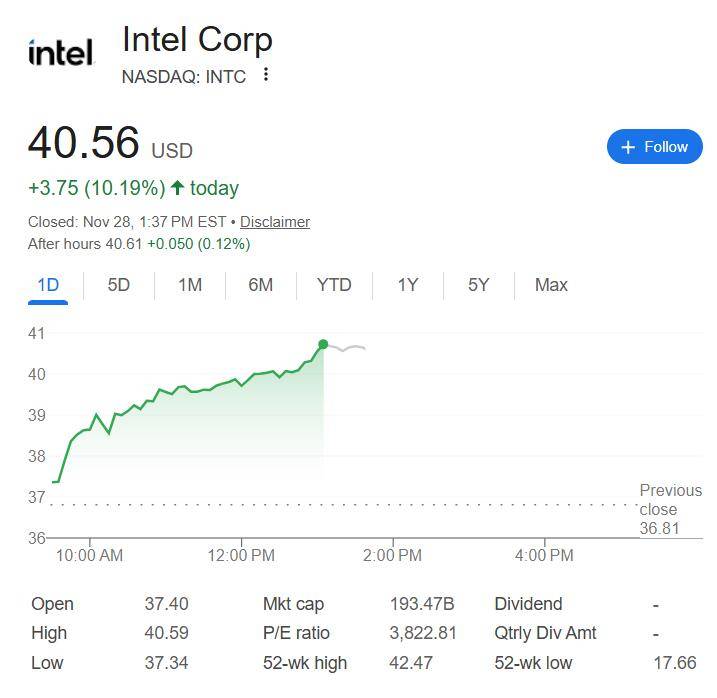
Group 1: Intel - Intel's stock surged by 10% on a positive development, reaching a market capitalization of over $190 billion, with a year-to-date increase exceeding 100% [2][4] - Analyst Ming-Chi Kuo indicated that the likelihood of Apple becoming a new customer for Intel has significantly increased, with potential shipments of Apple M-series chips starting as early as 2027 [4] - Winning Apple's advanced node orders is seen as crucial for Intel, as it could signify the end of the company's most challenging period in its foundry business [4][5] - Apple is expected to order between 15 million to 20 million units of the standard M-series chips for MacBook Air and iPad Pro in 2026 and 2027 [5] - Intel has received substantial investments this year, including a $2 billion investment from SoftBank and a $50 billion investment from NVIDIA [5][6] Group 2: Micron Technology - Micron Technology plans to invest 1.5 trillion yen (approximately $9.6 billion) to build a factory in Japan for AI storage chips, with production expected to start around 2028 [1][8] - Micron's stock rose by 2.7%, with a market capitalization of $265.8 billion, and has seen a year-to-date increase of over 180% [10] - Analysts have raised Micron's target price due to increasing demand for DRAM, particularly driven by AI applications, with expectations of supply constraints by 2026 [11]


全文精修版+现场高清PPT!但斌最新观点集合:谈AI时代、谈谷歌、谈纳指、谈投资感悟……
Xin Lang Cai Jing· 2025-11-30 05:21
Core Insights - The current era is characterized as the age of artificial intelligence, comparable to the time when the steam engine was invented, marking a significant investment opportunity [3][15] - Technological progress is identified as the fundamental driver of wealth growth and societal advancement, despite economic fluctuations and crises [5][16] - The investment strategy of the company has shifted towards focusing on AI-related companies, similar to past successful investments in technology [9][16] AI Era - The AI era is seen as a transformative period, with potential for significant changes in business models and consumer behavior, such as the use of AI agents for everyday tasks [12][22] - Companies like Nvidia and Google are highlighted as key players in the AI space, with substantial investments in research and development [22][23] Investment Strategy - The company has made strategic decisions to invest heavily in AI technologies, reflecting a belief that the same opportunities that existed in previous technological revolutions are present today [9][16] - The importance of long-term investment perspectives is emphasized, suggesting that successful investments require a multi-decade view [10][19] Market Trends - The Nasdaq index has shown significant growth over the past decades, with historical performance indicating that technology-driven markets tend to outperform others [5][18] - Recent trends show increased investment in companies like Google and Alibaba, indicating a shift in market sentiment towards AI and technology stocks [13][14][23] Competitive Landscape - The competitive environment in AI is described as intense, with major companies like Amazon, Google, and Microsoft investing heavily in AI technologies [22] - The potential for monopolistic structures in the AI industry is noted, with a few companies likely to dominate the market and achieve unprecedented valuations [24]






人形机器人死亡报告:我们发现6大高危方向
3 6 Ke· 2025-11-30 03:48
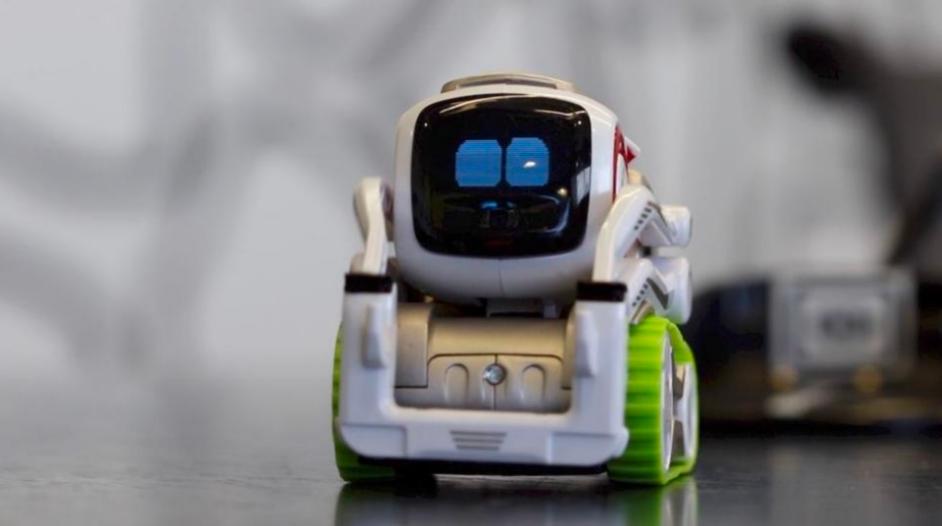
Core Viewpoint - The humanoid robot industry, which gained significant attention in 2023, is now facing a wave of bankruptcies, highlighting a stark contrast between expectations and reality in the market [11]. Group 1: Industry Overview - Multiple companies, including Datar and OneStar, have recently faced severe operational issues, including layoffs and cash flow problems, leading to their downfall [1][4]. - The humanoid robot sector has seen a surge in financing events, with 114 occurrences in the first five months of 2025, surpassing the total for 2024 [4][3]. - Despite the recent financing boom, the industry is experiencing a significant number of closures, reflecting the challenges of transitioning from concept to commercial viability [11][5]. Group 2: Reasons for Failures - The market for companion and social robots is limited, with functionalities easily replaced by smart speakers and apps, making it a high-risk area for failure [6]. - High-cost general-purpose humanoid robots face challenges due to complex technology, low margins, and a lack of clear market demand, leading to inevitable failures [7]. - Companies overly reliant on parent companies for support are at high risk, as strategic shifts or funding withdrawals can jeopardize their survival [8]. - Products with high hardware costs but low added value struggle to maintain cash flow, making it difficult for companies to sustain operations [9]. - Research prototypes lacking practical applications are unlikely to achieve profitability, leading to potential business failures [10]. Group 3: Notable Bankruptcy Cases - Anki, a consumer robotics company, declared bankruptcy in 2019 due to insufficient market demand for its high-cost interactive robots [17]. - Alphabet's Everyday Robots project was shut down in 2023 due to high costs and limited product applicability [19]. - K-Scale Labs, which focused on low-cost humanoid robots, ceased operations in November 2025 due to financing failures and cash flow issues [21]. - Rethink Robotics, known for collaborative robots, filed for bankruptcy in 2025 after failing to meet sales expectations and facing investor withdrawal [14]. - OneStar, established in May 2025, disbanded within five months due to internal conflicts with its parent company, Geely [37]. Group 4: Market Characteristics - Consumer-level companion and social robot companies often face high R&D costs and limited market size, making them vulnerable to failure [42][44]. - General service robots derived from research institutions struggle with unclear commercialization paths and high costs [46][48]. - Companies supported by parent firms may face existential threats if those firms withdraw support or shift focus [50][52]. - Startups often lack the financial stability to survive without continuous funding, making them susceptible to market fluctuations [54][56]. Group 5: Common Challenges - High R&D and production costs coupled with low margins are significant barriers to success in the humanoid robot industry [55][57]. - Insufficient market demand and unclear commercialization paths hinder the ability of humanoid robots to achieve profitability [58][59]. - Heavy reliance on external financing creates vulnerabilities, as seen in multiple cases where funding failures led to business closures [59][61]. - Strategic adjustments by parent companies can lead to rapid business failures for dependent startups [62][63].

经济学家宋清辉:高市谬论恐损害日本经济复苏机会 稳定理性合作方是上策
Sou Hu Cai Jing· 2025-11-29 22:10
其次,从资本市场情绪来看,高市早苗的言论发生在全球市场整体疲软的背景下,更容易被放大。再加上日本国内对于通胀、汇率以及经济前景的担忧,导 致投资者本已处于谨慎状态。此时日本首相发表敏感、错误表态,无疑成为压垮市场信心的「额外负担」,进而促使海外资金加速撤离,国内投资者也纷纷 做出避险选择。具体来看,日本软银、电子元件股、半导体设备股原本属于科技行情的核心标的,却在此轮下跌中跌幅靠前,反映出市场恐慌情绪已从旅游 消费板块进一步蔓延至高科技领域。 从经济学和金融市场角度看,高市早苗的言论不仅在政治上失当,在经济上更是给日本造成了不可挽回的负面冲击。后续日本政府是否能采取有 效措施修复与中国的关系、稳定市场预期,或将直接影响股市能否见底反弹,也将影响日本经济能否避免更大的下行压力。 著名经济学家 宋清辉 【沪港通锦囊】高市谬论恐损害日本经济复苏机会 近日,日本首相高市早苗的涉台错误言论引发巨大争议,不仅在政治和外交层面造成了严重负面影响,也迅速传导至日本金融市场,成为拖累东京股市的重 要因素。11月18日,日本东京股市两大股指连续第三个交易日大幅下跌,日经225指数收盘下跌3.22%,东证指数下跌2.88%。在此背 ...
Is OpenAI building its future on debt? Study reveals partners are burdened with $96 billion in loans
MINT· 2025-11-29 11:10
Core Insights - The AI industry is increasingly reliant on debt, with companies tied to OpenAI borrowing approximately $96 billion to fund operations [1][5] - OpenAI has minimal debt exposure, leveraging partnerships for financial backing while its partners have taken on significant loans [5] Debt Accumulation - Companies such as SoftBank, Oracle, and CoreWeave have collectively borrowed at least $30 billion to invest in OpenAI [4] - Blue Owl Capital and Crusoe have taken on loans amounting to $28 billion, while Oracle and Vantage are in discussions to borrow an additional $38 billion [4] Financial Commitments - OpenAI has commitments totaling $1.4 trillion for energy and computing power over the next eight years, which exceeds its projected annual revenue of $20 billion for this year [3] - The loans taken by OpenAI's partners are expected to approach $100 billion soon, raising scrutiny over the sustainability of this debt-driven model [3][2] Industry Dynamics - The shift towards debt financing in the AI sector marks a departure from previous funding methods, which primarily relied on cash reserves from major tech companies [4] - OpenAI's strategy involves leveraging the balance sheets of its partners to support its growth amid a compute shortage that constrains its operations [2][4]

美团王兴:外卖价格战没有为行业创造价值,不可持续;特斯拉被曝曾拆解中国电动汽车; 2025贺岁档新片票房破10亿丨邦早报
创业邦· 2025-11-29 01:08
Group 1 - Meituan reported Q3 revenue of RMB 955 billion, a 2.0% increase from RMB 936 billion in the same period last year, but faced a significant operating loss of RMB 141 billion in its core local commerce segment due to intensified competition in the food delivery industry [4] - The adjusted EBITDA and adjusted net profit for Meituan fell to negative RMB 148 billion and negative RMB 160 billion respectively, marking the first loss since 2022 [4] - As of September 30, 2025, Meituan held cash and cash equivalents of RMB 992 billion and short-term investments of RMB 421 billion [4] Group 2 - China FAW Group is reportedly finalizing an investment in Leap Motor, with an initial stake of around 5% expected to be signed by the end of the year [5] - Baidu has initiated a new round of layoffs affecting multiple departments, with some teams facing cuts of up to 40% due to declining advertising revenue and increased competition in AI [5] - BYD is recalling nearly 89,000 Qin PLUS DM-i vehicles due to battery consistency issues that may restrict power output, posing safety risks [5] Group 3 - Taobao Flash Sale is expanding its cancellation of late delivery penalties to 60 cities by the end of the year, aiming to improve rider income and service efficiency [6] - Xiaomi's CEO Lei Jun responded to criticisms regarding the energy consumption of the Xiaomi SU7, acknowledging that the vehicle's size and configuration contribute to its performance [6] Group 4 - A major 3D printing factory is set to be established in Shenzhen by Huina Technology, which plans to deploy 15,000 3D printers by Q1 2026, making it the largest globally [8] - Huawei's Mate 80 series has launched at a competitive price, with the Mate 80 Pro Max selling out quickly and achieving a premium above the iPhone 17 Pro Max [8] Group 5 - Soul App has submitted its IPO application to the Hong Kong Stock Exchange, with Tencent holding a 49.9% stake as a strategic investor [10] - Adani Group plans to invest up to $5 billion in building AI infrastructure for Google in southern India, reflecting a significant commitment to the growing data center sector [10] Group 6 - OpenAI's data center partners are accumulating nearly $100 billion in debt related to the company, with significant loans being secured for further development [9] - Nvidia's CEO Jensen Huang emphasized the irreplaceability of Nvidia's GPUs in the AI market, asserting the company's unique position despite increasing competition [9]



重新赢得大客户在望!英特尔暴涨10%,郭明錤料2027年交付苹果M系列芯片
Sou Hu Cai Jing· 2025-11-28 19:45
Core Insights - Intel's stock experienced a significant rebound following a prediction by analyst Ming-Chi Kuo that Intel will begin supplying low-end M-series chips to Apple as early as 2027, marking a major turnaround for Intel after losing Apple's Mac processor orders for several years [1][3][4] Group 1: Intel's Stock Performance - Following Kuo's announcement, Intel's stock surged over 10%, achieving its best single-day performance in over two months, and has seen a cumulative increase of over 20.6% over five trading days [1][3] - The stock closed at its highest level since October 29, reflecting renewed investor optimism about Intel's future prospects [1][6] Group 2: Collaboration Details - Kuo indicated that Apple plans to use Intel's 18A advanced process technology for its low-end M-series processors, primarily for MacBook Air and iPad Pro, with an expected combined shipment of around 20 million units in 2025 [3][5] - Apple has signed a non-disclosure agreement with Intel and is currently awaiting the release of Intel's PDK 1.0/1.1 versions, which are crucial for the development of these chips [5][6] Group 3: Strategic Implications - Winning Apple's advanced process order is seen as a significant symbolic victory for Intel, indicating that the worst period for its foundry services may be coming to an end, despite the relatively small order volume compared to competitors like TSMC [6][10] - The collaboration aligns with Apple's strategy to diversify its supply chain and support U.S. manufacturing policies, while still relying heavily on TSMC for the majority of its M-series chips [10][11] Group 4: Government Support and Market Position - Intel's recovery is supported by substantial investments from the U.S. government, including an $8.9 billion investment that makes the government one of Intel's largest shareholders [6][13] - Despite facing challenges in regaining its technological edge and market share, Intel's stock has risen nearly 64% since the announcement of government investment, reflecting growing investor confidence [6][13]
Meesho 6.06亿美元IPO成印度首宗大型电商上市交易
Xin Lang Cai Jing· 2025-11-28 17:05
来源:环球市场播报 Meesho 是印度电商领域的重要玩家,与亚马逊(Amazon)及沃尔玛旗下的 Flipkart 形成竞争。该公司 计划启动规模约 6.06 亿美元的首次公开募股(IPO),此次 IPO 的特点是早期投资方将少量减持股份, 而软银(SoftBank)、普罗苏斯(Prosus)等知名投资方则选择不出售任何股份。在全球科技领域股东 普遍倾向于在企业上市时套现离场的背景下,这一举措凸显了投资方对印度蓬勃发展的在线零售市场的 信心。 这家成立十年的初创企业计划将每股股价定为 105-111 印度卢比,通过发行新股募集 425 亿印度卢比 (约合 4.75 亿美元),剩余部分通过二级市场减持筹集,IPO 后 Meesho 的估值约为 5010 亿印度卢比 (约合 56 亿美元)。2021 年,该公司在私募市场的估值约为 50 亿美元。 Meesho 将成为印度首家上市的大型综合电商平台。据了解,其竞争对手 Flipkart 预计于明年启动 IPO, 另有消息称亚马逊正考虑将印度业务分拆,为未来上市做准备。 根据招股说明书(PDF 文件),Meesho 的部分早期股东将在此次 IPO 中减持:Elev ...