招商银行

Search documents
去年深圳8家银行密集“换将”,新行长们的角色之变
Nan Fang Du Shi Bao· 2026-01-21 06:19
Core Insights - Shenzhen's "14th Five-Year Plan" aims to establish a global "Industrial Financial Center," raising expectations for local financial institutions, particularly banks [1] - The recent leadership changes in at least eight commercial banks in Shenzhen reflect a strategic shift towards enhancing the role of these institutions in the financial ecosystem [1] Leadership Changes - The appointment of Xiong Tao as the head of the Industrial and Commercial Bank of China (ICBC) Shenzhen branch marks a significant leadership transition, emphasizing his experience in corporate banking and technology finance [2][3] - Ma Mingjun, previously the head of the Tianjin branch of the Bank of China, has been appointed to lead the Shenzhen branch, indicating a strategic focus on the Guangdong-Hong Kong-Macao Greater Bay Area [3] - Wang Xinghai has taken over as the head of the Shenzhen branch of China Merchants Bank, showcasing the bank's commitment to internal talent development and stability [4][6] - Zhang Chaohui's appointment as the head of Ping An Bank's Shenzhen branch highlights the importance of this branch within the bank's overall strategy [5][6] Focus on Technology Finance - Several new leaders in Shenzhen's banking sector are emphasizing technology finance, with initiatives aimed at supporting key sectors such as semiconductors and advanced manufacturing [8][9] - The establishment of specialized financial products for technology enterprises is a priority for banks like Shanghai Pudong Development Bank, which aims to support the entire lifecycle of tech companies [9] - Chen Dapeng, head of Minsheng Bank's Shenzhen branch, aims to tailor financial services to the unique needs of the innovation-driven economy in Shenzhen [10][11] Strategic Importance of Shenzhen - Shenzhen's banking sector is positioned as a critical area for talent development and strategic implementation, serving as a testing ground for financial innovations [12][13] - The city is recognized as a key player in China's financial landscape, with total banking assets reaching 14.25 trillion yuan, ranking third among major cities [14] - The "14th Five-Year Plan" emphasizes the need for banks to transition from traditional financing to integrated services, including venture capital and cross-border finance [15]
观察|去年深圳8家银行密集“换将”,新行长们的角色之变
Nan Fang Du Shi Bao· 2026-01-21 06:03
Core Viewpoint - Shenzhen's "15th Five-Year Plan" aims to establish itself as a global "industrial financial center," raising expectations for local financial institutions, particularly banks, in their roles and responsibilities [22][23]. Group 1: Leadership Changes in Shenzhen Banks - Over the past year, at least eight commercial banks in Shenzhen have changed their leadership, including major state-owned banks and leading joint-stock banks [2]. - The appointment of Xiong Tao as the head of the Industrial and Commercial Bank of China (ICBC) Shenzhen branch reflects a strategic move to enhance the bank's focus on technology and innovation [2][4]. - Similarly, Ma Mingjun has been appointed as the head of the Bank of China Shenzhen branch, indicating a strengthened commitment to the Guangdong-Hong Kong-Macao Greater Bay Area [4][7]. Group 2: Key Appointments and Their Implications - Wang Xinghai, a veteran of China Merchants Bank, has taken over as the head of the Shenzhen branch, showcasing the bank's internal talent development strategy [9]. - Ping An Bank has also seen significant leadership changes, with Zhang Chaohui becoming the head of the Shenzhen branch, emphasizing the importance of this branch within the bank's overall strategy [11]. - New leaders at various banks, such as Shang Wencheng of China Everbright Bank and Yuan Rui of Shanghai Pudong Development Bank, are focusing on technology finance and innovative service models to meet the needs of Shenzhen's tech-driven economy [12][15]. Group 3: Strategic Focus on Technology Finance - The new leaders are expected to align their banks' strategies with Shenzhen's identity as a technology innovation hub, emphasizing the importance of "investment-loan linkage" services [12][23]. - The financial institutions are being urged to develop comprehensive service models that support the entire lifecycle of technology enterprises, particularly in critical sectors like semiconductors and advanced manufacturing [12][15]. - The shift towards a more integrated financial service approach reflects a broader trend in which banks are expected to act as "deep partners" and "comprehensive service providers" rather than just capital providers [23]. Group 4: Challenges and Future Directions - The banks in Shenzhen face challenges in transitioning from traditional financing to more complex service models, requiring enhanced risk management and understanding of emerging technologies [23]. - There is a growing need for collaboration with venture capital, insurance, and other financial institutions to meet the comprehensive needs of enterprises [23]. - The emphasis on long-term investment strategies and the establishment of a long-term assessment mechanism are critical for supporting sustainable growth in the technology sector [23].






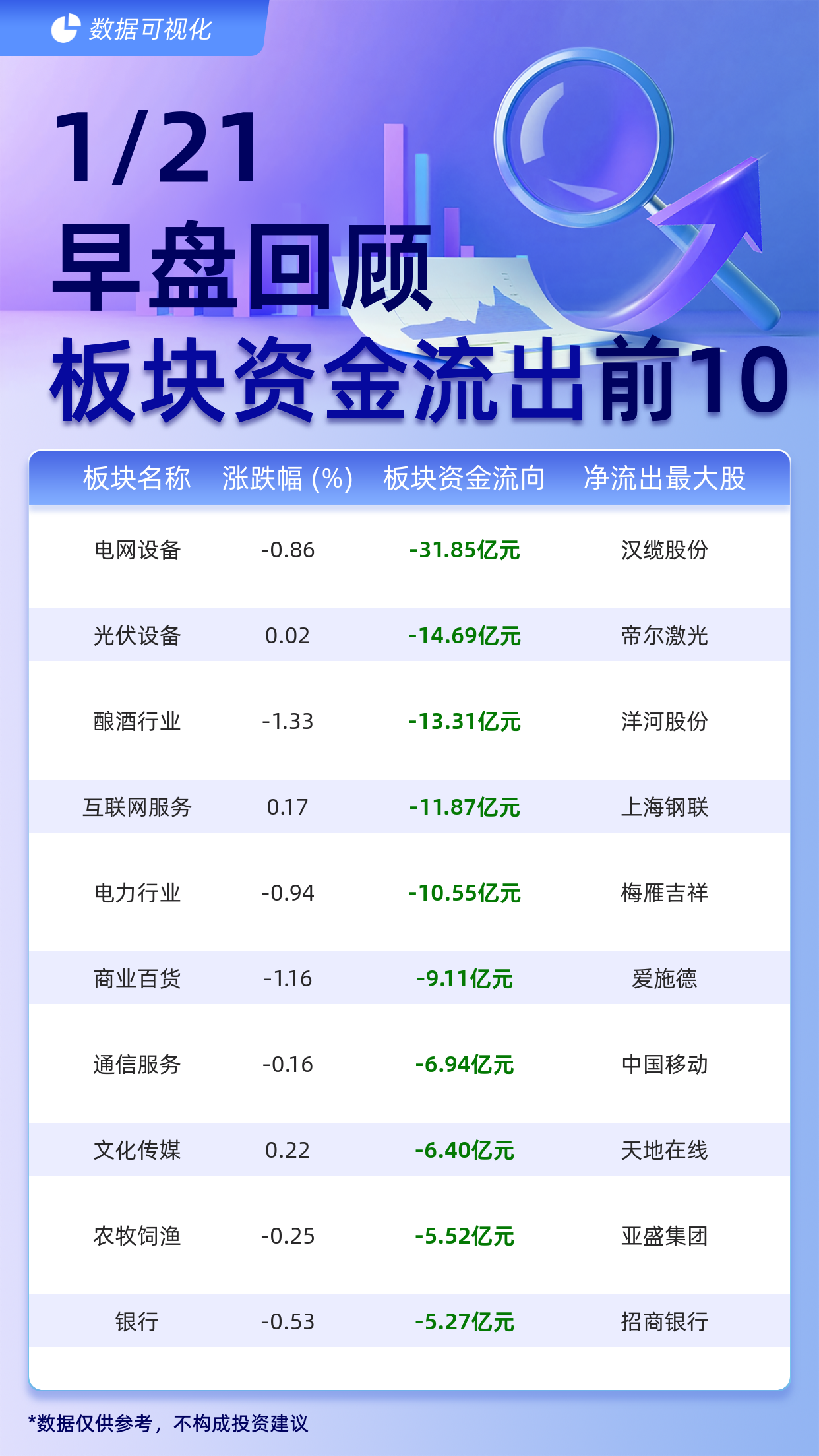
主力板块资金流出前10:电网设备流出31.85亿元、光伏设备流出14.69亿元
Jin Rong Jie· 2026-01-21 04:04
Core Viewpoint - As of January 21, the main market saw a net inflow of 7.765 billion yuan in major funds, indicating a mixed sentiment among investors across various sectors [1]. Fund Flow Summary - The top ten sectors with the largest fund outflows included: - Power Grid Equipment: net outflow of 3.185 billion yuan, with a decline of 0.86% [2] - Photovoltaic Equipment: net outflow of 1.469 billion yuan, with a slight increase of 0.02% [2] - Alcohol Industry: net outflow of 1.331 billion yuan, with a decrease of 1.33% [2] - Internet Services: net outflow of 1.187 billion yuan, with a rise of 0.17% [2] - Electric Power Industry: net outflow of 1.055 billion yuan, with a decline of 0.94% [2] - Commercial Retail: net outflow of 911 million yuan, with a decrease of 1.16% [2] - Communication Services: net outflow of 694 million yuan, with a decline of 0.16% [3] - Cultural Media: net outflow of 640 million yuan, with an increase of 0.22% [3] - Agriculture, Animal Husbandry, and Fishery: net outflow of 552 million yuan, with a decrease of 0.25% [3] - Banking: net outflow of 527 million yuan, with a decline of 0.53% [3]
招商银行:优化实施个人消费贷款财政贴息政策
Zheng Quan Shi Bao Wang· 2026-01-21 03:41
人民财讯1月21日电,招商银行(600036)发布关于优化实施个人消费贷款财政贴息政策有关事项的公 告,根据《关于优化实施个人消费贷款财政贴息政策有关事项的通知(财金〔2026〕1号)》相关规定, 招商银行对符合通知要求的个人消费贷款客户和信用卡账单分期客户,自2026年1月1日起按调整后的贴 息政策提供服务。此前已签署《个人消费贷款贴息补充协议》的个人消费贷款客户,自2026年1月1日起 自动适用最新贴息政策。招商银行办理个人消费贷款和信用卡账单分期贴息不收取任何服务费用,且未 与任何贷款中介机构/个人开展合作。 ...
107股连续5日或5日以上获融资净买入
Zheng Quan Shi Bao Wang· 2026-01-21 03:24
Group 1 - The core point of the article highlights that as of January 20, a total of 107 stocks in the Shanghai and Shenzhen markets have experienced net buying through financing for five consecutive days or more [1] - The stock with the longest consecutive net buying days is Huatian Hotel, which has seen net buying for 12 consecutive trading days [1] - Other notable stocks with significant consecutive net buying days include China Merchants Bank, Ping An Bank, Focus Media, New China Life Insurance, Hongfuhuan, Kaile Shares, New Industry, and China Ping An [1]



中小微企业贷款贴息、民间投资专项担保……财政部连发五项重要政策
Sou Hu Cai Jing· 2026-01-21 03:12
Group 1 - The Ministry of Finance and other departments have released five policy documents aimed at optimizing financial support for personal consumption loans, equipment updates, private investment guarantees, service industry loans, and small and micro enterprise loans [1][9][29] - The personal consumption loan subsidy policy has been extended until December 31, 2026, with adjustments to the subsidy standards and an expanded range of supported financial institutions [4][5][6] - The equipment update loan subsidy policy includes a 1.5% subsidy on fixed asset loans for equipment updates, applicable for up to two years, and has been expanded to include various sectors such as construction, aviation, and digital technology [10][11][12] Group 2 - The private investment guarantee plan has a total quota of 500 billion yuan, to be implemented over two years, focusing on supporting small and micro enterprises in various sectors including technology upgrades and service industry enhancements [17][18] - The plan includes a risk-sharing mechanism where banks will bear at least 20% of the loan risk, while the government guarantee fund will cover up to 80% [19] - The government will also reduce guarantee fees and increase the compensation limit for the guarantee fund to enhance support for private investments [20] Group 3 - The service industry loan subsidy policy has been extended to December 31, 2026, with an increased subsidy cap of 10 million yuan per loan and a 1% annual subsidy rate [23][24] - The policy now includes additional sectors such as digital, green, and retail industries, expanding the scope of financial support [24][25] - The implementation of these policies will involve streamlined processes for fund allocation and enhanced collaboration among financial institutions and regulatory bodies [26][28]



中国太保20260120
2026-01-21 02:57
Summary of China Pacific Insurance Conference Call Company Overview - **Company**: China Pacific Insurance (中国太保) - **Industry**: Insurance Key Points Financial Performance and Taxation - The actual tax rate for Q3 2025 increased mainly due to the higher proportion of property insurance profits and seasonal differences in tax-exempt income from government bonds, but these factors are not expected to have a lasting impact on the company's net profit [2][3] - The overall performance for Q4 2025 is expected to remain stable across life insurance, property insurance, and asset management sectors, with a focus on strict cost control to enhance profit sustainability [3][10] Life Insurance Market Outlook - The 2026 life insurance "opening red" is expected to benefit from increased insurance demand due to macroeconomic conditions and a shift of bank deposits towards insurance products, which are perceived as attractive due to their guaranteed returns and expected income characteristics [2][4] - The aging population and declining birth rates in China are increasing the importance of commercial insurance [4] Sales Strategies - The agent channel employs a "first quarter red" strategy, focusing on segmented customer management to enhance sales efficiency by targeting high-net-worth, mid-to-high-end, and end customers with tailored products [2][5] - The bank insurance channel is progressing steadily, emphasizing the expansion of major bank networks and leveraging resources from joint-stock banks, with both channels performing better than expected [2][7] Value Rate and Product Mix - The value rate is influenced by differences in insurance types, payment methods, and the proportion of bank insurance business. The increase in the proportion of participating products has a lower value rate compared to protection products, but the rise in regular premium business is expected to positively contribute to the overall value rate stability [2][8] Agent Workforce and Capacity - The agent workforce remains stable at approximately 180,000, with core personnel making up less than 30%. The company is focusing on enhancing the quality of new recruits to improve sales capabilities [9] Cost Control and Long-term Strategy - The company has been proactive in managing expenses, reducing non-compliant costs, and ensuring that short-term business growth does not compromise long-term development [10] Bank Insurance Channel Development - The bank insurance channel has seen significant growth since its re-launch in Q4 2021, with a focus on diversifying channels to mitigate risks and capitalize on high-net-worth customer opportunities [11][12] Non-Car Insurance Business - The non-car insurance sector is expected to face challenges in premium growth due to regulatory changes, but improvements in the combined cost ratio are anticipated [20] Investment Strategies - The company plans to adopt a barbell strategy in fixed income asset allocation, exploring innovative assets to enhance interest income, while maintaining a focus on dividend value strategies in equity investments [21][22][23] Future Considerations - The company is adjusting its asset management strategies to account for the unique liability characteristics of floating yield products, aiming to optimize the balance between fixed income and equity investments based on market conditions [24] Conclusion - China Pacific Insurance is navigating a complex market environment with a focus on strategic growth in life insurance, effective cost management, and innovative investment strategies to ensure long-term sustainability and profitability [2][3][10]

个人消费贷贴息政策“延期扩围”,大行股份行快速跟进,新入围地方银行:客户流失担忧消除
Xin Lang Cai Jing· 2026-01-21 02:48
Core Viewpoint - The newly revised consumer loan interest subsidy policy is expected to stimulate domestic consumption recovery by encouraging banks to increase consumer loan issuance [1][7]. Group 1: Policy Implementation - Major state-owned banks and joint-stock banks, including Agricultural Bank of China, Bank of China, and Postal Savings Bank, have promptly responded to the new consumer loan interest subsidy policy [1][7]. - Postal Savings Bank announced that from September 1, 2025, to December 31, 2026, personal consumption loans used for actual consumption will be eligible for interest subsidies, with credit card bill installments also included in the subsidy scope [2][8]. - The policy removes the previous restriction on single transactions of 50,000 yuan or more for eligible consumption transactions [2][8]. Group 2: Operational Procedures - China Merchants Bank outlined that customers must follow specific procedures to apply for the consumer loan interest subsidy, including signing a supplementary agreement during or after the loan issuance [3][9]. - The bank will calculate the subsidy amount based on the agreed-upon subsidy ratio and cap, directly deducting the subsidy from the interest charged to customers [3][9]. Group 3: Inclusion of More Financial Institutions - The latest policy expansion includes city commercial banks, foreign banks, and consumer finance institutions, which were previously excluded from the interest subsidy program [4][10]. - This expansion aims to enhance fairness and inclusivity in the financial system, encouraging local banks to actively participate in consumer loan issuance [4][10]. - Industry insiders expressed optimism about the inclusion of more consumer finance companies, indicating readiness to implement the policy effectively [5][11].
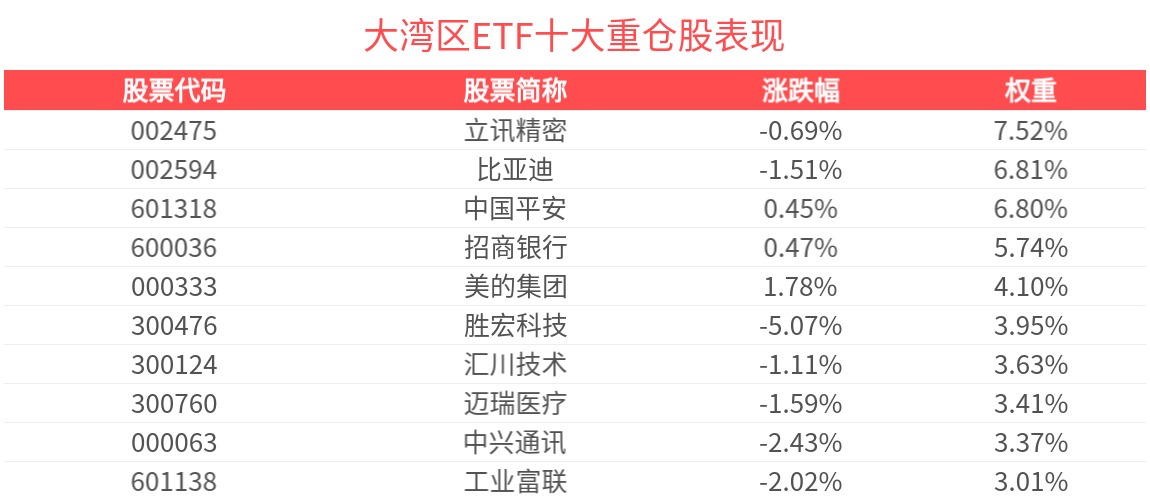
中证粤港澳大湾区发展主题指数下跌0.89%,大湾区ETF(512970)成立以来超越基准年化收益达3.35%
Sou Hu Cai Jing· 2026-01-21 01:55
费率方面,大湾区ETF管理费率为0.15%,托管费率为0.05%。 跟踪精度方面,截至2026年1月20日,大湾区ETF近半年跟踪误差为0.026%。 大湾区ETF紧密跟踪中证粤港澳大湾区发展主题指数,中证粤港澳大湾区发展主题指数反映受益于粤港澳大湾区发展相关上市公司的整体表现。该指数系列 包含中证港股通粤港澳大湾区发展主题指数、中证沪港深粤港澳大湾区发展主题指数和中证粤港澳大湾区发展主题指数,分别从港股通合资格证券范围、沪 港深三地上市公司及内地市场中的粤港澳大湾区企业中选取符合湾区发展主题的最大50只香港市场证券、最大300家公司及最大100只内地市场证券作为指数 样本,并结合湾区经济发展特点和样本空间内科技类证券权重调整科技证券行业因子,以使指数样本中科技类证券权重与待选空间中科技类证券占比接近。 数据显示,截至2025年12月31日,中证粤港澳大湾区发展主题指数(931000)前十大权重股分别为中国平安、立讯精密、比亚迪、招商银行、美的集团、胜宏 科技、汇川技术、工业富联、中兴通讯、迈瑞医疗,前十大权重股合计占比46.96%。(以上所列股票仅为指数成份股,无特定推荐之意) 截至2026年1月20日 1 ...
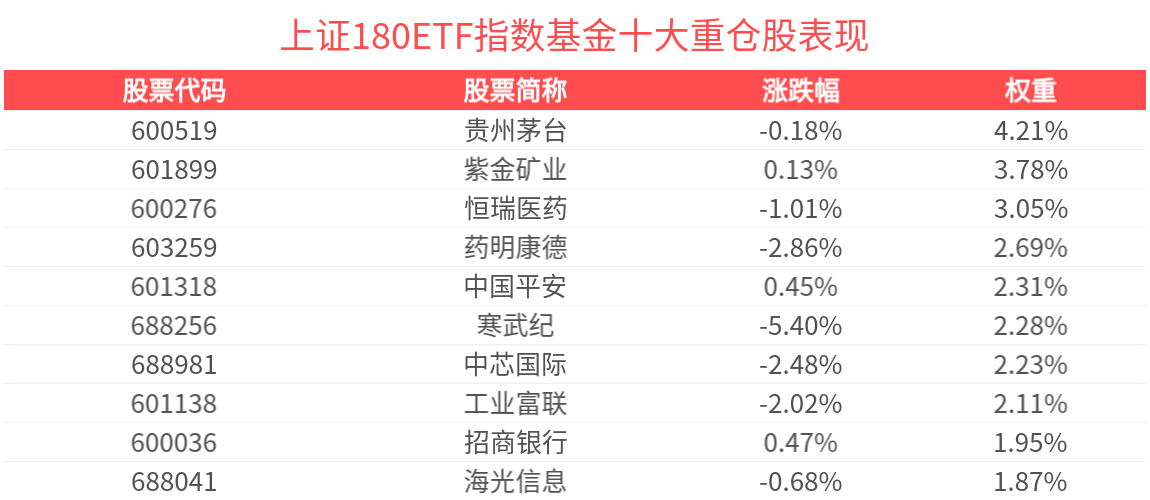
上证180指数上涨0.08%,上证180ETF指数基金(530280)实现4连涨
Sou Hu Cai Jing· 2026-01-21 01:55
Core Viewpoint - The Shanghai 180 ETF Index Fund closely tracks the Shanghai 180 Index, which reflects the overall performance of 180 large-cap and liquid stocks in the Shanghai securities market [2] Group 1: Index Performance - As of January 20, 2026, the Shanghai 180 Index rose by 0.08%, with notable increases in constituent stocks such as China Chemical (+10.01%), China Power Construction (+7.02%), and Hengli Petrochemical (+6.62%) [1] - The Shanghai 180 ETF Index Fund achieved a four-day consecutive increase, with the latest price reported at 1.26 yuan [1] - The fund's average daily trading volume over the past year was 256.26 million yuan, with a turnover rate of 0.11% on January 20, 2026 [1] Group 2: Fund Metrics - The fund's Sharpe ratio since inception is 2.13, indicating a favorable risk-adjusted return [1] - The maximum drawdown for the fund year-to-date is 1.30%, with a relative benchmark drawdown of 0.06% [1] - The management fee for the fund is 0.15%, and the custody fee is 0.05% [1] Group 3: Top Holdings - As of December 31, 2025, the top ten weighted stocks in the Shanghai 180 Index account for 25.29% of the index, including Kweichow Moutai, Zijin Mining, and China Ping An [2] - The top ten stocks by weight are Kweichow Moutai (4.21%), Zijin Mining (3.78%), and China Ping An (2.31%), among others [3]