
中国平安人寿保险股份有限公司

Search documents
南方传媒:2024年报净利润8.1亿 同比下降36.92%
Tong Hua Shun Cai Bao· 2025-04-25 15:00
10派5.5元(含税) 前十大流通股东累计持有: 61930.62万股,累计占流通股比: 69.12%,较上期变化: -385.70万股。 | 名称 持有数量(万股) | | 占总股本比例 | 增减情况(万 | | --- | --- | --- | --- | | | | (%) | 股) | | 广东省出版集团有限公司 | 55178.17 | 61.59 | 不变 | | 中国工商银行股份有限公司-华安媒体互联网混合型证 | | | | | 券投资基金 | 1862.17 | 2.08 | 33.20 | | 南方出版传媒股份有限公司回购专用证券账户 | 1390.65 | 1.55 | 不变 | | 广东樵山文化产业投资控股有限公司 | 682.41 | 0.76 | 不变 | | 中国工商银行股份有限公司-国联优势产业混合型证券 投资基金 | 589.49 | 0.66 | -28.78 | | 兴业银行股份有限公司-工银瑞信文体产业股票型证券 | | | | | 投资基金 | 522.45 | 0.58 | 新进 | | 交通银行股份有限公司-易方达科讯混合型证券投资基 | | | | | 金 | ...

嘉化能源:截至2025年4月21日前十大流通股东持股占比49.46%
Mei Ri Jing Ji Xin Wen· 2025-04-22 09:31
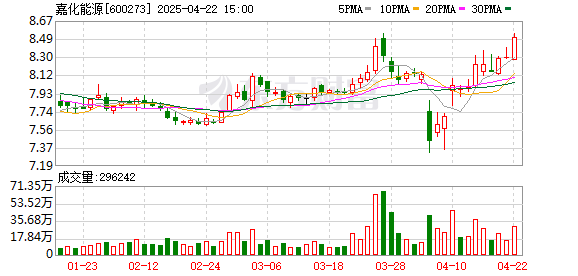
嘉化能源(SH 600273,收盘价:8.5元)4月22日晚间发布公告称,浙江嘉化能源化工股份有限公司于 2025年4月9日召开公司第十届董事会第十一次会议,审议通过了《关于以集中竞价交易方式回购股份方 案的议案》,同意公司使用公司自有资金以集中竞价交易方式回购公司股份。现将公司2025年4月21日 前十大无限售条件股东披露如下:浙江嘉化集团股份有限公司持约5.15亿股,占比37.06%;浙江嘉化能 源化工股份有限公司回购专用证券账户持约4417万股,占比3.17%;香港中央结算有限公司持约2499万 股,占比1.8%;济南汇正投资合伙企业(有限合伙)持约2150万股,占比1.55%;管建忠持约2016万 股,占比1.45%;中国平安人寿保险股份有限公司-分红-个险分红持约1343万股,占比0.97%;交通 银行股份有限公司-景顺长城中证红利低波动100交易型开放式指数证券投资基金持约1337万股,占比 0.96%;中国银行股份有限公司-易方达中证红利交易型开放式指数证券投资基金持约1218万股,占比 0.88%;招商证券股份有限公司客户信用交易担保证券账户持约1142万股,占比0.82%;中国平安人寿 保险 ...


中文传媒:2024年报净利润7.44亿 同比下降66.33%
Tong Hua Shun Cai Bao· 2025-04-18 13:27
三、分红送配方案情况 数据四舍五入,查看更多财务数据>> 一、主要会计数据和财务指标 | 名称 | 持有数量(万股) | 占总股本比 | 增减情况 | | --- | --- | --- | --- | | | | 例(%) | (万股) | | 江西省出版传媒集团有限公司 | 75554.10 | 55.76 | 不变 | | 香港中央结算有限公司 | 6005.10 | 4.43 | -2514.22 | | 招商银行股份有限公司-上证红利交易型开放式指数证券投 资基金 | 2975.58 | 2.20 | 742.70 | | 中国人寿(601628)保险股份有限公司-分红-个人分 | | | | | 红-005L-FH002沪 | 1909.90 | 1.41 | 362.45 | | 中国建设银行股份有限公司-华泰柏瑞中证红利低波动交易 | | | | | 型开放式指数证券投资基金 | 1861.47 | 1.37 | 729.80 | | 国泰基金管理有限公司-社保基金1102组合 | 1388.81 | 1.02 | 450.00 | | 中国平安人寿保险股份有限公司-分红-个险分红 | 111 ...

机构风向标 | 鄂尔多斯(600295)2024年四季度已披露前十大机构持股比例合计下跌1.26个百分点
Xin Lang Cai Jing· 2025-04-15 03:18
Core Insights - Erdos (600295.SH) released its 2024 annual report on April 15, 2025, indicating that 243 institutional investors held a total of 1.716 billion A-shares, accounting for 61.33% of the total share capital [1] - The top ten institutional investors collectively held 60.08% of the shares, with a decrease of 1.26 percentage points compared to the previous quarter [1] Institutional Investor Summary - The top ten institutional investors include Inner Mongolia Erdos Cashmere Group, China Merchants Bank - SSE Dividend ETF, Hong Kong Central Clearing Limited, and several others [1] - In the public fund sector, four funds increased their holdings, representing a 0.52% increase, while three funds decreased their holdings slightly [2] - A total of 232 new public funds were disclosed this period, including several ETFs focused on dividends and indices [2] Insurance and Foreign Investment Summary - In the insurance sector, two insurance funds reduced their holdings slightly [2] - One foreign fund, Hong Kong Central Clearing Limited, increased its holdings by 0.11% [2]

国家队持有ETF市值突破1万亿,三大信号值得关注→
21世纪经济报道· 2025-04-01 23:49
Core Viewpoint - The trend of long-term funds investing in A-shares through ETFs is expected to continue throughout 2024, with significant purchases from institutions like Huijin and insurance funds [2][14]. Group 1: Huijin's Increased Holdings - In the second half of 2024, Huijin's investment strategy focused on core broad-based ETFs, with Huijin Asset Management being the main buyer, acquiring 713.58 million ETF shares [3]. - Huijin Asset Management increased its holdings in several ETFs, including Huatai-PineBridge CSI 300 ETF and E Fund CSI 300 ETF, with respective purchases of 258.93 million and 190.11 million shares [3]. - Huijin Investment's actions were primarily concentrated in the first half of 2024, with a notable increase in holdings of the E Fund CSI 500 ETF by 13.86 million shares, while reducing its holdings in the E Fund CSI 300 ETF by 273.80 million shares due to fund share consolidation [4][5]. Group 2: Insurance Funds' Participation - Insurance companies have become a significant source of incremental funds in the ETF market, with China Life and New China Life increasing their ETF holdings by 79.82 million and 78.97 million shares, respectively [8][9]. - Unlike Huijin, insurance funds have adopted a broader investment strategy, focusing on both core broad-based ETFs and industry-themed ETFs, such as the CSI Internet ETF and the ChiNext 50 ETF [9][10]. - By the end of December 2024, China Life held 123 ETFs with a total of 653.19 million shares, while New China Life held 68 ETFs with 291.81 million shares [10][11]. Group 3: Signals for Future ETF Development - The continuous investment by Huijin and insurance funds in ETFs signals a strong policy support for the development of index-based investments in China [15][16]. - The influx of long-term funds is expected to drive innovation in ETF products, with suggestions for multi-asset ETFs and lifecycle smart ETF combinations to meet the needs of long-term investors [18]. - There is an anticipated increase in incremental funds for index products that align with long-term investment philosophies, particularly for core assets that offer strong risk resistance and liquidity [19].



一文全览“保险公司债”
Minsheng Securities· 2025-03-31 14:02
1. Report Industry Investment Rating No information about the industry investment rating is provided in the report. 2. Core Viewpoints of the Report - The insurance industry is one of the three pillars of China's modern financial system. With the development of the industry, insurance company bonds, as a core financing tool, are becoming increasingly important, and market attention is rising [9]. - Given that life insurance accounts for a major share in China's insurance industry, the report constructs a credit analysis framework for life insurance companies, evaluating their creditworthiness from three aspects: operational ability, solvency, and liquidity [5][66]. 3. Summary by Relevant Catalogs 3.1 Focus on the Insurance Industry 3.1.1 Insurance Industry Overview - After more than 40 years of development, the scale of China's insurance industry has continued to expand. As of December 31, 2024, the total assets of insurance companies and insurance asset management companies reached 35.9 trillion yuan, and the original insurance premium income for the whole year of 2024 was 5.7 trillion yuan [12]. - In terms of asset proportion, life insurance companies accounted for 89%, property insurance companies 8%, re - insurance companies 2%, and insurance asset management companies 1% [13]. - As of the end of December 2024, there were 239 insurance institutional legal entities in China, including 13 insurance groups (holding companies), 1 policy - based insurance company, 89 property insurance companies, 75 life insurance companies, 10 pension insurance companies, 7 health insurance companies, 7 re - insurance companies, 34 insurance asset management companies, and 3 mutual aid societies [18]. 3.1.2 Types of Insurance - Insurance is mainly divided into two categories: life insurance and property insurance. Historically, life insurance has accounted for about 70% of premium income, and in 2024, it accounted for 75% [20][26]. - Life insurance includes life insurance, health insurance, and accident insurance. Property insurance can be classified into property loss insurance, liability insurance, surety insurance, and credit insurance [20][25]. 3.1.3 Business Analysis of Insurance Companies - Insurance companies' business mainly consists of three categories: insurance business, investment business, and other businesses. The investment business is an important source of profit, with fixed - income assets as the main investment, and the proportion of bonds has been increasing since 2019 [34][35]. 3.1.4 Construction of the Insurance Company Solvency Supervision System - China's insurance solvency supervision has completed the construction of the second - phase of the "Solvency II" system. The requirements for solvency compliance have become stricter, and insurance companies' solvency adequacy ratios are under pressure [40][42]. 3.2 Focus on Insurance Company Bonds 3.2.1 Policy Changes of Insurance Company Bonds - Since 2005, insurance company bonds have gone through different stages, including the issuance of sub - ordinate regular debts (2005 - 2014), capital - supplementing bonds (2015 - 2024), and non - fixed - term capital bonds (since 2023) [3][45]. 3.2.2 Types of Insurance Company Bonds - As of March 25, 2025, the outstanding balance of insurance company bonds was 433.57 billion yuan, with capital - supplementing bonds accounting for 74%. Life insurance companies' outstanding bonds accounted for 76%, and property insurance companies accounted for 15%. The issuers are highly concentrated in high - grade entities, with AAA - rated bonds accounting for 90% [53][57]. 3.3 Credit Analysis Framework for Life Insurance Companies - The report constructs a credit analysis framework for life insurance companies, evaluating their creditworthiness from three aspects: operational ability, solvency, and liquidity [5][66]. - A sample of 38 life insurance, pension insurance, and health insurance companies with outstanding bonds was selected for scoring. Generally, companies such as Taiping Life, Taikang Life, and New China Life scored higher, indicating better creditworthiness, while companies like Guohua Life and Tianan Life scored lower [71].
险资购金试点落地 中国人寿平安人寿尝鲜
Shang Hai Zheng Quan Bao· 2025-03-25 18:31
Core Insights - The first gold inquiry transaction by China Life Insurance Co., Ltd. marks the official launch of insurance capital investment in gold in China [1] - Ping An Life Insurance Co., Ltd. also completed its first Shanghai gold transaction, indicating a broader acceptance of gold investment among insurance companies [1] - The pilot program for insurance funds to invest in gold was initiated by the National Financial Regulatory Administration, with ten companies, including China Life, participating [1] Group 1 - The introduction of insurance capital into the gold market is expected to enhance the stability and pricing capabilities of the RMB gold market [1] - Insurance funds are considered important long-term investment capital, and their participation is anticipated to improve the coordination of financial policies and support the development of Shanghai as an international financial center [1] - The investment style of insurance capital tends to favor long-term holding, which may contribute to the stability of the gold market and strengthen the position of the Shanghai Gold Exchange [2] Group 2 - The increasing uncertainty in both domestic and international environments has highlighted the value of gold as a safe-haven asset [2] - Investing in gold allows insurance capital to diversify investment channels and enhance the variety of investment portfolios [2]
国寿、平安等险资入场黄金市场,首批交易正式落地
Peng Pai Xin Wen· 2025-03-25 12:30
Core Viewpoint - The entry of insurance capital into the gold market marks a significant development, with major companies like China Life and Ping An completing their first gold transactions, indicating a shift from planning to execution in gold investment strategies [3][4]. Group 1: Insurance Companies' Actions - China Life completed the first gold inquiry transaction by a domestic insurance institution at the Shanghai Gold Exchange on March 25 [3]. - Ping An Life executed the first Shanghai gold transaction by a domestic insurance institution on the same day [3]. - Other insurance companies also completed their first on-site bidding and bulk trading transactions [3]. Group 2: Investment Strategy and Benefits - China Life emphasized a long-term investment philosophy, focusing on the unique value of gold in optimizing portfolios, hedging risks, and resisting inflation, aiming to enhance the long-term risk-return ratio of its overall investment portfolio [4]. - Ping An Life highlighted the importance of this historical opportunity, planning to actively research gold investment strategies to optimize asset allocation and improve capital utilization efficiency [4]. - The entry of insurance capital into gold investment is expected to optimize asset allocation, enhance potential returns, promote the development of the RMB gold market, and improve RMB gold pricing functions [5]. Group 3: Regulatory Framework - In February, the National Financial Regulatory Administration announced a pilot program for insurance capital investment in gold, with ten insurance companies selected as the first pilot units [5]. - The scope of pilot investments includes various gold contracts and borrowing services at the Shanghai Gold Exchange [5]. - On March 24, the Shanghai Gold Exchange accepted several major insurance companies as members, facilitating their participation in the gold market [6].

落地!首笔“险资购金”今日完成
券商中国· 2025-03-25 12:01
Core Viewpoint - The article highlights the significant development of insurance funds investing in gold, marking a shift from planning to execution with the first gold inquiry transaction completed by China Life Insurance on March 25, 2023 [1]. Group 1: Insurance Companies and Gold Trading - On March 24, 2023, the Shanghai Gold Exchange announced the acceptance of several insurance companies, including China Life, as members, allowing them to participate in gold trading [3]. - The pilot program for insurance funds to invest in gold was initiated following a notification from the National Financial Regulatory Administration, which identified ten pilot insurance companies for this initiative [3]. Group 2: Investment Strategy and Market Impact - China Life Insurance emphasized its commitment to a long-term investment philosophy, focusing on the unique value of gold in optimizing portfolios, hedging risks, and combating inflation [4]. - The pilot program is expected to enhance the asset allocation structure of insurance funds, improve the stability of investment returns, and promote the healthy development of the gold market [6]. - The entry of insurance funds into the gold market is anticipated to provide long-term capital, increasing the depth and breadth of the gold market and enhancing the pricing power of the RMB in gold [6].


4家险企“开户”成功 黄金市场迎来新资金
Zhong Guo Jing Ying Bao· 2025-03-24 11:34
Core Viewpoint - The recent approval of four insurance companies as members of the Shanghai Gold Exchange marks a significant entry of insurance funds into the gold market, driven by rising gold prices and the need for diversified asset allocation [1][2]. Group 1: Membership Approval - Four insurance companies, including China People's Property Insurance, China Life Insurance, Ping An Life Insurance, and China Pacific Life Insurance, have been approved as members of the Shanghai Gold Exchange [1]. - Membership allows these companies to engage in gold and precious metal trading, enhancing their investment capabilities [2]. Group 2: Regulatory Framework - The criteria for becoming a member of the Shanghai Gold Exchange include having a registered capital of at least 50 million RMB and maintaining profitability over the last three years [2]. - The initiative to allow insurance funds to invest in gold aims to broaden investment channels and optimize asset allocation within insurance companies [2]. Group 3: Investment Pilot Program - A pilot program initiated by the National Financial Regulatory Administration allows ten insurance companies to invest in gold, focusing on various gold trading contracts [2][3]. - The pilot program is expected to enhance the pricing power of Chinese capital markets in gold, similar to the purchasing behavior of central banks [3]. Group 4: Market Impact - Insurance funds are anticipated to become significant marginal price setters in the gold market, although their impact on global gold supply and demand is expected to be manageable [3][4]. - Projections suggest that the long-term gold holdings of Chinese insurance funds could reach between 208 to 555 tons, with a minimal impact on global demand [4].