
黄金现货实盘合约

Search documents
险资投资黄金“周年记”:面对暴涨,需要“克制”
Sou Hu Cai Jing· 2026-02-13 17:09
Core Viewpoint - The insurance industry in China has begun to invest in gold, with six out of ten approved insurance companies becoming members of the Shanghai Gold Exchange, reflecting a cautious approach to this new investment opportunity [2][3][4]. Group 1: Investment Progress - The pilot program for insurance companies to invest in gold was initiated a year ago, with ten companies approved to participate [3]. - As of now, six insurance companies have become members of the Shanghai Gold Exchange, with the first transactions successfully executed by several companies [3][4]. - The investment scope includes various gold-related contracts and products, allowing for a diversified approach to gold investment [3]. Group 2: Regulatory Framework - Insurance companies are required to adhere to strict investment limits, with the total investment in gold not exceeding 1% of their total assets, theoretically allowing for a maximum allocation of nearly 200 billion yuan [4]. - The regulatory framework aims to enhance the risk management capabilities of insurance funds, particularly in the context of inflation and economic pressures [4]. Group 3: Market Context - The gold market has shown strong performance, with significant price increases noted, particularly in early 2025 [9]. - Long-term returns on gold investments have been favorable, with annualized returns of 8.6% in USD since 1971 and 9.8% in RMB since the establishment of the Shanghai Gold Exchange [7]. Group 4: International Perspective - Internationally, insurance companies have a history of investing in gold, with U.S. firms actively using gold to enhance risk-adjusted returns, especially during financial crises [5]. - In contrast, Japanese insurance companies have been more conservative regarding gold investments, reflecting a lower risk tolerance [6]. Group 5: Future Outlook - Despite the current high prices and volatility in the gold market, institutions remain optimistic about gold's long-term potential as a stabilizing asset in investment portfolios [10]. - The cautious approach of Chinese insurance companies towards gold investment is attributed to the need for time to develop investment frameworks and expertise in this area [10].

国盛证券:银行贵金属业务有望成重要增长极 红利策略或仍有持续性
智通财经网· 2025-10-27 03:03
Core Viewpoint - The gold market in 2025 presents challenges due to high volatility, but this does not alter the trend of listed banks deepening their precious metals business, supported by global central banks increasing gold reserves [1] Policy and Market Environment - As of September 2025, China's official gold reserves reached 74.06 million ounces, marking an increase of 40,000 ounces from August, continuing an 11-month growth trend [1] - In Q2 2025, global central banks added 166 tons of gold to their reserves, with 95% of surveyed central banks expecting further increases in the next 12 months [1] - The Financial Regulatory Bureau's pilot program for insurance funds to invest in gold creates new opportunities for banks to provide services to insurance institutions, enhancing their middle-income business [2] Business Dynamics and Revenue Contribution - In the first half of 2025, China's gold consumption was 505.205 tons, a year-on-year decrease of 3.54%, with gold jewelry consumption down 26% and gold bars and coins up 23.69% [3] - The demand for gold bars and coins reflects a growing need for gold as a hedge and store of value, positioning banks as key channels for these products [3] - The decline in gold jewelry consumption may lead banks to focus more on investment-type precious metals business, enhancing revenue stability [3] Risks and Outlook - High volatility in the gold market poses a significant challenge for listed banks, testing their risk control capabilities in proprietary trading and client asset preservation [4] - Future profitability from precious metals will depend on banks' ability to establish robust risk management systems and optimize asset allocation [4] - Banks with strong risk control and market-making capabilities are likely to strengthen their competitive position and expand market share [4]
黄金大涨背后,银行布局加快了
Sou Hu Cai Jing· 2025-09-04 22:06
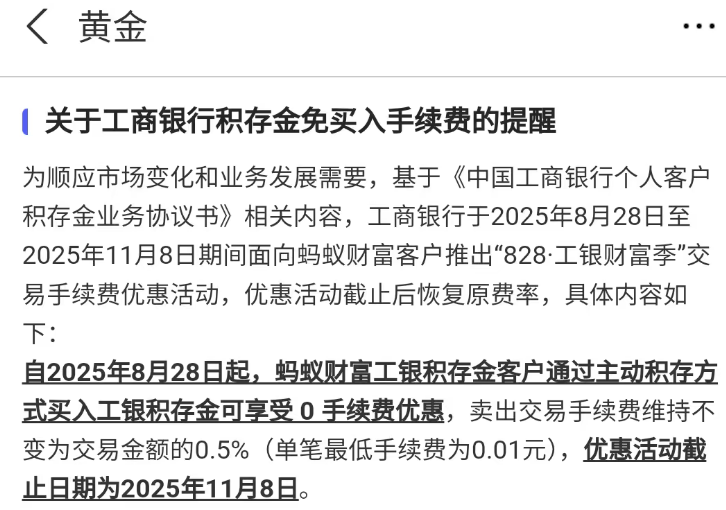
Core Viewpoint - The international gold price has reached a new high, surpassing $3600 per ounce, driven by increased market risk aversion and a significant year-to-date increase of over 36% in gold prices [1][10]. Retail Gold Business Expansion - Banks are actively expanding their retail gold business in response to rising consumer demand, with products like investment gold bars and accumulation gold being promoted to capture market share [1][3]. - Industrial and Commercial Bank of China launched a marketing campaign during the Qixi Festival, offering zero-fee accumulation gold purchases through platforms like Alipay and Tencent Finance [1]. - The retail gold business is seen as enhancing customer loyalty and service capabilities, with products like accumulation gold meeting asset allocation and preservation needs, thereby increasing transaction frequency and cross-selling opportunities in wealth management and insurance [3]. Performance Metrics - Postal Savings Bank reported a significant increase in gold accumulation trading amounting to 5.569 billion yuan, a year-on-year growth of 238.78%, and gold sales of 1.424 billion yuan, up 69.16% [4]. - The appeal of retail gold among younger consumers is growing, with nearly 100 million views on social media platforms discussing bank gold bars [4]. Gold Repurchase Services - Banks are enhancing their gold repurchase systems, with Industrial and Commercial Bank establishing 133 new gold repurchase service outlets to improve service coverage and volume [5]. Institutional Gold Business - The institutional gold business is also crucial, offering services such as gold leasing, price hedging, and the sale of precious metal products to corporate clients [6]. - The Shanghai Gold Exchange has approved 13 market makers for interbank gold inquiry trading, with Postal Savings Bank becoming a trial market maker [6]. Insurance Capital Involvement - The entry of insurance capital into the gold market is expected to drive banks' intermediary income through services like transaction execution and asset custody [9][10]. - China Bank reported a 37% increase in precious metal income in the first half of the year, while Industrial Bank led in interbank gold trading volume with over 3 trillion yuan [9][10].



又一家险企获投资黄金“入场券”
Guo Ji Jin Rong Bao· 2025-07-01 13:26
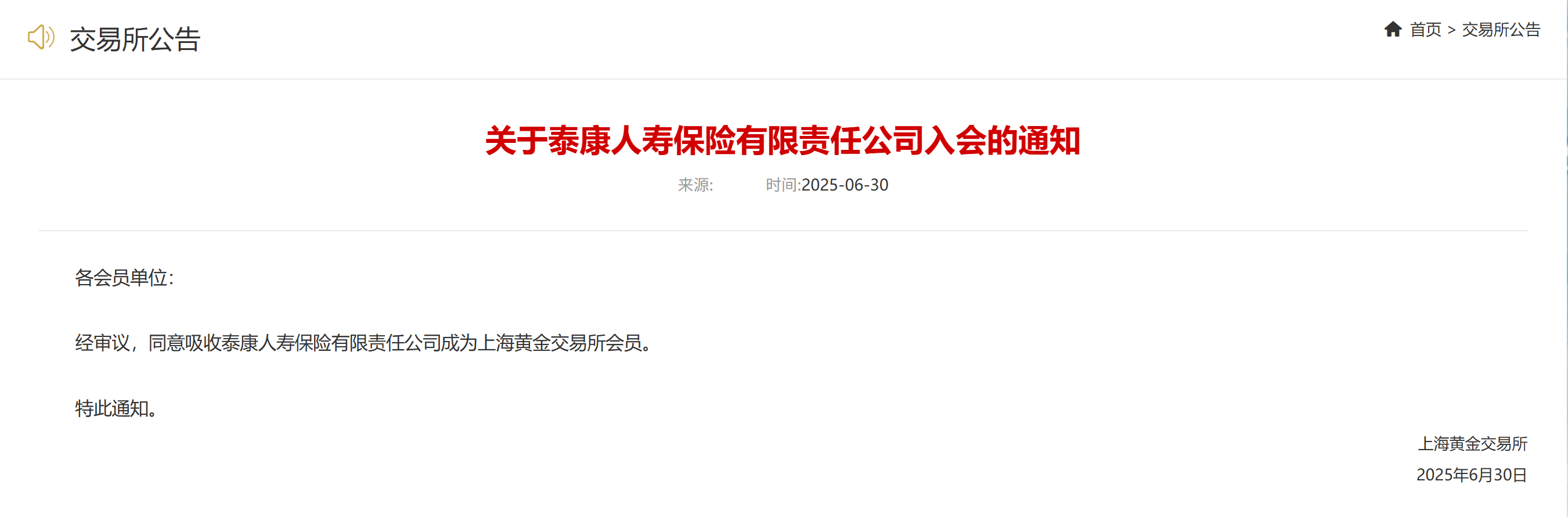
Group 1 - The core viewpoint of the articles is that the inclusion of insurance companies in gold trading through the Shanghai Gold Exchange marks a significant shift in investment strategies, allowing for diversification and potential higher returns amidst a declining interest rate environment [2][3]. - The pilot program initiated by the financial regulatory authority allows ten insurance companies to invest in various gold-related products, which is expected to enhance their asset-liability management and overall investment capabilities [2][3]. - The entry of insurance capital into the gold market is anticipated to inject long-term funds, thereby increasing market depth and promoting the healthy development of the gold market, while also enhancing the pricing power of the RMB in gold transactions [3]. Group 2 - Insurance companies are expected to benefit from gold investments as a hedge against inflation and economic volatility, providing a low correlation with traditional asset classes, which can improve portfolio stability and risk management [3]. - Experts emphasize the importance of establishing robust risk management frameworks for insurance institutions, including the use of risk assessment models to monitor market and operational risks associated with gold investments [4]. - A comprehensive approach involving fundamental, technical, sentiment, and quantitative analyses is recommended to understand the factors influencing gold prices, which will aid in making informed investment decisions [4].
险资“买金”破冰千亿级增量资金入市可期
Zhong Guo Zheng Quan Bao· 2025-03-31 20:40
Core Viewpoint - The approval of four insurance companies as members of the Shanghai Gold Exchange marks a significant step in allowing insurance funds to invest in gold, which is expected to optimize asset allocation, diversify risks, and enhance investment returns [1][2]. Group 1: Insurance Companies' Participation - Four pilot insurance institutions, including PICC Property and Casualty, China Life, Ping An Life, and Taikang Life, have successfully initiated gold trading activities, including bidding, inquiry, pricing, and bulk trading [1]. - The pilot insurance companies have expressed their commitment to a long-term and stable investment philosophy, emphasizing the unique role of gold in their asset allocation strategies [1][3]. Group 2: Regulatory Framework and Market Impact - The National Financial Regulatory Administration announced a pilot program for insurance funds to invest in gold, allowing ten insurance companies to engage in various gold trading activities [2]. - The Shanghai Gold Exchange has established a framework to support these pilot insurance companies, including investment management systems and risk management strategies [2]. Group 3: Benefits of Gold Investment - Investing in gold is seen as a way to optimize the asset allocation structure of insurance funds, as gold has a low correlation with traditional financial assets like stocks and bonds, thus helping to mitigate investment risks [3][4]. - The entry of insurance funds into the gold market is expected to bring in substantial long-term capital, enhancing the depth and breadth of the gold market and promoting its healthy development [4]. Group 4: Future Investment Strategies - Insurance companies are advised to adopt a long-term and stable investment approach, with a focus on risk management and market analysis, especially given the current high gold prices [4][6]. - Companies are encouraged to establish comprehensive risk control systems that address market, compliance, operational, and reputational risks while collaborating with banks and the Shanghai Gold Exchange [5][6].


国寿、平安等险资入场黄金市场,首批交易正式落地
Peng Pai Xin Wen· 2025-03-25 12:30
Core Viewpoint - The entry of insurance capital into the gold market marks a significant development, with major companies like China Life and Ping An completing their first gold transactions, indicating a shift from planning to execution in gold investment strategies [3][4]. Group 1: Insurance Companies' Actions - China Life completed the first gold inquiry transaction by a domestic insurance institution at the Shanghai Gold Exchange on March 25 [3]. - Ping An Life executed the first Shanghai gold transaction by a domestic insurance institution on the same day [3]. - Other insurance companies also completed their first on-site bidding and bulk trading transactions [3]. Group 2: Investment Strategy and Benefits - China Life emphasized a long-term investment philosophy, focusing on the unique value of gold in optimizing portfolios, hedging risks, and resisting inflation, aiming to enhance the long-term risk-return ratio of its overall investment portfolio [4]. - Ping An Life highlighted the importance of this historical opportunity, planning to actively research gold investment strategies to optimize asset allocation and improve capital utilization efficiency [4]. - The entry of insurance capital into gold investment is expected to optimize asset allocation, enhance potential returns, promote the development of the RMB gold market, and improve RMB gold pricing functions [5]. Group 3: Regulatory Framework - In February, the National Financial Regulatory Administration announced a pilot program for insurance capital investment in gold, with ten insurance companies selected as the first pilot units [5]. - The scope of pilot investments includes various gold contracts and borrowing services at the Shanghai Gold Exchange [5]. - On March 24, the Shanghai Gold Exchange accepted several major insurance companies as members, facilitating their participation in the gold market [6].

4家险企“开户”成功 黄金市场迎来新资金
Zhong Guo Jing Ying Bao· 2025-03-24 11:34
Core Viewpoint - The recent approval of four insurance companies as members of the Shanghai Gold Exchange marks a significant entry of insurance funds into the gold market, driven by rising gold prices and the need for diversified asset allocation [1][2]. Group 1: Membership Approval - Four insurance companies, including China People's Property Insurance, China Life Insurance, Ping An Life Insurance, and China Pacific Life Insurance, have been approved as members of the Shanghai Gold Exchange [1]. - Membership allows these companies to engage in gold and precious metal trading, enhancing their investment capabilities [2]. Group 2: Regulatory Framework - The criteria for becoming a member of the Shanghai Gold Exchange include having a registered capital of at least 50 million RMB and maintaining profitability over the last three years [2]. - The initiative to allow insurance funds to invest in gold aims to broaden investment channels and optimize asset allocation within insurance companies [2]. Group 3: Investment Pilot Program - A pilot program initiated by the National Financial Regulatory Administration allows ten insurance companies to invest in gold, focusing on various gold trading contracts [2][3]. - The pilot program is expected to enhance the pricing power of Chinese capital markets in gold, similar to the purchasing behavior of central banks [3]. Group 4: Market Impact - Insurance funds are anticipated to become significant marginal price setters in the gold market, although their impact on global gold supply and demand is expected to be manageable [3][4]. - Projections suggest that the long-term gold holdings of Chinese insurance funds could reach between 208 to 555 tons, with a minimal impact on global demand [4].