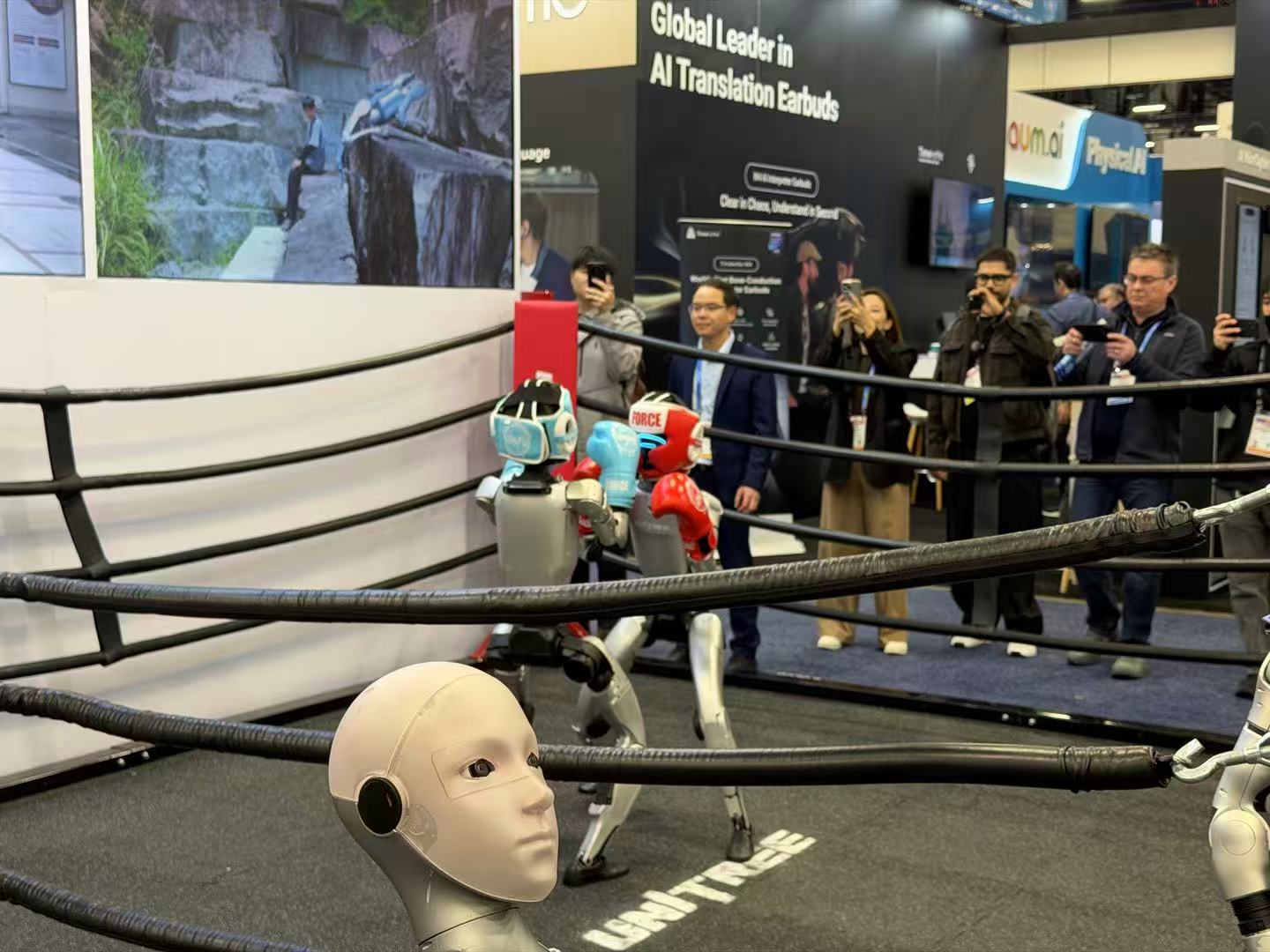
众擎机器人

Search documents
深圳“机器人谷”闪耀CES 打开“物理AI”连接入口
2 1 Shi Ji Jing Ji Bao Dao· 2026-01-08 08:55
Core Insights - The 2026 International Consumer Electronics Show (CES) showcased a strong presence from Shenzhen's "Robot Valley," highlighting China's capabilities in embodied intelligence and commercialization potential [1] - Companies from Shenzhen, including SUTENG Juchuang, YUEJIANG Technology, and others, presented innovations in humanoid robots, quadruped robots, tactile perception systems, and 3D vision modules, forming a complete technology chain from perception to application [1] Group 1: Humanoid Robots - The humanoid robot TORA-ONE demonstrated its ability to make ice cream, showcasing real-time perception of human actions and dynamic interaction strategies, emphasizing the importance of tactile sensing in reliable interactions [2][4] - ZHUIJI Dynamics introduced its flagship product LimX Oli, a full-sized humanoid robot with 31 degrees of freedom, designed for various applications from gait planning to multi-modal interaction [2][3] Group 2: Market Expansion and Collaboration - ZHUIJI Dynamics aims to explore valuable application scenarios and expand collaboration opportunities at CES, focusing on markets with high labor costs and aging populations [4] - The company has actively developed a global distributor network, targeting regions with direct demand for their robots [4] Group 3: Technological Breakthroughs - SUTENG Juchuang showcased an "unmanned intervention" delivery process, highlighting its self-developed VTLA-3D operational model that integrates visual, tactile, and language information for enhanced operational efficiency [7][11] - The company’s model improves data efficiency and reduces reliance on extensive training data by utilizing high-precision 3D point clouds [11] Group 4: Data Collection and AI Integration - PASINI introduced a full-modal embodied intelligence data collection system, establishing the world's largest data collection and model training base, capable of producing 200 million high-quality data sets annually [12][14] - The integration of tactile feedback systems and AI models is crucial for bridging the gap between AI and the physical world, enhancing the commercial viability of embodied intelligence [11][15] Group 5: Product Innovations - The launch of the Gemini 305, a compact dual-camera designed for robotic arms, offers independent configuration of color and depth data resolution, providing precise visual solutions for collaborative robots [13] - Other products showcased include the T800 quadruped robot and the Rover X1, which are designed for various applications from high-end research to consumer markets [5][9]


四大芯片巨头掌门人罕见同台发声
2 1 Shi Ji Jing Ji Bao Dao· 2026-01-08 05:57
Core Insights - The CES 2026 highlighted the significant advancements in AI technology, particularly in the context of increasing computational power and the emergence of new applications across various sectors [1][2][8] - Chinese companies are playing an increasingly vital role in the global tech landscape, showcasing innovative AI hardware and solutions that attract considerable attention at international events [1][4][9] Group 1: AI and Computational Power - NVIDIA's CEO Jensen Huang emphasized the arrival of the "ChatGPT moment," indicating that machines are beginning to understand and act in the real world, with autonomous taxis being one of the first applications to benefit [2] - Huang introduced the new Rubin architecture, which includes a comprehensive stack solution with six core components, addressing the exponential growth in AI computational demands, projected to increase tenfold annually [2] - AMD's CEO Lisa Su noted that the computational power is transitioning from Zetta to Yotta Scale, with AI model training floating-point computation power increasing fourfold each year and inference token consumption rising by 100 times over the past two years [2] Group 2: Emerging AI Applications - Qualcomm's CEO Cristiano Amon highlighted the potential of next-generation personal AI devices, predicting a market size of 100 million units in the coming years, driven by edge AI and situational awareness capabilities [3] - The CES showcased a variety of AI-native products, with a notable increase in the capabilities of robots, moving beyond simple demonstrations to more complex functionalities [4][6] - The development of humanoid robots is progressing towards commercialization, with companies achieving significant advancements in motion control and operational precision, indicating a clear path for deployment in sectors like manufacturing and logistics [6][7] Group 3: Chinese Companies and Global Impact - Chinese firms are increasingly recognized as key players in the global tech ecosystem, leveraging their supply chain and R&D capabilities to drive innovation and efficiency [1][8][9] - The ability of Chinese companies to rapidly iterate on products, with a typical development cycle of about one year compared to two to three years for European counterparts, is enhancing their competitive edge [8][9] - The CES 2026 served as a platform for showcasing how AI technologies are set to permeate everyday life, with a focus on transforming concepts into tangible value through collaborative global efforts [9]


四大芯片巨头掌门人罕见同台发声
21世纪经济报道· 2026-01-08 05:49
Core Insights - The CES 2026 highlighted the significant role of chip giants like NVIDIA, Intel, AMD, and Qualcomm in the AI era, emphasizing the need for hundreds of times more computing power and the expansion of AI applications from cloud to edge [2] - Chinese manufacturers showcased their advancements in AI hardware, gaining international attention and marking China's evolution into a key player in global tech innovation [2][9] - The rapid evolution of foundational computing infrastructure is crucial for the development of AI large models, with chip leaders stressing the accelerating demand for computing power and new application opportunities [2][4] Group 1: AI and Computing Power - NVIDIA's CEO Jensen Huang announced the arrival of the "ChatGPT moment" in AI, highlighting the capabilities of machines to understand and act in the real world, with autonomous taxis being a primary application [3] - Huang introduced the new Rubin architecture, which includes a comprehensive stack solution with multiple core components to address the exponential growth in AI computing demands [4] - AMD's CEO Lisa Su noted that AI model training requires floating-point computing power to grow fourfold annually, with inference token consumption increasing by 100 times over the past two years [4] Group 2: Emerging AI Applications - Qualcomm's CEO Cristiano Amon emphasized the potential of next-generation personal AI devices, predicting a market size of 100 million units in the coming years, driven by edge AI and situational awareness capabilities [5] - The integration of edge data is seen as critical for providing personalized services, with Amon predicting that those who can leverage edge data will lead in the AI competition [5] Group 3: Robotics and Automation - Chinese companies showcased advanced robots at CES 2026, demonstrating improved capabilities compared to previous years, indicating a shift from simple demonstrations to more complex functionalities [6][7] - The development of humanoid robots is progressing towards commercialization, with companies achieving significant advancements in motion control and operational precision [7][9] - The demand for robotics is increasing due to global aging populations and rising labor costs, with exoskeleton robots gaining traction in various markets [7][9] Group 4: Supply Chain and Innovation - Chinese manufacturers are leveraging their supply chain advantages to accelerate product iterations, achieving faster development cycles compared to European counterparts [9][10] - The efficiency of China's industrial chain is enabling rapid technological breakthroughs and cost optimizations, distinguishing "Chinese manufacturing" from "Chinese innovation" [10] - The CES 2026 served as a platform for showcasing how AI is set to permeate everyday life, with a focus on transforming concepts into tangible value through collaborative efforts across the industry [10]
郑州机器人产业跑出加速度
He Nan Ri Bao· 2026-01-07 23:20
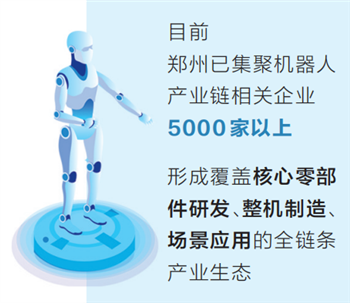
Group 1 - Zhengzhou has signed a strategic cooperation framework agreement with Zhiyuan Innovation (Shanghai) Technology Co., Ltd., marking a significant step in the humanoid robot sector [2] - The establishment of the Zhiyuan Robot Central Bodily Intelligence Industrial Base in Zhengzhou aims to enhance technology research and development, product incubation, and industrial layout [2] - The city is set to become a major hub for the robot industry, with multiple companies like UBTECH and Shenzhen Zhongqing planning to establish production bases and manufacturing centers in Zhengzhou [2][3] Group 2 - Major research platforms such as the Zhongyu Bodily Intelligence Laboratory are accelerating their development in Zhengzhou, with leading AI companies establishing operations in the area [3] - The collaboration between Zhongyu Bodily Intelligence Laboratory and Zhuoyide has led to the development of humanoid robots that have performed well in competitions and are being utilized for city tours [3] - Zhengzhou has over 5,000 companies in the robot industry chain, creating a comprehensive ecosystem that includes core component research, complete machine manufacturing, and application scenarios [3] Group 3 - Zhengzhou's manufacturing sector is diverse, with a large market space and rich application scenarios that facilitate the gathering of upstream and downstream partners [4] - The city benefits from a complete set of industrial factors, ample talent reserves, and convenient logistics networks, which are crucial for attracting robot companies [4] Group 4 - The local government has introduced several policy initiatives, such as the "Henan Province Bodily Intelligence Industry Development Action Plan (2024-2027)" to create new advantages for industry development [5] - The focus on prioritizing future industries is seen as a key driver for enhancing urban capabilities and supporting high-quality economic development [5]


CES 2026见证AI生态变局 中国厂商跻身全球核心阵营
2 1 Shi Ji Jing Ji Bao Dao· 2026-01-07 23:14
Core Insights - The competition among major chip manufacturers is intensifying around the foundational computing power for AI, with native AI hardware accelerating its large-scale implementation, transitioning from laboratory settings to consumer and industrial applications [1][2] - Chinese manufacturers are playing an increasingly significant role at global tech events, showcasing their advancements in AI hardware and capabilities, which are supported by their supply chain and R&D strengths [2][11] Group 1: Computing Power and AI Development - The rapid evolution of underlying computing infrastructure is crucial for the accelerated development of AI large models, with chip leaders emphasizing the exponential growth of computing power and the new application opportunities it creates [3][4] - NVIDIA's CEO highlighted the arrival of the "ChatGPT moment" for physical AI, indicating that machines are beginning to understand and act in the real world, with autonomous taxis being one of the first applications to benefit [3] - AMD's CEO noted that the floating-point computing power for training AI models is growing fourfold annually, with inference token consumption increasing by 100 times over the past two years, necessitating new product offerings to meet Yotta-scale infrastructure demands [4] Group 2: Emerging AI Applications - The potential of edge AI is significant, with advancements in smart wearable devices being highlighted as a new category of mobile terminals that will coexist with smartphones [5][6] - Qualcomm's CEO projected that the market for personal AI devices could reach 100 million units in the coming years, emphasizing the importance of edge data for providing highly relevant user services [6] Group 3: Robotics and Physical AI - The maturity of physical AI was showcased at CES, with Chinese manufacturers presenting advanced robots that demonstrate improved capabilities compared to previous years [7][8] - The introduction of humanoid robots and their increasing commercial viability was noted, with companies achieving substantial progress in motion control and operational precision [9][10] - The integration of hardware, sensors, and environmental perception into scalable systems is seen as essential for advancing physical AI applications across various industries [10] Group 4: Chinese Manufacturers' Competitive Edge - Chinese companies are leveraging their supply chain efficiencies and R&D capabilities to drive rapid iterations and cost optimization in the robotics sector, significantly outpacing European competitors in product development cycles [11][12] - The shift from simple manufacturing to innovative solutions reflects a broader transformation in the perception of "Made in China" to "Created in China," highlighting the technological advancements and better solutions being offered [12]
CES 2026见证AI生态变局,中国厂商跻身全球核心阵营
2 1 Shi Ji Jing Ji Bao Dao· 2026-01-07 13:35
Core Insights - The article highlights the acceleration of native AI hardware development, emphasizing the growing demand for computing power and the expansion of AI applications from cloud to edge [1][2][12] - Chinese manufacturers are increasingly becoming significant players at CES 2026, showcasing a variety of AI hardware, including AI glasses and robots, which have garnered substantial attention [1][12] Group 1: AI Hardware and Computing Power - The rapid evolution of underlying computing infrastructure is supporting the accelerated development of AI large models, with a noted annual increase in floating-point operations for training by four times and a 100-fold increase in inference token consumption over the past two years [2][3] - NVIDIA's CEO highlighted the arrival of the "ChatGPT moment" for physical AI, with autonomous taxis being one of the first applications to benefit from this technology [2] - AMD's CEO discussed the transition to Yotta Scale compute, indicating that AI potential will be fully unleashed across data centers, personal computing devices, and edge AI [2][3] Group 2: Robotics and Physical AI - The maturity of physical AI was emphasized at CES, with a notable improvement in the capabilities of showcased robots compared to previous years, indicating a shift from simple demonstrations to more complex functionalities [7][8] - Companies like UTree Technology and Zongqiong Robotics are showcasing advanced robots capable of performing intricate movements, signaling a move towards mass production and real-world applications [8][9] - The integration of edge AI and real-time situational awareness in wearable devices is expected to create significant market opportunities, with projections of reaching 100 million units in the coming years [5][6] Group 3: Chinese Manufacturers and Global Role - Chinese firms are transitioning from being merely the "world's factory" to becoming key players in global technological innovation, supported by strong supply chain and R&D capabilities [1][12] - The efficiency of China's supply chain allows for rapid product iteration, with a production cycle of about one year compared to three to five years for European companies [12][13] - The article underscores that the advancements in AI technology are not just about manufacturing but also about creating better solutions and technologies, marking a shift from "Chinese manufacturing" to "Chinese innovation" [13]
过去一年 人形机器人掌握了哪些炫酷技能
Yang Shi Xin Wen Ke Hu Duan· 2026-01-07 08:11
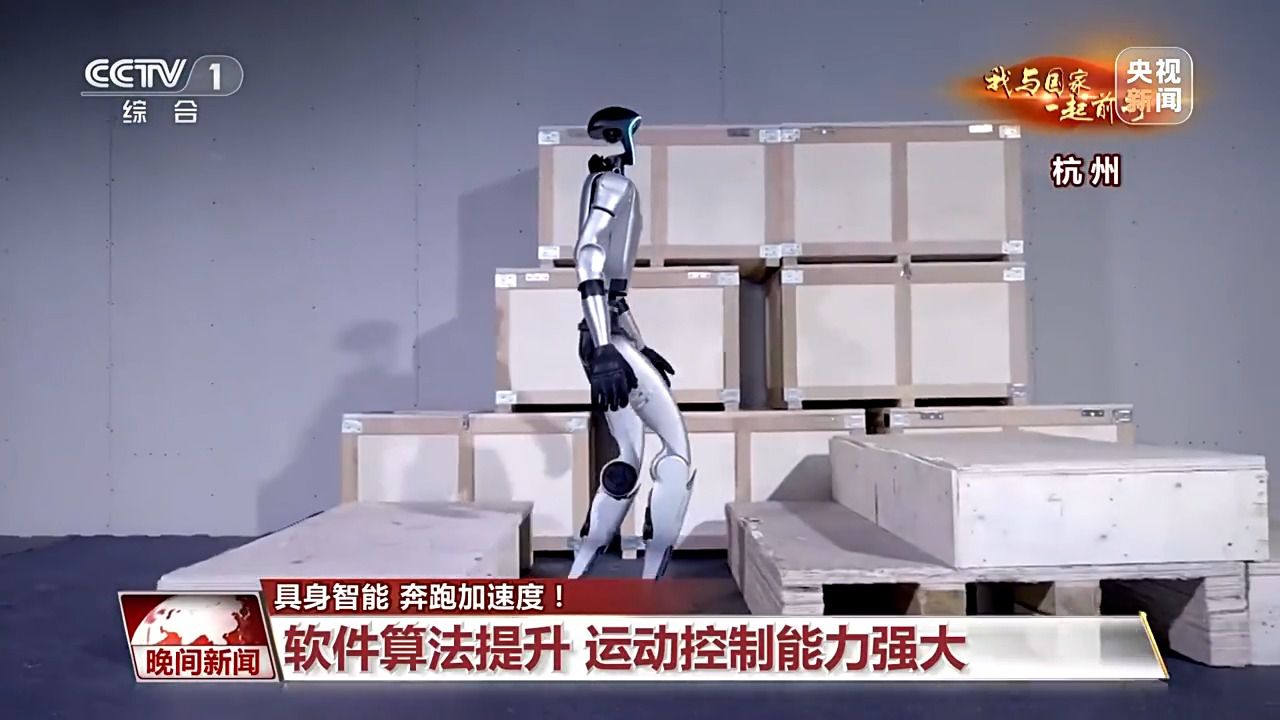
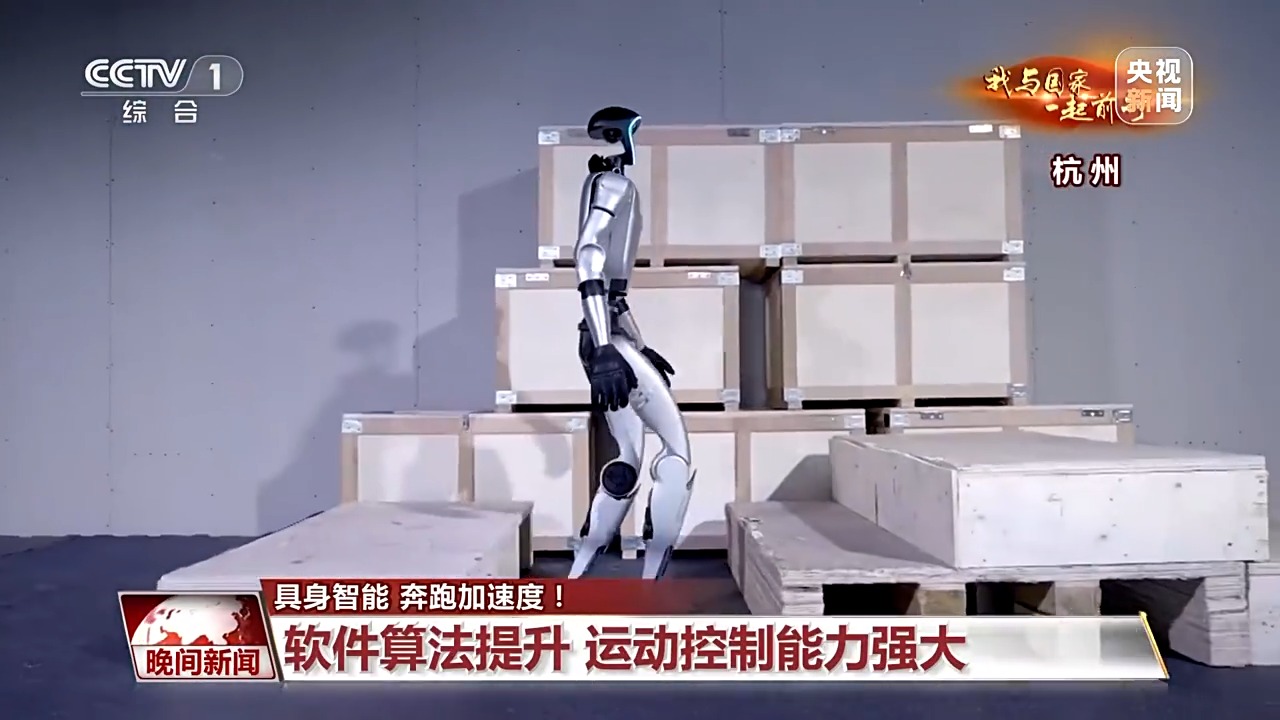
我与国家一起前行丨过去一年人形机器人掌握了哪些炫酷技能 2025年,"具身智能"作为前瞻布局的未来产业,被写入"十五五"规划建议中。简单来说,具身智能就是有了"身体"的人工智能。它不仅能思考,还会行动。 2025年,它们用身体感知世界,在学习中不断进化,它们登上春晚舞台、站上马拉松跑道、走进学校和工厂。从杭州到深圳,从上海到北京,机器人和背后 的科研团队,正沿着不同的路径加速奔跑。 年初还慢慢悠悠,年底就解锁了高难度空翻,人形机器人2025年的迭代之快,令人称奇。 机器人越来越灵活、稳定,靠的是复杂的运动控制算法,简单来说就是人类的小脑。 硬件软件全栈自研提高核心竞争力 2025年12月,这款通用人形机器人,再次向体能极限发起挑战。高性能固态动力电池、搭载29个自由度关节,峰值扭矩可达450N m,综合体能超越90%成 年男性。简单来说,扭矩越大、自由度越高,就意味着越有力量、越灵活。 众擎机器人创始人兼CEO 赵同阳:奔跑、格斗以及跳跃爆发的时候,用到的电流特别大。一个小关节,能接近一个跑车的扭矩,设计得不足够优秀,板子 可能会烧掉,齿轮可能会崩掉,所以我们从材料的轻量化研究、抗冲击能力、包括电路的抗浪涌, ...
我与国家一起前行丨过去一年 人形机器人掌握了哪些炫酷技能
Yang Shi Xin Wen Ke Hu Duan· 2026-01-07 07:14
Core Insights - The concept of "embodied intelligence" is included in the 14th Five-Year Plan, indicating a strategic focus on AI that can perceive and act in the world [1] - By 2025, humanoid robots are expected to evolve rapidly, showcasing advanced capabilities in various environments, including performances and industrial applications [3][21] Group 1: Technological Advancements - Humanoid robots are achieving remarkable agility and stability through complex motion control algorithms, akin to human brain functions [6] - The general humanoid robot is equipped with a high-performance solid-state power battery and 29 degrees of freedom, with a peak torque of 450 N·m, surpassing 90% of adult males in physical capabilities [9] - Companies are focusing on full-stack self-research for software algorithms and hardware components to enhance core competitiveness [11][16] Group 2: Industry Applications - Robots are increasingly utilized in industrial settings, performing tasks that are repetitive, labor-intensive, or hazardous, with production efficiency reaching 30% to 40% of human capabilities [25] - The development of autonomous charging capabilities allows robots to maintain continuous operation, enhancing productivity [28] - Real-world scenarios are crucial for the evolution of robots, with ongoing training in various fields such as healthcare, energy exploration, and emergency rescue [44] Group 3: Collaborative Ecosystem - The integration of research and industry is exemplified by the close proximity of companies and research institutions, facilitating rapid innovation and supply chain efficiency [18][45] - The establishment of innovation centers for embodied intelligence across the country supports technology breakthroughs and industry ecosystem development [37] - The focus on creating a robust supply chain allows for quick access to nearly half of the required components within a 10-kilometer radius, enhancing operational efficiency [19]
跑通“产学研用”一体化创新马拉松 场景!具身智能实战中升级本领
Yang Shi Wang· 2026-01-07 05:43
Group 1 - The core concept of embodied intelligence is introduced as a future industry included in the "14th Five-Year Plan," emphasizing its ability to think and act, evolving through learning by 2025 [1] - By 2025, robots are expected to participate in various activities, from performing on stage to competing in marathons, showcasing their integration into daily life and industries across major cities in China [1][4] - The rapid iteration of humanoid robots in 2025 is highlighted, with advancements in their capabilities, such as performing complex movements like flips, indicating significant progress in technology [12][14] Group 2 - Companies like Yushutech are developing robots with enhanced motion control capabilities, utilizing complex algorithms that mimic human brain functions to improve flexibility and stability [16][18] - The introduction of high-performance solid-state batteries and advanced joint designs in humanoid robots allows them to exceed the physical capabilities of 90% of adult males, showcasing advancements in hardware [24][25] - The self-research and development approach adopted by companies is crucial for building core competitiveness, with a focus on improving key components like motors and controllers [26] Group 3 - The practical application of robots in industrial settings is emphasized, with robots achieving 30%-40% of human production efficiency in tasks such as assembly and quality inspection [35] - The development of autonomous battery swapping capabilities in robots allows for continuous operation, addressing concerns about battery life and enhancing productivity [35] - The evolution of robots into autonomous guides capable of interacting with their environment marks a significant advancement in AI algorithms and robotics [40][43] Group 4 - The establishment of innovation centers across China is fostering collaboration between enterprises and research institutions, focusing on core technology breakthroughs and industry ecosystem development [45][57] - The integration of robots into various sectors, including healthcare, energy exploration, and emergency rescue, demonstrates their potential to empower diverse industries and contribute to societal advancements [53] - The overall progress in China's robotics industry reflects a shift from catching up to leading in key areas, supported by a robust innovation ecosystem [56][60]
拳脚、舞步与订单,中国机器人“刷屏”CES
Di Yi Cai Jing· 2026-01-07 05:12
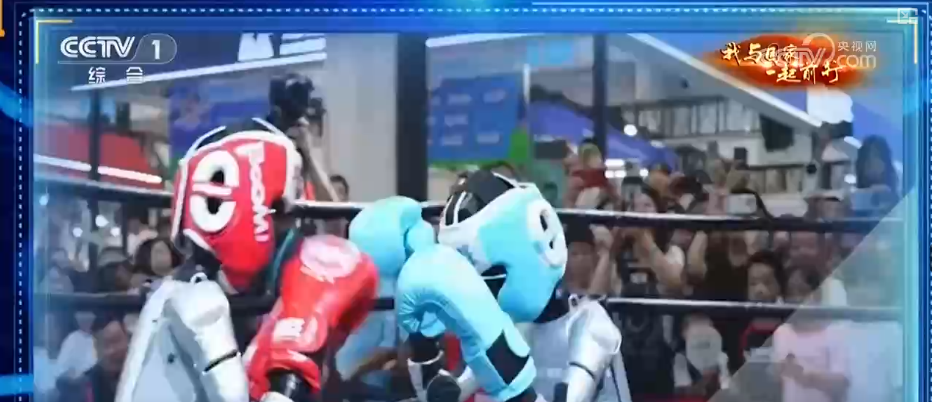
Core Insights - Chinese humanoid robots are gaining significant attention at CES 2026, showcasing advancements from laboratory concepts to real-world applications [1][2] - The presence of numerous Chinese companies at CES highlights the growing influence of China's robotics industry on the global stage [2][5] Group 1: Company Highlights - Companies like Unitree, Galaxy General, and Fourier are among the prominent Chinese exhibitors, with many participating for the first time [2][4] - Unitree's G1 humanoid robot engaged in a fighting demonstration, attracting a large audience and showcasing its competitive pricing with the R1 robot priced at $4,900 [4] - The debut of ZhiYuan's humanoid robot, which performed a dance, captivated foreign attendees, indicating a strong interest in Chinese robotic innovations [5] Group 2: Market Trends - The CES event is increasingly focusing on consumer-oriented (C-end) robotics, with products like Fourier's "Care-bot" designed for emotional companionship [9] - The four-legged robot Bobo from Weita Power allows for interactive experiences and is set to launch globally in Q2 2026, targeting markets in North America, Europe, and the Middle East [11] - Magic Atom reported that over 60% of its revenue comes from overseas, emphasizing the importance of international markets for Chinese robotics companies [13] Group 3: Industry Insights - The robotics industry is recognized for its reliance on Chinese supply chains, even among foreign companies, highlighting China's critical role in hardware manufacturing [13] - Many exhibitors at CES aim to enhance brand visibility and secure overseas orders, indicating a strategic push for international market penetration [13]