优必选科技

Search documents
中国电信与优必选合作的10万台AI悟空机器人开启交付
Zheng Quan Shi Bao Wang· 2025-11-16 07:53
作为一款定位为"家庭新成员"的智慧伴侣,AI悟空具备了卓越的多模态交互能力,融合视觉感知、语音 交互与场景化Agent调度于一体,深度融合大模型技术底座,实现了从"被动应答"到"主动服务"的智慧 跨越。 人民财讯11月16日电,近日,优必选科技与中国电信(601728)陕西公司联合打造的首款"AI大模型家 庭小型人形机器人"AI悟空,在陕西电信的多家核心营业厅正式上线,意味着双方此前制定的"10万台销 量目标"战略合作正式进入实质交付阶段。 ...

机遇还是泡沫?高交会激辩具身智能:明年有望实现“脱离遥控器”突破,场景通用仍需十年沉淀
Mei Ri Jing Ji Xin Wen· 2025-11-15 07:22
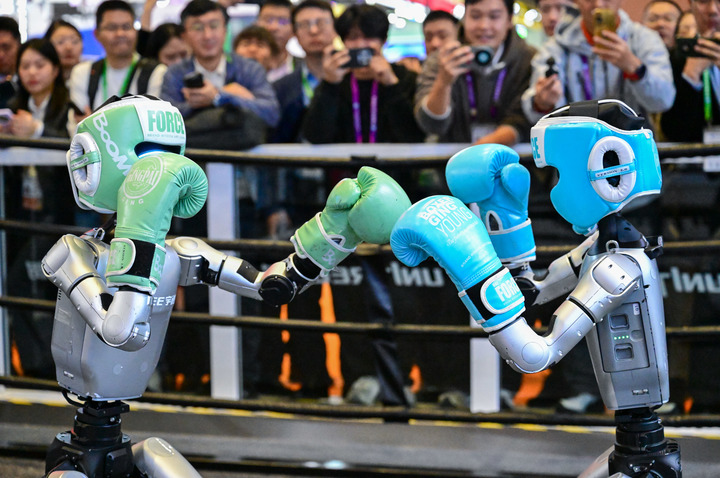
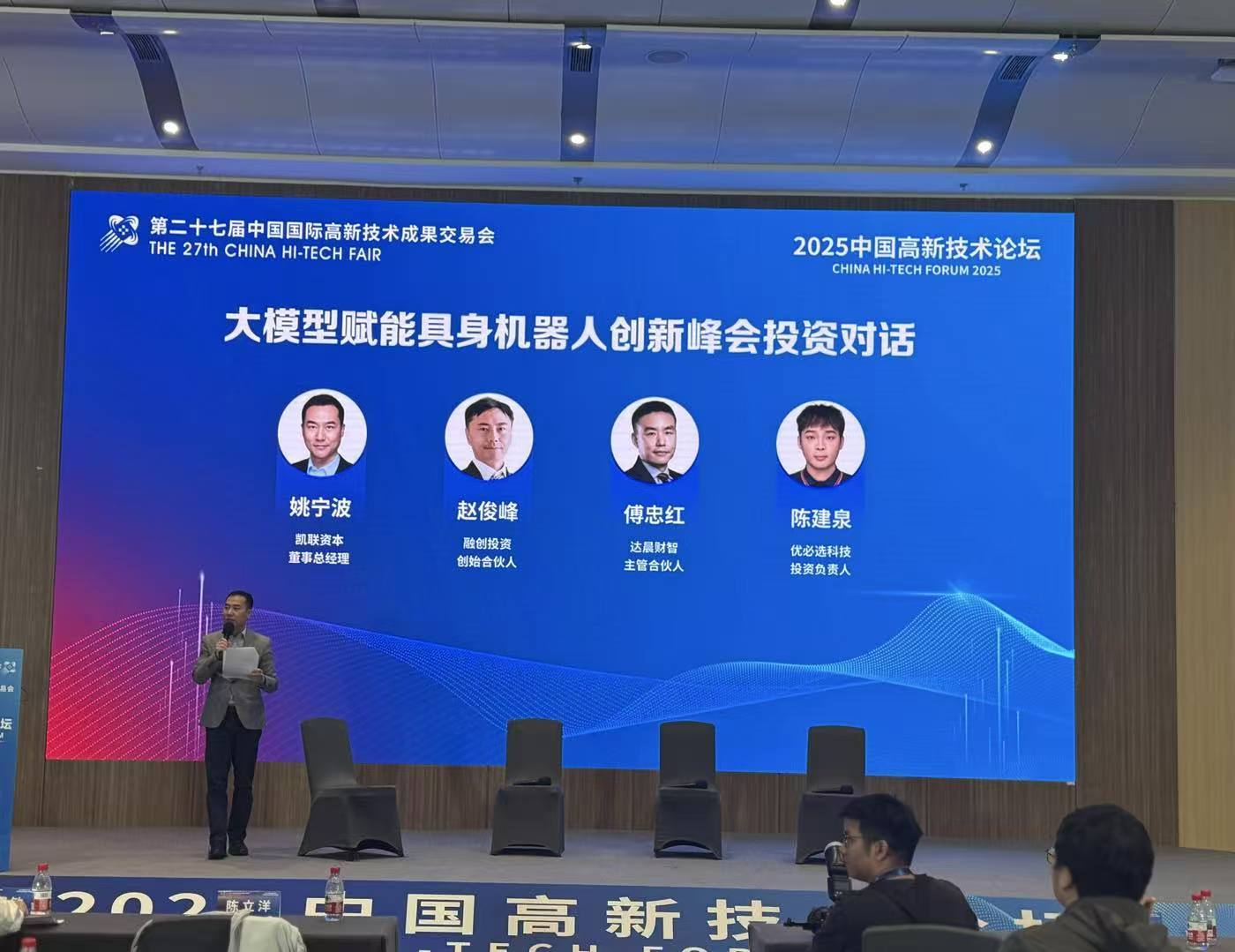
11月14日,第二十七届中国国际高新技术成果交易会(以下简称"高交会")在深圳国际会展中心开幕。本届高交会以"科技赋能产业融合共创未来"为主题, 汇聚了全球100多个国家和地区的5000多家知名企业及国际组织,集中展示了5000余项前沿科技创新成果。 《每日经济新闻》记者在现场了解到,具身智能机器人成为展会焦点,几乎每家参展的机器人企业均有人形机器人进行现场演示。 值得关注的是,作为高交会的核心论坛之一,"大模型赋能具身机器人创新峰会投资对话"(以下简称"峰会")吸引了来自凯联资本、融创投资、达晨财智、 优必选科技等机构和企业的嘉宾。与会者围绕具身智能行业融资泡沫争议、赛道格局、技术落地及创业方向等核心议题展开深度对话,为行业发展与投资决 策提供了参考视角。 图片来源:每经记者甄素静摄 格局未定抑或泡沫显现?业界激辩具身智能投资机遇 随着高交会现场人形机器人演示的密集亮相,具身智能赛道的融资热度与泡沫争议成为行业关注的焦点。有观点认为,当前具身智能融资市场异常火爆,已 出现泡沫堆积现象,且赛道格局基本确定,尤其是在核心技术领域。但本次峰会的与会嘉宾普遍认为,这种判断过于片面,赛道仍存在大量投资机会。 达晨财智 ...

超8亿元人形订单、数百台集中交付,「优必选」已迎“新生”
Robot猎场备忘录· 2025-11-15 00:05
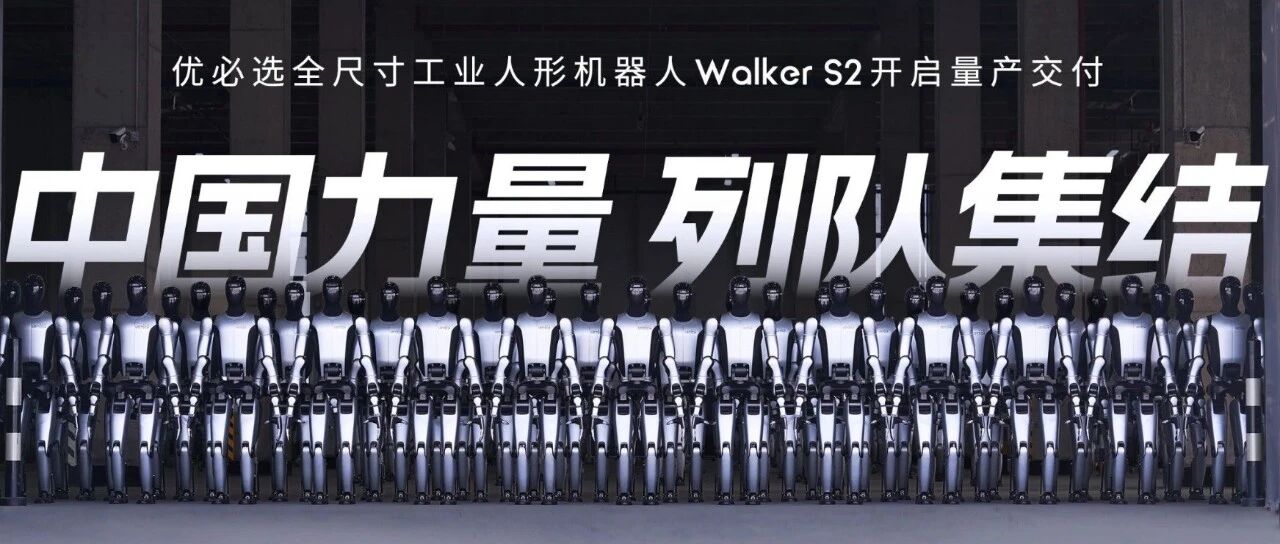
Core Viewpoint - The article highlights the significant progress of UBTECH Robotics in the humanoid robot sector, particularly with the mass production and delivery of the Walker S2, marking a new phase in its commercialization journey [2][3]. Commercialization Progress - UBTECH has officially commenced mass production of the Walker S2, with hundreds of units set for delivery to industrial applications, moving beyond non-commercial scenarios like research and entertainment [2][3]. - The company has established strategic partnerships with major automotive manufacturers such as Dongfeng Liuzhou Motor, Geely, and FAW, indicating a strong push towards commercialization [4]. - Recent contracts include a 250 million yuan order for humanoid robot products and solutions, showcasing UBTECH's ability to secure significant industrial contracts [7][8]. - As of now, the Walker series has secured over 800 million yuan in contracts, with nearly 50 million yuan already delivered in the first half of the year [8]. Technical Route - UBTECH possesses comprehensive technical capabilities in humanoid robotics, including proprietary technologies like BrainNet 2.0 and Co-Agent, enabling autonomous and collaborative operations [12][14]. - The company has formed a strategic partnership with Huawei to enhance product development and application in the humanoid robotics field [12]. Secondary Market - UBTECH's stock has seen fluctuations since its listing at 90 HKD, peaking at 328 HKD before dropping to 40.8 HKD, and currently recovering to 130.7 HKD as of November 14 [15]. - The stock's performance has been influenced by broader market conditions and the company's ability to attract capital [16]. - The competitive landscape includes several emerging humanoid robot companies, with some already progressing towards IPOs, which could impact UBTECH's market position [17]. Industry Context - The humanoid robot sector is experiencing a wave of interest, particularly with the anticipated developments from Tesla's Optimus project, which could serve as a catalyst for the entire industry [19]. - The article emphasizes the importance of achieving a commercial breakthrough in industrial applications for UBTECH to maintain a competitive edge in the market [8][18].
关于人形机器人造房子,麦肯锡很认真的预测了
机器人大讲堂· 2025-11-13 09:26
Core Insights - The construction industry is facing a productivity crisis, with a growth rate of only 0.4% over the past 22 years, while manufacturing has seen an average annual growth of 3% [1][3] - The industry is experiencing a labor shortage due to an aging workforce and a lack of interest from younger generations, creating a significant gap in the demand for housing and infrastructure, estimated at $40 trillion [1][3] - Humanoid robots are seen as a potential solution to this crisis, capable of performing a wide range of construction tasks and improving efficiency [1][6] Construction Industry Challenges and Solutions - The construction industry's productivity is hindered by its heavy reliance on human labor, which is becoming increasingly scarce [3] - Construction projects are complex and require a high degree of customization, making automation difficult [3] - Factors such as high physical demands, safety risks, and uncertain career prospects deter young workers from entering the field, exacerbating the labor crisis [3] Advantages of Humanoid Robots - Humanoid robots are versatile and can perform various tasks such as moving materials, welding, and cleaning, which traditional specialized robots cannot do [6][9] - These robots utilize embodied AI, allowing them to perceive their environment and make real-time decisions, enhancing their adaptability on construction sites [6][9] - They can work continuously without breaks, reducing labor costs significantly as their prices are expected to drop to $2,000-$5,000 by 2035 [9][10] Barriers to Implementation - The deployment of humanoid robots faces three main technological challenges: AI foundational models, mobility and flexibility, and safety and collaboration capabilities [10][11] - Current robots are still somewhat limited in their capabilities, particularly in navigating complex environments and performing delicate tasks [10] - The high cost of humanoid robots, currently ranging from $15,000 to $50,000, poses a significant barrier for widespread adoption [10] Future Development Phases - In the next 3-5 years, humanoid robots are expected to handle simple, repetitive tasks, freeing human workers to focus on more technical aspects of construction [13] - In the 5-10 year timeframe, these robots will take on more complex tasks and work collaboratively with human workers [13] - By the long-term phase (10+ years), humanoid robots are anticipated to autonomously execute complex construction tasks, transforming the construction workflow [14] Deployment Strategies for Construction Companies - Companies can adopt different strategies for deploying humanoid robots based on their financial strength and risk tolerance: - **Pioneers**: Large firms with strong capital can collaborate with robot manufacturers for customized solutions [17] - **Early Adopters**: Medium-sized firms can utilize existing robot products in standardized projects to gain market share [18] - **Selective Deployers**: Smaller firms can focus on high ROI scenarios for gradual implementation [18] Conclusion and Industry Outlook - The integration of humanoid robots into the construction industry represents a shift towards human-robot collaboration, where humans focus on design and management while robots handle repetitive and hazardous tasks [19] - The future of the construction industry will be shaped by technological advancements, making it essential for companies to embrace these changes proactively [19]
为什么造机器人灵巧手比造人形机器人还难?
机器人大讲堂· 2025-11-13 09:26
Core Insights - The article emphasizes that teaching robots to perform dexterous tasks, such as opening a bottle, is significantly more complex than basic locomotion, with the difficulty being at least ten times greater [1] - The development of dexterous hands is considered the "ultimate challenge" in robotics, as human hands are highly evolved and capable of intricate movements that robots struggle to replicate [1][3] Summary by Sections Dexterous Hands: An Underestimated Challenge - Human hands consist of 27 bones, 29 joints, and 34 muscles, allowing for both strength and precision, which is difficult for robots to mimic [1] - The complexity of dexterous hand control exceeds that of robotic locomotion, requiring a complete feedback loop of visual recognition, force feedback, and real-time adjustments [3][5] Market Pricing and Technical Barriers - Current market prices reflect the technical barriers of dexterous hands: a humanoid robot with walking capabilities costs around $16,000, while a robot like Boston Dynamics' Atlas is estimated at $140,000, and a dexterous hand from Shadow Robot exceeds $100,000 [6] - The inherent conflict between spatial constraints and functional requirements complicates the design of robotic hands, akin to building a complex gear system in a small space [6] Evolution of Dexterous Hand Technology - The development of dexterous hands has undergone five key iterations since 1980, starting with the Stanford/JPL Hand, which proved the feasibility of replicating human hand movements [8][10] - Despite advancements, many designs remained in the experimental phase due to high costs and reliability issues, with simpler designs dominating the industrial automation market [12] The "Impossible Triangle" Dilemma - The industry faces a dilemma known as the "impossible triangle," where achieving high performance, low cost, and high reliability simultaneously is challenging [20] - High-performance hands, like the Shadow Hand, are expensive and have high failure rates, while low-cost options sacrifice performance [21][22] Six Main Technical Approaches - Various technical approaches to dexterous hand design include direct drive, tendon-driven, hydraulic, linkage, hybrid, and open-source methods, each with its own advantages and disadvantages [24] - For instance, the tendon-driven approach allows for a more human-like structure but complicates control, while hydraulic systems offer high power density but are costly and require maintenance [30][32] AI and Open Source as Game Changers - The rise of AI and open-source models presents opportunities to overcome existing limitations in dexterous hand technology, optimizing control and reducing costs [36] - AI can enhance precision and reliability, while open-source initiatives encourage global collaboration and innovation, potentially lowering development costs [37] Future Outlook - The industry anticipates significant breakthroughs in dexterous hand technology over the next five years, including substantial cost reductions and improved reliability [40] - The ultimate goal is to create dexterous hands that enable robots to integrate seamlessly into human environments, marking a pivotal shift from industrial tools to household companions [38]
决赛巅峰对决倒计时5天!2025第二届中关村具身智能机器人应用大赛见证机器人“真干活”终极比拼,等你来打卡
机器人大讲堂· 2025-11-12 05:55
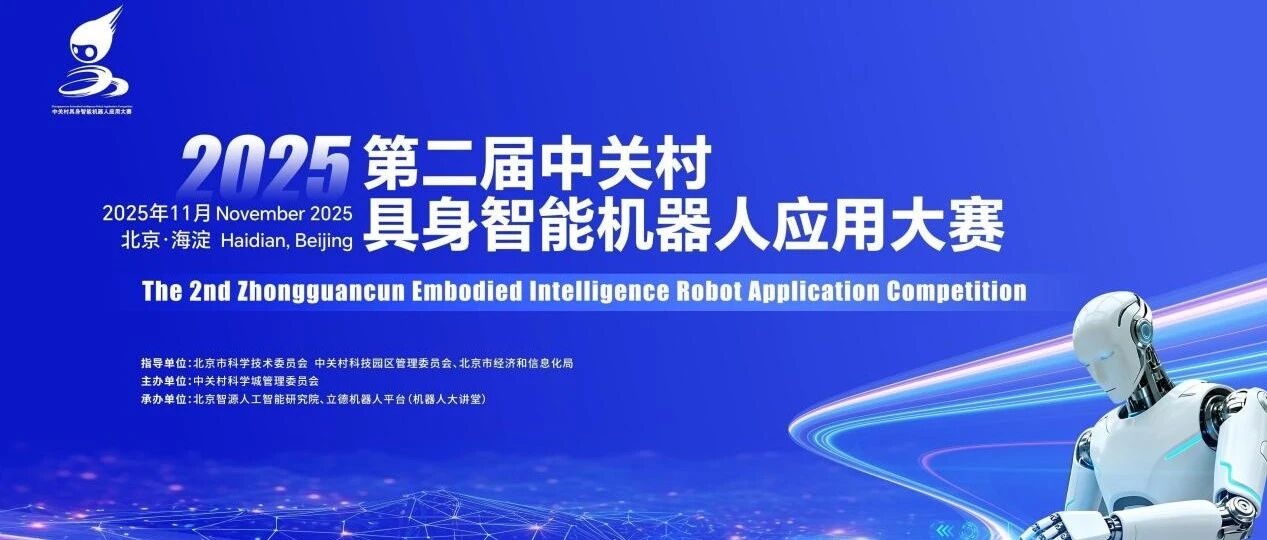
历经数月的筹备与初赛的筛选,第二届中关村具身智能机器人应用大赛即将迎来最高潮 —— 决赛将于 11 月 17-18 日在中关村国家自主创新示范区展示中心正式开赛 。 作为引领下一代人工智能发展的核心方向,具身智能正推动机器人从 "工具执行"迈向"自主感知 - 决策 - 行 动"的全链条进化。通过融合视觉、语言、动作等多模态能力,具身智能机器人正在工业、商业、家庭等场景 实现"正干活、干好活"的技术突破。 而即将拉开帷幕的 2025 第二届中关村具身智能机器人应用大赛 ,正是这一产业生态的核心展示与竞技的舞 台。 这场 以 "劳动最光荣"为核心,以"具身引智、应用未来"为主题 的科技盛宴,将有近百支优秀队伍, 围绕具 身智能模型能力挑战赛、具身智能场景应用赛、具身智能学术前沿与产业生态三大赛道 19 项核心任务 展开 终极角逐,不仅将瓜分 200 万元总奖金池,更将解锁具身智能技术从实验室走向应用场景的全新可能。 1 2025年11月17-18日 ♀中关村国家自主创新示范区展示中心 目自引到 应用未来 日中国 H 观众报名通道 扫描二维码进行报名 距离决赛开赛 仅剩五天时间 ,现面向全国 开放报名通道 ,无论你 ...
天奇股份:公司主营业务智能装备业务涵盖汽车整车制造环节的智能仓储、智慧物流有关产品及服务
Zheng Quan Ri Bao Zhi Sheng· 2025-11-11 10:13
Core Viewpoint - Tianqi Co., Ltd. is focusing on intelligent equipment business, particularly in the automotive manufacturing sector, which includes smart warehousing and logistics products and services [1] Group 1: Business Overview - The main business of the company includes intelligent equipment that covers smart warehousing and logistics related to automotive manufacturing [1] - The company has a joint venture with UBTECH Robotics, named Wuxi Youqi Intelligent Technology Co., Ltd., which aims to develop an end-to-end unmanned logistics system based on unmanned vehicles and humanoid robots [1]

天奇股份(002009.SZ):已为多家客户提供具身智能机器人应用解决方案
Ge Long Hui· 2025-11-11 07:31
Core Viewpoint - The company focuses on providing advanced embodied intelligent robot application solutions, aiming to establish a comprehensive ecosystem for the industrialization of embodied intelligence [1] Group 1: Business Focus - The company's robot business includes the research and manufacturing of robot bodies, development of embodied intelligent application models, and data collection for embodied intelligence [1] - The company aims to achieve a closed-loop system of "scene-data-model-application" to enhance the implementation of embodied intelligent applications [1] Group 2: Market Applications - The company has provided embodied intelligent robot application solutions to multiple clients across various sectors, including automotive manufacturing, component manufacturing, lithium battery production, 3C manufacturing, unmanned retail, and urban cultural tourism [1] Group 3: Strategic Partnerships - The company has established a significant strategic partnership with UBTECH Robotics to collaborate on the application of biped robots in industrial manufacturing, particularly in unmanned logistics solutions [1]
十五运开幕式上人形机器人如何协作奏乐?揭秘→
Ren Min Ri Bao· 2025-11-11 02:13
Core Viewpoint - The performance of humanoid robots at the opening ceremony of the 15th National Games showcased advancements in robotics technology, particularly in collaborative music performance, highlighting the potential for robots to achieve precision and synchronization comparable to human musicians [1] Group 1: Technology and Innovation - The humanoid robots performed using "bronze jue," an ancient musical instrument, requiring precise control of striking position and force, which poses significant challenges for both humans and robots [1] - The largest bronze jue used in the performance measures 64 cm in height and weighs 40 kg, while the smallest is 36.8 cm tall and weighs 10.75 kg, indicating the scale and complexity of the instruments involved [1] - Achievements in group intelligence, multimodal large models, and "humanoid eyes" stereo vision perception were crucial for enabling the robots to perform accurately [1] Group 2: Performance Metrics - The robots achieved millimeter-level striking precision with an error margin of within 2 mm, and the synchronization error among the three robots was within 10 milliseconds, demonstrating high levels of coordination [1] - The robots were able to strike each bronze jue with a stability and precision that rivals human musicians, showcasing the potential for humanoid robots in performing arts [1]

在进博会上感受人形机器人发展前沿脉动
Xin Hua Wang· 2025-11-10 23:24
Core Insights - The development of humanoid robots is rapidly advancing, with increasing applications in various sectors, moving from entertainment to practical industrial uses [1][7] - Humanoid robots are seen as a new generation of super terminals, similar to smartphones and electric vehicles, with significant potential to drive economic growth and innovation [9] Group 1: Technological Advancements - Humanoid robots are becoming more versatile, capable of performing complex tasks such as quality inspection and assisting in various environments [4][7] - The technology is evolving to allow humanoid robots to autonomously complete approximately 80% of tasks in unfamiliar settings, marking a significant breakthrough [7][8] - Companies are focusing on enhancing the performance, cost control, and algorithm application of humanoid robots to achieve scalable production capabilities [9] Group 2: Industry Trends - The humanoid robot industry is currently in a phase of exploration, with a consensus forming around the need for collaboration between academia and industry to drive commercialization [8][9] - The upcoming year is anticipated to be critical for the commercial rollout of humanoid robots, particularly in industrial applications, with expectations of significant unit deliveries [9][10] - The industry is expected to witness a major milestone with the delivery of over 10,000 units by a single company, akin to the emergence of the "ten thousand club" in the electric vehicle sector [10]