TI

Search documents
这一芯片赛道,天塌了!
半导体芯闻· 2025-09-26 10:43
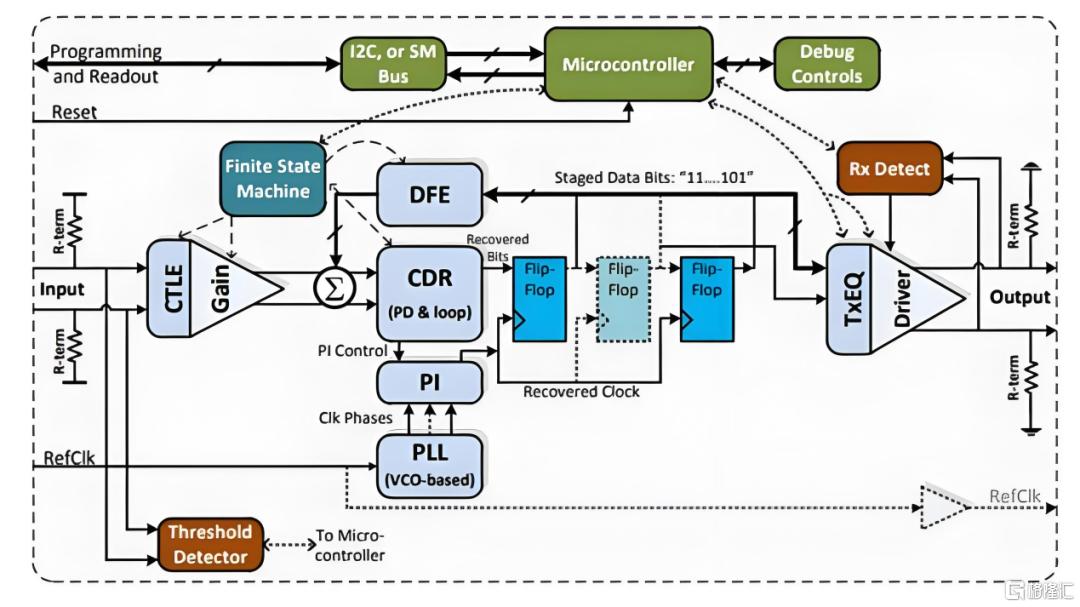
Core Viewpoint - The strategic alliance between NVIDIA and Intel aims to integrate AI-accelerated computing with the x86 ecosystem, significantly enhancing the influence of NVIDIA's NVLink technology over the traditional PCIe standard [3][15][21] Group 1: NVLink vs PCIe - NVLink technology offers several times the bandwidth and lower latency compared to PCIe, posing a significant challenge to the long-standing PCIe standard [3][15] - Intel's embrace of NVLink is a symbolic shift, indicating a potential restructuring of CPU and GPU interconnect paradigms, which may impact the demand for PCIe Retimer chips [3][15][21] Group 2: PCIe Retimer Chips - PCIe Retimer chips emerged as a necessary solution to address signal integrity issues as data transfer rates increased from PCIe 3.0 to PCIe 6.0, with insertion loss rising from 22dB to 36dB [6][7] - Retimer chips are crucial for extending transmission distances and improving signal quality in high-speed data center environments, especially as AI demands grow [10][11] Group 3: Market Dynamics - The PCIe Retimer chip market is characterized by a "duopoly" led by AsteraLabs and Lanqi Technology, with other players like Pericom and TI competing in various segments [12][13][14] - The global PCIe Retimer chip market is projected to reach $1.8 billion by 2025, driven by the increasing demand for high-speed interconnects in AI and server applications [14] Group 4: Impact of NVIDIA and Intel Alliance - The partnership between NVIDIA and Intel may disrupt the PCIe Retimer market, as NVLink's superior bandwidth and lower latency could reduce the need for Retimer chips in AI server configurations [15][16][21] - Intel's integration of NVLink into its x86 CPUs could lead to a shift in the server ecosystem, potentially establishing NVLink as the new industry standard [17][18] Group 5: Future Outlook - Despite the potential challenges posed by NVLink, PCIe Retimer chips may still hold value in scenarios where long-distance transmission and complex topologies are required, ensuring their relevance in the AI era [21]


英伟达“误伤”一颗芯片
Ge Long Hui· 2025-09-26 01:20
Core Insights - The strategic alliance between NVIDIA and Intel aims to integrate AI accelerated computing with the x86 ecosystem, focusing on the NVLink technology's interconnect capabilities, which poses a significant challenge to the long-dominant PCIe standard [1][15][21] - Intel's embrace of NVLink is symbolically significant, indicating a potential restructuring of CPU and GPU interconnect paradigms, which may impact the PCIe Retimer chip market [1][15][21] Group 1: NVLink and PCIe Dynamics - NVLink technology offers several times the bandwidth and lower latency compared to PCIe, making it a formidable competitor in AI training and large-scale computing scenarios [1][15] - The introduction of NVLink could lead to a decline in the relevance of PCIe Retimer chips, which are primarily used to address signal integrity issues in long-distance PCIe connections [15][18] - The collaboration between NVIDIA and Intel may redefine the interconnect protocols in data centers, potentially leading to a shift from general compatibility to vertical integration [18][21] Group 2: Retimer Chip Market Overview - The PCIe Retimer chip is essential for maintaining signal integrity in high-speed data transmission, especially as PCIe standards evolve and data rates increase [3][4][10] - The market for PCIe Retimer chips is expected to grow significantly, driven by the increasing demand for AI servers and high-performance computing [14][10] - Major players in the Retimer chip market include AsteraLabs and 澜起科技, with competition intensifying as companies adapt to the evolving landscape [11][12][13] Group 3: Future Implications - If the NVLink strategy is successfully implemented, it could lead to a fundamental redesign of AI server architectures, with a reduced need for Retimer chips in certain configurations [19][21] - The potential for NVLink to become an industry standard, especially with Intel's involvement, could further diminish the market for PCIe Retimer chips [18][21] - Despite the challenges posed by NVLink, there remain scenarios where Retimer chips are indispensable, particularly in complex topologies and non-GPU device interconnections [21]
英伟达“误伤”一颗芯片
半导体行业观察· 2025-09-26 01:11
Core Viewpoint - The strategic alliance between NVIDIA and Intel aims to integrate AI-accelerated computing with the advantages of the x86 ecosystem, focusing on the NVLink technology architecture, which poses a significant challenge to the long-dominant PCIe standard [2][3] Group 1: NVLink vs PCIe - NVLink offers several times the bandwidth and lower latency compared to PCIe, making it superior for AI training and large-scale computing, thus threatening the PCIe technology route [2][3] - Intel's embrace of NVLink is symbolically significant, indicating a potential restructuring of CPU and GPU interconnect paradigms, which may impact the Retimer chip market that relies on PCIe [2][3] Group 2: Retimer Chips - Retimer chips are essential for addressing signal integrity issues in PCIe connections, especially as data transfer rates increase with newer PCIe versions [5][6] - The demand for Retimer chips is expected to rise significantly due to the expansion of cloud computing and AI servers, where multiple GPUs are used, necessitating 8 to 16 Retimer chips per AI server [10][11] Group 3: Market Dynamics - The Retimer chip market is characterized by a "duopoly" led by AsteraLabs and Lanqi Technology, with competition from traditional analog giants and other players [12][13] - The global PCIe Retimer chip market is projected to reach $1.8 billion by 2025, driven by the increasing need for high-speed interconnects in AI and server applications [15] Group 4: Impact of NVIDIA and Intel Alliance - The collaboration between NVIDIA and Intel may disrupt the Retimer chip market, as NVLink's superior bandwidth and lower latency could reduce the need for signal compensation chips [17][19] - If Intel's CPUs begin to support NVLink, it could accelerate the adoption of NVLink as a standard, further diminishing the role of Retimer chips in the ecosystem [19][20] Group 5: Future Outlook - Despite the potential challenges posed by NVLink, Retimer chips may still hold value in scenarios where long-distance transmission and complex topologies are involved, ensuring data integrity in non-GPU device interconnections [23]
TI increases dividend 4% to $1.42 per share, marking 22 consecutive years of increases
Prnewswire· 2025-09-18 20:01
Core Viewpoint - Texas Instruments Incorporated (TI) announced a 4% increase in its quarterly cash dividend, raising it from $1.36 per share to $1.42, which annualizes to $5.68 [1] Company Summary - The new quarterly cash dividend of $1.42 represents a 4% increase from the previous dividend of $1.36 per share [1] - The annualized dividend amount is now $5.68, reflecting the company's commitment to returning value to shareholders [1]

Texas Instruments (TXN) Stock Drops Despite Market Gains: Important Facts to Note
ZACKS· 2025-09-15 22:51
Company Performance - Texas Instruments (TXN) closed at $178.20, reflecting a -2.41% change from the previous day, underperforming the S&P 500's 0.47% gain [1] - Over the past month, TXN shares have depreciated by 6.15%, while the Computer and Technology sector gained 3.88% and the S&P 500 gained 2.32% [1] Upcoming Earnings - Texas Instruments is projected to report earnings of $1.48 per share, indicating a year-over-year growth of 0.68% [2] - The consensus estimate for revenue is $4.64 billion, representing an 11.83% increase compared to the same quarter of the previous year [2] Full Year Estimates - For the full year, earnings are projected at $5.6 per share and revenue at $17.67 billion, showing changes of +7.69% and +12.94% respectively from the previous year [3] - Recent changes to analyst estimates suggest a favorable outlook on the business health and profitability of Texas Instruments [3] Valuation Metrics - Texas Instruments has a Forward P/E ratio of 32.61, which is a discount compared to the industry average Forward P/E of 38.67 [5] - The current PEG ratio for TXN is 2.98, while the average PEG ratio for the Semiconductor - General industry is 3.62 [6] Industry Ranking - The Semiconductor - General industry is part of the Computer and Technology sector and holds a Zacks Industry Rank of 27, placing it in the top 11% of over 250 industries [6] - The Zacks Industry Rank assesses the strength of industry groups based on the average Zacks Rank of individual stocks, with the top 50% rated industries outperforming the bottom half by a factor of 2 to 1 [7]
Chip Stock Falls as China Launches Investigations
Schaeffers Investment Research· 2025-09-15 16:34
Core Viewpoint - Texas Instruments Inc (NASDAQ:TXN) is experiencing a significant decline in stock price due to recent investigations launched by China into U.S. semiconductor imports, marking its lowest trading levels since May [1][2]. Group 1: Stock Performance - TXN is down 3.2% at $176.80, reflecting a broader trend of three consecutive weekly losses and a year-to-date decline of 5.6% [1][2]. - The stock is currently in "oversold" territory, indicated by a 14-day relative strength index of 3.6 [2]. Group 2: Options Market Activity - There has been a notable increase in put options trading, with 12,000 puts exchanged today, which is double the average intraday volume, compared to 6,222 calls [3]. - The most popular put contract is the November 190 put, followed by the September 180 put [3]. - Options are currently reasonably priced, with TXN's Schaeffer's Volatility Index (SVI) at 28%, ranking in the low 8th percentile of its annual range, indicating low volatility expectations among traders [3].
民生证券-半导体行业点评:商务部发起反倾销调查,模拟IC迎国产替代新机遇-250915
Xin Lang Cai Jing· 2025-09-15 06:32
Core Viewpoint - The Chinese Ministry of Commerce announced anti-dumping investigations on U.S. imported analog chips and anti-discrimination investigations related to U.S. measures in the integrated circuit sector, effective from September 13, 2025 [1][2]. Industry Summary - The domestic analog chip market has a low localization rate, with U.S. manufacturers holding significant market shares. In 2024, Texas Instruments (TI) is expected to generate approximately $3.012 billion from Chinese customers, accounting for 19% of its revenue, while Analog Devices, Inc. (ADI) is projected to earn around $2.129 billion, representing about 23% [2]. - The combined revenue from TI and ADI in 2024 from the Chinese market exceeds $5 billion, indicating a substantial presence of U.S. companies in the analog chip market and highlighting the potential for domestic alternatives [2]. Company Summary - The anti-dumping investigation is a response to the significant increase in imports of general interface and gate driver chips from the U.S., which rose by 37% from 2022 to 2024, while import prices dropped by 52%. This has severely impacted the gross margins of domestic companies [2]. - The investigation marks a policy escalation aimed at promoting domestic production of analog chips, reflecting a clear commitment to accelerate the localization of the analog IC industry [2][3]. - Companies likely to benefit from this trend include Sirepu, Naxin Micro, Shengbang Co., Nanchip Technology, Aiwei Electronics, Jiewate, Jingfeng Mingyuan, and Meixin Sheng [3].
半导体行业点评:商务部发起反倾销调查,模拟IC迎国产替代新机遇
Minsheng Securities· 2025-09-15 06:01
Investment Rating - The report recommends a positive investment outlook for companies involved in the simulation IC industry, particularly those benefiting from the domestic substitution trend [3][4]. Core Insights - The Ministry of Commerce has initiated anti-dumping investigations against imported simulation chips from the United States, indicating a strong governmental push for domestic alternatives in the simulation IC sector [1][2]. - The report highlights that U.S. manufacturers have long held significant market shares in the simulation chip market in China, with major companies like TI and ADI generating substantial revenues from this market [2]. - The domestic simulation companies are poised to benefit from the ongoing trend of domestic substitution, especially in the context of increased competition and declining prices from U.S. firms [2]. Summary by Sections Section 1: Industry Overview - The anti-dumping investigation targets simulation chips, particularly those using 40nm and above process technologies, which include various interface and gate driver chips [1]. - The investigation period for dumping is set from January 1, 2024, to December 31, 2024, while the period for industry damage assessment spans from January 1, 2022, to December 31, 2024 [1]. Section 2: Market Dynamics - U.S. companies, including TI and ADI, accounted for over $5 billion in revenue from the Chinese market in 2024, indicating a significant opportunity for domestic manufacturers to capture market share [2]. - The report notes a 37% increase in the import volume of relevant chips from the U.S. and a 52% decrease in import prices from 2022 to 2024, which has severely impacted the profit margins of domestic companies [2]. Section 3: Investment Recommendations - The report suggests focusing on companies that have a high proportion of general interface and gate driver chips, which have been under pressure from U.S. competition, as they are likely to be the primary beneficiaries of the domestic substitution trend [3]. - Specific companies recommended for investment include SiRuPu, NaXinWei, ShengBang, NanXin Technology, AiWei Electronics, JieHuaTe, JingFengMingYuan, and MeiXinSheng [3][4].





It May Be Time to Buy the Dip in Texas Instruments
MarketBeat· 2025-09-12 11:05
Core Viewpoint - Texas Instruments operates in a different segment of the technology sector compared to NVIDIA, focusing on analog and embedded chips, which may present a buy-the-dip opportunity for patient investors despite recent stock downturns [1][2][3]. Financial Performance - In the trailing twelve-month period, Texas Instruments reported a year-over-year revenue growth of only 2%, significantly lower than NVIDIA's 71% [2]. - The company achieved a strong 14% year-over-year revenue growth in its most recent quarter, primarily driven by manufacturers pulling forward demand to avoid tariffs [4]. - Texas Instruments has guided for revenue between $4.45 billion and $4.80 billion for the upcoming quarter, with the automotive sector being a key focus [5]. Market Position and Analyst Sentiment - Texas Instruments is not seeking government equity stakes, which may alleviate some investor concerns [6]. - Analysts maintain a bullish outlook with a 12-month stock price forecast of $211.90, indicating a potential upside of 14.95% from the current price of $184.35 [8][9]. - Despite trading at a premium to historical averages, analysts believe the company can sustain growth at this valuation [9][10]. Technical Analysis - The stock appears oversold, trading well below its 50-day simple moving average, with a relative strength indicator (RSI) around 36 [11]. - Momentum indicators suggest slowing downside momentum, and if support holds at $180, a near-term recovery could occur with resistance levels around $200 and $210 [12].
国信证券:模拟芯片行业周期向上 推荐具有高端化和平台化能力的企业
智通财经网· 2025-09-12 01:24
Core Viewpoint - The analog chip industry is in an upward cycle, with domestic companies expected to enter a phase of scale expansion for new products in the coming years [1][2] Industry Overview - The global analog chip market is projected to grow at a CAGR of 4.77% from 2004 to 2024, with expected growth rates of 3.3% and 5.1% in 2025 and 2026, reaching market sizes of $82.2 billion and $86.4 billion respectively [1] - Major domestic companies recommended include: Shengbang Co. (300661.SZ), Jiewate (688141.SH), Sirepu (688536.SH), Naxinwei (688052.SH), Nanxin Technology (688484.SH), Aiwei Electronics (688798.SH), Chipengwei (688508.SH), Diaowei (688381.SH), and Jingfeng Mingyuan (688368.SH) [1] Domestic Market Potential - In 2024, China is expected to account for approximately 35% of the global analog chip market, representing a significant revenue source for international manufacturers [2] - Major international companies like TI, ADI, and MPS are projected to generate revenues of approximately $30 million, $21 million, and $12 million from China in 2024, respectively [2] Key Application Areas - **Industrial Sector**: After inventory depletion, normal procurement and new product introduction are expected to resume, with domestic companies' new products likely to achieve scale [2] - **AI Sector**: The AI industry is driving overall demand for analog chips, with a focus on domestic production of core power management chips [2] - **Automotive Sector**: The electrification and intelligence of vehicles provide growth opportunities for domestic analog chip companies, with the market for automotive analog chips still in its early stages [3] - **Consumer Electronics**: Companies are increasingly diversifying their product offerings to provide comprehensive solutions for applications like mobile devices, leading to a more pronounced "Matthew Effect" [3]