
智谱

Search documents
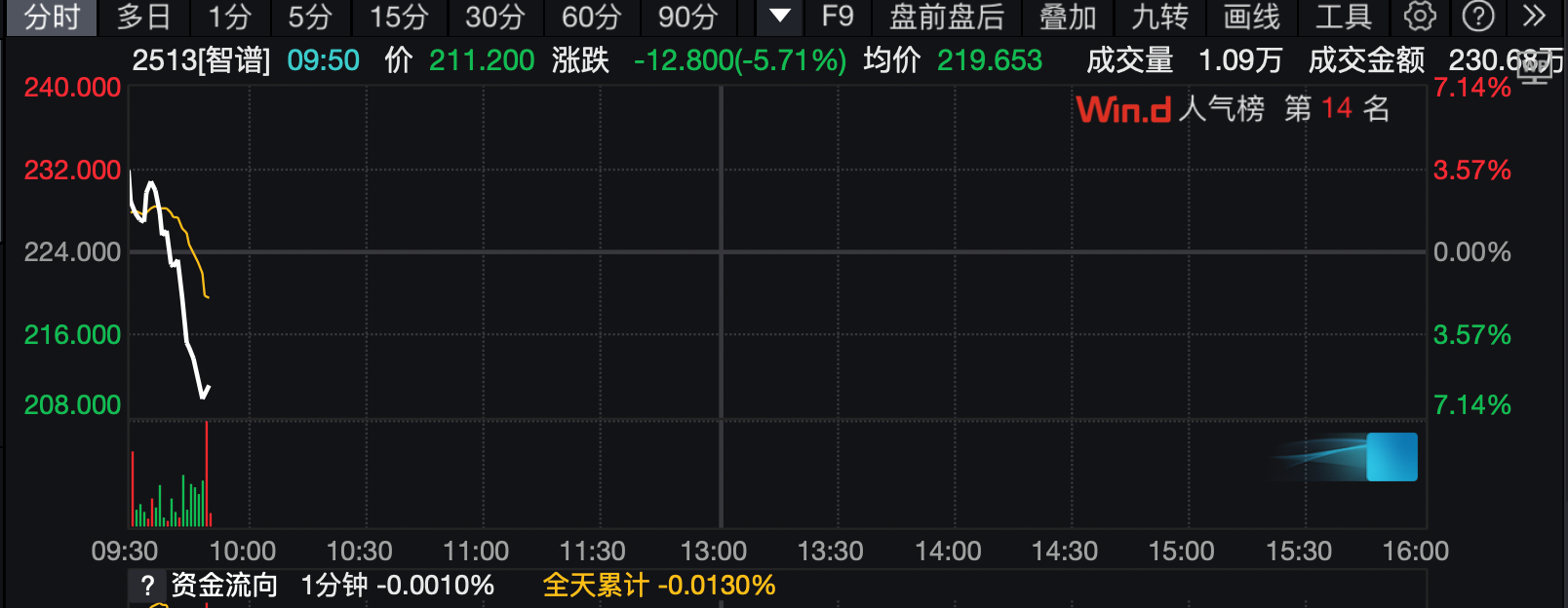
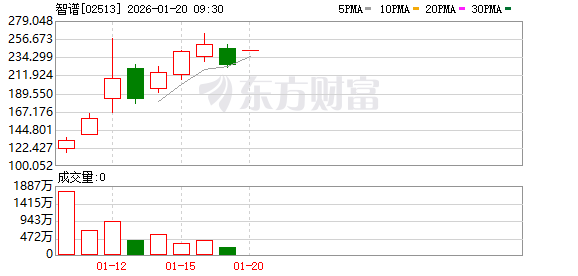
港股AI概念股短线走弱
Jin Rong Jie· 2026-01-20 02:29
港股AI概念股短线走弱,智谱跌超10%,百度集团-W跌超3%,商汤-W、腾讯控股、阿里巴巴-W、 MINIMAX-WP纷纷下挫。 本文源自:金融界AI电报 ...
恒生科技指数开盘下跌,智谱、MiniMax股价回涨后走低
Di Yi Cai Jing· 2026-01-20 02:24
Group 1 - The Hong Kong stock market is currently experiencing a volatile upward trend, but faces short-term challenges [1][3] - The Hang Seng Technology Index opened down 0.22%, with major tech stocks mostly declining; notable declines include Zhizhu (down 8.48%) and MiniMax (up 0.79%) [3] - Zhizhu and MiniMax reported significant losses, with cumulative losses of over 6.2 billion yuan and approximately 9.2 billion yuan respectively from 2022 to mid-2025 [3] Group 2 - Google DeepMind's CEO highlighted that Chinese teams, represented by DeepSeek and Alibaba, are rapidly approaching the technological frontier, with only a few months' gap compared to Western teams [4] - The research team from China International Capital Corporation noted that seven leading tech stocks in Hong Kong contributed significantly to the Hang Seng Index, with a peak contribution of 14 percentage points to a 37% return [4] - The discussion around potential bubbles in the AI industry is deemed less important than confirming the current stage of development, as bubbles can drive industry growth [4]

未知机构:基础模型厂商的价值依然被低估华泰计算机0120我-20260120
未知机构· 2026-01-20 02:10
Summary of Conference Call Notes Industry and Companies Involved - The discussion primarily revolves around the AI model industry, specifically focusing on companies such as Zhipu and MiniMax, which are involved in foundational model training and deployment [1][2]. Core Insights and Arguments - **Misunderstanding of Business Models**: Many leaders still perceive Zhipu as a company focused on B2B project deployment and MiniMax as a B2C internet application provider. The report argues that these applications are merely commercial representations to provide visible returns to investors, while the true core lies in their foundational model training capabilities, which are among the top tier globally in open-source models [1]. - **Valuation of Kimi**: Kimi, a pre-IPO company, completed a $500 million financing round at the end of December, achieving a valuation of $4.3 billion. Shortly after, Kimi initiated another financing round with a pre-investment valuation of $4.8 billion. This rapid increase indicates a fear of missing out (FOMO) in the primary market regarding investments in large models, suggesting a re-evaluation of the value of domestic large models [1]. - **Recognition of AI Model Companies**: MiniMax's founder, Yan Junjie, participated in a significant roundtable discussion, becoming the second representative from an AI large model company to do so, following DeepSeek's founder. This participation highlights the industry's acknowledgment of the position of large model manufacturers [2]. - **Differences in AI Development**: The current wave of AI differs fundamentally from the previous wave of computer vision. While computer vision primarily addressed single recognition tasks, general large models possess greater potential across various domains such as work, life, and scientific discovery. The report suggests that this time, there will not be a decline in technology premium due to control by terminal manufacturers [3]. - **Market Potential of Foundational Models**: The report emphasizes the need to evaluate the valuations of Zhipu and MiniMax from a higher perspective, considering the contribution of large models to global GDP and the market share they could capture in the future. It suggests that the commercialization of large models is still evolving, with many pathways yet to be explored [3]. Other Important but Potentially Overlooked Content - **Product Launches and Market Awareness**: The recent launch of Anthropic's CoWork Agent product, which was entirely coded using Cloud Code, quickly gained popularity, further highlighting the potential embedded within foundational model manufacturers [3].
港股开盘 | 恒指低开0.07% AI应用概念回暖 智谱等涨超3%
智通财经网· 2026-01-20 01:37
Group 1 - The Hang Seng Index opened down 0.07% and the Hang Seng Tech Index fell 0.22%, with AI application concepts showing a rebound while tech stocks like Baidu Group declined over 2% [1] Group 2 - Huatai Securities believes that the core factors driving the market rebound in the first quarter remain unchanged, including overall loose financial conditions, foreign capital inflow, upward revisions of profit expectations, and the attractiveness of Hong Kong stocks [2] - Tianfeng Securities indicates that the short-term rebound of Hong Kong stocks is supported by valuation recovery and improved sentiment, but the upward potential may be constrained by high overseas interest rates and limited rate cut expectations [2] - Guojin Securities expects that with the acceleration of domestic economic recovery and the shift towards loose monetary policy in major overseas economies, the valuation advantage of Hong Kong stocks will become more pronounced [2] Group 3 - Industrial Securities recommends prioritizing leading internet companies in the Chinese AI sector, anticipating a resonance of buying from both domestic and foreign investors [3] - The report suggests focusing on dividend assets in a low-interest-rate environment, highlighting opportunities in insurance, banking, energy, property management, and public utilities [3] - New consumption trends are emphasized, with three main lines of focus: traditional service-oriented consumption transformation, Z-generation consumption trends, and high-end consumption [3]
港股早评:三大指数低开,科技股弱势,AI应用概念股活跃,中国中免开涨2.8%
Ge Long Hui A P P· 2026-01-20 01:29
Core Viewpoint - The article highlights the impact of tariff fears and geopolitical tensions on global markets, leading to a decline in European stocks and a slight drop in Hong Kong indices [1] Group 1: Market Performance - US markets were closed overnight, while European stocks experienced significant declines [1] - Hong Kong's three major indices opened slightly lower, with the Hang Seng Index down 0.07%, the National Index down 0.16%, and the Hang Seng Tech Index down 0.22% [1] Group 2: Company Performance - Major technology stocks showed weakness, with Baidu falling over 2%, and Tencent and Xiaomi both declining more than 1.2% [1] - AI application concept stocks saw renewed activity, with Zhihui rising 3.6% [1] - New consumption concept stocks collectively increased, with Pop Mart rising over 5%, and Hu Shang Ayi and China Duty Free both up 2% and 2.8% respectively [1] - Real estate stocks mostly declined, with Country Garden down 4.6% and heavy machinery stock China National Heavy Duty Truck Group falling nearly 5% [1]

港股开盘:恒指微跌0.07%、科指跌0.22%,科网股、石油股下挫,黄金股普涨,AI应用概念股回暖
Jin Rong Jie· 2026-01-20 01:28
Market Overview - The Hong Kong stock market opened slightly lower on January 20, with the Hang Seng Index down 0.07% at 26,544.9 points, the Tech Index down 0.22% at 5,737.11 points, the National Enterprises Index down 0.16% at 9,119.42 points, and the Red Chip Index down 0.21% at 4,133.76 points [1] - Major tech stocks experienced declines, with Alibaba down 0.37%, Tencent down 1.48%, JD.com down 0.09%, Xiaomi down 1.26%, Meituan down 0.2%, Kuaishou down 0.26%, and Bilibili down 0.91% [1] - Oil stocks opened lower, with Shanghai Petrochemical falling over 4%, while real estate stocks continued to decline, with Country Garden down over 4% [1] - Gold stocks saw a general increase, with Zijin Mining rising over 1%, and AI application stocks showed some recovery, with MINIMAX-WP and Zhiyu rising over 3% [1] - New consumption concept stocks collectively rose, with Pop Mart increasing over 5%, and Hu Shang Ayi and China Duty Free rising by 2% and 2.8% respectively [1] Company News - China Taiping (00966.HK) expects a net profit increase of approximately 215% to 225% in 2025, compared to 8.432 billion HKD in the previous year [2] - TCL Electronics (01070.HK) anticipates an adjusted net profit of approximately 2.33 billion to 2.57 billion HKD in 2025, representing a growth of about 45% to 60% [2] - Jihong Co. (02603.HK) projects a net profit of approximately 273 million to 291 million HKD in 2025, with a year-on-year growth of 50% to 60% due to the recovery of the packaging business and significant growth in cross-border e-commerce [2] - Guolian Minsheng (01456.HK) expects a net profit of 2.008 billion RMB in 2025, a year-on-year increase of around 406% [2] - China Railway (00390.HK) reported a new contract amount of 1,165.98 billion RMB in Q4 2025, with a cumulative new contract amount of 2,750.9 billion RMB, reflecting a year-on-year growth of 1.3% [2] Additional Company Developments - Shenzhen Holdings (00604.HK) anticipates a total contract sales amount of approximately 13.311 billion RMB in 2025, a decrease of 21.55% year-on-year [3] - SF Holding (06936.HK) reported a total revenue of 27.339 billion RMB in December from its express logistics, supply chain, and international businesses, marking a year-on-year growth of 3.41% [4] - China Ruyi (00136.HK) plans to invest approximately 14.2 million USD in AIsphere to explore innovative applications of AI technology in film, streaming, and gaming content production and operations [4] - Baide International (02668.HK) has signed a memorandum of understanding with potential sellers regarding the possible acquisition of part or all of a target company's equity [5] - Yanda Pharmaceutical (00512.HK) has had its new drug application for the innovative radiolabeled drug TLX591-CDx accepted by the Chinese drug regulatory authority [7] Institutional Insights - Huatai Securities indicates that the core factors driving the market rebound in Q1 have not fundamentally changed, suggesting continued opportunities for investment in Hong Kong stocks [8] - CICC notes that gold prices may stabilize more than silver, with short-term adjustments potentially providing investment opportunities [9] - Huayuan Securities highlights that geopolitical changes are reshaping global oil trade flows, which may support freight rates in the short term [9] - Zhongtai Securities anticipates that the late Spring Festival may lead to differentiated travel patterns, boosting market demand, particularly in the aviation sector [9]
智谱GLM-4.7-Flash发布并开源
Mei Ri Jing Ji Xin Wen· 2026-01-20 01:02
Core Viewpoint - The release of GLM-4.7-Flash marks a significant advancement in mixed thinking models, offering a new choice that balances performance and efficiency for lightweight deployment [2] Group 1: Product Details - GLM-4.7-Flash has a total parameter count of 30 billion, with 3 billion active parameters, positioning it as a state-of-the-art (SOTA) model in its category [2] - GLM-4.7-Flash will replace the previous version, GLM-4.5-Flash, on the Zhiyu open platform BigModel.cn, and it will be available for free access starting immediately [2]
智谱将开源GLM-4.7-Flash,API免费调用
Xin Lang Cai Jing· 2026-01-20 00:56
Core Insights - The company is set to release and open-source the GLM-4.7-Flash model today, which is a hybrid thinking model with a total parameter count of 30 billion and an active parameter count of 3 billion, providing a balance of performance and efficiency for lightweight deployment [1][3] Group 1 - GLM-4.7-Flash will replace the previous GLM-4.5-Flash model [1][3] - The model will be available for free access on the Zhiyu Open Platform BigModel.cn [1][3]
智谱GLM-4.7-Flash正式发布并开源 供免费调用
Zheng Quan Ri Bao· 2026-01-20 00:40
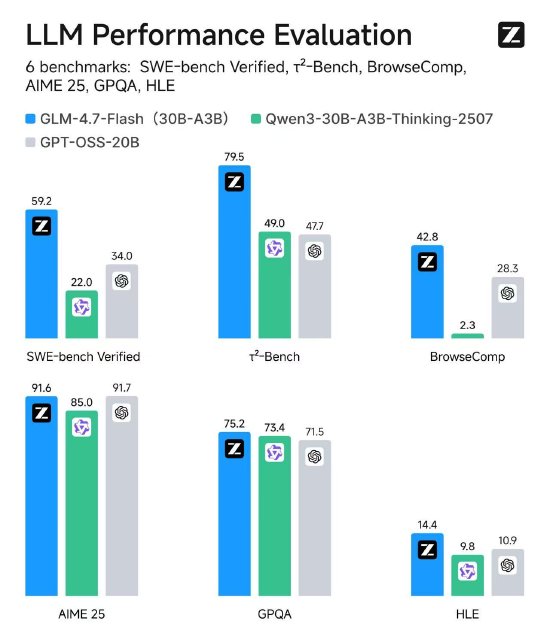
Core Viewpoint - The release of GLM-4.7-Flash marks a significant advancement in lightweight model deployment, offering a balance of performance and efficiency, and is now available for free on the BigModel.cn platform [2] Group 1: Model Performance - GLM-4.7-Flash is recognized as the strongest model in the 30B category, surpassing competitors such as gpt-oss-20b and Qwen3-30B-A3B-Thinking-2507 in major benchmark tests like SWE-bench Verified and τ²-Bench [2] - The model achieves state-of-the-art (SOTA) scores in the open-source category among models of similar and approximate sizes [2] Group 2: Application Scenarios - GLM-4.7-Flash demonstrates excellent performance in both front-end and back-end tasks during internal programming tests [2] - Beyond programming, the model is applicable in various general scenarios including Chinese writing, translation, long text generation, and emotional/role-playing tasks [2]
老板说"去分析一下竞品",90%的人第一步就做错了
3 6 Ke· 2026-01-20 00:23
Core Insights - The article emphasizes that competitive product analysis has become an essential skill for AI product managers due to the rapid iteration and evolution of AI products [1][3] - It highlights the unique characteristics of the AI industry that necessitate continuous competitive analysis to maintain market relevance and identify differentiation opportunities [3][4][5] Importance of Competitive Analysis - AI products evolve at a much faster pace than traditional software, making previous conclusions potentially obsolete within weeks [3] - The AI market is crowded yet distinctly segmented, requiring thorough research to identify unique positioning and differentiation strategies [4] - The low switching costs for users mean that they can easily migrate to competitors if new features are introduced, underscoring the need for constant vigilance in competitive analysis [5] Value of Competitive Analysis - The first layer of value is understanding the market landscape and identifying the company's position among competitors [6][7] - The second layer involves recognizing strengths and weaknesses to guide product iterations, ensuring that the company meets or exceeds industry standards [8] - The third layer aids in strategic decision-making by predicting competitive risks and industry trends, which is crucial for resource allocation and strategic planning [9][10] Tailoring Reports for Different Roles - Different stakeholders require different insights from competitive analysis reports, necessitating tailored presentations for executives, product teams, development teams, and marketing teams [9][10] - Executives focus on strategic positioning and opportunities, while product teams seek actionable insights for feature improvements [9] - Development teams look for technical implementation details, and marketing teams are interested in pricing strategies and promotional channels [10] Conclusion - The core purpose of competitive analysis is to gain a comprehensive understanding of the market landscape, identify product strengths and weaknesses, and formulate precise product strategies and differentiation [11]